How Much Caffeine Is in Lipton Tea? Black, Green, Iced
How Much Caffeine Is in Lipton Tea? Black, Green, Iced
Key Takeaways
- Lipton black tea bags brew to about 55 mg of caffeine per 8 fl oz cup (Lipton FAQ).
- Lipton green tea is listed at 45 mg per cup in the FAQ, but the Signature Blend green tea product page says 6 to 30 mg per serving.
- Bottled Lipton iced teas carry 20 to 26 mg per bottle on their labels, well below a cup of hot tea.
- Lipton Decaffeinated Black Tea is labeled "no caffeine," though USDA data show decaf black tea retains about 2 mg per cup. Lipton herbal teas are caffeine free.
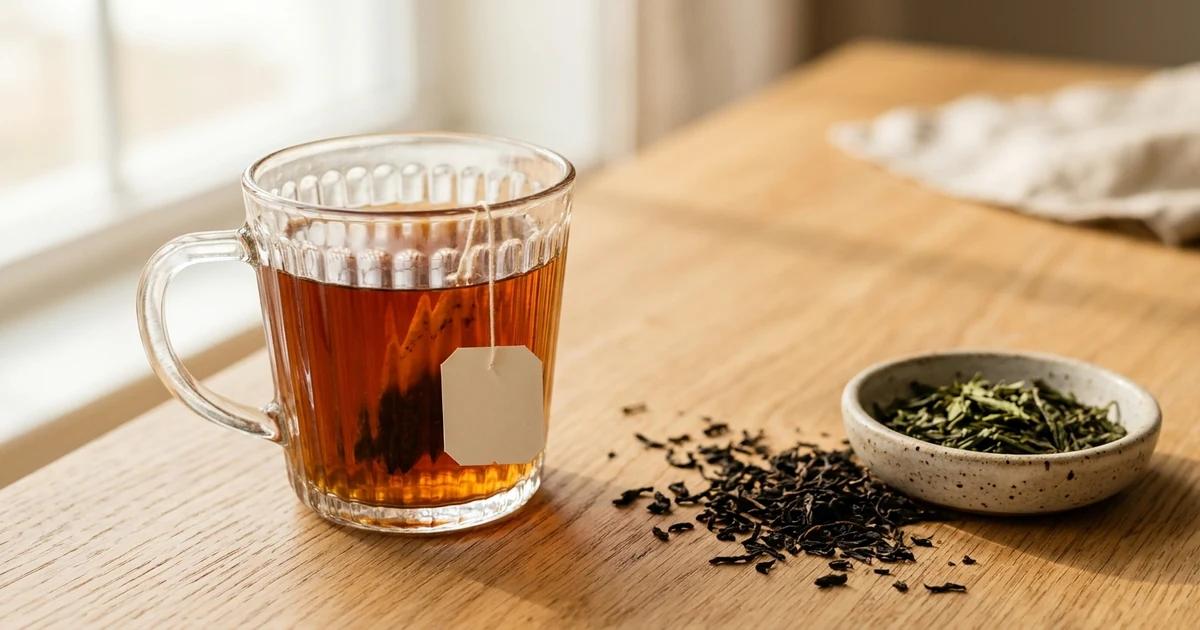
A cup brewed from one Lipton black tea bag has about 55 mg of caffeine, according to Lipton's own FAQ. That is roughly half a standard cup of brewed coffee. Lipton puts green tea a little lower, at 45 mg per cup. Bottled Lipton iced teas are lighter still: labels list 20 to 26 mg per 16.9 or 20 oz bottle, depending on the flavor and size.
The numbers shift more than you'd expect across the Lipton range. Below is a full breakdown by product, with sources you can check.
Lipton Caffeine by Tea Type
| Lipton product | Serving as stated | Caffeine | mg per fl oz | Source |
|---|---|---|---|---|
| Black tea bag, brewed | 1 cup (8 fl oz) | 55 mg | 6.9 | Lipton FAQ |
| Green tea, brewed | 1 cup (8 fl oz) | 45 mg | 5.6 | Lipton FAQ |
| Signature Blend Green Tea | 1 serving (8 fl oz, 4 min) | 6 to 30 mg | 0.75 to 3.75 | lipton.com product page |
| Decaffeinated Black Tea | 1 cup | "no caffeine" per Lipton | n/a | lipton.com product page |
| Golden Chamomile (herbal) | 1 cup | caffeine free | 0 | lipton.com product page |
| Iced Black Tea family-size bag | 1 bag = 1 quart | not published | n/a | lipton.com product page |
| Bottled Peach Iced Tea | 20 fl oz | 24 mg | 1.2 | Label, Giant Food listing |
| Bottled Citrus Green Tea | 20 fl oz | 26 mg | 1.3 | Label, Giant Food listing |
| Bottled Peach Iced Tea | 16.9 fl oz | 20 mg | 1.18 | Label, Food Lion listing |
| Generic black tea, brewed (USDA) | 8 fl oz (237 g) | 47 mg | 5.9 | USDA FDC 173227 |
| Generic green tea, brewed (USDA) | 1 cup (245 g) | 29 mg | n/a | USDA FDC 171917 |
| Roon pouch (not a tea) | 1 pouch | 80 mg | n/a | takeroon.com |
Sources: lipton.com product pages and FAQ, bottle labels as listed by Giant Food and Food Lion, USDA FoodData Central, checked Oct 31, 2026.
Why Lipton Gives Two Numbers for Green Tea
Lipton's FAQ says 45 mg per brewed cup, while its Signature Blend green tea page says 6 to 30 mg per serving. That is a wide gap, and both numbers come from the same company.
Lipton's FAQ explains it: caffeine in tea "depends on the preparation method, brewing time, the amount of tea leaves used, and the size of the tea bags." The Signature Blend page calls for 8 fl oz of hot water steeped 4 minutes. A shorter steep or cooler water pulls less caffeine into the cup.
Lipton does not say which figure applies to which cup, so neither should be treated as the exact number for yours. The practical rule from Lipton's own explanation: a shorter or cooler brew lands at the lower number. For context, USDA puts generic brewed green tea at 29 mg per cup; matcha is a different case, covered on its own page.
How Much Caffeine Is in a Pitcher of Lipton Iced Tea?
Lipton's family-size iced tea bags are labeled "1 TEA BAG = 1 QUART," with brew directions calling for boiling water and a 3 to 5 minute steep. Lipton does not publish a caffeine figure for these bags. The Cold Brew family-size bags (5-minute cold brew) also list no milligrams.
Temperature, time, and dilution with ice all change extraction, so estimating a per-glass figure from a hot-brewed number would be guesswork. The bottled teas below print exact figures on every label.
Bottled Lipton Iced Tea Caffeine
Bottled Lipton iced teas carry caffeine on the Nutrition Facts label. Three verified examples:
- Lipton Peach Iced Tea, 20 fl oz: 24 mg (1.2 mg per fl oz) per the label on Giant Food
- Lipton Citrus Green Tea, 20 fl oz: 26 mg (1.3 mg per fl oz) per the label on Giant Food
- Lipton Peach Iced Tea, 16.9 fl oz: 20 mg (1.18 mg per fl oz) per the label on Food Lion
Other flavors vary. The label on each bottle prints the number, so flip it over before you buy if caffeine matters.
Lipton Tea vs a Cup of Coffee
USDA puts a standard 8 fl oz cup of brewed coffee at roughly 95 mg (40 mg per 100 g × 237 g), so Lipton black tea's 55 mg is about 58% of that. The FDA's 12 oz figures show a similar gap: black tea 71 mg, green tea 37 mg, brewed coffee 113 to 247 mg.
You would need about seven cups of Lipton black tea (7 × 55 mg = 385 mg) to approach the FDA's 400 mg daily reference for most healthy adults. For more on coffee's caffeine range, the numbers vary by brew method and bean.
Does Lipton Decaf or Herbal Tea Have Caffeine?
Lipton's Decaffeinated Black Tea page describes it as having "no caffeine." USDA data tell a slightly different story: decaf black tea measures about 1 mg per 100 g, roughly 2 mg per 8 fl oz cup (FDC 174871). Decaffeination removes nearly all caffeine, but not every molecule.
Lipton's herbal teas are a separate category. The FAQ states that "herbal teas generally do not have caffeine because they are not made from traditional tea leaves." The Golden Chamomile page labels it "naturally caffeine free." Our chamomile caffeine guide covers that tea in more detail.
A note on safety: The FDA considers 400 mg of caffeine a day an amount not generally linked to negative effects for most adults. If you are pregnant or breastfeeding, the FDA recommends talking to your health care provider about caffeine intake.
Related from Roon
- Tea for Energy: How Caffeine in Tea Compares
- Does Earl Grey Have Caffeine?
- How Much Caffeine Is in Sweet Tea?
Frequently Asked Questions
Does Lipton tea have more caffeine than coffee?
No. Lipton black tea has about 55 mg per 8 fl oz cup; brewed coffee averages around 95 mg for the same size per USDA data. The FDA's 12 oz figures show the same gap: black tea 71 mg vs coffee 113 to 247 mg.
Is Lipton black tea high in caffeine?
Moderate. Lipton's 55 mg is slightly above the USDA generic figure for brewed black tea (47 mg per 8 fl oz) but roughly half a cup of coffee.
How much caffeine is in Lipton Earl Grey or English Breakfast?
Lipton does not publish a caffeine figure for either on their product pages. Both are black teas, so they fall in the same general range, but without a brand-specific number any milligram count would be a guess. See our Earl Grey caffeine breakdown for the typical range.
Can I drink Lipton tea at night?
A general guideline: finish your last caffeinated drink at least 8 hours before you plan to sleep. Lipton black tea at 55 mg is enough to interfere with sleep for many people if timed too late. Lipton's herbal teas (Golden Chamomile, for example) are caffeine free and a better evening choice.
The Tea Habit, Minus the Refills
Lipton black tea gives you 55 mg per cup, which means a second or third mug to keep the lift going through a long afternoon. Each Roon pouch delivers 80 mg of caffeine (about one and a half Lipton cups) alongside 60 mg of L-theanine, the same amino acid tea is known for, plus 25 mg of methylliberine (Dynamine) and 5 mg of theacrine (TeaCrine).
Methylliberine is the ingredient that separates a pouch from another cup. In a randomized, double-blind crossover study (n=12), co-administration of methylliberine with caffeine slowed caffeine's oral clearance and extended its half-life from 7.2 to 15 hours, with no increase in peak concentration (study). That study used 100 mg methylliberine and 150 mg caffeine, roughly 4× the methylliberine and 1.9× the caffeine in a single Roon pouch, so the mechanism points in the same direction at Roon's dose without matching the study's exact magnitude. A 15-hour half-life describes clearance, not 15 hours of lift; one pouch is usually felt for about 6 to 8 hours, which is why the last one belongs at least 8 hours before bed.
Roon is a zero-nicotine, zero-sugar caffeine pouch (it contains sucralose), not a tea and not a replacement for one. Tins start from $9.16 with a subscription. If you like what tea does but not the refill cycle, give Roon a look.
Sources
- Lipton US FAQ (caffeine in black and green tea, herbal teas)
- Lipton Signature Blend Green Tea product page (6 to 30 mg per serving)
- Lipton Decaffeinated Black Tea product page ("no caffeine" claim)
- Lipton Golden Chamomile product page ("naturally caffeine free")
- Lipton Iced Black Tea Family Size Tea Bags (1 bag = 1 quart, no caffeine published)
- Giant Food, Lipton Peach Flavor Iced Tea 20 oz btl (24 mg label)
- Giant Food, Lipton Citrus Flavor Green Iced Tea 20 oz btl (26 mg label)
- Food Lion, Lipton Peach Flavor Iced Tea 12 pk 16.9 oz btls (20 mg label)
- USDA FoodData Central, black tea brewed (FDC 173227)
- USDA FoodData Central, green tea brewed (FDC 171917)
- USDA FoodData Central, decaf black tea brewed (FDC 174871)
- USDA FoodData Central, brewed coffee (FDC 171890)
- FDA, Spilling the Beans: How Much Caffeine Is Too Much?
- Methylliberine-caffeine PK study, Journal of Exercise and Nutrition
Written by Roon Team