The Glymphatic System: How Your Brain Power-Washes Itself While You Sleep
Roon Team
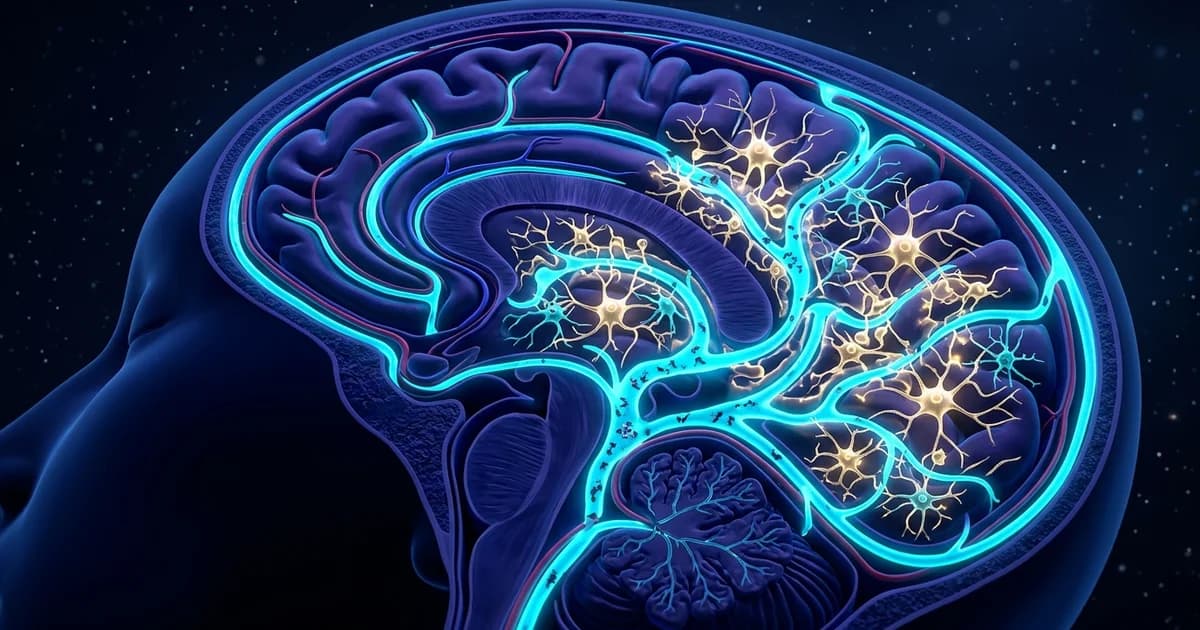
The Glymphatic System: How Your Brain Power-Washes Itself While You Sleep
Your brain burns through a staggering amount of fuel every day, and like any high-output engine, it generates waste. Sticky proteins, spent metabolites, the molecular trash of constant neural firing. For more than a century, nobody could explain where that garbage went, because the brain has no lymphatic vessels like the rest of your body. The answer turned out to be the glymphatic system, a cleanup network that runs mostly while you sleep.
Think of it as a pressure washer that only switches on at night. Clean cerebrospinal fluid floods in along your arteries, sweeps through brain tissue, collects the waste, and drains it out. When you wake up rested, you are quite literally working with a freshly rinsed brain.
This is one of the most important discoveries in modern neuroscience, and most people have never heard of it. Here is how it works, why it depends so heavily on sleep, and what you can actually do to keep it running.
Key Takeaways
- The glymphatic system is the brain's waste clearance pathway, and it runs primarily during deep, non-REM sleep.
- Brain cells shrink during sleep, opening up the space that lets cleaning fluid flow and flush out waste.
- Water channels called aquaporin-4 sit on brain support cells and act as the system's plumbing.
- One of the proteins this system clears is amyloid beta, a molecule linked to Alzheimer's disease.
- No supplement, drug, or focus aid replaces the cleanup that only real sleep delivers.
What Is the Glymphatic System?
The glymphatic system is a brain-wide network that uses cerebrospinal fluid to wash metabolic waste out of brain tissue, and it does most of its work while you sleep. The name combines "glial," the brain's support cells, with "lymphatic," the body's waste-draining network.
Neuroscientist Maiken Nedergaard and her team described it in 2012, and the discovery filled a gap that had puzzled anatomists for generations. The body's lymphatic system drains waste from nearly every organ. The brain, sealed behind the skull and the blood-brain barrier, needed its own solution. Evolution built one out of existing parts: the fluid-filled spaces around blood vessels and the support cells that wrap them.
As one summary of the field puts it, the glymphatic system is a brain-wide network of perivascular spaces that facilitates the clearance of waste products from the brain during sleep, according to Jeffrey Iliff, a professor in the Department of Psychiatry and Behavioral Sciences and Department of Neurology.
The mechanics are not complicated. Fresh cerebrospinal fluid enters along the arteries, moves through the tissue, picks up soluble waste, and exits along the veins. In, through, out. The brain rinses itself.
How the Brain Cleans Itself: The Mechanism
Here is the part that makes the system so elegant. The space between your brain cells physically expands during sleep, which is what allows fluid to move through and carry waste away.
During deep sleep, your brain cells shrink, widening the channels around them. That extra room lets cerebrospinal fluid sweep through far more freely than it can during the day. The same flow that trickles when you are awake turns into a current when you are asleep.
Why It Mostly Runs at Night
The on/off switch appears to be a brain chemical called norepinephrine, which keeps you alert during the day. In a 2025 study published in Cell, Nedergaard's group found that tightly synchronized oscillations in norepinephrine, cerebral blood volume, and cerebrospinal fluid were the strongest predictors of glymphatic clearance during NREM sleep.
In plain terms, those slow, rhythmic contractions of your blood vessels during deep sleep act like a pump. They push fluid through the tissue. While you are awake, higher levels of norepinephrine increase brain parenchymal resistance, thereby suppressing glymphatic activity, and locally blocking norepinephrine receptors in awake mice can change that.
This is why sleep is not optional for the system. Deep, slow-wave sleep is the phase that drives the cleaning. Cut it short and the pump barely runs.
Glymphatic Aquaporin: The Brain's Built-In Plumbing
The water channel aquaporin-4 is the single most important piece of plumbing in the glymphatic system, and without it the whole network stalls. These channels sit on the endfeet of astrocytes, the star-shaped support cells that wrap around your blood vessels.
Picture thousands of tiny valves lining the outside of every vessel. They control how water and fluid move between the blood vessel spaces and the brain tissue. Aquaporin-4 water channels are highly enriched in astrocytic endfeet that ensheath the cerebral vasculature, covering up to 20 to 60 percent of the perivascular endfeet membrane facing the vessel wall.
When these channels are missing or damaged, the system grinds down. Research in eLife showed that cerebrospinal fluid transport is facilitated by the expression of aquaporin-4 water channels on the perivascular endfeet, establishing directional clearance of interstitial solutes. Lose the channels and fluid stagnates across the brain.
So the glymphatic aquaporin connection is direct: these proteins are the taps that let the wash cycle happen. Their health matters as much as the sleep that powers them.
Amyloid Clearance During Sleep: The Alzheimer's Link
One of the most important things the glymphatic system flushes out is amyloid beta, the sticky protein that clumps into the plaques found in Alzheimer's disease. This is where brain waste clearance during sleep stops being academic and starts mattering for everyone.
The link held up in humans, not just mice. A randomized crossover trial published in Nature Communications reported that glymphatic clearance during normal sleep increased morning plasma levels of Alzheimer's biomarkers compared to sleep deprivation. In other words, a good night's sleep moved more waste protein out of the brain and into the bloodstream for disposal.
The reverse is just as telling. According to a 2025 review in Frontiers in Neurology, in humans, sleep deprivation impairs cerebrospinal fluid to blood clearance of amyloid beta and tau, and a sleep-active glymphatic system contributes to the clearance of these proteins from the brain.
The same review frames the broader stakes plainly: sleep is the primary driver of glymphatic clearance, so sleep disturbances can impede glymphatic activity and clearance, increasing the presence of amyloid beta and tau, and thus increasing Alzheimer's disease risk.
None of this means one bad night gives you a disease. It means chronic poor sleep starves a cleanup system your brain depends on, and the waste it should be removing is the kind you do not want building up over decades.
What Actually Supports Glymphatic Function
You cannot buy a healthier glymphatic system. You earn it mostly through sleep, with a few habits that help the fluid move. Here is how the main factors compare.
| Factor | Effect on Glymphatic Clearance | Why |
|---|---|---|
| Deep, non-REM sleep | Strongly improves | This is the phase that drives the pump and widens the spaces between cells |
| Sleep deprivation | Strongly impairs | Norepinephrine stays high, the pump barely runs, waste accumulates |
| Side sleeping position | May improve | Animal imaging suggests the lateral position clears waste more efficiently |
| Aquaporin-4 health | Foundational | These channels are the plumbing; damage causes fluid to stagnate |
| Daytime stimulants near bedtime | Impairs indirectly | Anything that fragments deep sleep cuts into clearance time |
Body position is a small but real lever. Imaging research summarized by Stony Brook University found that sleeping in the lateral, or side, position, compared to sleeping on the back or stomach, may more effectively remove brain waste. The researchers were careful to note this came from animal imaging, so treat it as a reasonable nudge rather than a prescription.
The biggest lever, by far, is protecting your deep sleep. Everything else is rounding error next to that.
Conclusion
The glymphatic system reframes sleep as active maintenance, not downtime. While you are unconscious, your brain cells shrink, fluid floods the tissue, and a chemical pump driven by your own blood vessels flushes out the waste your neurons made all day, including the proteins tied to long-term brain health.
The takeaway is blunt and a little inconvenient. There is no pill, no channel, and no clever posture that substitutes for the hours of deep sleep this system needs to run. You can support the plumbing and nudge the fluid, but the wash cycle only happens when you actually sleep. Protect that window, and you are protecting one of the few cleanup crews your brain has.
Frequently Asked Questions
What is the glymphatic system in simple terms?
It is your brain's waste removal network. Cerebrospinal fluid flows in along your blood vessels, sweeps through brain tissue, picks up metabolic waste and proteins, then drains away. The name blends "glial," the brain's support cells, with "lymphatic," the body's drainage system. It runs mostly during deep sleep, when the spaces between your brain cells widen and let fluid move freely.
Does the glymphatic system only work during sleep?
It works far more during sleep than during waking hours. The brain chemical norepinephrine keeps the system suppressed while you are alert and active. During deep, non-REM sleep, norepinephrine drops and triggers slow, rhythmic blood vessel contractions that pump fluid through the tissue. Some baseline clearance happens while awake, but deep sleep is when the system does the heavy lifting.
How does the glymphatic system clear amyloid?
Amyloid beta is a soluble protein your brain produces, and the glymphatic system flushes it out with cerebrospinal fluid during sleep. A human crossover trial found that normal sleep raised morning blood levels of Alzheimer's biomarkers compared to sleep deprivation, meaning more waste protein had been moved out of the brain. Poor sleep reduces this clearance, letting amyloid linger longer than it should.
What is aquaporin-4 and why does it matter?
Aquaporin-4 is a water channel protein concentrated on astrocytes, the brain's support cells. These channels line the outside of blood vessels and control how fluid moves between vessel spaces and brain tissue. They are the plumbing of the glymphatic system. When aquaporin-4 is missing or damaged, fluid stagnates and brain waste clearance during sleep slows down across the whole brain.
Can poor sleep raise dementia risk through this system?
Research points that way. Sleep is the primary driver of glymphatic clearance, so chronic sleep disruption reduces how much amyloid beta and tau the brain removes. Over years, that buildup is associated with higher Alzheimer's risk. One bad night is not a diagnosis, but consistently shortchanging deep sleep starves a cleanup system your brain relies on. This is correlation and mechanism, not a guarantee.
Does sleeping position affect brain waste clearance?
Possibly. Imaging research in animals found that the side, or lateral, sleeping position cleared waste more efficiently than sleeping on the back or stomach. The researchers cautioned that this needs confirmation in humans before anyone treats it as a rule. If you already sleep on your side, that is a small bonus. The amount and depth of your sleep matters far more than your position.
Does caffeine hurt the glymphatic system?
Not directly, but timing matters. Caffeine itself does not break the system. The risk is indirect: caffeine taken too late can fragment or shorten the deep sleep that powers glymphatic clearance. Since the wash cycle depends on uninterrupted slow-wave sleep, anything that eats into that window reduces how much waste your brain removes. Keep stimulants to earlier in the day to protect the cleanup.
Why a Clean Brain Starts With Sleep, Not a Pouch
The honest conclusion of all this research is one a supplement brand rarely says out loud: nothing replaces sleep. The glymphatic system is the clearest example we have. The amyloid clearance, the waste flushing, the overnight reset, all of it happens during deep sleep and nowhere else. No focus tool changes that math.
That is exactly why Roon is built as a daytime focus aid and not a sleep replacement. Roon is a sublingual pouch with a four-ingredient stack of 80 mg caffeine, 60 mg L-theanine, 25 mg methylliberine (Dynamine), and 5 mg theacrine (TeaCrine), designed for a fast 5 to 10 minute onset and 6 to 8 hours of focus without the jitters or crash. It helps you get more out of your waking hours. It does not do the work your glymphatic system does at night, and the formula is timed so it clears your system well before bedtime if you use it in the morning.
If you want the full picture, read our guides on how sleep consolidates memory and getting caffeine timing right so it doesn't wreck your sleep. Use the day to focus. Use the night to clean house. Try Roon for the first part, and let your brain handle the second.
Written by Roon Team