The Endocannabinoid System: Your Brain's Built-In Balance Network
Roon Team
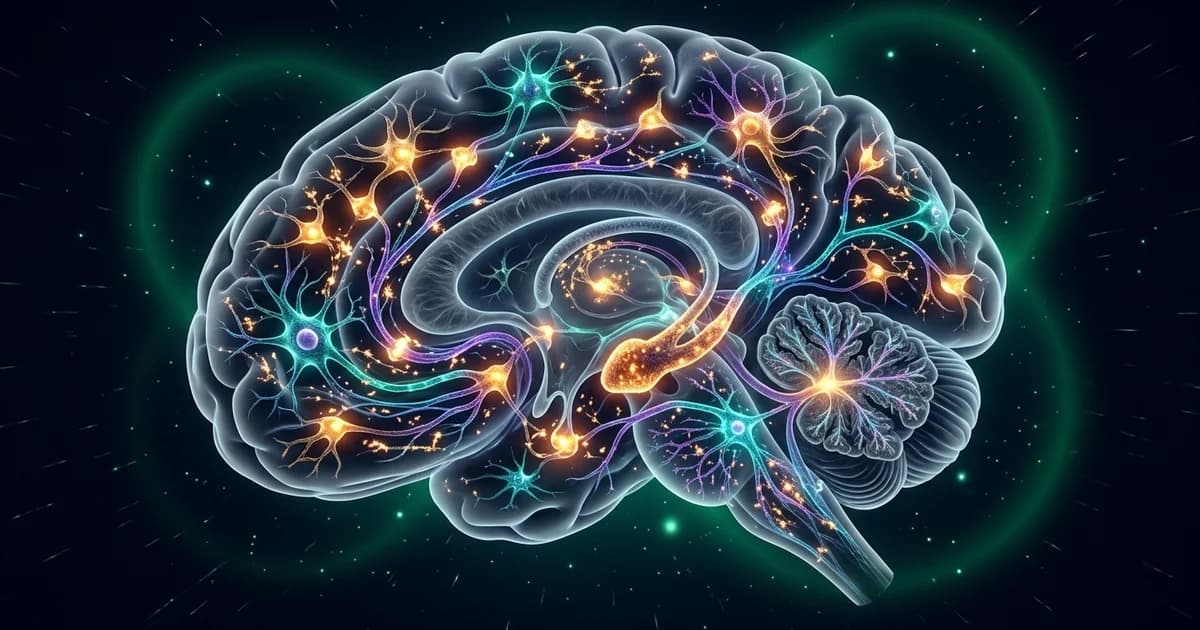
The Endocannabinoid System: Your Brain's Built-In Balance Network (and the Real "Runner's High")
For decades, the warm calm you feel after a long run got blamed on endorphins. That story is mostly wrong.
The real driver is the endocannabinoid system, a signaling network your body runs every second of every day, long before any plant or supplement touches it. It keeps your stress, mood, appetite, and pain perception inside a workable range. Think of it less as a single switch and more as a thermostat that fires only when something drifts out of balance.
Here is how it actually works, why your post-workout buzz comes from it, and what that means for the way you think about mood and stress.
Key Takeaways
- The endocannabinoid system (ECS) is a network of receptors, signaling molecules, and enzymes that helps keep your body in balance, or homeostasis.
- Your brain makes its own cannabinoids, including anandamide, nicknamed the "bliss molecule."
- The famous runner's high is driven largely by endocannabinoids, not endorphins.
- The ECS works backward across synapses, dialing other signals up or down on demand.
- Chronic stress can throw this system off, which is why it sits at the center of mood and anxiety research.
What Is the Endocannabinoid System?
The endocannabinoid system is a biological network that helps your body maintain internal balance by adjusting how your cells communicate. It has three parts: receptors that sit on cell surfaces, signaling molecules called endocannabinoids, and enzymes that build and break those molecules down.
Scientists found it by working backward from cannabis. Researchers wanted to know how THC affected the brain, found the receptor it binds to, then asked the obvious question: why would the human body have a receptor for a plant compound? Because the body makes its own versions.
In 1992, a team led by Raphael Mechoulam isolated the first one. Mechoulam initiated a research project that led to the isolation of the first described endocannabinoid anandamide (N-arachidonoyl-ethanolamine, AEA) in 1992. The name was deliberate. They named it anandamide because they believed that this compound would have an effect on mood and emotion and could potentially create happiness. In Sanskrit, ananda means bliss. That choice tells you what the system does at its best.
The Three Pieces: Receptors, Messengers, and Enzymes
CB1 and CB2 Receptors
The system runs on two main receptors. The CB1 receptor lives mostly in the brain and nervous system, where it shapes mood, memory, appetite, and pain. CB1 is one of the most widespread receptors of its kind in the entire central nervous system, which is why endocannabinoids touch so many functions at once.
CB2 receptors sit mainly in immune cells and peripheral tissue. They lean more toward inflammation and immune response. When people talk about the CB1 receptor brain connection, they mean the part of the system that governs how you feel and think.
The Endocannabinoids Themselves
Your body makes two primary messengers: anandamide and 2-AG (2-arachidonoylglycerol). Anandamide is the slow, mood-leaning one. 2-AG is faster and handles rapid, moment-to-moment signaling between neurons.
These molecules are not stored in little packets waiting to be released, the way most neurotransmitters are. Your cells build them on demand, the instant they are needed, then dismantle them once the job is done.
The Enzymes
Two enzymes act as the cleanup crew. FAAH breaks down anandamide, and MAGL breaks down 2-AG. This matters more than it sounds. If you slow down FAAH, anandamide hangs around longer, which is exactly the lever a lot of mood and pain research is pulling on right now.
How the System Actually Signals: It Runs Backward
Here is the part that surprises most people. The endocannabinoid system mostly works in reverse compared to normal brain signaling.
In a typical synapse, the signal travels from the sending neuron to the receiving one. Endocannabinoids flip that. Upon postsynaptic activation, 2-AG is released immediately after de novo synthesis, activates presynaptic CB1 cannabinoid receptors, and transiently suppresses neurotransmitter release.
In plain terms: the receiving neuron senses it is getting too much input, makes an endocannabinoid on the spot, and sends it backward to the sending neuron with a message to ease off. The released 2-AG then acts retrogradely onto presynaptic cannabinoid CB1 receptors and induces suppression of neurotransmitter release either transiently or persistently. Anandamide tends to carry a slower version of that same kind of message.
This backward, on-demand design is what lets the system act like a thermostat. It does not push your brain in one direction. It corrects overshoot in real time.
The Real "Runner's High" Is Built on Endocannabinoids
The runner's high feels like a release of endorphins, but the better explanation involves endocannabinoids. Endorphins are large molecules that struggle to cross from your blood into your brain, so they have a hard time producing the mental calm runners describe. Anandamide crosses far more easily.
A 2015 study made the case directly. Researchers ran mice and then tried to block the calm, reduced-anxiety state that followed. A runner's high depends on cannabinoid receptors in mice, as the title of the PNAS paper put it. When they blocked the endocannabinoid system, the relaxed, pain-tolerant state disappeared, even though the endorphin system was still active.
Scientific American covered the same finding, reporting that exercise raised anandamide levels and that the mood and anxiety benefits tracked the endocannabinoid system rather than endorphins. Chemistry coverage from C&EN reached a similar conclusion about the molecular basis of the effect.
So the next time you feel calm and slightly euphoric after a hard effort, that is runner's high endocannabinoids at work. Your brain raised its own anandamide and let CB1 receptors do the rest.
The Endocannabinoid System and Stress
The endocannabinoid system is one of the body's main brakes on the stress response, and chronic stress appears to wear that brake down. This is where the science gets genuinely useful for everyday life.
Research links endocannabinoid signaling to how the brain manages fear, anxiety, and the stress hormone cycle. A review in PMC describes the system's role in modulating fear, anxiety, and stress, and earlier translational work in PMC connects ECS function to stress-related psychiatric conditions.
The pattern that keeps showing up: short bursts of stress can recruit endocannabinoids to help you adapt and recover. Prolonged stress can blunt the system, which may leave you more reactive over time. That two-way relationship is why endocannabinoid stress regulation has become such an active research target.
None of this means you can hack your way to permanent calm. It means the system is doing real work in the background, and that healthy inputs like sleep and movement help keep it responsive.
How the ECS Compares to Other "Feel-Good" Systems
People lump every mood-related brain chemical into one bucket. They run on different rules. Here is a clean comparison.
| System | Main Messenger | What It Mainly Does | Notable Feature |
|---|---|---|---|
| Endocannabinoid | Anandamide, 2-AG | Restores balance; calms overactive signaling | Made on demand, signals backward across synapses |
| Endorphin | Beta-endorphin | Blunts pain | Large molecule, crosses into the brain poorly |
| Dopamine | Dopamine | Drives reward, motivation, wanting | Anticipation more than pleasure |
| Adenosine | Adenosine | Builds sleep pressure, governs alertness | The system caffeine blocks |
That last row matters for one reason. Not everything that sharpens your mind touches the endocannabinoid system at all. Alertness and focus run heavily on the adenosine and arousal pathways, which is a different axis entirely.
Frequently Asked Questions
What is the endocannabinoid system in simple terms?
The endocannabinoid system is your body's internal balancing network. It uses receptors, signaling molecules your body makes itself, and enzymes to keep functions like mood, stress, appetite, sleep, and pain within a stable range. When something drifts too far in one direction, the system releases endocannabinoids that nudge it back toward balance, then breaks those molecules down once the job is done.
What does anandamide do?
Anandamide is one of the two main endocannabinoids your body produces. It binds to CB1 receptors in the brain and tends to support a calmer, more positive mood, which is why it earned the nickname "bliss molecule." It plays a role in pain perception, appetite, and the relaxed feeling that follows hard exercise. An enzyme called FAAH breaks it down fairly quickly.
Is the runner's high caused by endorphins or endocannabinoids?
Current evidence points to endocannabinoids more than endorphins. Endorphins are large molecules that do not cross easily from the blood into the brain, so they struggle to produce the mental calm that defines a runner's high. A 2015 PNAS study found that blocking cannabinoid receptors in mice removed the calm, low-anxiety state after running, while the endorphin system alone did not account for it.
Where are CB1 receptors located?
CB1 receptors are concentrated in the brain and central nervous system, which is why they influence mood, memory, appetite, and pain. They are among the most widespread receptors of their type in the brain. CB2 receptors, by contrast, sit mainly in immune cells and peripheral tissue, where they relate more to inflammation and immune response.
How does stress affect the endocannabinoid system?
Short-term stress can recruit endocannabinoids to help your brain adapt and recover. Chronic, prolonged stress appears to blunt the system, which may leave you more reactive and less able to settle. Research has tied endocannabinoid signaling to the regulation of fear, anxiety, and the stress hormone cycle, making it a focus of ongoing mood and stress studies.
Does caffeine work through the endocannabinoid system?
No. Caffeine works mainly on the adenosine system, where it blocks the receptors that build sleep pressure and reduce alertness. That is a separate pathway from the endocannabinoid system, which is why a stimulant can sharpen focus without directly touching the network behind the runner's high.
Can I raise my anandamide naturally?
Exercise is the most reliable lever, since sustained aerobic activity raises anandamide levels. Quality sleep and stress management help keep the broader system responsive. There is no need for dramatic interventions, and you should treat any supplement claims about boosting endocannabinoids with skepticism unless they are backed by real human data.
The Takeaway: A Quiet System Doing Loud Work
The endocannabinoid system rarely gets credit because it works in the background, correcting overshoot rather than creating dramatic spikes. It made your last good run feel like relief instead of exhaustion. It helps decide whether a stressful afternoon settles or spirals.
The simplest way to support it is also the least glamorous. Move your body, sleep well, and manage stress before it becomes chronic. The biology rewards consistency far more than any single quick fix.
Where Focus Lives, and Where It Doesn't
Here is a distinction worth keeping straight. The endocannabinoid system shapes your mood, your stress recovery, and that post-run calm. It is not the system behind sharp, sustained mental focus. That job runs on a different axis entirely: adenosine and arousal.
That separation is the whole idea behind Roon. Roon is a zero-nicotine sublingual pouch built around four ingredients, 80 mg caffeine, 60 mg L-theanine, 25 mg methylliberine (Dynamine), and 5 mg theacrine (TeaCrine), designed for a clean 5 to 10 minute onset and 6 to 8 hours of focus with no jitters and no crash. It works on the alertness pathway, not the endocannabinoid one.
So think of them as separate tools. Roon is not a mood supplement or a substitute for exercise, sleep, and the balance your endocannabinoid system provides. It is for the hours when you need to think clearly. If you want to go deeper on the underlying biology, read our breakdowns of how CBD interacts with the endocannabinoid system and why exercise drives BDNF and brain health, then try Roon when focus is what you actually need.
Written by Roon Team