Do Nootropic Pouches Actually Work? The Evidence
Do Nootropic Pouches Actually Work? The Evidence
If you are asking do nootropic pouches work, the honest answer is: mostly no for the herbal part, at the doses pouches actually use. Yes, for the stimulant part, at a real dose. "Work" here means measurable gains in alertness, attention-switching, and reduced tiredness, not memory or mood. Most of what a nootropic pouch does comes from its caffeine or paraxanthine. The botanical extras are usually dosed far below the amount any trial has tested.
If you are choosing a brand rather than weighing the evidence, see the nootropic pouches buyer's guide.
Below is the ingredient-by-ingredient breakdown no ranking page gives you: the dose on the label versus the dose in the trial, and a plain answer about where the gap sinks the claim.
Key Takeaways
- Caffeine plus L-theanine is the only ingredient pairing in pouches with consistent trial-level support for attention and alertness, at doses most caffeine-based pouches actually deliver.
- Paraxanthine (a caffeine metabolite) shows early promise for post-exercise reaction time, but the evidence base is still small.
- Alpha-GPC, citicoline, lion's mane, tyrosine, and B vitamins appear in pouch labels at doses far below what clinical trials have studied. At those amounts, no measurable cognitive effect should be expected. Motion pouches, for example, list Alpha-GPC and citicoline without per-ingredient doses on their site.
- Reddit's skepticism about herbal-only blends is consistent with the published dose data.
How a Pouch Gets Into Your Blood
Nootropic pouches sit between your lip and gum, delivering ingredients through the buccal mucosa, the blood-vessel-rich tissue lining your cheek. This route bypasses first-pass metabolism through the liver, the process that breaks down a portion of any compound you swallow before it reaches circulation.
A 2002 study comparing caffeine via chewing gum versus capsules found buccal absorption reached peak plasma levels faster. That is the pharmacokinetic basis for the "hits in minutes" claim on pouch packaging.
One honest caveat: no dedicated pharmacokinetic study of any nootropic pouch product exists. Every absorption figure cited on this page comes from studies of ingredients in capsule, drink, or standalone form. Nobody has published data on how much of each ingredient crosses the buccal membrane from a pouch matrix versus being swallowed with saliva. The onset-speed advantage is real in principle. Its exact size, for pouches specifically, is unquantified.
Caffeine and L-Theanine: the Only Pouch Pairing With Trial-Grade Evidence
A 2025 systematic review and meta-analysis in Nutrition Reviews (50 RCTs reviewed, 15 eligible for meta-analysis) found that the combination of L-theanine plus caffeine produced small-to-moderate improvements in attentional task performance, including attention-switching accuracy, and may benefit mood outcomes like alertness, compared with placebo. The median doses across the included caffeine-plus-theanine arms were roughly 80 to 100 mg caffeine and 80 to 100 mg theanine.
That dose window matters. Caffeine-based nootropic pouches disclose 30 to 200 mg of caffeine per pouch; most sit at 30 to 100 mg, and a few go to 150 to 200 mg. The ones at 80 mg or above with a disclosed theanine dose sit inside the studied range. The ones at 30 to 50 mg caffeine with theanine undisclosed do not.
One null finding worth knowing: a 2008 study by Rogers et al. reported that adding 200 mg L-theanine to caffeine did not produce a statistically significant reduction in jitteriness. The meta-analysis supports theanine's role in attention, but the claim that it "prevents jitters" overstates the data.
| Metric | Caffeine + L-Theanine | Evidence Level |
|---|---|---|
| Attention-switching accuracy | Small-to-moderate improvement vs. placebo | Meta-analysis, 15 RCTs |
| Alertness (self-reported) | May improve | Meta-analysis |
| Tiredness (self-reported) | May reduce | Meta-analysis |
| Jitteriness reduction from theanine | Not statistically significant | Single RCT (Rogers 2008) |
| Studied dose range | ~80-100 mg caffeine + ~80-100 mg theanine | Median across included trials |
Paraxanthine: the Caffeine-Free Approach
Paraxanthine is the primary active metabolite your liver produces when it breaks down caffeine. At least one pouch brand markets it at 100 mg per pouch as a caffeine-free stimulant (that figure is the brand's own published number, not independently verified).
A 2024 study published in the Journal of the International Society of Sports Nutrition found that post-exercise cognitive function improved approximately 23.5% more with paraxanthine than with caffeine after a 10-km treadmill run.
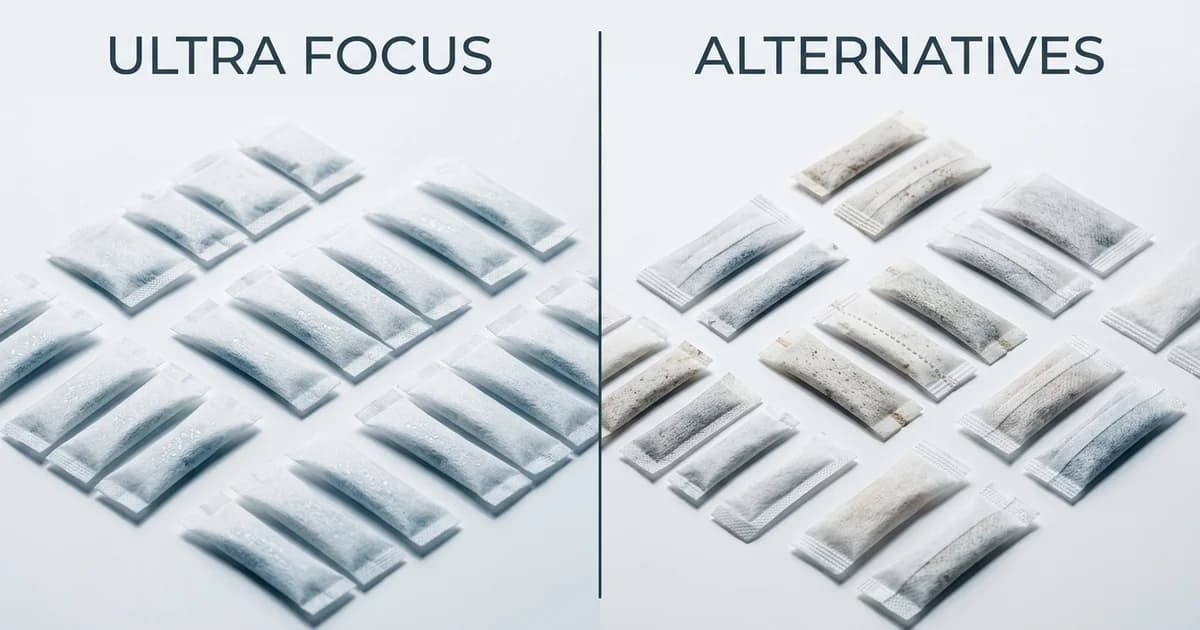
The case for paraxanthine is real but early. That study was small, and the broader evidence base is thin compared with caffeine's decades of replication. Paraxanthine's reported elimination half-life is roughly 3.1 hours, shorter than caffeine's wide 1.5-to-9.5-hour range. Faster clearance is a selling point if you want a shorter window, and a limitation if you need focus through a full workday. For more on paraxanthine pouches, see our Ultra pouches review.
Citicoline, Alpha-GPC, Tyrosine, Lion's Mane, B Vitamins: the Dose Gap
This is where the label stops matching the literature. The table below compares the doses used in published clinical trials against the doses nootropic pouches actually contain, where disclosed.
| Ingredient | Dose Range in Trials | Typical Dose in Pouches | Verdict |
|---|---|---|---|
| Alpha-GPC | 200-630 mg (Kerksick 2024, Nutrients; Marcus et al. 2017) | 40-100 mg (where disclosed) | Well under the studied range |
| Citicoline (Cognizin) | 250-500 mg (Cognizin clinical trials) | 100-125 mg (where disclosed) | Below the studied range |
| Lion's mane | 1.8-3 g extract (Frontiers in Nutrition, 2025; La Monica 2023) | Single-digit to low double-digit mg | Far below any studied dose |
| Tyrosine | 2,000 mg in acute cognitive studies | Undisclosed or trace | No pouch-relevant dosing data |
| B vitamins (B6, B12) | Cofactor-level; deficiency correction doses | Varies | No meaningful standalone claim at any pouch dose |
The pattern is consistent: a pouch physically cannot hold gram-level doses of powder. The format works for potent stimulants (caffeine at 80 mg is a small volume) but is the wrong vehicle for ingredients that need hundreds of milligrams or more. Listing them on the label is legal. Expecting them to do anything measurable at those amounts is not supported by the trials.
What Reddit Says (and Where It Is Right)
Skeptics on r/NooTopics have called herbal-only nootropic pouches "basically herbal scams like other 10 ingredient nootropic supplements" while crediting only specific stimulant ingredients with a felt effect. Counter-comments in the same community single out paraxanthine-based pouches as producing "a more noticeable, slight nootropic benefit."
The honest read: the community's skepticism about herbal-only blends at pouch doses lines up with the dose-gap table above. Reddit credits only caffeine or paraxanthine with a felt effect, which matches the trial evidence. The blanket "scam" label is too broad. A pouch delivering 80+ mg caffeine with disclosed theanine is doing what coffee does through a faster route, with a second ingredient backed by meta-analytic data. A pouch listing 12 botanicals at undisclosed doses, priced at a premium, is closer to what the skeptics describe.
What to Expect in the First Hour
If you are trying a caffeine-based nootropic pouch for the first time, here is a realistic timeline:
- 5 to 15 minutes: Onset. Buccal absorption means the stimulant hits faster than swallowing a capsule or drinking coffee. You will feel alertness first, not euphoria.
- 15 to 45 minutes: Peak effect window. The subjective experience is a stimulant-shaped response: reduced tiredness, sharper focus, possibly elevated heart rate at higher doses. It feels like caffeine because it mostly is caffeine.
- 2 to 4 hours (caffeine) / 6 to 8 hours (extended formulas): Duration varies by dose, by whether the formula includes ingredients that slow caffeine clearance, and by your individual metabolism. Some Reddit users describe the crash from a low-dose, short-acting stimulant pouch as sharper than coffee's, likely because a smaller total dose clears faster.
If you want a detailed breakdown of absorption timing, see how fast do caffeine pouches work.
How to Tell If a Pouch Is Actually Doing Anything
Skip the subjective "I feel smarter" test. Pick one task you do daily at the same time (a typing test, a reaction-time app, emails cleared per hour). Three days with the pouch, three days without, same conditions. Track task speed and tiredness on a 1-to-10 scale.
You are looking for a consistent difference across days, not a single good session. If the effect disappears when you stop paying attention to it, it was expectation, not pharmacology.
Brands Where the Label Lets You Check the Math
Some pouch brands disclose full milligram amounts for every active ingredient on their packaging. Others hide behind proprietary blend labels. The dose-gap table above only works if you can see the numbers. If a brand will not tell you how many milligrams of Alpha-GPC or lion's mane are in the pouch, you cannot evaluate whether the dose is near what the research studied. For a full brand-by-brand comparison with disclosed doses, see the best nootropic pouches buyer's guide.
Conclusion: The Stimulant Is the Product
A nootropic pouch works to the exact extent its stimulant dose is real and disclosed. Caffeine plus L-theanine, at 80+ mg caffeine and 80+ mg theanine, has consistent meta-analytic support for attention and alertness. Paraxanthine has early but promising data. Everything else on most pouch labels is dosed well under what any trial has shown does anything measurable. That does not make every pouch a scam. It means the label tells two stories: one supported by evidence, and one that is mostly marketing.
Frequently Asked Questions
Do you get a buzz from nootropic pouches?
If the pouch contains 80 mg or more of caffeine, yes, you will feel a stimulant effect: increased alertness, reduced tiredness, slightly faster reaction time. It feels like caffeine because it is caffeine. Pouches that rely only on herbal ingredients at the doses they actually contain are unlikely to produce a noticeable effect based on the available trial data.
How long do nootropic pouches take to work?
Most users report onset in 5 to 15 minutes. Buccal absorption through the cheek lining is faster than swallowing a pill or drinking coffee, where stomach transit and liver metabolism add delay. No pouch-specific pharmacokinetic study exists, so absorption curves are borrowed from ingredient-level research.
Which nootropic pouches actually work?
The ones with a disclosed stimulant dose (caffeine or paraxanthine) in a range the published research supports. For caffeine-based pouches, that means roughly 80 mg or more of caffeine with a disclosed L-theanine dose. For paraxanthine pouches, the early data is promising but the evidence base is still small. See our buyer's guide for a full comparison.
Do caffeine-free nootropic pouches do anything?
If they contain paraxanthine, possibly. If they rely only on herbs, adaptogens, or B vitamins at the doses a pouch can physically hold, the clinical evidence for a measurable cognitive effect is weak to nonexistent. Paraxanthine is technically caffeine-free (it is a caffeine metabolite, not caffeine itself), and it has at least one published trial showing a cognitive benefit.
Are nootropic pouches any good compared with coffee?
Both deliver caffeine. The differences are delivery speed (buccal absorption is faster), convenience (no liquid), and in some formulas the addition of L-theanine or other compounds. Whether that justifies a price premium depends on how much you value the format. The caffeine pouches vs. nootropic pouches breakdown covers the distinction in detail.
Is it bad to take a nootropic pouch every day?
Caffeine builds tolerance with daily use, meaning the same dose produces a smaller effect over time. That is true whether the source is a pouch, coffee, or a pill. Stay within the FDA's general guidance of 400 mg caffeine per day for healthy adults. If you have a medical condition or take medication, talk to your clinician before adding any caffeine source. Skip caffeine pouches if you are pregnant or under 18. See are nootropic pouches safe for more.
The One Pairing With the Evidence Behind It
This article spent nine sections making one argument: the part of a nootropic pouch that works is the stimulant, at a real dose, on the label. The rest is mostly filler at sub-clinical amounts.
Roon is built around that finding. The formula pairs caffeine with L-theanine inside the dose range the Nutrition Reviews meta-analysis studied, delivered as a zero-nicotine, zero-sugar sublingual pouch (Cool Mint, 15 per tin). It also includes Dynamine (methylliberine), which slows caffeine clearance to extend duration, and TeaCrine (theacrine). Every milligram is on the label and on the product page, so you can do the same math this article just walked you through.
What extends the window past coffee's 3-to-4-hour fade is methylliberine, which slows caffeine clearance; theacrine does not change caffeine's pharmacokinetics. A randomized, double-blind, crossover PK study (n=12) found that 100 mg methylliberine co-administered with 150 mg caffeine cut caffeine's oral clearance from 41.9 to 17.1 L/hr and extended its half-life from 7.2 to 15 hours, with no increase in peak concentration. Roon uses roughly a quarter of that methylliberine dose and about half the caffeine, so the study's numbers do not map directly. The mechanism is directionally the same: same peak, longer tail. That is why the felt window runs 6 to 8 hours. It also means you should stop at least 8 hours before bed.
Roon is not a substitute for medical treatment and does not claim to improve memory. It starts from $9.16 per tin on the 12-tin subscription, as little as $0.61 per pouch. There is a 30-day money-back guarantee on your first order. Try Roon.
Related from Roon
- https://www.takeroon.com/blog/best-nootropic-pouches-buyers-guide
- https://www.takeroon.com/blog/are-nootropic-pouches-safe
- https://www.takeroon.com/blog/caffeine-pouches-vs-nootropic-pouches
- https://www.takeroon.com/blog/how-fast-do-caffeine-pouches-work
Written by Roon Team