Choline Bitartrate: Is the Cheapest Choline Worth It?
Roon Team
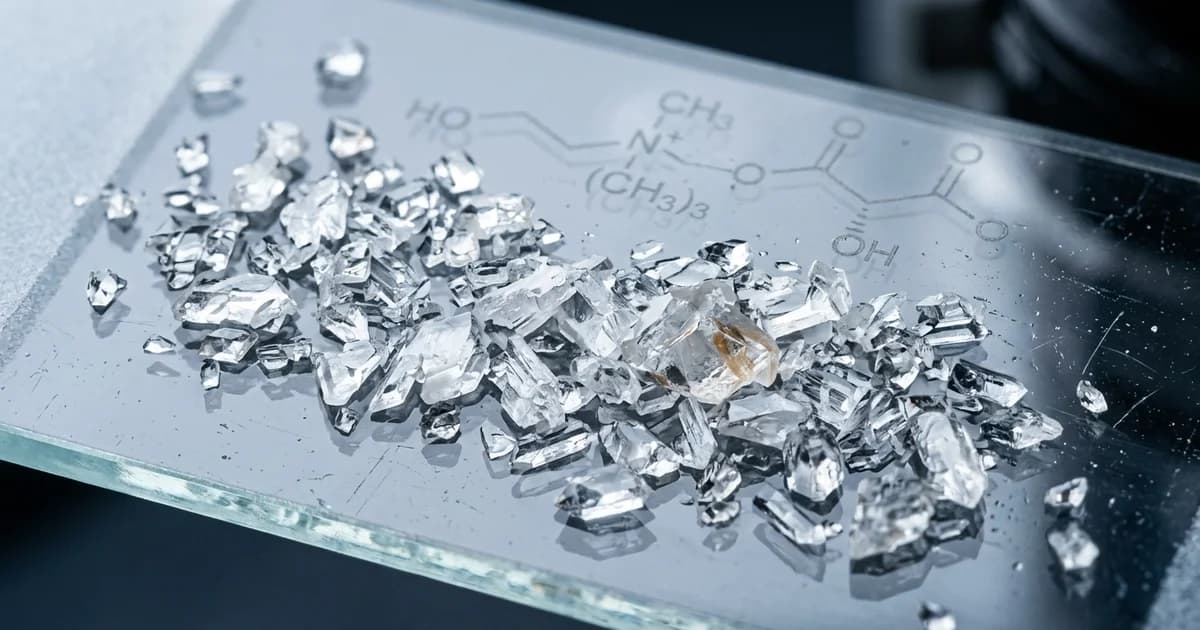
Choline Bitartrate: Is the Cheapest Choline Worth It?
Choline bitartrate is the most affordable choline supplement on the shelf, and that low price tells you almost everything about how it works. It is a basic choline salt: cheap to make, easy to dose, and built to top up a nutrient that most people simply do not eat enough of.
What it is not is a reliable shortcut to sharper memory or faster thinking. The science on that is thinner than the marketing suggests.
So is the cheapest choline worth your money? It depends entirely on what you want it to do.
Key Takeaways
- Choline bitartrate is a choline salt that delivers roughly 41% choline by weight, making it an efficient and inexpensive way to raise total choline intake.
- It is good at correcting dietary shortfalls, which matter because most people in the US fall short of recommended choline levels.
- For brain-specific effects, it underperforms. Human trials show it struggles to cross the blood-brain barrier compared with citicoline and alpha-GPC.
- The right question is not "cheap or expensive," it is "baseline nutrition or cognitive performance?"
What Choline Bitartrate Actually Is
Choline bitartrate is choline bound to tartaric acid, a pairing that keeps the molecule stable and cheap to manufacture. According to research published in PLOS One, choline bitartrate contains about 41.1% choline by molecular weight, so a 1,000 mg dose delivers roughly 410 mg of actual choline.
That ratio is the whole appeal. You get a high payload of usable choline for very little money, which is why it shows up in budget nootropic blends and standalone tubs sold by the kilogram.
Choline itself is the workhorse. Your body uses it to build acetylcholine, a neurotransmitter tied to memory and muscle control, and phosphatidylcholine, a structural fat in every cell membrane. It also supports liver function and methylation. The catch is the delivery, not the demand.
Why Choline Intake Matters in the First Place
Most people are running a quiet deficit. Health and nutrition experts have flagged that current choline intake is too low for the majority of Americans, with very few adults hitting the recommended Adequate Intake.
The reference numbers come from the National Academies. The Linus Pauling Institute lists the Adequate Intake as 550 mg per day for men and 425 mg per day for women, with higher targets during pregnancy and breastfeeding.
The problem is food. Choline is concentrated in eggs, beef liver, and other foods many people eat rarely. A diet without those staples leaves a real gap, and that gap is exactly where a cheap choline supplement earns its keep.
Choline Bitartrate Benefits: What the Science Supports
The strongest case for choline bitartrate is general nutrition, not cognitive enhancement. As a high-percentage choline salt, it is an efficient tool for raising whole-body choline status, which supports liver health, cell membrane integrity, and the raw material your body needs to make acetylcholine.
Where the story weakens is the brain. In a placebo-controlled trial published in PLOS One, researchers gave healthy young adults a large dose of choline bitartrate and found no acute improvement in memory performance.
This lines up with the broader literature. Reviews note that choline bitartrate does not reliably improve visuospatial memory, working memory, or verbal recall in healthy people, likely because it crosses the blood-brain barrier poorly. The choline gets into your blood. Getting it into neurons is the hard part.
So the honest summary: useful for filling a dietary hole, unconvincing as a same-day focus tool.
Choline Bitartrate Bioavailability and the Blood-Brain Barrier
Choline bitartrate has decent systemic bioavailability but limited brain delivery, and that distinction is the entire debate. Once swallowed, the choline enters circulation fine. The bottleneck is the tightly controlled gateway between your blood and your brain.
Citicoline and alpha-GPC are built around this problem. They carry choline in forms that the brain takes up more readily and converts into acetylcholine and membrane phospholipids more efficiently. That is why they cost more and why nootropic users reach for them when the goal is cognition rather than baseline nutrition.
Choline bitartrate was never engineered for that job. It is a nutrient delivery salt doing exactly what a nutrient delivery salt does.
Choline Bitartrate vs Citicoline vs Alpha-GPC
Here is how the three most common choline sources compare across the things that actually matter. The choline bitartrate vs citicoline question is really a question of purpose.
| Choline Source | Approx. Choline by Weight | Brain Delivery | Best For | Relative Cost |
|---|---|---|---|---|
| Choline bitartrate | ~41% | Limited | Filling dietary choline gaps | Lowest |
| Citicoline (CDP-choline) | ~18% | Strong | Memory and attention support | High |
| Alpha-GPC | ~40% | Strong | Acetylcholine-driven focus and power output | High |
Read the table the right way. Choline bitartrate wins on price and raw choline payload. Citicoline and alpha-GPC win on getting that choline where a nootropic user wants it.
None of these is a stimulant. They feed the cholinergic system, but they do not deliver the fast, felt lift that people often expect from a focus product. That gap is worth keeping in mind when you build a stack. If you want the mechanics of fast onset, our breakdown of how L-theanine and caffeine work together covers a very different pathway.
Dosing and Side Effects
Choline bitartrate is usually dosed between 500 mg and 2,000 mg per day, often split to reduce stomach upset. The most common complaints are mild: nausea, loose stools, or a faint body odor at high doses, since excess choline can be metabolized into trimethylamine.
The National Academies set a Tolerable Upper Intake Level for total choline at 3,500 mg per day for adults, and the fishy-odor effect is the classic sign you have pushed too high. Most people stay well under that.
If you are taking it purely to correct a dietary shortfall, you do not need heroic doses. A modest amount that closes the gap toward the Adequate Intake does the job.
Frequently Asked Questions
Is choline bitartrate good for the brain?
Indirectly. It supplies choline, the building block your body uses to make acetylcholine and cell membranes. But human trials have not shown reliable same-day cognitive benefits in healthy adults, mostly because choline bitartrate crosses the blood-brain barrier poorly. It is better understood as nutritional support than as a focus enhancer.
Choline bitartrate vs citicoline: which is better?
It depends on the goal. Choline bitartrate is cheaper and delivers more choline per gram, which suits people fixing a dietary deficit. Citicoline reaches the brain more effectively and has stronger evidence for memory and attention, which suits people chasing cognitive performance. Different tools, different jobs.
How much choline bitartrate should I take?
Typical doses range from 500 mg to 2,000 mg per day, often split into smaller servings. Since the salt is about 41% choline by weight, 1,000 mg provides roughly 410 mg of choline. Stay below the 3,500 mg daily upper limit for total choline, and talk to a clinician if you have a health condition.
Why is choline bitartrate so cheap?
It is a simple salt of choline and tartaric acid that is inexpensive to produce at scale. The low cost reflects the manufacturing, not a flaw in the choline itself. You are paying for a high-payload, no-frills choline source rather than a specialized brain-delivery form.
Does choline bitartrate cause body odor?
It can at high doses. Excess choline can be converted by gut bacteria into trimethylamine, which produces a faint fishy smell. This is dose-dependent and uncommon at moderate intakes. Splitting your dose and staying within recommended limits usually prevents it.
Can I get enough choline from food instead?
Sometimes. Eggs and beef liver are dense sources, and a diet rich in them can meet the Adequate Intake. The trouble is that many people eat little of either, which is why a large share of the population falls short and why a cheap choline supplement can be a practical fix.
The Bottom Line on Cheap Choline
Choline bitartrate is honest about what it is. It is a low-cost, high-payload choline salt that does one thing well: it raises your total choline intake when your diet falls short.
What it does not do is reliably sharpen focus or memory on demand. The human evidence points to weak brain delivery, and the forms that solve that problem cost more for a reason. Buying choline bitartrate and expecting a cognitive lift is buying the wrong tool for the job.
Match the supplement to the goal. If you want baseline nutrition, the cheapest choline is a smart buy. If you want measured cognitive performance, you are shopping in a different aisle.
When You Want Performance, Not Just a Nutrient Top-Up
This article drew a line between two goals: correcting a dietary choline gap and getting fast, dependable focus. Choline bitartrate is genuinely good at the first. It was never designed for the second, and pretending otherwise is how people end up disappointed.
Roon sits on the performance side of that line. It is a sublingual cognitive pouch built around four ingredients chosen for speed and staying power: 80 mg caffeine, 60 mg L-theanine, 25 mg methylliberine (Dynamine), and 5 mg theacrine (TeaCrine). The format is the point, since absorbing under the tongue supports a 5 to 10 minute onset and a 6 to 8 hour window of focus with no jitters, no crash, and no tolerance creep.
To be clear, Roon is not a choline product and not a replacement for a balanced diet or a doctor's advice on nutrient deficiencies. If your goal is filling a choline gap, a cheap salt does the job. If your goal is dialed-in focus when you sit down to work, try Roon for the job it was actually built to do.
Written by Roon Team