Cheap Dopamine vs Real Dopamine: Same Molecule, Different Prediction
Cheap Dopamine vs Real Dopamine: Same Molecule, Different Prediction
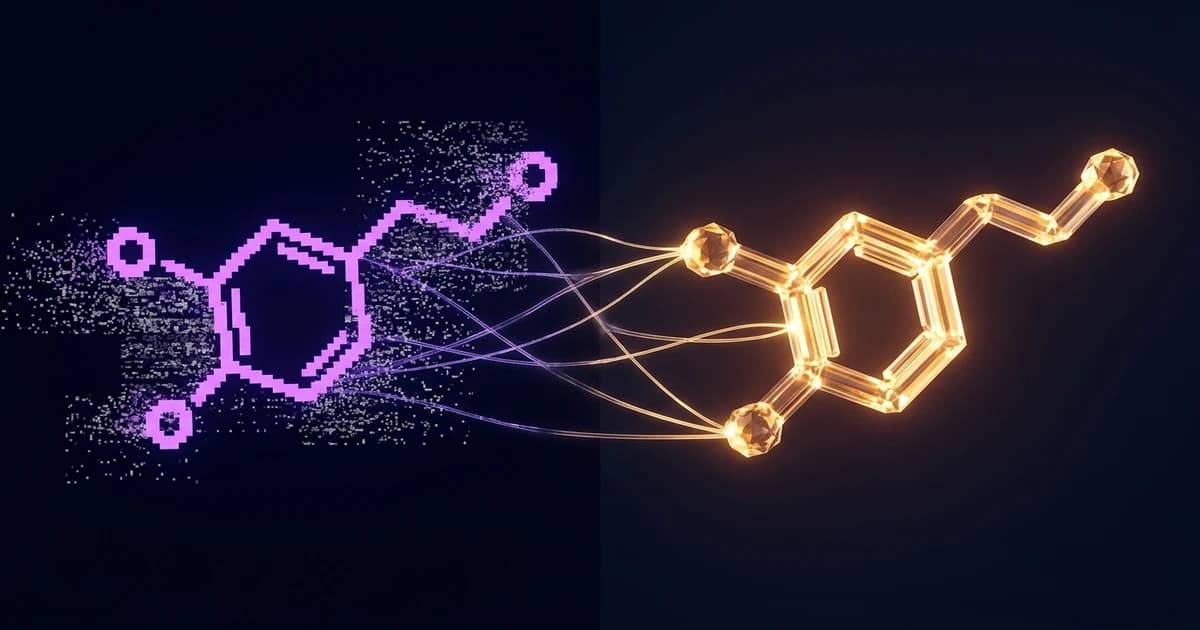
There is no cheap dopamine and no real dopamine. Your brain makes one molecule. What differs is the prediction: rewards that arrive unpredictably, cost nothing, and are always available train the wanting system fastest. That is why they feel compulsive without feeling especially good. The distinction people sense is real, but the axis is wrong. It is not about which activity is virtuous. It is about which schedule the reward arrives on.
Key Takeaways
- Dopamine drives wanting (the pull toward a thing), not liking (how good it feels). These come apart, which is why you can scroll for an hour without enjoying it.
- Dopamine neurons respond to outcomes better than predicted and go quiet once a reward is fully expected. Unpredictable rewards keep the signal firing.
- The useful sort is structural, not moral: how unpredictable is the payoff, how low is the effort cost, how constantly available is the source.
- Caffeine does not flood the brain with dopamine. Human PET data showed it raised D2/D3 receptor availability, a different finding entirely.
What Dopamine Actually Does: Wanting, Not Liking
Most "cheap dopamine" articles start with the same sentence: dopamine is the pleasure chemical. It is not. Dopamine is closer to the wanting chemical, and wanting and pleasure are not the same thing.
A 2007 review in Psychopharmacology by Kent Berridge weighed three competing explanations: hedonic "liking," learned prediction, and incentive salience, or "wanting." The conclusion: incentive salience fits more evidence than either alternative, and dopamine is neither necessary nor sufficient to produce hedonic "liking" for sensory pleasures.
The animal work makes the split concrete. Rats depleted of dopamine stop seeking food. They stop crossing a cage to get it. But when sugar is placed on their tongues, they still show normal liking reactions. The wanting disappeared. The pleasure did not. For a deeper look at how dopamine operates in the motivation system, this dissociation is the place to start.
Why This Explains the Scroll That Was Not Fun
You have had the experience. An hour of scrolling that was not enjoyable and was very hard to stop. You did not like it, but you did not stop wanting it. That is wanting and liking pulling in different directions.
This is the specific dissociation Berridge describes, running in a human evening. The pull is high. The payoff is low. You can recognize these patterns in yourself without needing a clinical label. The folk vocabulary calls this "cheap dopamine," and the intuition is half right: something about the reward delivery is making wanting outrun liking.
When people describe everything feeling like effort, they are describing the downstream version: a wanting system trained on fast, unpredictable rewards that struggles to generate pull for slow, predictable ones.
Prediction Error: The Mechanism That Sorts the List
The second half comes from Wolfram Schultz. In a 1997 paper in Science, Schultz, Dayan, and Montague showed that dopaminergic neurons in primates produce a signal tracking errors in reward prediction. Three parts:
- Better than predicted: the neurons fire.
- Worse than predicted: the neurons go quiet.
- Exactly as predicted: no response.
A reward you fully expect stops producing a dopamine signal. A reward you cannot predict keeps producing it. The system updates on surprise, not on pleasure.
A social media feed is unpredictable by design. Every refresh might produce something funny, enraging, or dull. The variability is the feature. A morning run is predictable: you know roughly how it will feel at minute 20 and minute 40. Prediction error is small. Wanting generated is small. That is a scheduling difference, not a moral one.
Three Properties That Actually Sort the List
Instead of sorting by how virtuous an activity sounds, sort by the three structural properties that prediction error research points to:
| Property | What it means | Why it matters |
|---|---|---|
| Unpredictability | Is the payoff variable from one instance to the next? | Variable rewards sustain prediction error. Fixed rewards extinguish it. |
| Effort cost | Does it take time, energy, or skill to access the reward? | Low-cost rewards can be repeated rapidly, compressing more prediction errors into less time. |
| Availability | Can you have it right now, always? | Constant availability removes natural pauses that would interrupt a wanting loop. |
An activity that scores high on all three will train wanting fastest. One that scores low on all three will not, regardless of how the internet categorizes it.
The List, Sorted by Schedule Instead of Virtue
| Activity | Unpredictable? | Low effort? | Always available? | What the schedule predicts |
|---|---|---|---|---|
| Social media feed | Yes | Yes | Yes | High wanting, sustained prediction error, easy to loop |
| Slot machine / loot box | Yes | Yes | Yes (when accessible) | Variable ratio, minimal cost per attempt |
| Competitive online gaming (ranked) | Yes | No (skill + time) | Mostly | Unpredictable, but effort cost slows repetition |
| Reading a novel | No (sequential) | No (sustained attention) | Yes | Low prediction error, wanting fades between sessions |
| Cooking a new recipe | Somewhat | No (prep, skill) | No (requires ingredients) | Mild variability, high friction, natural stopping point |
| Running | No | No | Mostly | Predictable payoff, effort is high, wanting slow to build |
| Reading with algorithmic recommendations | Yes | Yes | Yes | The "real dopamine" activity now scores like a cheap one |
| Gambling on a sports bet | Yes | Yes | Yes (on a phone) | A "real" interest delivered on a slot-machine schedule |
Two entries break the moral frame on purpose. Reading through an algorithmic recommendation engine scores identically to a social media feed. And competitive gaming, which cheap dopamine lists file under "junk," involves high effort and skill-dependent outcomes that slow the loop. The sort is about the delivery, not the activity.
The Caffeine Correction
Nearly every article in this space claims caffeine "floods your brain with dopamine." The human data says something different.
A 2015 PET study by Volkow and colleagues gave 300 mg of caffeine to healthy adults and measured striatal dopamine using [11C]raclopride, a tracer that competes with endogenous dopamine for D2/D3 receptors. Caffeine did not increase striatal dopamine release. It increased D2/D3 receptor availability in the putamen and ventral striatum (not the caudate), and the ventral striatum change correlated with alertness.
Receptor availability going up means more receptors were open for the tracer to bind, the opposite direction from a flood. The mechanism, attributed to Ferré and colleagues, involves adenosine A2A and dopamine D2 receptors forming heteromers: adenosine normally reduces dopamine's affinity at D2, and caffeine blocks A2A, removing that brake. For more, see the full explanation of the A2A-D2 receptor interaction.
Caffeine affects alertness. The specific claim that it floods your brain with dopamine is backwards.
Two Claims This Page Will Not Make
First: there is no measured "reset" timeline for a phone habit. The receptor-recovery numbers circulating online come from PET studies of people treated for stimulant dependence. Those numbers describe that population. No equivalent data exist for screen habits.
Second: the "dopamine baseline drains and refills" picture is a metaphor. Harvard Health noted in 2020 that dopamine is not a resource you drain and refill like a fuel tank. A 2025 analysis in Psychology Today catalogued related errors, including the claim that there is a fixed dopamine threshold. If a framework asks you to picture a tank with a fill line, it left the science behind.
Conclusion
The distinction between "cheap dopamine" and "real dopamine" is not about the molecule and not about which activities are virtuous. It is about the reward schedule: how unpredictable the payoff is, how little effort it costs, and how constantly available the source remains. Recognizing that makes the problem structural, and the adjustments structural too.
What to Do With This, Without a Detox
If the pull is coming from unpredictability, zero cost, and constant availability, then the lever is those three properties, not willpower and not a day count.
Add friction. A screen-time lock, moving an app off the home screen. Effort cost is a structural change, not a moral one.
Make the reward predictable. Checking a feed at set times removes the variable-ratio schedule. The content is the same; the delivery is not.
Make it unavailable for a window. A phone in another room during dinner is not a "dopamine detox." It is a pause in availability, and it works for a mechanical reason.
Changing the cue beats fighting the urge.
Frequently Asked Questions
Is cheap dopamine a real thing?
Not as a separate molecule. Your brain produces one kind of dopamine. The term describes a real pattern: rewards that are unpredictable, effortless, and always available train the wanting system faster than slow, predictable ones. The distinction is in the delivery schedule, not the chemical.
What is the difference between cheap dopamine and real dopamine?
The molecule is identical. What differs is the reward schedule. Activities people call "cheap dopamine" tend to be highly variable, require no effort, and are available at all times. Activities called "real dopamine" tend to be more predictable, require effort, and have natural stopping points.
What counts as cheap dopamine?
Any reward source that scores high on three properties: unpredictable payoff, near-zero effort cost, and constant availability. Social media feeds, loot boxes, and algorithmic recommendation engines all fit. So does any "healthy" activity delivered on the same schedule, like reading through an infinite-scroll algorithm.
Does caffeine give you cheap dopamine?
No. A 2015 PET study by Volkow and colleagues found that 300 mg of caffeine did not increase striatal dopamine release in healthy adults. It raised D2/D3 receptor availability, a different mechanism entirely. The claim that caffeine "floods your brain with dopamine" misreads the data.
Does a "dopamine detox" reset your receptors?
There is no measured timeline for receptor changes from screen habits. The recovery numbers circulating online come from PET studies of a different population entirely. Harvard Health has noted that dopamine is not a resource you drain and refill. Reducing compulsive behavior is a reasonable goal; framing it as a chemical reset is not supported by evidence.
How do I want the good things again?
Wanting responds to the schedule. If slow, predictable activities have stopped generating pull, the wanting system is likely calibrated to faster, more variable inputs. The adjustment is structural: add friction to the fast sources, add novelty to the slow ones. Not a 30-day challenge. A change in what is available and when.
It was never about which reward is virtuous. It was about which schedule it arrives on.
Same Molecule, Different Schedule, and the Caffeine Misread
The core argument above is that "cheap" versus "real" is not about the chemical but about the delivery schedule: unpredictable, effortless, and infinitely available versus structured, earned, and bounded. Caffeine fits neatly into the bounded category. Volkow's 2015 PET data showed 300 mg did not flood the striatum with dopamine at all; it raised D2/D3 receptor availability, a fundamentally different story than the one social media tells.
Roon delivers 80 mg caffeine, 60 mg L-theanine, 25 mg methylliberine (Dynamine), and 5 mg theacrine (TeaCrine) in a sublingual pouch. Zero sugar, zero nicotine. The schedule is deliberate by design: one pouch, 6 to 8 hours of sustained focus, then done. Dynamine slows caffeine's clearance. A randomized double-blind crossover PK study (n=12) using 150 mg caffeine and 100 mg methylliberine cut oral clearance from 41.9 to 17.1 L/hr and extended half-life from 7.2 to 15 hours without raising the peak. That study used roughly 4x the methylliberine and 1.9x the caffeine Roon contains, so the mechanism is directionally the same, not a direct extrapolation. The longer tail means you should stop at least 8 hours before bed.
Roon is not a substitute for restructuring the reward schedules that actually drive compulsive behavior. But if you are replacing an every-30-minute scroll break with a single, predictable input that serves focus for most of a workday, the schedule itself is the point. Pouches start at as little as $0.61 each. Try Roon for your next deep-work day.
Written by Roon Team