Brain Fog Joint Pain Fatigue: Why Am I So Tired
Roon Team
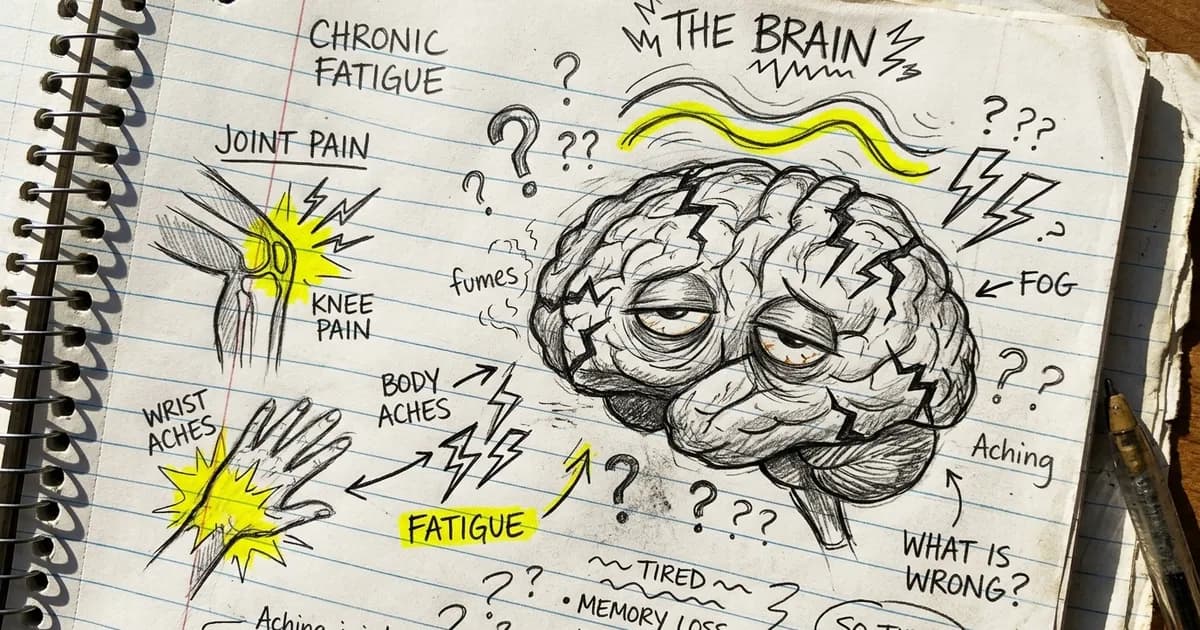
Brain Fog Joint Pain Fatigue: Why Am I So Tired and What's Actually Going On?
You're staring at your screen. The words blur. You had eight hours of sleep, but your skull feels packed with wet cotton. Your joints ache for no obvious reason, and the simplest decisions feel like calculus.
If you're dealing with brain fog definition and causes alongside joint pain and fatigue all at once, you're not lazy, and you're not imagining it. These three symptoms share a common biological thread, and understanding that thread is the first step toward fixing it.
Key Takeaways:
- Brain fog joint pain fatigue frequently show up together because they share a root cause: systemic inflammation.
- Conditions like autoimmune disease, chronic fatigue syndrome, poor sleep, and gut dysfunction can all trigger this cluster of symptoms.
- Inflammation disrupts dopamine signaling in the brain, directly impairing focus, motivation, and energy.
- Targeted nutritional support, including compounds like L-theanine and caffeine, can help restore cognitive clarity.
The Inflammation Connection: Why Brain Fog Joint Pain Fatigue Travel Together
These three symptoms rarely show up alone, and understanding brain fog symptoms and fixes helps clarify why. Brain fog joint pain fatigue commonly result from autoimmune conditions, fibromyalgia, chronic fatigue syndrome, hormonal imbalances, and viral illness, according to clinical reviews. That's not a coincidence. It's a pattern, and the pattern points to one mechanism: inflammation.
When your immune system stays activated for too long, it doesn't just attack your joints, and brain fog and head pressure is one common result. It floods your bloodstream with inflammatory cytokines, small signaling molecules that cross into your brain and disrupt normal function. Research from the Cleveland Clinic confirms that your immune system can cause neuroinflammation that temporarily blocks or slows your brain's ability to process information.
Think of it this way: your brain runs on precise chemical signaling. Inflammation is static on the line.
How Cytokines Hijack Your Brain Chemistry
The damage goes deeper than general "fogginess." Inflammatory cytokines directly interfere with dopamine, the neurotransmitter responsible for motivation, focus, and reward. Research published in Neuropsychopharmacology has shown that inflammation-driven drops in dopamine lead to measurable deficits in motivation and motor activity.
This explains why brain fog joint pain fatigue don't just make you forgetful. They make you not care. The motivation to push through a hard task evaporates. Simple work feels exhausting. That's not a character flaw. It's a neurochemical disruption.
A 2024 hypothesis paper from the Patient-Led Research Collaborative proposed that chronic inflammation can block dopamine receptors via striatal adenosine pathways, essentially putting the brakes on your brain's reward system. The result: brain fog joint pain fatigue that no amount of willpower can override.
The Six Most Common Causes of Brain Fog Joint Pain Fatigue
Not all brain fog is created equal. Here are the most frequent drivers behind these symptoms, ranked by how often they overlap with joint pain and physical fatigue.
1. Autoimmune Conditions
Autoimmune diseases like rheumatoid arthritis, lupus, and Hashimoto's thyroiditis are among the most common causes of brain fog joint pain fatigue appearing together. The American Brain Foundation lists fatigue, joint pain, and swelling as the most common symptoms across autoimmune conditions.
In lupus specifically, over 95% of patients report arthritis-related pain, with an additional 20% to 30% also developing fibromyalgia. Brain fog in these patients isn't secondary. It's a direct consequence of the same inflammatory cascade attacking the joints.
2. Fibromyalgia
Fibromyalgia deserves its own category because the cognitive symptoms are so pronounced. Duke Health reports that over 70% to 80% of fibromyalgia patients experience brain fog. The condition involves widespread pain, crushing fatigue, and a type of cognitive dysfunction so common it has its own name: "fibro fog."
3. Chronic Fatigue Syndrome (ME/CFS)
CDC data from 2021-2022 found that 1.3% of U.S. adults have ME/CFS, a condition defined by profound fatigue that doesn't improve with rest. The CDC's symptom profile describes patients feeling "stuck in a fog" with difficulty thinking clearly. Joint pain, headaches, and dizziness are all part of the clinical picture.
If you're experiencing brain fog joint pain fatigue together, and rest doesn't help, ME/CFS should be on your radar.
4. Post-Viral Inflammation (Long COVID and Beyond)
The COVID-19 pandemic put brain fog on the medical map. A study published in Nature Neuroscience in 2024 found evidence of blood-brain barrier disruption persisting up to a year after COVID-19 infection. When that barrier breaks down, inflammatory molecules that normally stay out of the brain get in.
Research from the University of Minnesota confirmed that COVID-19 triggers brain inflammation directly linked to cognitive fog and exhaustion. But this isn't exclusive to COVID. Epstein-Barr, influenza, and other viral infections can trigger the same post-viral inflammatory cycle, producing brain fog joint pain fatigue months after the initial illness.
5. Sleep Disruption
This one hides in plain sight. You "sleep" for seven or eight hours but wake up exhausted. A 2025 study published in Cureus examined sleep deprivation's impact on brain fog in young adults and found clear links between poor sleep quality and cognitive impairments including difficulty concentrating, memory problems, and reduced mental performance.
Chronic pain from joint inflammation makes deep sleep harder to achieve. Arthritis Research Canada notes that arthritis pain frequently disrupts sleep, creating a feedback loop: pain wrecks sleep, poor sleep worsens fog, fog increases stress, and stress amplifies pain.
6. Gut Dysfunction
Your gut and brain communicate constantly through the vagus nerve and shared chemical messengers. RedRiver Health and Wellness Center explains that gut inflammation, leaky gut, and even parasitic infections can trigger brain inflammation. If you're dealing with brain fog joint pain fatigue alongside digestive issues, the gut-brain connection is worth investigating.
Brain Fog Joint Pain Fatigue Causes: A Quick Comparison
| Condition | Brain Fog | Joint Pain | Fatigue | Distinguishing Feature |
|---|---|---|---|---|
| Autoimmune Disease | ✅ | ✅ | ✅ | Blood markers (ANA, RF, anti-CCP) |
| Fibromyalgia | ✅ | ✅ (widespread) | ✅ | Tender points, no blood markers |
| ME/CFS | ✅ | ✅ | ✅ (defining) | Post-exertional malaise |
| Long COVID | ✅ | Possible | ✅ | History of COVID infection |
| Sleep Disorders | ✅ | Indirect | ✅ | Unrefreshing sleep, daytime drowsiness |
| Gut Dysfunction | ✅ | Possible | ✅ | Digestive symptoms (bloating, IBS) |
What Actually Helps Brain Fog Joint Pain Fatigue: Practical Steps That Work
Rule Out the Big Stuff First
If brain fog joint pain fatigue are showing up together, see a doctor. Get bloodwork. A basic panel checking thyroid function (TSH, free T4), inflammatory markers (CRP, ESR), and autoimmune antibodies (ANA) can rule out or confirm conditions that need medical treatment.
This isn't optional. Hashimoto's thyroiditis alone affects millions of people and is frequently missed in standard checkups because its symptoms, including fatigue, brain fog, and joint stiffness, mimic so many other conditions.
Address Inflammation Directly
Once you've ruled out (or started treating) underlying conditions, reducing systemic inflammation becomes the priority:
- Sleep: Protect it aggressively. Seven to nine hours of quality sleep is non-negotiable for brain recovery.
- Movement: Low-impact exercise reduces inflammatory markers. Even 20 minutes of walking helps.
- Diet: Reduce processed sugar and refined carbohydrates, both of which spike inflammation. Prioritize omega-3 fatty acids, leafy greens, and fermented foods.
- Stress management: Chronic psychological stress elevates the same cytokines that cause brain fog joint pain fatigue. Meditation, breathwork, or even a consistent wind-down routine before bed can lower baseline inflammation.
Support Your Neurochemistry
Here's where targeted supplementation matters, and researching remedies for brain fog can help you prioritize what to try first. Your brain needs specific inputs to maintain clarity under stress, and the right compounds can support cognitive performance even when inflammation is working against you.
Caffeine paired with L-theanine is one of the most well-studied combinations for cognitive support. A systematic review published in Cureus found that the combination improved total cognition composite scores and performance on tasks requiring sustained attention. A separate study on PubMed showed that moderate levels of L-theanine and caffeine together improved accuracy during task switching, increased subjective alertness, and reduced self-reported tiredness.
The key is the pairing. Caffeine alone can increase anxiety and create jitters, especially if inflammation has already primed your nervous system. L-theanine smooths that response, promoting calm focus instead of wired agitation.
Adding theacrine and methylliberine extends the effect further. A randomized crossover study published in Cureus found that a combination of caffeine, theacrine, and methylliberine increased cognitive performance and reaction time without negatively affecting mood. Research on tactical personnel suggested that co-ingestion of these three compounds can sustain cognitive performance over a longer period compared to caffeine alone.
Clear the Fog
Brain fog joint pain fatigue are your body's alarm system. They're telling you that something, whether it's inflammation, an immune response, poor sleep, or gut dysfunction, needs attention. The worst thing you can do is ignore it. The second worst thing is to just throw more coffee at the problem and hope for the best.
If you've addressed the fundamentals and you're looking for a cleaner way to support daily mental clarity, Roon was built for exactly this. It combines 80 mg of caffeine with L-theanine, theacrine, and methylliberine in a zero-nicotine sublingual pouch, delivering 6 to 8 hours of sustained focus without the jitters, crash, or tolerance buildup that comes with most stimulants. No pills to swallow. No waiting 45 minutes for something to kick in.
Roon won't fix an autoimmune condition or cure chronic fatigue syndrome. But for the everyday brain fog joint pain fatigue that sits between you and your sharpest thinking, it's a precise, research-backed tool that works.