Brain Fog Blurry Vision: Why Your Eyes
Roon Team
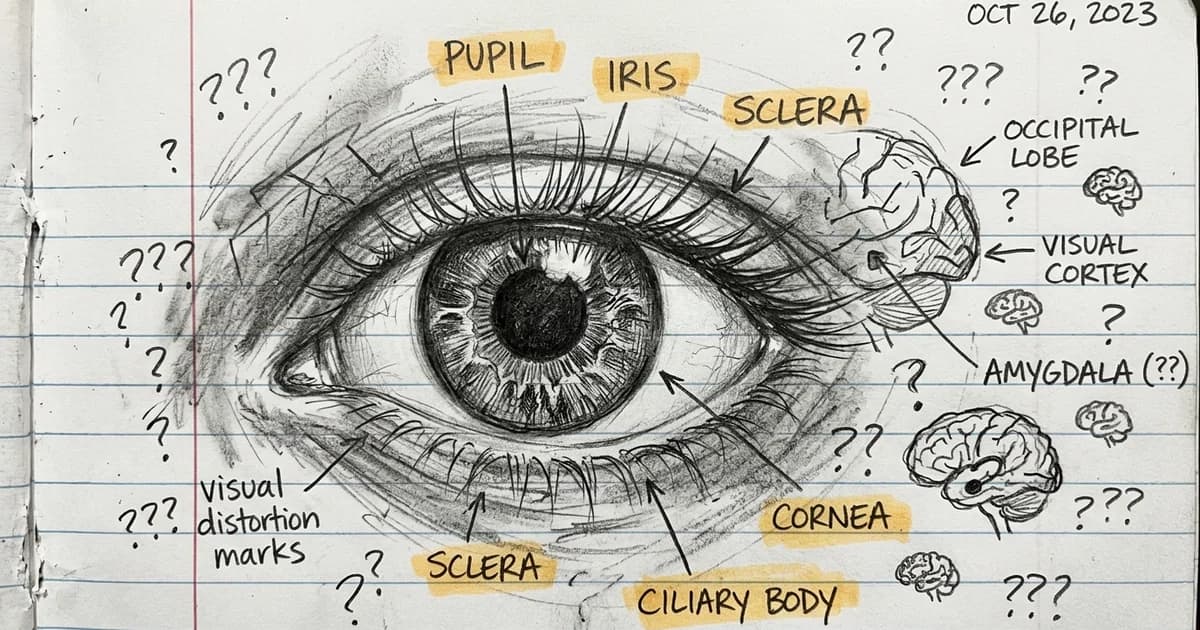
Brain Fog Blurry Vision: Why Your Eyes and Your Mind Are Failing Together
You're staring at your screen. The words blur. You re-read the same sentence three times and still can't absorb it. Your eyes feel heavy, your thoughts feel thick, and you're wondering if something is genuinely wrong with you.
Brain fog blurry vision is one of the most common co-occurring complaints doctors hear, yet most people treat these as two separate problems. They see an eye doctor for the blur. They blame stress for the fog. But the science tells a different story: your brain and your eyes share so much neural real estate that when one fails, the other almost always follows.
This guide breaks down exactly why brain fog blurry vision happens, what's going on in your brain when both strike, and what you can do about it.
Key Takeaways
- Brain fog blurry vision shares root causes like sleep deprivation, blood sugar instability, chronic stress, and neuroinflammation.
- Over 50% of your brain's cortex is dedicated to processing visual information, which explains why cognitive decline hits your vision first.
- Binocular vision problems like convergence insufficiency can directly cause brain fog blurry vision by overloading your brain's processing capacity.
- Targeted nutrients like L-Theanine combined with caffeine have been shown to improve both attention and visual reaction time.
Why Brain Fog Blurry Vision Happens at the Same Time
Your brain doesn't treat "thinking" and "seeing" as separate jobs. According to research from the University of Rochester, more than half of your brain's cortex is dedicated to processing visual stimuli. That means vision isn't just an eye function. It's a brain function. A very expensive one.
When your brain's resources get taxed (by poor sleep, chronic stress, inflammation, or nutrient deficiency) the systems that suffer first are the ones that demand the most energy. Vision processing sits right at the top of that list.
This is why brain fog blurry vision rarely shows up as just one symptom. When your prefrontal cortex is struggling to maintain focus and working memory, the visual cortex next door feels the squeeze too. The result: blurred sight, difficulty tracking text on a page, and that unsettling feeling that your eyes just "won't cooperate."
The Neuroscience Behind Brain Fog Blurry Vision
Your Brain Is Running a Visual Processing Bottleneck
Think of your brain's cognitive resources like bandwidth. Under normal conditions, your brain seamlessly allocates processing power between thinking, seeing, and coordinating movement. But when inflammation, fatigue, or metabolic stress enters the picture, that bandwidth shrinks.
A 2025 study published in PMC found that prolonged sleep loss impairs synaptic plasticity, disrupts memory consolidation, and increases neuroinflammation. All of these hit your visual processing system hard because it's the single largest consumer of cortical resources.
The practical effect? Your eyes physically work fine. Your retinas are capturing light. But your brain can't keep up with the incoming data. So the world looks blurry, even though your prescription hasn't changed. That disconnect is the hallmark of brain fog blurry vision.
Convergence Insufficiency: When Your Eyes Overload Your Brain
Here's a connection most people miss entirely. Binocular vision dysfunction, particularly convergence insufficiency (CI), can directly trigger brain fog blurry vision.
Convergence insufficiency is the inability of your eyes to work together properly when focusing on near objects, like a screen or a book. A study published in PMC found that students with CI showed higher interference effects on attentional tasks compared to those with normal binocular vision. The researchers concluded that vergence function is directly linked to attentional and cognitive performance.
In plain terms: when your eyes struggle to converge, your brain burns extra fuel trying to fuse two slightly misaligned images into one. That extra cognitive load leaves fewer resources for thinking, remembering, and concentrating. The result feels exactly like brain fog blurry vision, because it is.
The 7 Most Common Causes of Brain Fog Blurry Vision
Brain fog blurry vision rarely appears without a trigger, and the same brain fog causes and symptoms tend to show up across all of them. Here are the most well-documented causes, ranked by how often they co-occur.
1. Sleep Deprivation
This is the single most common cause. Research from PMC shows that inadequate sleep leads to increased neuroinflammation and oxidative stress, which impair both cognitive function and visual processing. Even one night of poor sleep measurably reduces your ability to focus your eyes and sustain attention.
2. Blood Sugar Instability
Your brain runs on glucose. When blood sugar spikes and crashes (from skipping meals, eating refined carbs, or insulin resistance), your brain loses its primary fuel source. Healthline reports that high blood sugar can damage blood vessels, resulting in poor circulation to the brain, which directly causes both foggy thinking and visual disturbances.
3. Chronic Stress and Cortisol
Prolonged stress keeps your body in a fight-or-flight state. Elevated cortisol levels constrict blood vessels, reduce blood flow to the brain, and impair the prefrontal cortex. Your visual system suffers because stress hormones affect pupil dilation, accommodation (the eye's ability to shift focus), and the brain's ability to process visual input cleanly.
4. Neuroinflammation
When your immune system triggers inflammation in the brain, the effects ripple across every cognitive function. The Cleveland Clinic lists autoimmune conditions like lupus, multiple sclerosis, and fibromyalgia as direct causes of brain fog blurry vision, all of which involve neuroinflammation that disrupts both thinking and sight.
5. Digital Eye Strain
A 2024 systematic review found that 74% of participants experienced computer vision syndrome symptoms. Prolonged screen use forces your eyes into a sustained near-focus position, fatigues the ciliary muscles, and reduces blink rate. The cognitive cost is real: your brain works harder to maintain focus on a glowing rectangle than on a printed page or a natural scene.
6. Dehydration
Your brain is roughly 75% water. Even mild dehydration (1-2% body weight loss) reduces cognitive performance and visual acuity. The mechanism is straightforward: less fluid means lower blood volume, which means less oxygen delivery to your brain and eyes.
7. Hormonal Changes
Fluctuations in estrogen, progesterone, and thyroid hormones can simultaneously affect neurotransmitter balance and tear film stability. This is why brain fog blurry vision is a common complaint during pregnancy, menopause, and thyroid dysfunction.
Brain Fog Blurry Vision: A Quick Diagnostic Comparison
| Symptom Pattern | Likely Primary Cause | Next Step |
|---|---|---|
| Fog + blur after screens | Digital eye strain / CI | 20-20-20 rule; eye exam for binocular vision |
| Fog + blur in the morning | Sleep deprivation | Sleep hygiene overhaul |
| Fog + blur after meals | Blood sugar instability | Track glucose; reduce refined carbs |
| Fog + blur during stress | Cortisol / autonomic dysfunction | Stress management; consider adaptogenic support |
| Fog + blur all day, every day | Neuroinflammation / systemic issue | See a doctor; blood work recommended |
What Actually Works for Brain Fog Blurry Vision
Fix the Foundations First
No supplement or trick can outrun bad sleep, chronic dehydration, or unmanaged stress, which is why knowing how to fix brain fog fast starts with these foundations. Start here:
- Sleep: 7-9 hours. Non-negotiable. Your glymphatic system (the brain's waste-clearance mechanism) only runs properly during deep sleep.
- Hydration: Half your body weight in ounces of water, minimum.
- Blood sugar stability: Eat protein and fat with every meal. Stop relying on caffeine and sugar to power through the afternoon.
- Screen breaks: The 20-20-20 rule works. Every 20 minutes, look at something 20 feet away for 20 seconds.
Get Your Eyes Properly Tested
A standard eye exam checks your prescription. It does not check binocular vision, convergence, or accommodative function. If you experience brain fog blurry vision regularly, ask for a functional vision evaluation. Convergence insufficiency is treatable with vision therapy, and the cognitive improvements can be dramatic.
Target Cognitive Performance Directly
Once the foundations are solid, specific nutrients can support your brain's ability to process information cleanly, including visual information.
L-Theanine is one of the most studied. A randomized placebo-controlled study from PMC found that L-Theanine improved attention, working memory, and executive function in middle-aged and older adults.
The combination of L-Theanine and caffeine is even more interesting. A study published in PubMed found that 97mg of L-Theanine combined with 40mg of caffeine improved accuracy during task switching and increased subjective alertness while reducing tiredness.
Theacrine and Methylliberine add another layer. A study published in Cureus found that a combination of caffeine, theacrine, and methylliberine increased cognitive performance and reaction time without interfering with mood.
When to See a Doctor About Brain Fog Blurry Vision
Brain fog blurry vision is usually caused by lifestyle factors. But sometimes these symptoms signal something more serious. See a doctor if:
- Symptoms persist for more than two weeks despite lifestyle changes.
- You experience sudden onset of blurry vision with confusion or headache.
- You have numbness, tingling, or weakness alongside the fog.
- Your vision changes are asymmetric (one eye worse than the other).
These can indicate conditions ranging from autoimmune disease to intracranial pressure changes that require medical evaluation.
Clear Eyes, Clear Mind
Brain fog blurry vision isn't two separate problems. These are two symptoms of the same underlying issue: a brain that's under-resourced, overstressed, or both. Fix the root causes (sleep, hydration, blood sugar, screen habits) and you'll notice both your thinking and your vision sharpen.
For the days when your foundations are solid but you still need sharper focus, the nutrient stack matters. That's exactly why Roon combines Caffeine (80mg), L-Theanine, Theacrine, and Methylliberine in a single sublingual pouch. It's the same combination shown in clinical research to support attention, reaction time, and sustained cognitive performance, delivered in a format that works in minutes without the jitters or crash of traditional stimulants.
Your brain and your eyes are the same system. Feed them accordingly.