5 Science-Backed Reasons This Biohacker Nootropic Pouch Is Replacing Energy Drinks
Roon Team
5 Science-Backed Reasons This Biohacker Nootropic Pouch Is Replacing Energy Drinks
You track your sleep with an Oura ring. You log every macro. You've tried lion's mane, racetams, and at least two versions of Alpha Brain. So why are you still slamming a 200mg caffeine energy drink every afternoon and pretending that's optimized?
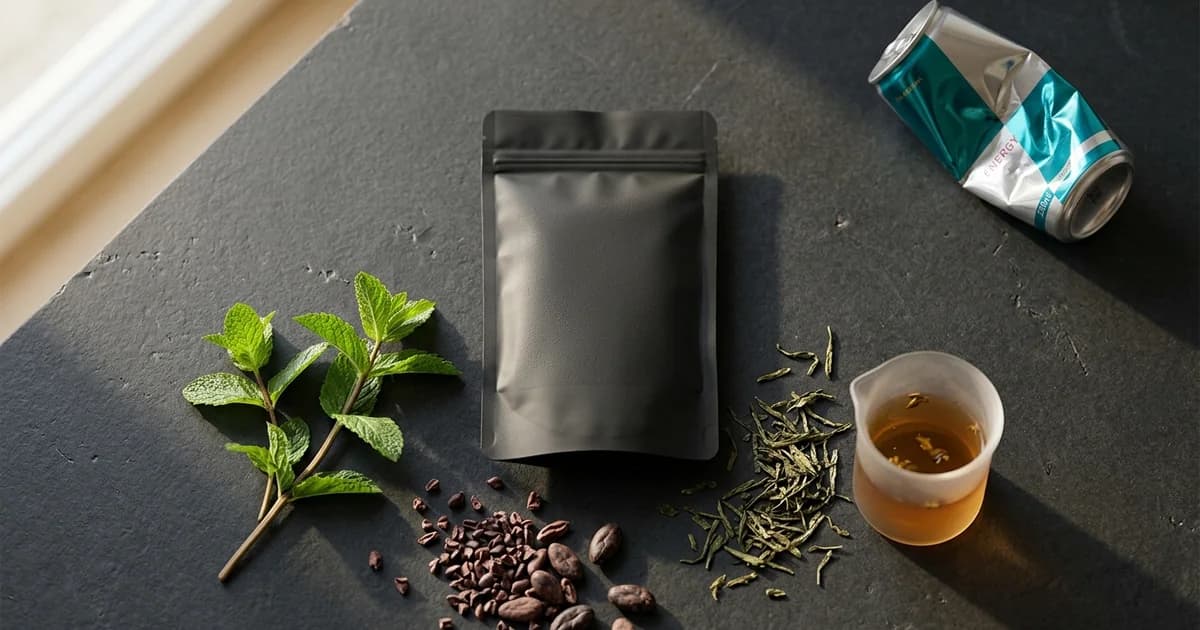
The biohacker nootropic pouch category barely existed two years ago. Now it's one of the fastest-growing segments in cognitive performance, with the nootropic pouch market exploding in 2025-2026 as former nicotine pouch users, quantified-self enthusiasts, and focus-obsessed professionals look for something that actually holds up to measurement. The shift makes sense. Energy drinks give you a caffeine spike, a sugar crash (or a chemical sweetener aftertaste), and zero transparency about what's really doing the cognitive work. A well-formulated nootropic pouch delivers targeted compounds through sublingual absorption, hits faster, and can be dosed precisely without chugging 16 ounces of liquid.
But "well-formulated" is doing a lot of heavy lifting in that sentence. Most products in this space are caffeine delivery systems with a nootropic label. Here are five reasons one specific pouch, Roon, is pulling biohackers away from their energy drink habit.
Key Takeaways:
- Roon is one of the only nootropic products that publishes finished-product cognitive battery data from its own testing, not just ingredient-level citations.
- The four-ingredient stack (caffeine, L-theanine, methylliberine, theacrine) has peer-reviewed support for improving reaction time and cognitive performance without affecting mood or heart rate.
- Sublingual delivery bypasses first-pass metabolism, meaning faster onset and higher bioavailability than capsules or drinks.
- At four clean ingredients with full dose transparency, Roon avoids the proprietary-blend problem plaguing most nootropic supplements.
1. Cognitive Battery Testing on the Actual Product (Not Just Individual Ingredients)
Here's the dirty secret of the nootropic industry: almost nobody tests their finished product. They cite studies on individual ingredients, often at doses that don't match what's in the bottle, and call it "science-backed." That's like citing a study on flour, eggs, and sugar and claiming your cake is clinically validated.
Roon took a different approach. Their Roon study tested six different nootropic stacks head-to-head against placebo using a cognitive battery that measured sustained attention, processing speed, precision, and cognitive control. The results were specific: their formula (Roon) achieved the highest processing speed (p=0.01) and the highest cognitive control score among all interventions tested. Placebo, meanwhile, showed degraded attention over the testing session, confirming what anyone who's tried to power through a long afternoon already knows: your brain declines without support.
This is what separates a cognitive battery tested nootropic from the rest of the field. Not ingredient citations. Finished-product data on real humans.
Best for: Quantified-self users who demand data before they trust a product.
2. Sustained Attention Without Tolerance Buildup
The tolerance problem is caffeine's original sin. You start with one cup. Then two. Then a double espresso barely registers. Biohackers know this cycle well, and it's the reason many rotate stimulants or cycle off caffeine entirely.
Roon's formula addresses this directly with theacrine (TeaCrine) and methylliberine (Dynamine). A study on theacrine supplementation found no tolerance development even after eight weeks of daily use. That's not a small finding. It means the compound keeps working at the same dose, day after day, without the escalation curve that makes caffeine a diminishing-returns game.
The combination matters too. A randomized crossover study published in Cureus found that caffeine combined with TeaCrine and Dynamine improved cognitive performance and reaction time in 50 male e-gamers without increasing anxiety or headaches. The combination outperformed caffeine alone.
In Roon's own testing, their formula achieved perfect sustained attention (100%), with complete elimination of attention failures, a statistically significant result (p<0.01). Placebo showed degraded attention over the same period.
Typical dose: 5 mg theacrine (from 40% TeaCrine standardized material) + 25 mg methylliberine (Dynamine) per Roon pouch.
3. Sublingual Delivery Beats Your Energy Drink's Absorption Rate
You drink a can of Monster or Celsius. It hits your stomach, passes through your digestive tract, gets processed by your liver (first-pass metabolism), and eventually some fraction of the active compounds reaches your bloodstream. That process takes 30-45 minutes for peak effect.
Sublingual absorption skips most of that. Compounds placed under the lip pass directly through the oral mucosa into the bloodstream. A 2024 meta-analysis from the Journal of Nutritional Neuroscience reported that sublingual nutrient delivery may increase bioavailability by up to 50% compared to capsule formats. Research on caffeine delivered via buccal absorption found the rate of absorption was faster than capsule delivery, with the gum and capsule formulations providing near-equivalent total bioavailability for 100mg and 200mg doses.
For biohackers, this isn't academic. Faster onset means tighter control over your cognitive state. You can dose precisely before a deep work block, a competition, or an exam, and feel the effect within minutes rather than waiting half an hour and hoping the timing works out.
Best for: Anyone who needs predictable, fast-acting cognitive support on a schedule.
4. Four Clean Ingredients, Zero Proprietary Blends
Open any Qualia Mind bottle and you'll find 27 ingredients at nearly $8 per serving at full price. Alpha Brain uses three proprietary blends, meaning you have no idea how much of each ingredient you're actually getting. Thesis sells six different formulations and asks you to experiment across all of them.
Roon's approach is the opposite: four active ingredients, every dose listed on the label.
- Caffeine: 80 mg (less than a standard cup of coffee)
- L-Theanine: 60 mg (the compound that smooths caffeine's stimulation)
- Methylliberine (Dynamine): 25 mg (fast-acting mood and motivation support)
- Theacrine (TeaCrine): 5 mg (from material standardized to 40% TeaCrine, for sustained duration without tolerance)
Each ingredient has a specific job. Caffeine and L-theanine are one of the most-studied nootropic combinations in the literature, with research showing improvements in attention, task-switching accuracy, and target discriminability. A 2025 study in elite wrestlers confirmed that combining caffeine with L-theanine produced superior cognitive results compared to either supplement alone. Methylliberine adds a rapid-onset mood and motivation boost within one hour that lasts approximately three hours. Theacrine extends the duration curve and prevents tolerance.
No filler. No proprietary blends. No 14-ingredient label designed to look impressive while hiding sub-clinical doses.
Best for: Biohackers who want full ingredient transparency and clinically relevant dosing.
5. Under $1 Per Dose (While Premium Nootropics Charge $6+)
Cost-per-dose is the metric that separates sustainable daily protocols from expensive experiments. Here's how the biohacker energy drink alternative market breaks down:
| Product | Format | Key Ingredients | Approx. Cost Per Serving | Ingredient Transparency |
|---|---|---|---|---|
| Roon | Sublingual pouch | Caffeine, L-Theanine, Dynamine, TeaCrine | ~$1.00/pouch, ~$0.61 subscribed | Full dose disclosure |
| Qualia Mind | 7 capsules | 27 ingredients | ~$6-8/serving | Open formula |
| Alpha Brain | 2 capsules | 3 proprietary blends | ~$2.25/serving | Proprietary blends |
| Thesis | 4 capsules | 6 different formulas | ~$3/serving | Open formula |
| Ultra Pouches | Pouch | Paraxanthine, L-Theanine, Alpha GPC | ~$1.07/pouch, ~$0.69 subscribed | No doses published |
| Cyclone Pods Focus | Pouch | Ashwagandha, Lion's Mane, Guarana (50 mg caffeine) | ~$0.50/pouch | Caffeine dose only |
| Monster/Celsius | 16 oz can (Monster), 12 fl oz can (Celsius) | Caffeine, B-vitamins, taurine | ~$2-3/can | Celsius lists MetaPlus as a proprietary blend |
Qualia Mind runs $39 for your first bottle, then $139/bottle after that, which works out to over $6 per serving for a 22-serving bottle. Alpha Brain Black Label costs roughly $2.25 per two-capsule serving. Ultra Pouches run about $1.07 per pouch one-time, or about $0.69 at the deepest subscription tier, and the company recommends 3-4 pouches per day for sustained benefit since each pouch lasts only 1-2 hours.
Roon comes in at roughly $1.00 per pouch, or about $0.61 on subscription, with each pouch designed for 6 to 8 hours of sustained focus from a single dose. When you factor in duration per dollar, the math gets even more favorable.
How to Build a Biohacking Focus Pouch Into Your Protocol
If you're used to tracking inputs and outputs, here's a practical framework:
- Baseline first. Run a cognitive test (dual n-back, Cambridge Brain Sciences, or similar) without any stimulant. Record your scores.
- Single-variable testing. Use one Roon pouch 15 minutes before your next test session. Same test, same time of day, same sleep conditions. Compare.
- Track duration. Note when the effect peaks and when it fades. Roon is designed for sustained performance across hours, not a 45-minute spike.
- Monitor tolerance. Repeat daily for two weeks. If your scores hold steady without needing to increase the dose, you've confirmed the no-tolerance claim for yourself.
This is the biohacker's standard: measure, compare, verify. Any product that can't survive that process isn't worth your money.
The Bottom Line: Test It Like a Biohacker
Most nootropics ask you to trust their marketing. Roon publishes finished-product cognitive battery data, the standard biohackers actually demand. Four ingredients, full dose transparency, sublingual delivery, and peer-reviewed research supporting the combination.
If you've been cycling through energy drinks, capsule stacks, and overpriced proprietary blends looking for something that holds up to real measurement, Roon is worth putting through your own protocol. Run the numbers. Track the data. Give it a try and let your cognitive battery do the talking.