Best Natural Caffeine Alternatives for Energy
Roon Team
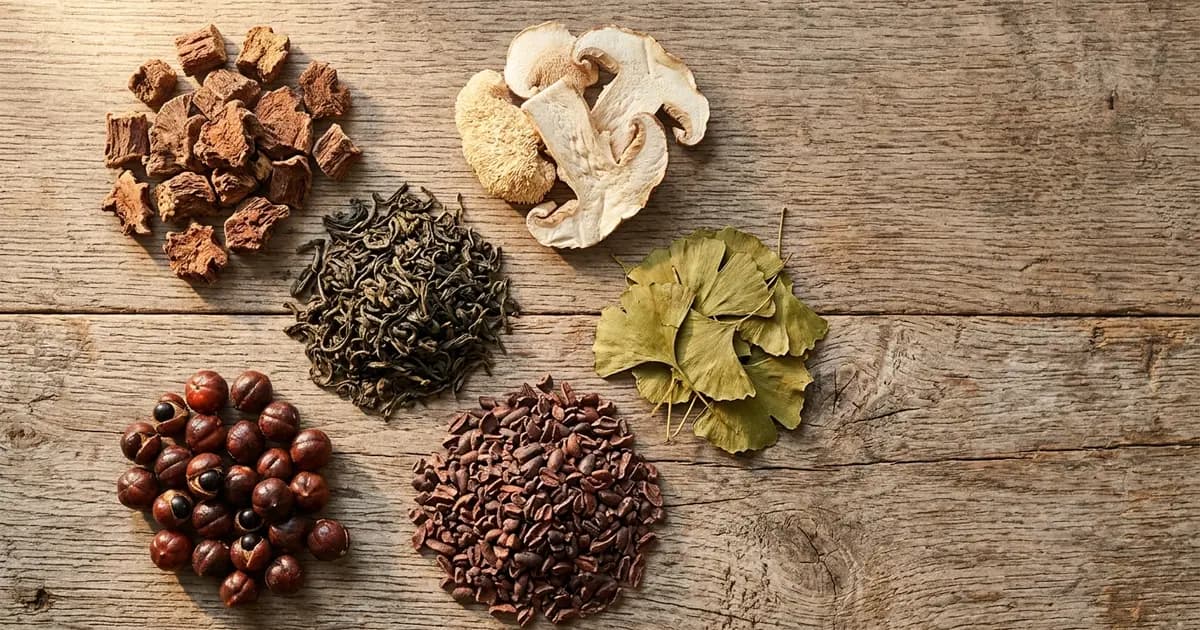
Best Natural Caffeine Alternatives for Energy (That Actually Work)
You drink coffee to focus. Then you drink more coffee because the first cup stopped working. Then you're four cups deep, your hands are shaking, and you still can't concentrate on the spreadsheet in front of you.
Sound familiar? If you're looking for a real caffeine alternative, you're not alone. According to a 2024 IFIC survey, 88% of Americans consume caffeine, and most do it daily. But a growing number of those people are realizing that their relationship with caffeine has become less "productive boost" and more "desperate dependency."
This guide breaks down the best natural caffeine alternative options for energy, how they work in your brain, and which ones are worth your money.
Key Takeaways:
- Caffeine tolerance can develop in as few as 3 days of regular use, forcing you to consume more for the same effect.
- Compounds like L-Theanine, theacrine, and methylliberine offer sustained energy and focus without the jitter-crash cycle.
- The most effective caffeine alternative compounds work on different (or overlapping) brain pathways than caffeine alone.
- Stacking specific compounds together often outperforms any single ingredient.
Why You're Searching for a Caffeine Alternative in the First Place
Caffeine works by blocking adenosine receptors in your brain. Adenosine is the molecule that makes you feel sleepy, so blocking it keeps you alert. Simple enough.
The problem is your brain adapts. Fast.
Research published in PMC suggests that habituation to caffeine's performance benefits can occur in as few as 2 to 28 consecutive days of use. Your brain literally grows more adenosine receptors to compensate for the ones caffeine is blocking. So you need more caffeine to get the same effect. And when you skip a day, all those extra receptors flood with adenosine at once, which is why caffeine withdrawal feels like your skull is being squeezed in a vise.
According to Healthline, you can develop caffeine dependence from doses as low as 100 mg per day, roughly one standard cup of coffee, in as few as 3 days.
Then there's the anxiety issue. A 2024 meta-analysis published in Frontiers in Psychology examined the relationship between caffeine intake and anxiety risk. For anyone already prone to anxious thoughts, high caffeine intake can make things worse.
The jitters. The crash. The tolerance. The anxiety. These aren't side effects of misuse. They're features of how caffeine works in your body over time. That's why finding a reliable caffeine alternative matters.
The Best Natural Caffeine Alternative Compounds for Energy and Focus
Not every caffeine alternative is created equal, and natural focus enhancers by effect size tell a very different story than Instagram influencers do. Here's what the science actually says.
L-Theanine: The Calm Focus Compound
L-Theanine is an amino acid found naturally in green tea and black tea. It promotes alpha brain wave activity, the same pattern your brain produces during states of relaxed concentration.
On its own, L-Theanine is a solid caffeine alternative. But paired with a low dose of caffeine, it becomes something different entirely.
A study on PubMed tested a combination of 97 mg of L-Theanine with just 40 mg of caffeine (less than half a cup of coffee) in 44 young adults. The result: improved cognitive performance and increased subjective alertness compared to placebo. The L-Theanine smoothed out caffeine's rough edges, delivering focus without the spike-and-crash pattern.
A 2025 double-blind crossover study published in PMC confirmed that the L-Theanine and caffeine combination improved selective attention even in sleep-deprived subjects. That's not a marginal benefit. That's the compound working under the worst possible conditions.
For people exploring a caffeine alternative for ADHD support, L-Theanine is particularly interesting. A systematic review on PMC noted that L-Theanine is known for enhancing cognitive function, particularly attention, which is the exact domain that ADHD disrupts. (To be clear: L-Theanine is not a treatment for ADHD. But it may support focus in people who struggle with attention.)
Theacrine: Caffeine's Longer-Lasting Cousin
Theacrine is a purine alkaloid found in kucha tea leaves. Structurally, it's similar to caffeine. Functionally, this caffeine alternative is different in the ways that matter most.
A 2024 study in Scientific Reports found that theacrine at doses of 100 or 400 mg produced objective indicators of improved cognitive performance. The researchers observed these effects the morning after consumption, suggesting a longer duration of action than caffeine.
But here's the real selling point: theacrine appears to resist tolerance buildup. According to Compound Solutions, theacrine delivers energy, focus, and improved mood without the habituation associated with caffeine. A review on The Optimizing Blog summarizes the key differences:
| Feature | Caffeine | Theacrine |
|---|---|---|
| Onset speed | Fast (15-30 min) | Moderate (30-60 min) |
| Duration | 3-5 hours | 4-6+ hours |
| Tolerance buildup | Rapid (days) | Minimal to none |
| Jitters/crash | Common at higher doses | Rare |
| Withdrawal symptoms | Yes | Minimal |
If caffeine is a sprint, theacrine is a half-marathon at a comfortable pace.
Methylliberine: The Fast-Acting Caffeine Alternative Amplifier
Methylliberine (also known by the trade name Dynamine) is another purine alkaloid, structurally related to both caffeine and theacrine. This caffeine alternative kicks in faster than theacrine and is often used to provide an immediate sense of alertness.
A 2023 study published in MDPI Nutrients found that methylliberine improved various indices of mood and affect in healthy men and women, without negatively impacting heart rate or blood pressure. The researchers also noted no adverse effects on vital signs, respiratory rate, or body temperature.
What makes methylliberine especially useful is how it interacts with caffeine. According to Nootropics Depot, clinical data suggests that methylliberine can extend caffeine's half-life by roughly two-fold. That means you can use less caffeine and still get a longer-lasting effect.
Rhodiola Rosea: The Anti-Fatigue Caffeine Alternative
Rhodiola rosea is an adaptogenic herb that's been used for centuries in Scandinavian and Russian traditional medicine. Modern research is catching up to the folklore.
A 2025 randomized crossover trial published in PMC found that seven days of Rhodiola rosea supplementation (200 to 1,500 mg/day) produced dose-dependent improvements in resistance exercise performance and significant nootropic effects on cognitive function in athletes.
A clinical review in SAGE Journals described Rhodiola's ergogenic effects as including reduction in fatigue, decreased muscle damage, and modulation of energy substrate utilization. As an adaptogen, it may also enhance physiological resistance to stress.
Rhodiola works differently from stimulants. Instead of forcing your brain to ignore fatigue signals, this caffeine alternative helps your body manage the underlying stress response. Think of it as improving your engine's efficiency rather than just pressing harder on the gas pedal.
Matcha: The Original Natural Caffeine Alternative
Matcha deserves a mention because it's essentially nature's own caffeine-and-L-Theanine stack. A single serving contains roughly 30-70 mg of caffeine alongside a meaningful dose of L-Theanine.
According to OSF Healthcare, matcha provides L-Theanine that promotes calmness while its antioxidant profile supports brain and heart health.
The limitation? Dosing is imprecise. Every cup of matcha delivers a different ratio of caffeine to L-Theanine depending on the grade, preparation method, and water temperature. You're getting the right idea with matcha, but not the right precision.
Why Single-Ingredient Caffeine Alternative Supplements Fall Short (And Stacking Works Better)
Here's what most caffeine alternative articles won't tell you: no single compound perfectly replaces caffeine. Each one addresses a piece of the puzzle.
L-Theanine gives you calm focus but not much raw energy. Theacrine gives you sustained energy without tolerance, but the onset is slower. Methylliberine kicks in fast but doesn't last as long on its own. Rhodiola manages fatigue over days and weeks, not minutes.
The real answer isn't picking one caffeine alternative. It's combining them.
A 2025 systematic review on MDPI examining supplements for attention and focus support confirmed that multi-ingredient approaches show the most consistent results across studies. Single-ingredient trials often produce mixed findings; stacked formulations tend to perform more reliably.
This is why the most effective natural caffeine alternative products aren't individual supplements. They're carefully dosed combinations where each ingredient covers the gaps left by the others.
What to Look for in a Caffeine Alternative for Energy
Before you buy anything, here's a quick checklist:
- Transparent dosing: The label should tell you exactly how much of each ingredient you're getting. Proprietary blends that hide behind "energy matrix: 500mg" are a red flag.
- Clinical doses: The amounts should match what was used in actual studies, not just a token sprinkle.
- Smart caffeine, high support: The best formulations use a moderate caffeine base (around 80 mg, comparable to a cup of coffee), then smooth and extend it with complementary compounds like L-theanine, theacrine, and methylliberine for 6-8 hours of sustained focus without the crash.
- No tolerance trap: If the product relies on high-dose caffeine with fancy branding, you'll be right back where you started in two weeks.
A Smarter Caffeine Alternative for Staying Focused
If you've read this far, you're probably done with the cycle: more coffee, more tolerance, more coffee, worse sleep, even more coffee.
The science points clearly toward multi-compound formulations that use low-dose caffeine alongside ingredients like L-Theanine, theacrine, and methylliberine. That combination delivers sustained focus for 6-8 hours, smooths out the energy curve, and sidesteps the tolerance problem that makes caffeine alone a losing game over time.
That's exactly what Roon is built on. Roon is a zero-nicotine sublingual pouch containing 80 mg of caffeine, L-Theanine, theacrine, and methylliberine, the same ingredients and dose ranges discussed throughout this article. No pills to swallow, no drinks to brew. You place it under your lip, and the active compounds absorb directly through the mucosa for a faster, cleaner onset.
Roon is not a magic solution. It's applied biochemistry in a format that fits in your pocket. If you're ready to stop chasing diminishing returns from your fourth cup of coffee, give it a look.