7 Reasons College Students Are Ditching Energy Drinks for Nicotine-Free Focus Pouches
Roon Team
7 Reasons College Students Are Ditching Energy Drinks for Nicotine-Free Focus Pouches
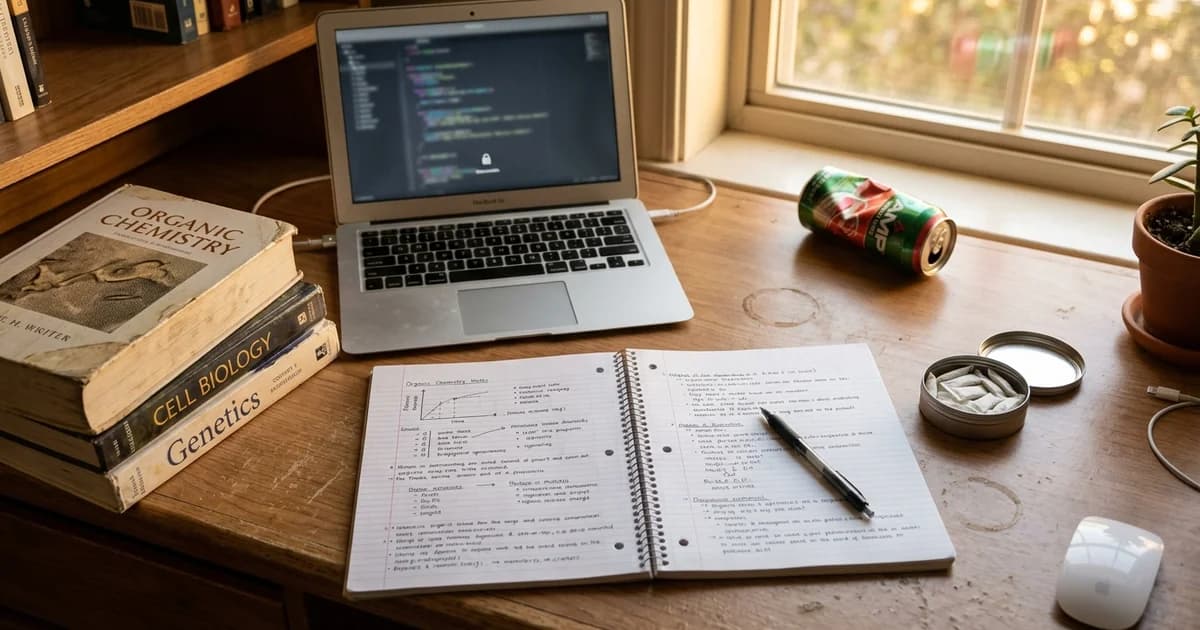
You're three hours into a library session, your second Red Bull is wearing off, and the jitters are setting in right as your organic chemistry notes start blurring together. Sound familiar? According to a 2025 survey from Grand Canyon University, 39% of college students have experienced crashes or jitters from overdoing caffeine. If you're searching for the best focus pouch for college students, you're not alone. A growing number of undergrads are swapping cans and cups for something smaller, faster, and designed to last an entire study session.
The shift makes sense. Energy drinks dump 150–300 mg of caffeine and 40+ grams of sugar into your system all at once, then leave you worse off two hours later. As a college student energy drink alternative, focus pouches take a different approach: targeted doses of nootropic compounds, absorbed through oral tissue, engineered for sustained cognitive performance instead of a short spike.
Here are seven reasons this swap is happening on campuses everywhere.
Key Takeaways:
- Focus pouches deliver caffeine and nootropic compounds through sublingual absorption, hitting your bloodstream in 5–10 minutes without the sugar or crash of energy drinks.
- The caffeine + L-theanine combination has strong clinical backing for improving attention while reducing jitteriness.
- Theacrine (TeaCrine™) shows no tolerance buildup even after weeks of daily use, which means your Monday pouch works as well as your Friday pouch.
- At a fraction of the cost of daily iced coffees or energy drinks, pouches rank among the most budget-friendly non-prescription study aid options available.
1. Zero Nicotine, Zero Sugar, Zero Crash
Most energy drinks are built on a simple formula: massive caffeine, massive sugar, and hope for the best. A single 12-ounce Monster contains 41 grams of sugar. That's more than the American Heart Association's recommended daily limit in one can.
The result? A blood sugar spike followed by an insulin-driven crash that leaves you groggier than before you cracked the can open. A systematic review in PMC found that jitteriness and "jolt and crash" episodes were among the most common side effects reported by energy drink consumers.
Nicotine-free focus pouches skip all of this. No sugar, no nicotine, no tobacco. Just targeted nootropic ingredients absorbed through your gums. You get the focus without the metabolic rollercoaster.
Best for: Students who want clean energy without sugar crashes or nicotine dependence.
2. Sublingual Delivery Hits in 5–10 Minutes
Coffee takes 30–45 minutes to fully absorb through your digestive system. Caffeine pills are similar. By the time that pre-study espresso kicks in, you've already lost half your focus window.
Focus pouches use sublingual (under-the-lip) absorption, a delivery method used in pharmacology for decades. The caffeine and other active compounds pass directly through the capillary-rich mucous membrane in your mouth and enter your bloodstream without going through your stomach or liver first. This bypasses what pharmacologists call "first-pass metabolism," which is why buccal caffeine delivery produces effects in roughly 5–10 minutes compared to 20–60 minutes for swallowed caffeine.
For a college student who just sat down at the library and needs to lock in, that speed difference matters.
Typical onset: 5–10 minutes via sublingual absorption vs. 30–45 minutes for coffee or pills.
3. The Caffeine + L-Theanine Stack Actually Has Science Behind It
This is the pairing that separates a focus pouch from a caffeine pill. L-theanine is an amino acid found naturally in tea leaves, and when combined with caffeine, it produces a distinct cognitive profile: alert but calm, focused but not wired.
A 2021 systematic review published in Cureus examined clinical trials on the caffeine and L-theanine combination and found improvements in total cognition composite scores, Go/NoGo task performance, and decreased activity in the brain's default mode network, the region associated with mind-wandering and distractibility.
Put simply: caffeine alone makes you alert. Caffeine plus L-theanine makes you alert and able to direct that alertness where it counts. That's why this combination shows up in natural focus enhancers for students who need sustained attention, not just a temporary jolt.
A 2023 crossover study in elite athletes confirmed that the caffeine + L-theanine combination improved attentional switching and accuracy of visual and auditory attention compared to either compound alone.
Typical dose in focus pouches: 50–80 mg caffeine paired with 50–100 mg L-theanine.
4. Theacrine and Dynamine Extend the Window Without Tolerance Buildup
Here's the problem with caffeine on its own: your body adapts. That first cup of coffee freshman year felt electric. By junior year, you need two cups just to feel normal. This is called pharmacodynamic tolerance, and it's well-documented.
Theacrine (sold as TeaCrine™) is a purine alkaloid structurally similar to caffeine, but with one critical difference. A randomized open-label study found that theacrine did not appear to induce pharmacodynamic tolerance with chronic use. An 8-week human study at 300 mg daily showed no habituation effects. Your body doesn't adapt to it the way it adapts to caffeine.
Methylliberine (Dynamine™) works on a faster timeline. According to Compound Solutions, Dynamine's onset is faster than caffeine while TeaCrine's is slower, so combining all three creates a layered effect: quick onset, sustained middle, extended tail.
A randomized crossover study in Cureus tested the caffeine + TeaCrine + Dynamine combination in young male e-gamers and found it improved performance on the Flanker Test of Inhibitory Control and reaction time on the Psychomotor Vigilance Task, without increasing self-reported anxiety.
Best for: Students who use caffeine daily and have noticed it working less over time.
5. One Pouch Covers a Full Library Session
The average study session for a college student runs 2–4 hours. A Red Bull gives you maybe 90 minutes before the decline starts. Coffee is similar, with most people reporting peak alertness for about 1–2 hours before the tail-off begins.
Focus pouches built on the caffeine + L-theanine + theacrine + methylliberine stack are designed for longer windows. Roon's product page describes their formula as providing sustained focus without jitters, crashes, or tolerance buildup. The combination of faster-acting (methylliberine) and slower-acting (theacrine) OTC nootropic pouch ingredients alongside caffeine and L-theanine creates a layered duration profile that a single-ingredient energy drink can't match.
That means one pouch before you open your laptop, and you're covered through the session. No second can, no refill trip to the campus Starbucks, no sugar crash at the two-hour mark.
Best for: Long study sessions, exam prep, and writing papers that require sustained concentration.
6. The Best Focus Pouch for College Students Costs Less Than Your Daily Coffee Habit
Let's do the math. A grande iced coffee at Starbucks runs about $4–$5 depending on location. A Red Bull 8.4 oz can costs roughly $2.99 at most retailers. If you're buying one of each per day (and plenty of students do), that's $7–$8 daily, or $210–$240 per month.
Roon starts at $15.00 per tin for a one-time 4-tin bundle, or as low as $9.16 per tin on subscription. Even at one pouch per day, that's a fraction of what most students spend on energy drinks and coffee combined. And because the formula is designed for sustained duration, most students won't need more than one per session.
| Daily Iced Coffee | Red Bull (8.4 oz) | Roon Focus Pouch | |
|---|---|---|---|
| Caffeine per serving | ~95 mg | 80 mg | 80 mg |
| L-Theanine | None | None | 60 mg |
| Theacrine + Methylliberine | None | None | 5 mg + 25 mg |
| Sugar | 0–30 g (varies) | 27 g | 0 g |
| Nicotine | None | None | None |
| Approximate cost | $4–$5 | $2.99 | ~$1.00/pouch, ~$0.61 subscribed |
| Duration of effect | 1–2 hours | 1–2 hours | Sustained (multi-hour) |
| Format | Liquid (16 oz cup) | Liquid (8.4 oz can) | Sublingual pouch |
The pouch wins on cost per hour of focus. It's not close.
7. Discreet Enough for Lectures, Libraries, and Exams
You can't crack open a Red Bull in a quiet library without turning heads. You can't sip an iced coffee during a closed-book exam. And if your professor has a no-food-or-drink policy in the lecture hall, your caffeine options just went to zero.
A focus pouch sits under your lip. No sound, no smell, no liquid, no container. Nobody knows it's there. This is the same form factor that made nicotine pouches popular on college campuses, except without the nicotine, the addiction risk, or the cardiovascular downsides.
For students juggling back-to-back classes, exam blocks, and library sessions where beverages aren't allowed near the rare book collection, the discreet format is a practical advantage that drinks simply can't match.
Best for: Exam day, quiet study spaces, lectures, and any situation where pulling out a drink isn't an option.
How to Get Started With Focus Pouches
If you've never used a focus pouch before, here's the short version:
- Place the pouch under your upper lip, between your gum and lip. It sits comfortably and stays put.
- Leave it in for 20–30 minutes. The active ingredients absorb through your oral tissue. You'll feel the effects within 5–10 minutes.
- Start with one pouch per session. Assess how your body responds before adding a second later in the day. Most formulas recommend a maximum of 2–3 pouches in 24 hours.
- Time it right. A nootropic pouch for exam day works best when timed 5, 10 minutes before you need to be locked in, at the start of a study block, or right before a demanding lecture.
If you're currently drinking 2–3 energy drinks per day, switching to a single focus pouch per study session will cut your caffeine intake, eliminate sugar entirely, and likely save you $100+ per month.
Skip the Can. Try the Pouch.
Energy drinks were designed to keep truck drivers awake on overnight hauls. They were never optimized for the kind of sustained, high-resolution cognitive work that college demands. You need focus, not just alertness. You need something that lasts through a full study session, not something that peaks in 45 minutes and leaves you reaching for another can.
Roon was built by Harvard and MIT-trained scientists specifically for this kind of cognitive performance. Each pouch delivers 80 mg of caffeine, 60 mg of L-theanine, 25 mg of methylliberine (Dynamine™), and 5 mg of theacrine (TeaCrine™), four compounds selected for how they work together, not just individually. No nicotine. No sugar. No crash.
If you're spending $5 a day on iced coffee and still hitting a wall by 3 PM, it might be time to rethink the approach. Give Roon a try and see what focused studying actually feels like.
Roon Team