Do Antioxidant Supplements Actually Reach Your Brain? The Bioavailability Reality Check
Roon Team
Do Antioxidant Supplements Actually Reach Your Brain? The Bioavailability Reality Check
You buy the turmeric capsules. You take the resveratrol. You trust the label that promises "brain support." Here is the uncomfortable question almost no one asks: did any of it actually get into your brain?
The honest answer to antioxidant supplements brain bioavailability is that most of what you swallow never makes it. It gets degraded in your gut, filtered by your liver, and stopped at a security checkpoint your brain runs around the clock. The dose on the bottle and the dose in your neurons are two very different numbers.
This is not a reason to give up on antioxidants. It is a reason to understand the real bottleneck, which is delivery, not the ingredient.
Key Takeaways
- Most oral antioxidants suffer heavy losses in the gut and liver before reaching your bloodstream, let alone your brain.
- The blood-brain barrier blocks the majority of molecules, so high blood levels do not guarantee high brain levels.
- Curcumin is the textbook example: alone it is barely absorbed, and even with piperine it struggles to cross into brain tissue.
- Delivery format, not just ingredient choice, is the variable that decides whether a compound works.
The Two Walls Between Your Pill and Your Neurons
Every oral antioxidant has to clear two separate barriers. Skipping either one means the dose you took is mostly theoretical.
Wall one: your gut and liver
When you swallow a capsule, it does not go straight to your bloodstream. It passes through the intestinal wall, then through the liver, where enzymes break down a large share of the active compound before it ever circulates. This is called first-pass metabolism.
The effect is brutal for many polyphenols. According to a ScienceDirect overview of the first-pass effect, oral bioavailability measures how much of a swallowed dose reaches circulation compared to the same dose given intravenously, and for heavily metabolized compounds that fraction can be small. The piece notes that some drugs are deliberately given by sublingual, buccal, or transdermal routes specifically to bypass the liver using routes of administration other than oral.
Wall two: the blood-brain barrier
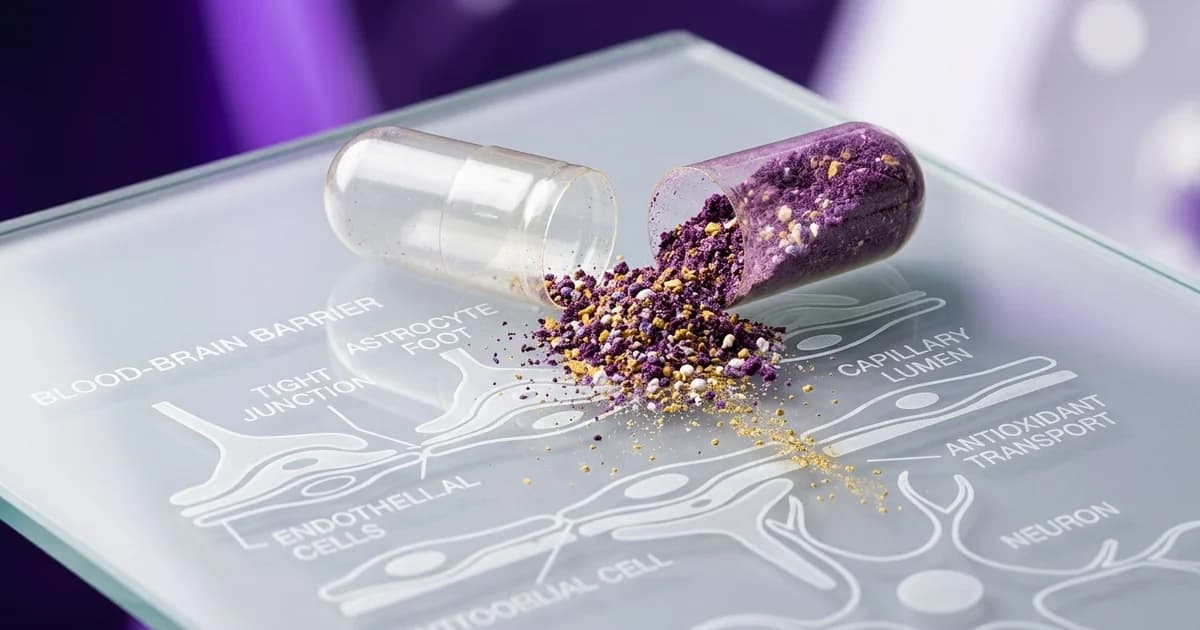
Even the fraction that survives your liver faces the blood-brain barrier, a tightly sealed layer of cells that controls what enters your central nervous system. It is selective by design. It keeps toxins out, and a lot of useful molecules with them.
This is the part marketing copy ignores. A compound can show up in a blood test and still be almost absent from brain tissue. Blood levels are not brain levels. Crossing this barrier is often the rate-limiting step, which is why a 2017 paper in Scientific Reports examined how specific polyphenols travel through the blood-brain barrier toward neuronal protection rather than assuming they simply arrive.
Curcumin: The Cautionary Tale of Polyphenol Absorption in the Brain
Curcumin is the most studied antioxidant in this conversation, and it fails the delivery test on its own. The question of curcumin bioavailability brain access has a clear answer: poor, unless you change how it is delivered.
Taken by itself, curcumin is barely absorbed, rapidly metabolized, and quickly cleared. The common fix is black pepper extract. A 2024 review in the journal Antioxidants (MDPI) reports that piperine, given alongside 2 grams of curcumin in healthy volunteers, increased the curcumin bioavailability by 2000%.
A 2000% jump sounds enormous. It is, in relative terms. But it starts from a near-zero baseline, and improving blood absorption still does not guarantee the molecule clears the blood-brain barrier in meaningful amounts. Better gut absorption solves wall one. It does little for wall two.
That gap is the whole point. When people talk about whether antioxidants reach the brain, they usually fix the easy barrier and assume the hard one takes care of itself.
So, Do Supplements Cross the Blood-Brain Barrier?
Some do, partially, and most do so far less efficiently than labels imply. Whether a given molecule crosses depends on its size, its fat solubility, its charge, and whether the barrier has a transporter that recognizes it.
Small, fat-soluble molecules tend to pass more readily. Large, water-soluble polyphenol structures tend to get stuck. This is why polyphenol absorption brain outcomes vary so widely from one compound to the next, and why a review in Frontiers in Pharmacology frames targeted delivery as central to making natural polyphenols useful against neuroinflammation rather than treating absorption as a given.
The takeaway for blood brain barrier supplements is simple. Asking "is this ingredient good for the brain?" is the wrong first question. The better question is "does this ingredient, in this format, actually arrive?"
How Delivery Formats Compare
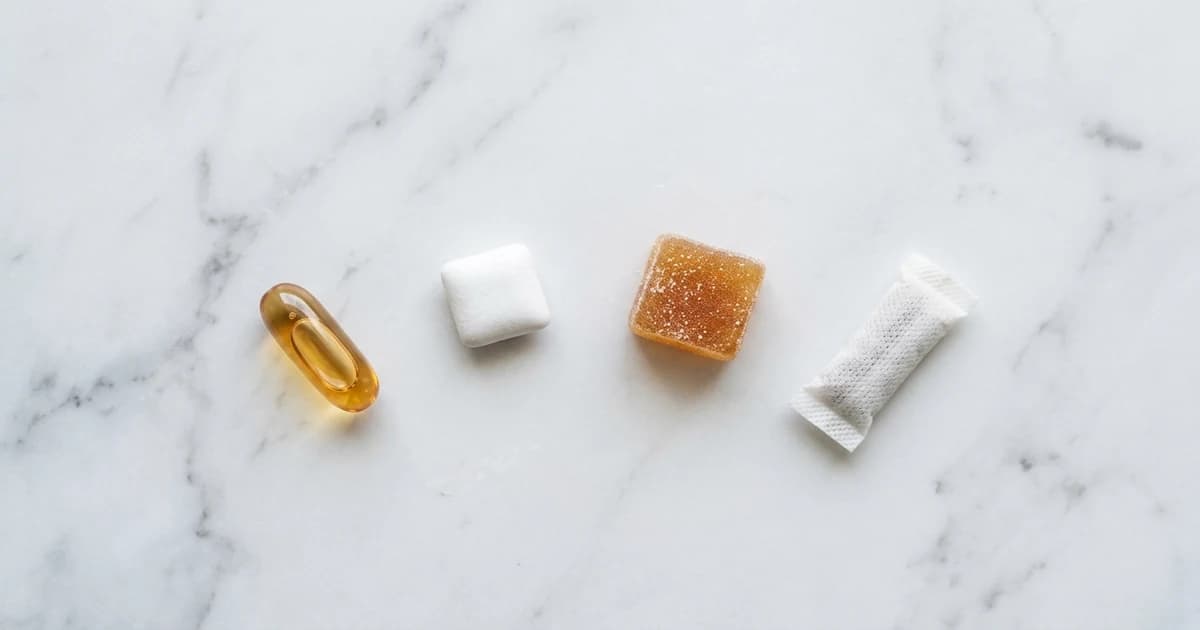
Format changes the math. The same compound can be wasted or preserved depending on how you take it. Here is a practical comparison of common delivery routes and how they handle the gut-and-liver barrier.
| Delivery Format | Bypasses Gut and Liver? | Typical Onset | Main Limitation |
|---|---|---|---|
| Standard oral capsule | No | 30 to 90 minutes | Heavy first-pass losses |
| Capsule with piperine | Partially (slows breakdown) | 30 to 90 minutes | Improves blood levels, not brain entry |
| Sublingual (under the tongue) | Yes (absorbs through mouth tissue) | 5 to 15 minutes | Limited to suitable small molecules |
| Intravenous | Yes (skips gut and liver) | Immediate | Clinical setting only |
The pattern is clear. Routes that route around the gut and liver preserve far more of the active dose, which is exactly why sublingual and buccal delivery exist for compounds that get destroyed when swallowed.
What This Means for How You Choose a Supplement
Stop reading the front of the bottle. Read the format. A high milligram count means nothing if most of it is lost before it works.
Three practical filters help:
- Check the delivery route. A compound known for poor oral absorption needs a format that protects it, not a bigger pill.
- Be skeptical of "brain" claims with no crossing data. General antioxidant activity in a test tube says nothing about central nervous system access.
- Favor ingredients with known transport. Some small molecules cross the barrier reliably. Many large polyphenols do not.
Delivery is the hidden variable. It quietly decides whether you are dosing your brain or just your urine.
The Bottom Line on Antioxidants and Your Brain
Antioxidants are not the problem. Delivery is. The compound can be brilliant on paper and still arrive in trace amounts because your gut, your liver, and your blood-brain barrier each take a cut.
A label that lists a strong ingredient at a strong dose has answered only half the question. The half that matters, how much survives the trip and crosses into your brain, is the half rarely printed on the box. Judge supplements by where the active compound ends up, not by what you put in your mouth.
Frequently Asked Questions
Do antioxidant supplements actually reach the brain?
Some reach the brain, but most arrive in much smaller amounts than the label suggests. An antioxidant has to survive digestion, escape first-pass liver metabolism, and then cross the blood-brain barrier. Each step removes part of the dose. The result is that brain concentrations are often far lower than blood concentrations, which is why delivery format matters as much as the ingredient itself.
Why is curcumin bioavailability in the brain so poor?
Curcumin on its own is barely absorbed and is broken down quickly by the body. Adding piperine from black pepper can raise blood absorption dramatically, by around 2000% in one healthy-volunteer study, but better blood levels do not automatically mean the molecule crosses into brain tissue. Curcumin's size and chemistry make blood-brain barrier passage difficult, so absorption fixes only part of the problem.
What is the blood-brain barrier and why does it block supplements?
The blood-brain barrier is a tightly sealed layer of cells that controls what enters your central nervous system. It exists to keep toxins out, and it blocks many beneficial molecules in the process. Whether a supplement crosses depends on its size, fat solubility, charge, and whether a matching transporter exists. Large, water-soluble polyphenols tend to be stopped.
Does high blood level mean high brain level?
No. This is one of the biggest misunderstandings in supplement marketing. A compound can register clearly in a blood test and still barely appear in brain tissue, because the blood-brain barrier is a separate, selective checkpoint. Crossing it is often the rate-limiting step, so blood concentration is an incomplete measure of how much actually reaches your neurons.
How does sublingual delivery improve absorption?
Sublingual delivery puts a compound under the tongue, where it absorbs through tissue rich in blood vessels and enters circulation directly. This route skips the digestive tract and the liver's first-pass metabolism, preserving more of the active dose. For compounds that are heavily degraded when swallowed, sublingual and similar routes can deliver substantially more of the ingredient to the bloodstream.
Does adding black pepper to curcumin solve the problem?
It helps with one barrier, not both. Piperine slows the enzymes that break curcumin down, raising how much enters your blood. That solves gut and liver losses. It does not change curcumin's difficulty crossing the blood-brain barrier, so pepper improves systemic exposure without guaranteeing meaningful brain delivery.
What should I look for when choosing a brain supplement?
Look at the delivery format first, then the ingredient. A large milligram count means little if most of the compound is lost before it works. Favor formats that protect the active ingredient from gut and liver breakdown, and be skeptical of "brain" claims that offer no evidence the compound actually crosses the blood-brain barrier.
Where Delivery Beats Dosage: The Roon Approach
This entire article points at one idea: the format decides the outcome. If you have read this far, you already know that a swallowed capsule donates much of its dose to your gut and liver long before your brain sees any of it.
That is the exact problem Roon was built around. Roon is a sublingual pouch, so its active ingredients absorb through the tissue under your lip and enter circulation directly, skipping the first-pass metabolism that limits so many oral compounds. The stack is four ingredients chosen for central nervous system activity, not antioxidant marketing: 80 mg caffeine, 60 mg L-theanine, 25 mg methylliberine (Dynamine), and 5 mg theacrine (TeaCrine), designed for a 5 to 10 minute onset and 6 to 8 hours of steady focus with no jitters and no crash.
To be clear about what Roon is not. It is not an antioxidant supplement, and it will not replace a diet rich in real polyphenols from food. What it does is treat delivery as the variable that matters, putting CNS-active compounds where standard pills lose them. If you want focus you can actually feel arrive, try Roon.
Written by Roon Team