Zone Pouches Review: Strengths, Flavors, and Real Value
Roon Team
Zone Pouches Review: Strengths, Flavors, and Real Value
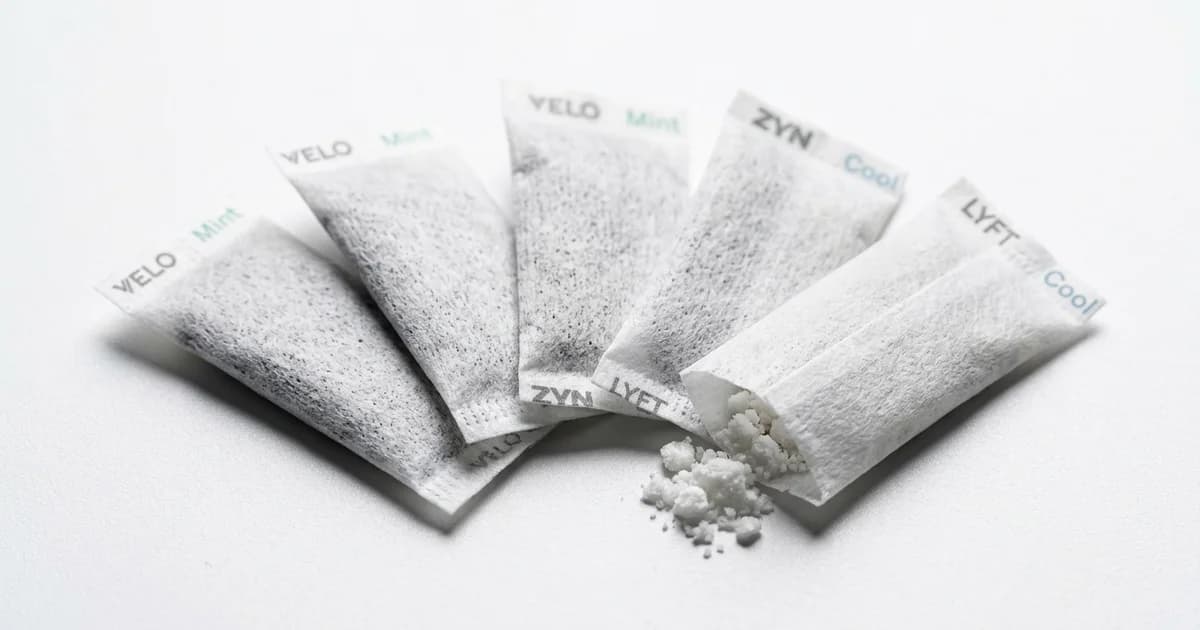
Zone pouches are the fastest-rising nicotine pouch brand you probably hadn't heard of two years ago. They launched in the US in early 2024, moved quietly into tens of thousands of stores, and now sit inside the top five by market share. This zone pouches review breaks down what the brand actually delivers, what only retailers list, and how zone pouches stack up against the category leader, ZYN.
A quick note before we start. Zone pouches contain nicotine. That single fact changes the buying decision more than any flavor or price comparison, so we will treat it as the headline, not the footnote.
Key Takeaways
- Zone publishes no strength list, no ingredient list and no price on zonepouches.com. The catalogue sits behind an age-gated login, so every specific below comes from a retailer, not from the brand.
- Zone pouches contain nicotine, which is addictive.
- Retailer listings put 20 pouches in a can. Zone is owned by Imperial Brands and managed in the US by ITG Brands.
- Zone does not sell direct, so pricing depends on the retailer and the promotion of the week.
- If you want the oral pouch ritual without nicotine, the honest comparison is against nicotine-free options, not just ZYN.
What Are Zone Pouches?
Zone pouches are a nicotine pouch brand made for adult nicotine users who want a spit-free, smoke-free format. You park a small white pouch under your lip, and nicotine absorbs through the gum tissue over 20 to 40 minutes.
The brand is newer than most of its shelf-mates. Zone is a nicotine pouch brand launched in the U.S. in February 2024, manufactured by TJP Labs in Canada and marketed by ITG Brands, a subsidiary of Imperial Brands, in the U.S. That corporate backing matters. It explains how zone pouches reached national distribution so quickly despite being this young.
Zone climbed fast. According to Tobacco Insider, Zone is the fifth-largest nicotine pouch brand in the US behind ZYN, on!, VELO, and Rogue, holding roughly 2.7% national share. For a product that did not exist before 2024, that is a steep ramp for zone pouches.
One thing to know before the specifics: Zone tells you almost nothing itself. Without a login, zonepouches.com serves contact details, legal links and a Prop 65 warning, and no statement about where its nicotine comes from. So the source of the nicotine is not something we can confirm from the brand. What is certain is that tobacco-free, whoever claims it, is not the same as nicotine-free, and we will come back to that.
Zone Nicotine Pouches: Strengths and What's Inside
Zone does not publish a strength ladder. There is no strength list anywhere on zonepouches.com, and the retailer listings that carry zone pouches do not agree with each other, so no figure here would be the brand lineup. Read the strength off the can or off the product page you are buying from, and treat any figure you see in a review, including ours, as second-hand.
The same goes for what is inside. Zone publishes no ingredient list without a login, so the only place to read one is the panel on the can in your hand.
Retailer listings put 20 zone pouches in a can. The pouches are slim and known for a soft, moist feel, which is a common praise point in user reviews on retail sites like Northerner. If pouch comfort matters to you, zone pouches tend to score well here.
Zone Pouches Flavors: Heavy on Mint
Zone publishes no flavor list of its own, so the count depends on which retailer you check. According to Nicokick, the assortment includes Wintergreen, Mint, Peppermint, Spearmint, Citrus, Dragonfruit, Cranberry, Jalapeño Lime, Spicy Mango, Spicy Strawberry, Smooth, Chill, White, and a tobacco-free Tobacco flavor.
The mints do the heavy lifting. Dragonfruit, Spearmint, and Wintergreen consistently rank as the most popular zone pouches picks. The spicy options, Jalapeño Lime and Spicy Mango, are where zone pouches try to separate themselves from the pack.
That is a healthy range on the Nicokick listing, though not the widest in the category. It is enough variety that most zone pouches users will find a daily driver and a backup.
Zone Pouches Pricing and Real Value
Zone pouches are not sold direct to consumers, so there is no single official price. You buy through retailers, and the per-pouch cost moves with promotions and state taxes.
The prices quoted for Zone across retailers and trade write-ups vary enough that no single figure represents the price. Check the listing at Got Pouches or whichever retailer you use on the day you buy, and take the number from there.
Here is the context that matters. Nicotine pouches cluster around $0.21 to $0.35 per pouch because they run 20 to 30 pouches per can at commodity tobacco-industry pricing. So zone pouches are not a bargain brand or a premium brand. They are priced like the market.
Zone vs ZYN: The Comparison Most Buyers Actually Want
In a zone vs ZYN matchup, zone pouches give you more pouches per can, while ZYN publishes its strengths and has far wider availability. The real differences are disclosure, can count, and distribution.
ZYN, by contrast, publishes its lineup. According to Nicokick, each can of ZYN contains 15 all-white pouches, and the standard US lineup runs 3mg and 6mg, with higher-strength ZYN Ultra options added more recently.
So the zone vs ZYN split is clear. ZYN prints its strengths, including a genuinely gentle 3mg starting point, so you know the dose before you buy. With Zone you are reading a retailer listing or the can. Retailer listings put 20 zone pouches in a can against ZYN's 15. Distribution still favors ZYN heavily, since it sits in far more stores nationwide.
Neither one changes the core fact: both deliver nicotine, and both create dependence with regular use.
Zone Pouches, ZYN, and a Nicotine-Free Comparison
Because many people searching for a zone pouches review are actually deciding whether they want nicotine at all, here is a wider table. It includes two nicotine pouches and two nicotine-free pouches so you can compare like with like.
| Product | Nicotine | Active ingredients | Count | Strengths | Approx. price/pouch |
|---|---|---|---|---|---|
| Zone | Yes | Nicotine only | 20/can (retailer listing) | Not published | Varies by retailer |
| ZYN | Yes (synthetic, tobacco-free) | Nicotine only | 15/can | 3mg, 6mg (US) | ~$0.30–0.40 (retailer) |
| Ultra Focus | No | 6 named actives, no doses published | 15/can | n/a | ~$1.07 |
| Roon | No | 80mg caffeine, 60mg L-theanine, 25mg Dynamine, 5mg TeaCrine | 15/tin | n/a | ~$0.61–$1.00 |
Notice the price jump between the nicotine pouches and the functional ones. That gap is structural. Zone pouches and similar nicotine products run 20 to 30 units per can at commodity pricing, while nootropic pouches run 15 per tin at supplement pricing. A raw per-pouch number does not tell you which is "better value" until you know what you are actually buying: a nicotine hit or a focus formula.
What's Missing Across All of These Pouches
Compare zone pouches, ZYN, and the rest, and a clear pattern shows up. Each product forces a trade-off.
Zone pouches and ZYN deliver nicotine and nothing else. The active ingredient is a single addictive compound. That is fine if nicotine is what you want, but zone pouches offer zero cognitive support beyond the short-lived stimulation nicotine provides. Zyn is highly addictive but less so than cigarettes or vapes, because absorption is slower than inhalation.
The regulatory picture is worth stating plainly. The FDA has not approved any nicotine pouches to help people quit smoking. Zone pouches and ZYN are nicotine products, not cessation tools.
Ultra Focus removes the nicotine but hides the doses. Ultra Focus is nicotine-free, tobacco-free, and caffeine-free, with six named actives. The problem is that takeultra.com publishes no milligram amount for any of the six, so you cannot verify what you are getting or how it compares. Ultra does dose its Sleep pouch to the milligram on the same FAQ page, and it now sells a caffeinated Energy pouch too, so caffeine-free describes Ultra Focus, not the whole brand.
So the gaps are specific:
- Zone pouches and ZYN: nicotine dependence, no cognitive ingredients, no clean energy.
- Ultra Focus: no nicotine, but no disclosed doses and no caffeine, so the "how much" question goes unanswered.
- All of them: none is designed as a transparent, nicotine-free focus tool with a published formula.
That is the space a functional pouch is built to fill.
Where a Nicotine-Free Focus Pouch Fits
If your real goal is the pouch ritual without the nicotine, the comparison shifts away from zone pouches and ZYN entirely. You are no longer shopping for a nicotine level. You are shopping for what the pouch actually does.
Roon sits in that nicotine-free lane with a fully published formula. Each sublingual pouch contains 80mg caffeine, 60mg L-theanine, 25mg methylliberine (Dynamine), and 5mg theacrine (TeaCrine). Every dose is on the label, which is the transparency Ultra Focus skips.
The design goal is different from zone pouches or any nicotine pouch. The caffeine and L-theanine pairing supports steady focus by improving attention-switching accuracy and promoting the alpha-wave activity linked to calm alertness. Dynamine and TeaCrine extend the effect, which is how Roon targets a 6 to 8 hour focus window with no crash and no tolerance buildup.
To be clear about what this is not: Roon is not a nicotine pouch, not a quit-smoking product, and not an FDA-authorized cessation aid. If you use nicotine and want to stop, talk to a clinician about approved options. Roon is simply one nicotine-free choice among several if what you actually miss is the ritual, not the nicotine. If you want to read more on the tradeoffs, our guides on caffeine and L-theanine for focus go deeper on the mechanism.
The Verdict on Zone Pouches as a Nicotine Pouch
Zone pouches are a well-made nicotine product. The soft pouch feel, the 20-count can and the wide flavor range make zone pouches a legitimate competitor in any zone vs ZYN comparison, and their fast climb into the top five shows adult nicotine users are responding. What Zone will not tell you is the detail. No strength ladder, no ingredient list and no price appear on its own site, so on every number you are taking a retailer's word for it.
The deciding question is not zone vs ZYN. It is whether you want nicotine at all. If you do, zone pouches are a solid, honest option worth trying. If you have started to question the daily nicotine habit, the more useful comparison is against nicotine-free pouches, where the whole point is to keep the ritual and drop the dependence.
Frequently Asked Questions
Are Zone pouches tobacco-free?
Zone makes no public statement about it. Nothing on zonepouches.com reachable without a login mentions the nicotine source or a tobacco-free status, so the only claim you can actually check is the one printed on the can or in the retailer's listing. What does not change either way: tobacco-free and nicotine-free are two different claims. Every zone pouch contains nicotine, so the addictive compound is present and active whatever its source.
What strengths do zone nicotine pouches come in?
Zone does not publish its strengths. There is no strength list on zonepouches.com, the catalogue is behind an age-gated login, and retailer listings do not agree with one another, so the only reliable answer is the number printed on the can you are holding. Retailer listings do agree on can size: 20 zone pouches per can.
How much do zone pouches cost?
Zone is not sold direct and publishes no price, so the answer depends on the retailer, the promotion and your state's taxes. The figures quoted around the web differ enough that we will not print one as the price. Check the retailer's page on the day you buy. As a category, nicotine pouches are cheap per unit because they ship 20 to 30 units per can at commodity pricing.
Zone vs ZYN: which is better?
It depends on what you want. In a zone vs ZYN comparison, retailer listings give zone pouches 20 per can against ZYN's 15. ZYN publishes its strengths, including a gentle 3mg starter dose, and has much wider store availability. Zone publishes neither its strengths nor a price. Both deliver nicotine and both are addictive. If you want a dose you can look up before you buy, ZYN wins. If you want more pouches per can, zone pouches edge ahead.
Is nicotine in zone pouches addictive?
Yes. Nicotine is addictive regardless of whether it comes from tobacco or a lab. Research shows pouch nicotine absorbs more slowly than smoking or vaping, which lowers the peak intensity, but regular use of zone pouches still builds dependence. The FDA has not approved any nicotine pouch as a tool to help people quit smoking, so zone pouches should be treated as a nicotine product, not a cessation aid.
What if I want the pouch ritual without nicotine?
Then your comparison is with nicotine-free pouches, not zone pouches or ZYN. Functional pouches like Roon deliver caffeine, L-theanine, and related compounds instead of nicotine, aiming at focus rather than a nicotine hit. They cost more per pouch because they ship fewer units at supplement pricing. If the habit you miss is the ritual and not the nicotine, that is the category worth exploring.
The Nicotine-Free Lane, With the Doses Actually Printed
If this zone pouches review left you weighing whether you want nicotine at all, that is the honest crossroads. Zone pouches and ZYN do one thing well: deliver nicotine in a comfortable pouch. Neither pretends to be anything else, and neither is built to help you step away from the compound driving the habit.
That is the gap Roon was designed for. It keeps the under-the-lip ritual and drops the nicotine entirely, using a published sublingual formula of 80mg caffeine, 60mg L-theanine, 25mg methylliberine (Dynamine), and 5mg theacrine (TeaCrine). The aim is 6 to 8 hours of steady focus with no jitters, no crash, and no tolerance creep, and every dose is on the label rather than hidden.
Roon is not a nicotine pouch and not a quit-smoking product, so if cessation is your goal, speak with a clinician about approved options. But if what you actually want is the ritual without the nicotine, try Roon as one nicotine-free option and judge it on the formula, not the habit it replaces.
Written by Roon Team