How to Get More Deep Sleep: Every Intervention Ranked by Evidence

How to Get More Deep Sleep: Every Intervention Ranked by Evidence
If you want to know how to get more deep sleep, the interventions with the strongest evidence are, in order: building sleep pressure through sleep restriction therapy and CBT-I, regular exercise, cutting total daily caffeine load, and warm bathing one to two hours before bed. Alcohol raises slow-wave sleep early in the night, then costs you the second half. Supplements do less than the label implies. Below, every entry carries its study design, sample size where confirmed, and the actual measured result.
Key Takeaways
- Deep sleep is front-loaded. Most of your N3 concentrates in the first two sleep cycles. A late bedtime does not postpone it; it deletes it.
- Sleep restriction therapy has the clearest mechanism. It is also a clinical protocol, not a shortcut.
- Exercise trends in the right direction, but the confidence intervals for its effect on N3 cross zero. That is an honest statement, not a discouraging one.
- Caffeine costs you about 11 minutes of deep sleep per night, and total load matters more than any single clock rule.
- A warm bath 1 to 2 hours before bed shortens the time to fall asleep by roughly 36 percent, getting you into the N3-heavy window sooner.
What Deep Sleep Is, and What a Normal Amount Looks Like
Deep sleep is stage N3, the slow-wave phase where your brain produces high-amplitude delta waves between roughly 0.5 and 4 Hz. It concentrates in the front third of the night, dominates the first two sleep cycles, and tapers as REM sleep lengthens across later cycles. Its job: physical restoration, memory consolidation, and waste clearance.
How much is normal? There is no consensus on an ideal deep sleep percentage. The Sleep Foundation gives a range of 10 to 20 percent of total sleep. Research puts it closer to 13 to 23 percent, which works out to roughly 60 to 110 minutes on a 7- to 9-hour night. A meta-analysis of 65 polysomnography studies (3,577 healthy subjects, Ohayon et al. 2004, SLEEP) found that slow-wave sleep declines by roughly 2 percent per decade of adult life, with most of that change levelling off around age 60.
| Intervention | Evidence Strength | Measured Outcome | Study Type |
|---|---|---|---|
| Sleep restriction / CBT-I | Strongest | Increased relative NREM delta power | Randomized controlled mechanistic trial |
| Exercise (evening, moderate) | Strong direction, wide CIs | N3 +0.84%, CI crosses zero | Network meta-analysis |
| Reduce caffeine load | Strong | N3 duration reduced 11.4 min by caffeine | Systematic review, 24 studies |
| Warm bath (40-42.5 °C) | Moderate-strong | Sleep onset latency reduced ~36% | Meta-analysis, 13 studies |
| Alcohol | Misleading | Increases early SWS, fragments second half | Polysomnography reviews |
| Glycine (3 g) | Small | Shortened latency to SWS, no change in amount | Small crossover study |
| Magnesium bisglycinate | Small | ISI improvement, d = 0.2 | RCT, n = 155 |
That table is the article in miniature. Now the reasoning.
The Fact That Reframes Everything: Deep Sleep Is Front-Loaded
N3 concentrates in the first two cycles, with early bouts running roughly 20 to 40 minutes. By the fourth or fifth cycle, N3 may be nearly absent. The practical consequence: going to bed at 1 a.m. instead of 11 p.m. does not shift your deep sleep two hours later. It eliminates the cycles where deep sleep would have been densest. Every intervention below works, in part, by protecting that early window.
Rank 1: Build Sleep Pressure (Sleep Restriction Therapy and CBT-I)
The single strongest lever for increasing slow-wave activity is sleep pressure, the homeostatic drive that accumulates while you are awake. More waking hours (within reason) means more adenosine, which means more delta power when you finally sleep. Sleep restriction therapy exploits this directly.
A randomized controlled mechanistic trial (Maurer et al. 2022, SLEEP) randomized adults meeting DSM-5 criteria for insomnia disorder to four weeks of sleep restriction therapy or to time-in-bed regularization (a control that kept a consistent schedule without reducing time in bed). The sleep restriction group showed increased relative NREM delta power (0.75 to 4.5 Hz), measured by ambulatory polysomnography, along with changes in sleepiness and arousal markers.
The mechanism in plain language: less time in bed means more accumulated sleep pressure, which concentrates and intensifies slow-wave activity in early cycles. It works, and it is temporarily unpleasant. This is a clinical protocol, not something to improvise from a blog post. If you suspect insomnia is the real problem, this belongs with a clinician trained in CBT-I.
Rank 2: Exercise
A network meta-analysis in Nature and Science of Sleep compared different intensities of evening exercise on sleep in healthy adults. Evening moderate-intensity exercise ranked first across the network, with trends toward improved wake after sleep onset, sleep efficiency, and N3 proportion.
The numbers, reported honestly: N3 proportion showed a mean difference of +0.84%, with a 95% confidence interval of -1.17 to 2.78. Wake after sleep onset: -2.50 minutes (CI: -8.17 to 1.62). Sleep efficiency: +0.41% (CI: -0.71 to 1.66). Every one of those confidence intervals crosses zero. So this is a ranking and a direction, not a measured quantity you can bank.
A Scientific Reports (2021) study offers a plausible mechanism: exercise improved slow-wave sleep quality by increasing slow-wave stability. One more finding from the meta-analysis: acute high-intensity evening exercise decreased REM sleep, but evening exercise completed before bedtime did not disrupt subsequent sleep in healthy young and middle-aged adults. The old rule that you cannot exercise at night is not supported by this data.
Rank 3: Cut Your Total Caffeine Load
A systematic review and meta-analysis of 24 studies (Gardiner et al. 2023, Sleep Medicine Reviews) quantified what caffeine does to sleep architecture. Caffeine reduced total sleep time by 45 minutes, sleep efficiency by 7 percent, and increased wake after sleep onset by 12 minutes. For deep sleep specifically: caffeine decreased N3 duration by 11.4 minutes and N3 proportion by 1.4 percent. The same paper estimated that coffee at 107 mg per 250 mL should be consumed at least 8.8 hours before bedtime, and a standard pre-workout dose at 217.5 mg at least 13.2 hours before.
Total daily load matters more than a single clock rule. The full argument for why the timing studies say something different from "no caffeine after 2 p.m." is covered in the sibling article.
Rank 4: Passive Body Heating
A meta-analysis of 13 studies (Haghayegh et al. 2019, Sleep Medicine Reviews) found that water-based passive body heating at 40 to 42.5 °C, scheduled 1 to 2 hours before bedtime, for as little as 10 minutes, shortened sleep onset latency by roughly 36 percent, about 10 minutes on average. It also improved self-rated sleep quality and sleep efficiency.
The mechanism: warming the skin accelerates core temperature decline by increasing the distal-to-proximal skin temperature gradient, one of the body's main signals for sleep onset.
A careful distinction: the measured outcome is sleep onset latency, not slow-wave sleep minutes. But because N3 is front-loaded, falling asleep faster means you enter the deep-sleep-dense early cycles sooner. This is the highest ratio of evidence to effort on the list. A warm shower. Ten minutes. One to two hours before bed.
The Alcohol Correction
Most sleep blogs will tell you alcohol "reduces deep sleep." That is wrong in its details. Alcohol increases slow-wave sleep in the first half of the night and suppresses REM. Your wearable may show a higher deep sleep number on a night you drank. That part is real, and it appears consistently in polysomnography reviews.
Then the second half arrives. As alcohol is metabolized, the night brings more wake after sleep onset, reduced sleep efficiency, REM rebound, and fragmentation. Higher doses make both effects more pronounced, and consuming alcohol closer to bedtime amplifies the pattern.
So the answer to "does alcohol increase or decrease deep sleep?" is: both, in sequence. The first half looks better on paper. The second half takes it back with interest. If your tracker shows elevated deep sleep after drinking, it is reading the first half accurately. It is not showing you the cost.
Schedule Regularity: The Boring Lever Nobody Ranks
Going to bed at roughly the same time each night, early enough that the N3-dense first third of the night falls inside your sleep window, is not exciting advice. It is also not optional. Irregular bedtimes fragment the circadian signal that gates slow-wave sleep onset. A bedtime that drifts past midnight clips the cycles where N3 is densest. A consistent schedule is the foundation every other intervention sits on. Here is a sleep hygiene checklist that covers schedule, environment, and wind-down.
Supplements, at Their Real Effect Sizes
This is where most articles oversell. The evidence for supplements and deep sleep specifically is thinner than the marketing suggests.
Glycine. A small crossover study (Yamadera et al. 2007) gave 3 g of glycine before bed to volunteers with unsatisfactory sleep. Glycine shortened polysomnographic latency to sleep onset and latency to slow-wave sleep, "without changes in the sleep architecture." That clause is the one supplement marketing leaves out: glycine shortened the time it took to reach deep sleep without increasing the amount of it. For the full picture, see the evidence on magnesium and glycine for sleep.
Magnesium bisglycinate. A randomized, placebo-controlled trial (Schuster et al. 2025, Nature and Science of Sleep, n = 155) tested 250 mg elemental magnesium daily against placebo. The result: a small but statistically significant reduction in Insomnia Severity Index scores, effect size d = 0.2. That is a small effect. The outcome was insomnia severity, not slow-wave sleep minutes.
Apigenin. One double-blind study has reported an increase in deep sleep with apigenin, and it is a single result that has not been replicated.
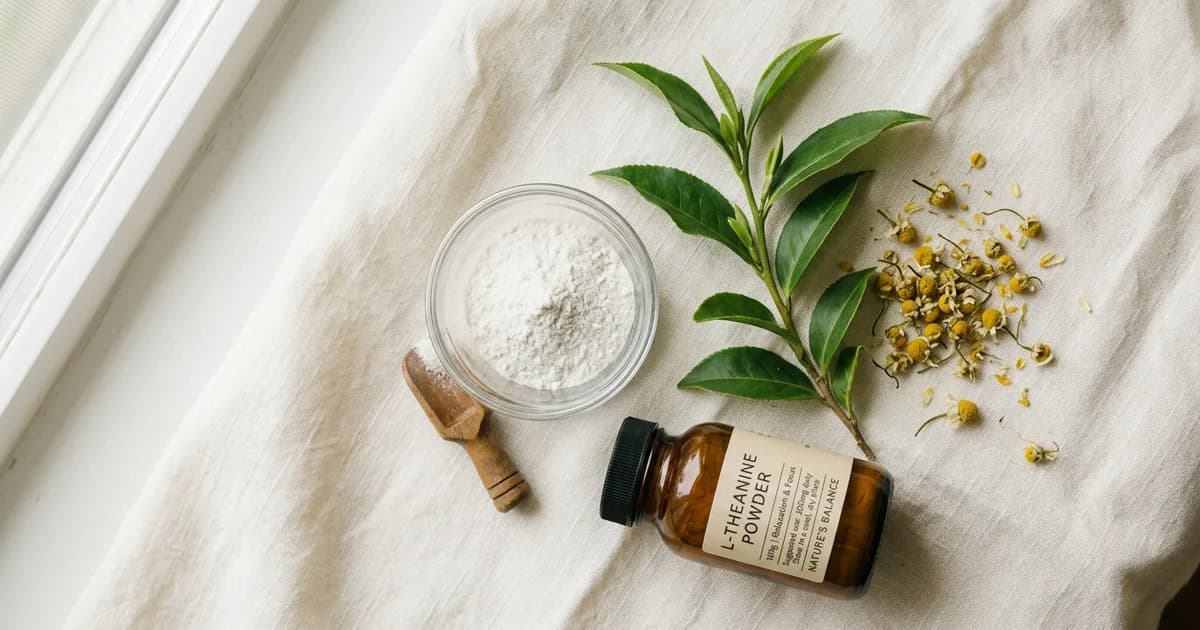
Tart cherry, ashwagandha, and L-theanine have evidence that is largely subjective and not specific to slow-wave sleep. For a wider look at what increases deep sleep from the supplement shelf, see the ranked list of supplements studied for deep sleep.
A Note on Your Tracker
Most readers arrived here because a wearable showed a number that looked low. A validation study of the Oura Ring Gen3 with OSSA 2.0 (96 participants, 421,045 epochs) reported good agreement with polysomnography for deep sleep, with sleep detection sensitivity of 94 to 95 percent and a positive predictive value for sleep of approximately 96 percent. But across devices more broadly, slow-wave sleep remains the noisiest and least reliably detected stage.
Hold both findings at once. Your tracker picks up real signal over weeks. A single low deep-sleep night is more likely measurement noise than physiology. Read trends, not single nights.
Conclusion: Choosing What to Change First
The ranking is ordered by evidence, not by ease. For the smallest effort with real data behind it, take a warm shower for 10 minutes one to two hours before bed. Cutting caffeine load costs nothing but the coffee. Exercise helps, even if the measured N3 effect has not cleared statistical significance. Sleep restriction therapy has the strongest mechanism and belongs with a clinician.
Supplements sit at the bottom because that is where their effect sizes put them. If sleep problems persist for weeks, they deserve a conversation with a clinician, not another supplement.
Frequently Asked Questions
How much deep sleep should I be getting?
There is no single correct number. Research places the range at roughly 13 to 23 percent of total sleep, or about 60 to 110 minutes on a 7- to 9-hour night. The Sleep Foundation cites 10 to 20 percent. Deep sleep declines by about 2 percent per decade of adult life (Ohayon et al. 2004). Track your own trend over weeks rather than comparing to a single benchmark.
Why is my deep sleep so low?
The most common explanations are high caffeine load, inconsistent bedtimes, late bedtimes that cut into N3-heavy early cycles, and normal age-related decline. Consumer trackers are also least accurate on deep sleep, so a single low reading may be noise. Multi-week trends are the readable signal.
Can you increase deep sleep naturally?
Yes, within limits. If you want to know how to increase deep sleep naturally, the interventions with the best evidence are building sleep pressure (clinically, through sleep restriction therapy), regular moderate-intensity exercise, reducing total caffeine intake, and warm bathing 1 to 2 hours before bed. None of them produce dramatic overnight changes. Consistency across weeks matters more than any single night's effort.
Does alcohol increase or decrease deep sleep?
Both, in sequence. Alcohol increases slow-wave sleep in the first half of the night and suppresses REM. In the second half, sleep fragments and REM rebounds. Your tracker may show elevated deep sleep after drinking because it is reading the first half accurately. The second half erases the gain.
Do supplements increase deep sleep?
The evidence is smaller than the marketing. Glycine (3 g) shortened the time to reach deep sleep but did not increase total deep sleep time. Magnesium bisglycinate showed a small insomnia severity improvement (d = 0.2) in a 155-person RCT, but the outcome was not slow-wave sleep. Apigenin has one unreplicated result. The best-studied finding here improved access to deep sleep, not the quantity of it.
Does going to bed earlier actually give you more deep sleep?
It can, because deep sleep concentrates in the first third of the night. If your current bedtime is late enough to cut into those early, N3-dense cycles, moving it earlier extends the window where deep sleep naturally occurs. The effect is not about the clock itself; it is about giving those first two cycles room to run their full length.
The Caffeine Variable You Can Actually Control
Total caffeine load ranked third on the evidence list for a reason: it is one of the few modifiable inputs with a clear, dose-dependent relationship to slow-wave sleep suppression. The question is not whether to use caffeine but how to use less of it for more of the day. Roon carries just 80 mg caffeine per pouch, paired with 25 mg methylliberine (Dynamine) that slows caffeine clearance and stretches the working window to 6 to 8 hours. A randomized double-blind crossover PK study (n=12) found methylliberine cut oral clearance from 41.9 to 17.1 L/hr and extended half-life from 7.2 to 15 hours, though that study used 100 mg methylliberine and 150 mg caffeine (roughly 4x the methylliberine and 1.9x the caffeine Roon carries), so the mechanism is directionally the same and the study did not measure Roon. Add 60 mg L-theanine to smooth the response and 5 mg theacrine (TeaCrine), and you get sustained focus from a lower total dose. The trade-off: that extended tail means you stop at least 8 hours before bed, or you are trading afternoon alertness for the deep sleep you just read an entire article about protecting.
Roon is not a substitute for sleep restriction therapy, consistent exercise, or any of the higher-ranked interventions above. But if your current caffeine pattern involves 300-plus milligrams spread across the afternoon, replacing that with one 80 mg pouch earlier in the day moves the needle on both the dose and the timing. Zero sugar, as little as $0.61 per pouch. Try Roon and check your deep sleep trend in two weeks.
Written by Roon Team