Task Paralysis: Why You Freeze Before You Even Start
You know exactly what you need to do. You want to do it. And you still cannot make yourself start.
That stuck feeling has a name and a mechanism. Task paralysis is the state where your brain refuses to initiate an action you fully intend to take, not because you are lazy or unmotivated, but because the task has registered as a threat and triggered a freeze response that suppresses task initiation. It is a wiring problem in the brain's starting system, not a character flaw. The fastest way out is not more willpower. It is a short sequence that moves your brain out of threat mode and lowers the task to a step small enough to begin.
This article is informational and not medical advice. If freezing on tasks is disrupting your work, relationships, or daily life, talk to a licensed clinician.
Key Takeaways
- Task paralysis is a freeze response, not laziness. The brain tags a task as a threat and the starting circuit stalls.
- It is distinct from procrastination, ADHD paralysis, and overwhelm, though they overlap and can occur together.
- Task initiation is gated by the prefrontal cortex and depends on dopamine to mark a task as worth starting right now.
- Naming the feeling and shrinking the task to a two-minute step are the two most reliable ways to unfreeze.
- Stable, jitter-free alertness makes it easier to hold that first small step once you take it.
What Task Paralysis Actually Is (and Why It Isn't Laziness)
Task paralysis is the inability to begin or finish a task because anxiety about it has hijacked your brain's executive function. The intent is there. The execution is locked.
Laziness implies you do not care about the outcome. Task paralysis is the opposite. You care so much, or feel so unsure about how to start, that the task reads as overwhelming and your brain stalls rather than acts. People who freeze this way are often conscientious and capable, which is exactly why the experience is so confusing. You can deliver excellent work and still sit frozen in front of an email for forty minutes.
The mechanism sits in the brain's executive control system. When a task feels too large, too ambiguous, or too loaded with consequence, the cost of starting registers as higher than the reward, and your starting system refuses to fire. Understanding that distinction matters, because the fix for laziness (motivation) is different from the fix for paralysis (lowering the threat and the activation cost).
Task Paralysis vs Procrastination vs ADHD Paralysis vs Overwhelm
These four states feel similar from the inside but run on different mechanisms, and the right response depends on which one you are in. Here is how they separate.
| Dimension | Task Paralysis | Procrastination | ADHD Paralysis | Overwhelm |
|---|---|---|---|---|
| Core driver | Freeze response to a task that reads as a threat | Choosing short-term relief over a delayed reward | Executive-function gap in task initiation, prioritization, and working memory | Too many demands exceeding current capacity at once |
| What it feels like | Frozen, blank, unable to start despite wanting to | Avoiding the task by doing something more pleasant | Mentally "stuck," cycling between tasks without starting any | Flooded, scattered, on the edge of shutting down |
| Intent to act | High. You want to start and cannot | Mixed. You delay on purpose | High, but the start signal does not fire reliably | High, but spread across too many things |
| Typical trigger | Ambiguity, high stakes, perfectionism | A more rewarding alternative is available | Underlying ADHD neurobiology | Volume and competing deadlines |
| Best first move | Name the trigger, shrink to a 2-minute step | Remove the easier alternative, add accountability | Externalize structure, reduce choices, clinical support | Triage and offload, do one thing only |
| Clinical link | Anxiety-adjacent, situational | Self-regulation pattern | Common ADHD presentation | Stress-load pattern |
The overlap is real. You can procrastinate because you are in task paralysis, and overwhelm can tip you into a freeze. The point of separating them is diagnostic: if you treat a freeze response like simple procrastination and just "try harder," you push on a system that is already locked.
Why Your Brain Freezes: The Threat Response Behind Starting
Starting a task is a specific neural event, and it depends on two things working together: a prefrontal cortex that decides the task is worth doing now, and enough dopamine to flag it as worth the effort.
Research published in the Journal of Neuroscience found that the dorsolateral prefrontal cortex drives mesolimbic dopaminergic regions to initiate motivated behavior. In plain terms, the planning part of your brain has to send the "go" signal to the reward system that supplies the chemical push to act. When dopamine does not tag the task as worth starting right now, the signal weakens and initiation stalls. This is why a task can feel impossible to start in the morning and trivially easy at 4 p.m. When a deadline finally makes it feel urgent.
The freeze layer comes from the threat system. When a task carries high stakes, ambiguity, or fear of failure, the amygdala flags it as a threat and drives a defensive freeze that suppresses the prefrontal "go" signal. Your body goes still and your thinking goes blank. That is not weakness. It is the same circuitry that freezes a person in any threatening situation, misapplied to a spreadsheet.
Here is the useful part. You can shift the brain out of that state by labeling what you feel. A landmark UCLA study by Matthew Lieberman, Putting Feelings Into Words, showed that affect labeling, simply naming an emotion, reduces amygdala activity and increases activity in the prefrontal cortex. Naming the trigger physically moves the brain from the threat circuit toward the control circuit. That single move is the foundation of the protocol below.
The Three Most Common Triggers
Most task paralysis traces back to one of three triggers, and identifying yours tells you which lever to pull first.
- Ambiguity. The task has no obvious first step. Your brain cannot start what it cannot define, so it stalls. The fix is to convert the vague task into one concrete physical action.
- High stakes. The outcome matters enough that failure feels dangerous, so the threat system engages. The fix is to lower the perceived stakes of the first step, not the whole project.
- Perfectionism. You hold an internal standard so high that no starting point feels good enough, so no starting point gets chosen. Goodwin University notes that task paralysis often follows from too many decisions, fear of failure, and perfectionism, all of which raise the cost of committing to a first move.
You can usually feel which trigger is active. Ambiguity feels foggy. High stakes feels tight in the chest. Perfectionism feels like restless dissatisfaction with every option.
How to Break Task Paralysis in the Next 10 Minutes
The way out of a freeze is to lower the threat and shrink the task until starting costs almost nothing. Here is a four-step protocol you can run in about ten minutes.
Minute 0 to 2: Name the trigger. Say out loud or write down what you feel and why. "I am frozen on this because it is ambiguous and I am afraid of getting it wrong." This is affect labeling, and per the Lieberman study above, it dampens the amygdala and re-engages the prefrontal cortex. You are not journaling for catharsis. You are flipping a neural switch.
Minute 2 to 4: Pick one, at random if needed. Decision load is part of the freeze. Stop optimizing which subtask to do first. Pick any one. A coin flip is a legitimate strategy here, because the goal is to break the deadlock, not to be correct.
Minute 4 to 6: Define a two-minute micro-step. Shrink the chosen task to something you can finish in two minutes. Not "write the report." Instead, "open the document and type the title." The micro-step has to be physical and unambiguous. Starting is the hard part; momentum handles the rest.
Minute 6 to 10: Add a body double. Work alongside another person, in the room or on a video call, even silently. Body doubling, a strategy Child Mind Institute describes for breaking initiation freezes, borrows external structure when your internal start signal is weak. The other person's presence makes the task feel less threatening and more accountable.
If you run all four and still cannot move, the issue may be physiological rather than situational. Which brings us to the next piece.
Where Energy and Focus Fit In
A freeze is harder to break when you are running on low or jittery energy, because the prefrontal cortex needs a stable baseline of alertness to hold a task in mind and act on it.
This is the point where stimulants enter the conversation, usually as coffee. Caffeine raises alertness, but a large jittery dose can amplify the very anxiety that drove the freeze, which is counterproductive. The goal is not maximum stimulation. It is steady, clean alertness that lets you hold the two-minute micro-step without your mind sliding off it.
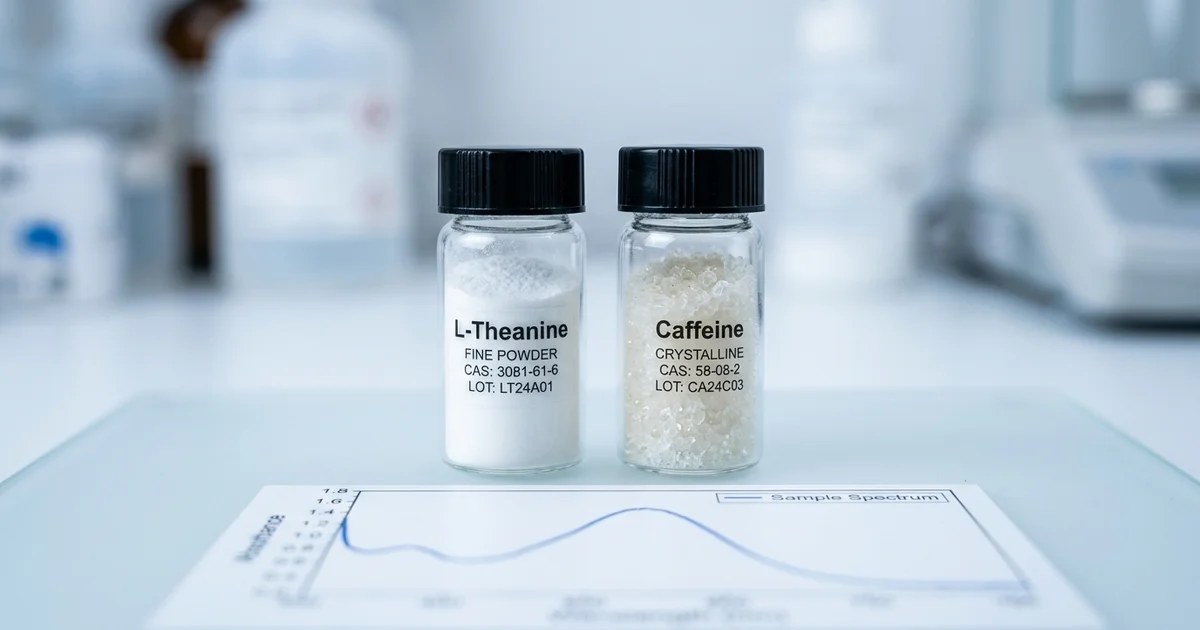
This is the logic behind pairing caffeine with L-theanine, an amino acid found in tea. The combination is well studied for supporting focused attention while smoothing the edge that caffeine alone can produce. The category that does this in a controlled dose, focus-oriented supplements, is worth knowing about precisely because the freeze is easier to break when your energy is level rather than spiking. The supplement does not start the task for you. It helps you hold the first small step once you take it.
When to See a Doctor
If task paralysis is frequent, severe, or spilling into your job, school, finances, or relationships, see a licensed clinician. A pattern of chronic freezing across many areas of life can be a sign of an underlying condition rather than a one-off situational stall.
In particular, a long-standing, lifelong pattern of trouble starting tasks, prioritizing, and following through, often paired with distractibility and a sense of being "stuck" between tasks, can reflect ADHD, which is a clinical diagnosis. Child Mind Institute and other medical sources describe ADHD paralysis as a real presentation that responds to structured support and, when appropriate, professional treatment. The protocol in this article is a useful coping skill for anyone, but it is not a substitute for assessment. If freezing comes with persistent low mood, loss of interest, or anxiety that does not lift, those also warrant a clinical conversation. Naming what you are dealing with, with help, is the same move that unfreezes a single task, applied to your life.
Conclusion
Task paralysis is not laziness and not a willpower deficit. It is a freeze response in a brain that has tagged a task as a threat and stalled the prefrontal-to-dopamine signal that would otherwise let you start. Once you see it that way, the solution stops being "try harder" and becomes a sequence: name the feeling to quiet the threat system, shrink the task until starting is nearly free, and borrow external structure when your internal start signal is weak. Energy matters too, because a steady, level baseline of alertness makes the first small step easier to hold. The freeze is real, but it is also breakable, usually in under ten minutes.
Frequently Asked Questions
Is task paralysis the same as procrastination?
No. Procrastination is choosing short-term relief over a task you could start, often by doing something more pleasant. Task paralysis is wanting to start and being unable to, because the task reads as a threat and your brain's initiation system stalls. They can occur together, and you can procrastinate as a way to avoid a freeze, but the underlying mechanisms differ. Procrastination responds to accountability; task paralysis responds to lowering the threat and shrinking the first step.
Why can't I start even when the task is important?
Importance can make it worse, not better. When a task carries high stakes, the amygdala flags it as a threat and drives a freeze that suppresses the prefrontal cortex's "go" signal. The more it matters, the more loaded it feels, and the harder it is to begin. Lowering the perceived stakes of the first step specifically, rather than the whole project, helps re-engage the starting system.
Does naming the feeling actually help?
Yes, and there is brain-imaging evidence for it. A UCLA study found that affect labeling, putting a feeling into words, reduces amygdala activity and increases prefrontal cortex activity. Naming why you are frozen physically shifts your brain from the threat circuit toward the control circuit. It takes about two minutes and is the single most reliable opening move for breaking a freeze.
What is a body double and why does it work?
A body double is another person who works alongside you, in person or on a call, even silently, while you do your task. It works by supplying external structure when your internal start signal is weak, and by making the task feel less threatening and more accountable. Child Mind Institute lists it among strategies for breaking initiation freezes. You do not need them to help with the task itself; their presence is the point.
Can caffeine help with task paralysis?
Caffeine can raise alertness, which supports the focus needed to hold a first step. The catch is that a large jittery dose can amplify the anxiety driving the freeze. Steady, clean alertness is the goal, not maximum stimulation. This is why caffeine is often paired with L-theanine, which supports focused attention while smoothing the jittery edge. No supplement starts the task for you; it helps you hold the step once you take it.
When is task paralysis a sign of ADHD?
A single stalled task is normal. A lifelong, pervasive pattern of trouble starting tasks, prioritizing, and following through, often with distractibility and a "stuck between tasks" feeling, can reflect ADHD, which only a clinician can diagnose. If freezing is frequent, severe, and disrupting your work or relationships across many areas of life, seek a professional assessment rather than self-diagnosing.
Holding the First Step, Without the Jitter
This article makes one core argument: the freeze breaks when you quiet the threat response and shrink the task to a step small enough to start. That is psychological work. But it is easier to do when your energy is level, because a stable, jitter-free baseline of alertness makes the first two-minute micro-step easier to hold.
That is the narrow role a focus base can play. Roon is a zero-nicotine sublingual pouch with 80 mg caffeine, 60 mg L-theanine, 25 mg methylliberine (Dynamine), and 5 mg theacrine (TeaCrine), built to support steady, clean alertness without the spike-and-crash of a large coffee. The L-theanine is there specifically to smooth the edge caffeine can create.
To be clear about what Roon is and is not: it is a focus supplement, not a treatment for task paralysis, anxiety, or ADHD, and it is not a substitute for the unfreeze protocol or for professional care. It supports the alertness you use to hold the first small step, after you have named the trigger and shrunk the task. If you want a clean focus base for that moment, try Roon.
By Roon Team