Task Initiation Paralysis: Why Getting Started Feels Physically Impossible
The gap between deciding to do something and your hands actually moving can feel like a wall. You know exactly what the task is. You may even want to do it. Yet some invisible resistance sits between intention and action, and the longer you stare at it, the heavier it gets.
That wall has a name in cognitive science. It is a breakdown in task initiation, the specific mental step that converts a decision into the first physical move. It is not laziness, and it is not a character flaw. It is a discrete brain function, run by your prefrontal cortex and switched on by a chemical signal you do not consciously control.
This article is informational and is not medical advice. If task paralysis is disrupting your work, relationships, or daily function, the "when to see a doctor" section below covers what that conversation looks like.
What Task Initiation Is and Why It Stalls
Task initiation is the executive-function step that turns a plan into a starting movement, and it stalls when your brain's "worth-it" signal fails to clear the threshold for action. You are not stuck because the task is hard. You are stuck because the system that launches behavior has not received a strong enough go signal to fire.
Cognitive scientists classify task initiation as one of the core executive functions, the self-management processes housed largely in the prefrontal cortex. The Child Mind Institute describes the freeze state colloquially as ADHD paralysis, a shutdown in which a person becomes overwhelmed and cannot start, prioritize, or switch between tasks. The mechanism, though, applies to everyone. The difference between an occasional stall and a chronic pattern is one of degree, not kind.
Key Takeaways
- Task initiation is a real executive function, not a willpower failure. It lives in the prefrontal cortex and decides when intention becomes movement.
- Dopamine gates the launch. Your brain weighs the effort of a task against its expected payoff, and starting feels impossible when that math comes up short.
- ADHD-pattern brains need a stronger "worth-it" signal to clear the same threshold, which is why the freeze is more frequent and more intense.
- The fix is behavioral first. Shrinking the first step below your freeze threshold reliably bypasses the wall. Stable, even alertness then supports follow-through.
The Executive-Function Step Most People Never Name
Most people never separate "deciding" from "starting," which is exactly why the failure feels so confusing. You assume that once you have decided, your body should follow. It does not, because deciding and initiating are run by different processes.
Executive function is an umbrella term covering several distinct skills: working memory, inhibition, cognitive flexibility, planning, and initiation. The National Institute of Mental Health groups these self-regulatory abilities together and notes that attention and self-management difficulties show up across planning, organizing, and following through. Task initiation is the link in that chain that converts the finished plan into the first observable action. When that single link weakens, the rest of the chain stays intact and useless. You have the plan. You have the intent. The launch sequence just will not run.
Why Starting Feels Harder Than Doing
Starting feels harder than doing because the brain runs a cost-benefit calculation before it acts, and dopamine is the currency that calculation is paid in. Once you are moving, the effort estimate drops and the loop sustains itself. The expensive part is the ignition.
Dopamine is best understood not as a "pleasure chemical" but as a signal for the expected value of effort. Research on effort-based decision-making, including work by Salamone and colleagues reviewed at the National Library of Medicine, shows that dopamine exerts bidirectional control over how much effort an organism is willing to spend for an anticipated reward. When dopamine signaling is low or the predicted payoff is distant, the brain rates the task as "not worth it right now" and withholds the go signal. That is the wall, rendered in neurochemistry. The task is not too big. The reward signal is too quiet.
This also explains why the wall vanishes the moment you begin. Action generates feedback, feedback updates the value estimate, and the loop becomes self-sustaining. The hardest unit of effort in any task is almost always the first one.
Everyday Triggers vs an ADHD Pattern
Everyday task stalls and an ADHD executive-function pattern look similar from the outside, but they differ in frequency, intensity, and how much they disrupt your life. A normal brain stalls on boring, ambiguous, or high-stakes tasks. An ADHD-pattern brain stalls more often, more intensely, and across tasks that should not trigger resistance at all.
The core difference is the size of the "worth-it" signal each brain needs to clear the same threshold. In ADHD, differences in dopamine signaling mean the value estimate for a non-urgent task often fails to reach the level required to launch, even when the person genuinely wants the outcome. The result is the freeze that the Child Mind Institute describes, where someone sees the to-do list and goes blank rather than starting.
| Feature | Everyday Task Stall | ADHD-Pattern Initiation |
|---|---|---|
| How often it happens | Occasional, task-specific | Frequent, across many task types |
| Typical trigger | Boring, vague, or high-stakes tasks | Even simple or wanted tasks can freeze |
| Intensity | Mild friction, resolves with a nudge | Strong block, can feel like physical paralysis |
| Time sensitivity | Eases as a deadline nears | Often still stuck until the deadline is critical |
| Life impact | Minor, situational | Disrupts work, school, relationships over time |
| What usually helps | A short break or a small push | Structured strategies, sometimes clinical support |
If your stalls match the right-hand column most days, that is a pattern worth naming and discussing with a professional, not a habit to push through alone.
A First-Step Protocol That Bypasses the Wall
The most reliable way to beat task initiation paralysis is to shrink the first step until it falls below your freeze threshold, because the brain launches what it scores as cheap. You are not lowering your standards. You are lowering the activation energy required to start, so the dopamine math tips toward "go."
Use this sequence the next time you hit the wall:
- Name the literal first physical action. Not "write the report." The action is "open the document and type the title." Strip the task down to a single observable movement.
- Shrink it until it feels almost insulting. If "open the document" still triggers resistance, shrink again to "sit in the chair and put hands on the keyboard." Keep cutting until the step is too small to refuse.
- Set a two-minute floor, not a ceiling. Commit to two minutes only. The goal is ignition, not completion. Most of the time, motion past the two-minute mark happens on its own because the value estimate updates once you are moving.
- Remove one point of friction in advance. Close the tabs, lay out the materials, queue the file. Each removed obstacle lowers the effort side of the brain's cost-benefit equation.
- Protect the follow-through window. Once you are in motion, the limiting factor shifts from starting to staying. Stable, even alertness, without a spike-and-crash cycle, helps you ride the momentum instead of stalling again twenty minutes in.
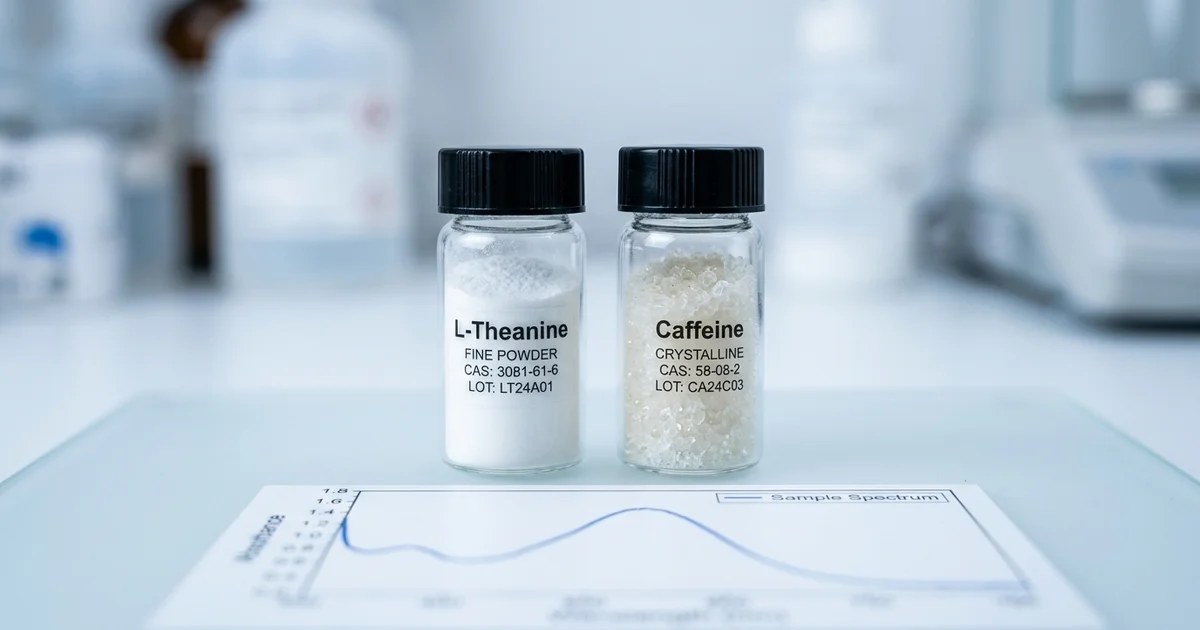
That last point is where stimulants enter the conversation. Many people reach for caffeine to force a start. The problem is that a sharp caffeine spike followed by a crash can fragment the very follow-through window you just opened. This is why cognitive-support products that pair caffeine with calming compounds, such as the combination of caffeine and L-theanine, are studied specifically for steadier attention. A frequently cited fMRI study on the caffeine and L-theanine combination found it supports faster responses to target stimuli and reduced mind-wandering compared with placebo, with the combination decreasing neural activity in brain regions associated with distraction. The behavioral step gets you moving. A clean, stable alertness base helps you keep going.
When the Freeze Is Worth a Conversation With a Clinician
You should talk to a clinician when task initiation paralysis is chronic, intense, and measurably disrupting your work, studies, or relationships, rather than an occasional bad day. Persistent executive-function breakdown is one of the recognized features of adult ADHD, and it is also a feature of depression, anxiety, burnout, and sleep deprivation. Self-diagnosis from a symptom list is unreliable.
The signals worth raising with a professional include a freeze pattern that has lasted for months, paralysis on tasks you genuinely care about, and a gap between your intentions and your output that is causing real consequences. The National Institute of Mental Health notes that ADHD persists into adulthood for many people and that proper evaluation matters because the same symptoms can have several causes. A qualified clinician can sort initiation difficulty from its lookalikes and build a plan around the actual cause. No supplement, app, or productivity hack is a substitute for that assessment.
The Wall Is a Signal, Not a Verdict
Task initiation paralysis is not evidence that you are lazy or undisciplined. It is the visible output of a measurable brain process: a prefrontal launch step that fires only when dopamine scores the effort as worth it. When the signal stays below threshold, your hands do not move, no matter how clearly you have decided.
That reframing changes what you do about it. You stop fighting your willpower and start engineering the math. Shrink the first step until it costs almost nothing, strip out friction before you sit down, and protect the momentum once it arrives. If the freeze is constant and costly across the parts of your life that matter, treat that as data and bring it to a professional. The wall is real. It is also far more workable once you know which lever actually moves it.
Frequently Asked Questions
Is task initiation paralysis the same as laziness?
No. Laziness implies you do not want to do the task. Task initiation paralysis is the opposite experience: you often want to start and still cannot. It reflects a breakdown in a specific executive-function step run by the prefrontal cortex and gated by dopamine. The "go" signal fails to clear the threshold for action, which is a mechanical problem, not a motivational or moral one.
Why can I start easily once a deadline is close?
A looming deadline raises the stakes and shortens the gap between effort and reward. That sharpens the brain's value estimate, so the dopamine-gated "worth-it" signal finally clears the launch threshold. The task did not get easier. The reward became more immediate and certain, which is exactly the variable the initiation system is most sensitive to.
Does everyone have task initiation problems, or only people with ADHD?
Everyone stalls sometimes, especially on boring, vague, or high-stakes tasks. The difference with an ADHD pattern is degree. ADHD-pattern brains stall more often, more intensely, and even on tasks the person genuinely wants to do, because they need a stronger value signal to clear the same threshold. Frequency, intensity, and life disruption are what separate an ordinary stall from a clinical pattern.
What is the fastest way to break the freeze in the moment?
Shrink the first step until it feels too small to refuse, then commit to only two minutes. Name a single physical action, like opening the file and typing a title, and remove one point of friction before you begin. This lowers the activation energy so the brain scores starting as cheap. Once you are moving, the value estimate updates and follow-through usually becomes easier.
Can caffeine help with getting started?
Caffeine can raise alertness, which may help you push past initial resistance. The catch is that a sharp spike followed by a crash can disrupt the follow-through window you just opened. Research on caffeine paired with L-theanine suggests the combination supports faster target-response times and less mind-wandering compared with placebo. Behavioral strategies do the starting; a stable alertness base supports staying in motion.
When should I see a doctor about this?
See a clinician when the freeze is chronic, intense, and disrupting your work, school, or relationships, rather than an occasional off day. Persistent executive-function difficulty can reflect ADHD, but also depression, anxiety, burnout, or poor sleep. Because the same symptom has several possible causes, a professional evaluation is the only reliable way to identify what is actually driving it.
A Calm Focus Base for the Follow-Through, Not a Replacement for the First Step
This article makes one core argument: starting is a dopamine-gated launch problem you solve with behavior, and staying started is an alertness problem you solve by avoiding the spike-and-crash cycle. The first part is on you. The shrink-the-step protocol does the ignition. The second part is where a clean stimulant base earns its place.
Roon is a zero-nicotine sublingual pouch built for that follow-through window. Each pouch carries 80 mg caffeine, 60 mg L-theanine, 25 mg methylliberine (Dynamine), and 5 mg theacrine (TeaCrine), a four-ingredient formula designed for steady, even alertness over several hours without the jitter or crash that fragments a work session. The L-theanine is there specifically to take the edge off the caffeine.
To be clear about what Roon is and is not: it is a focus aid for sustaining momentum once you have started. It is not a treatment for ADHD, and it is not a substitute for the behavioral first-step protocol or for a clinician's evaluation if your paralysis is chronic and costly. Get yourself moving first. If you want a calmer alertness base to ride that momentum, it is worth a look.
By Roon Team