Serotonin vs GABA: Two Completely Different Kinds of Calm
Roon Team
Serotonin vs GABA: Two Completely Different Kinds of Calm
People use the word "calm" like it means one thing. It doesn't. The serotonin vs gaba question matters because these two brain chemicals produce calm through entirely different machinery, and confusing them leads to bad decisions about supplements, sleep, and stress.
One quiets the noise. The other tunes the mood underneath it. Treat them as interchangeable and you end up taking the wrong thing for the wrong problem.
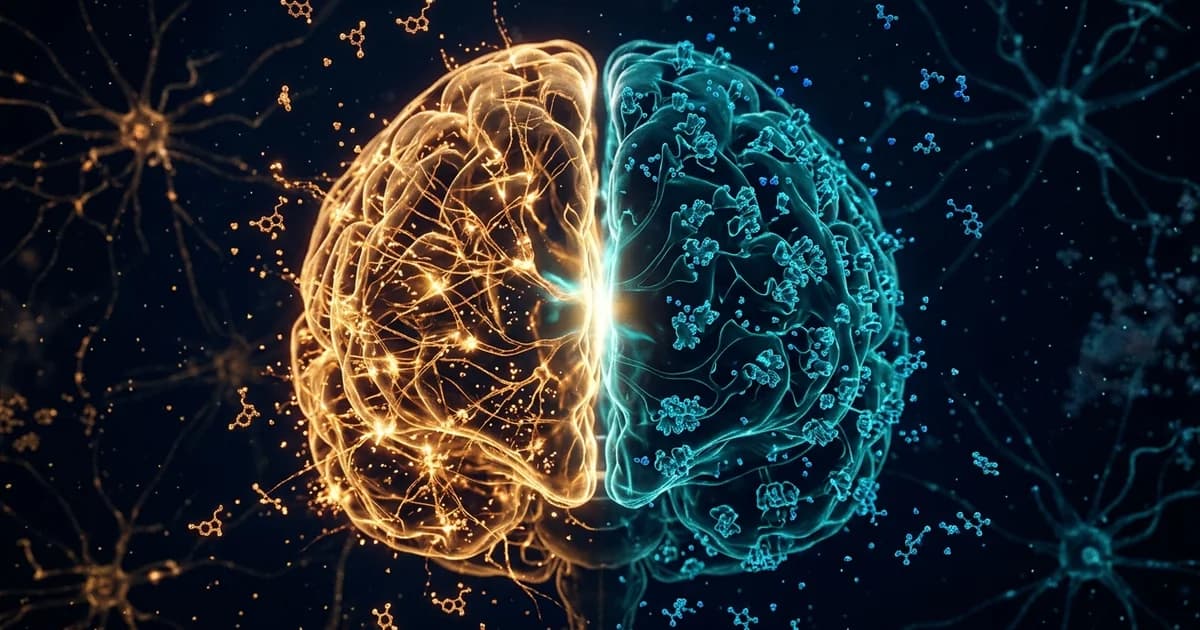
Here's the clean version. GABA dials down electrical activity in your neurons, which feels like the brakes coming on. Serotonin shapes how stable and content your baseline mood is over hours and days. Both reduce distress. They are not the same molecule, the same speed, or the same kind of relief.
Key Takeaways
- GABA is the brain's main inhibitory neurotransmitter. It slows neuron firing and produces fast, physical relaxation.
- Serotonin is a mood-and-regulation neurotransmitter. It works slower and shapes emotional steadiness, sleep timing, and appetite.
- The serotonin and gaba difference comes down to speed and job: GABA quiets activity now, serotonin sets the tone over time.
- For gaba vs serotonin anxiety, GABA targets the racing, wired feeling, while serotonin influences the longer mood pattern.
- Neither is the same as the alert calm you get from L-theanine paired with caffeine, which is a third category entirely.
What GABA Actually Does
GABA is the primary inhibitory neurotransmitter in your central nervous system, and its main job is to slow things down. When a neuron is overexcited, GABA binds to its receptors and makes that neuron less likely to fire. According to the Cleveland Clinic, GABA blocks specific signals in the brain to decrease activity in your nervous system, which produces a calming effect.
Think of GABA as the volume knob turning down. Less firing, less mental chatter, a body that stops bracing.
This is why so many sedatives and anti-anxiety drugs target the GABA system. Benzodiazepines, alcohol, and many sleep aids work by boosting GABA's effect at its receptors. They make the brakes stronger. That is also why they cause drowsiness, slowed reaction time, and dependence over time.
The GABA feeling is physical and fast. Shoulders drop. Heart rate eases. The "wired and tired" sensation fades because the overexcited signaling gets damped.
What Serotonin Actually Does
Serotonin is less of a brake and more of a thermostat for mood. It does not shut neurons off the way GABA does. Instead, it modulates how you feel, sleep, eat, and regulate emotion across longer windows of time.
Serotonin is sometimes called the "feel-good" chemical, but that label oversells it. Its real job is regulation and balance. The Cleveland Clinic describes serotonin as a chemical that carries messages between nerve cells and plays a role in mood, digestion, sleep, and other body functions.
Most of your body's serotonin actually lives in your gut, not your brain, where it helps run digestion. The portion in your brain influences mood stability and the timing of sleep, partly because serotonin is a building block your body converts into melatonin at night.
The serotonin effect is slow and structural. You do not feel a serotonin "hit" the way you feel a GABA-driven wave of relaxation. You feel its absence over days as low mood, poor sleep, and irritability.
Serotonin vs GABA: The Core Difference
The serotonin and gaba difference is speed versus tone. GABA acts in milliseconds to reduce neural firing. Serotonin acts over minutes, hours, and days to shape your emotional baseline.
Here is the side-by-side breakdown.
| Feature | GABA | Serotonin |
|---|---|---|
| Primary role | Inhibitory: slows neuron firing | Modulatory: regulates mood and rhythm |
| Type of calm | Physical relaxation, "brakes on" | Emotional steadiness, mood floor |
| Speed | Fast, near-immediate | Slow, builds over time |
| Best framed as | Volume knob | Thermostat |
| What runs low feels like | Restless, wired, tense | Low mood, poor sleep, irritability |
| Common targets | Sedatives, sleep aids, alcohol | Antidepressant pathways, mood support |
| Where it mostly lives | Throughout the brain | Mostly the gut, plus the brain |
When you map types of calm neurotransmitters this way, the choice gets obvious. If your problem is a racing, overstimulated nervous system at 11 p.m., that is a GABA-shaped problem. If your problem is a flat, low mood that has dragged on for two weeks, that is a serotonin-shaped problem.
GABA vs Serotonin for Anxiety
For gaba vs serotonin anxiety, the answer depends on which anxiety you mean. Anxiety is not one experience, and the two systems address different layers of it.
GABA targets the acute, physical layer. The pounding chest, the inability to sit still, the sense that every signal is turned up too loud. Boosting GABA activity quiets that overexcitement, which is why fast-acting anti-anxiety medications work on this system.
Serotonin targets the slow, cognitive layer. The persistent worry, the low mood that colors everything, the rumination that does not switch off. This is why many longer-term mood and anxiety treatments work through serotonin pathways and take weeks to build an effect rather than minutes.
So the mood vs relaxation neurotransmitter framing is genuinely useful. Serotonin is your mood neurotransmitter. GABA is your relaxation neurotransmitter. Different tools, different timelines, different problems.
The Third Kind of Calm Most People Miss
There is a calm that neither GABA sedation nor serotonin mood support describes: alert calm. It is the state where your body is relaxed but your mind stays sharp and awake.
This is the territory of L-theanine, an amino acid found in tea. Research links L-theanine to increased alpha brain wave activity, the pattern associated with relaxed, wakeful attention rather than drowsiness, as shown in an EEG study of L-theanine and alpha-band brain activity.
Alert calm is different from GABA's sedation because you do not get sleepy. It is different from serotonin's slow mood lift because you feel it the same session.
When L-theanine pairs with caffeine, the combination smooths out caffeine's jitter and edge while keeping the alertness. That is a focused, steady state, not a sedated one and not a mood-pill one. It is a separate category worth understanding before you reach for anything.
Conclusion
Calm is not a single feeling, and treating it like one is the mistake. GABA is your fast brake, slowing an overexcited nervous system into physical relaxation. Serotonin is your slow thermostat, shaping mood, sleep, and emotional steadiness across days.
The serotonin vs gaba distinction is about speed and job, not better versus worse. Match the tool to the layer of the problem: GABA for the wired body, serotonin for the heavy mood. And remember there is a third state entirely, the awake, relaxed focus that comes from a different mechanism than either one.
Understand which calm you actually need, and the noise around supplements and sleep aids gets a lot quieter.
Frequently Asked Questions
Is GABA or serotonin better for sleep?
They support sleep in different ways. GABA promotes sleep by quieting an overactive nervous system, which is why GABA-targeting sedatives cause drowsiness. Serotonin supports sleep indirectly because your body converts it into melatonin, the hormone that helps set sleep timing. If your issue is a racing mind at night, that is closer to a GABA-shaped problem. If your issue is disrupted sleep rhythm tied to low mood, serotonin pathways are more involved.
Can you increase GABA and serotonin naturally?
You can support both through lifestyle. Regular exercise, sleep, and sunlight exposure help maintain healthy serotonin signaling. Practices like deep breathing and meditation are associated with GABA activity and a calmer nervous system. Diet matters too, since serotonin is built from the amino acid tryptophan found in protein-rich foods. None of this replaces medical care for diagnosed conditions, and supplements affect everyone differently.
What is the main serotonin and gaba difference?
The main difference is function and speed. GABA is inhibitory, meaning it slows neuron firing for fast physical relaxation. Serotonin is modulatory, meaning it shapes mood, sleep, and emotional balance over longer periods. GABA acts like a volume knob turning activity down right now. Serotonin acts like a thermostat setting your baseline mood over hours and days. One quiets, the other regulates.
Which neurotransmitter handles anxiety?
Both play a role, but at different layers. For gaba vs serotonin anxiety, GABA addresses the acute, physical symptoms like a racing heart and restlessness by calming overexcitement. Serotonin influences the slower cognitive layer, the persistent worry and low mood that build over time. This is why fast anti-anxiety medications target GABA while many longer-term mood treatments work through serotonin and take weeks to show effects.
Are types of calm neurotransmitters limited to GABA and serotonin?
No. GABA and serotonin are two of the most discussed, but they are not the whole picture. Other chemicals shape your state too, including dopamine for motivation and norepinephrine for alertness. There is also the alert calm produced by compounds like L-theanine, which increases relaxed-but-awake brain activity without sedation. Calm is a spectrum of states, not a single switch controlled by one molecule.
Is the calm from L-theanine the same as GABA calm?
Not exactly. L-theanine is associated with increased alpha brain wave activity, a relaxed yet alert state, and it does not knock you out the way GABA-driven sedation can. GABA calm is about slowing neural firing, which tends toward drowsiness at higher levels. L-theanine produces a steadier, wakeful relaxation, which is part of why it pairs well with caffeine to smooth out jitters while keeping you sharp.
The Calm That Keeps You Awake
If you read this far, you already see the trap: reaching for a GABA-style sedative when what you actually want is to stay sharp, or expecting a serotonin-style mood shift to happen in one session. Different mechanisms, different timelines.
Roon is built for the third kind of calm, the alert kind. It is not a GABA-ergic sedative and not a serotonergic mood pill. It is a sublingual pouch that pairs 60 mg of L-theanine with 80 mg of caffeine, plus 25 mg methylliberine (Dynamine) and 5 mg theacrine (TeaCrine), designed for clean focus that holds for 6 to 8 hours with no jitters and no crash.
To be clear about what it isn't: Roon is not a treatment for anxiety, depression, or any sleep disorder, and it is not a substitute for medical care. It is a focus tool. If the state you want is relaxed, awake, and locked in, that is the lane it was made for. Try it when you need calm that keeps you working.
Written by Roon Team