Saffron for Mood: The Kitchen Spice With Antidepressant-Grade Trial Evidence
Roon Team
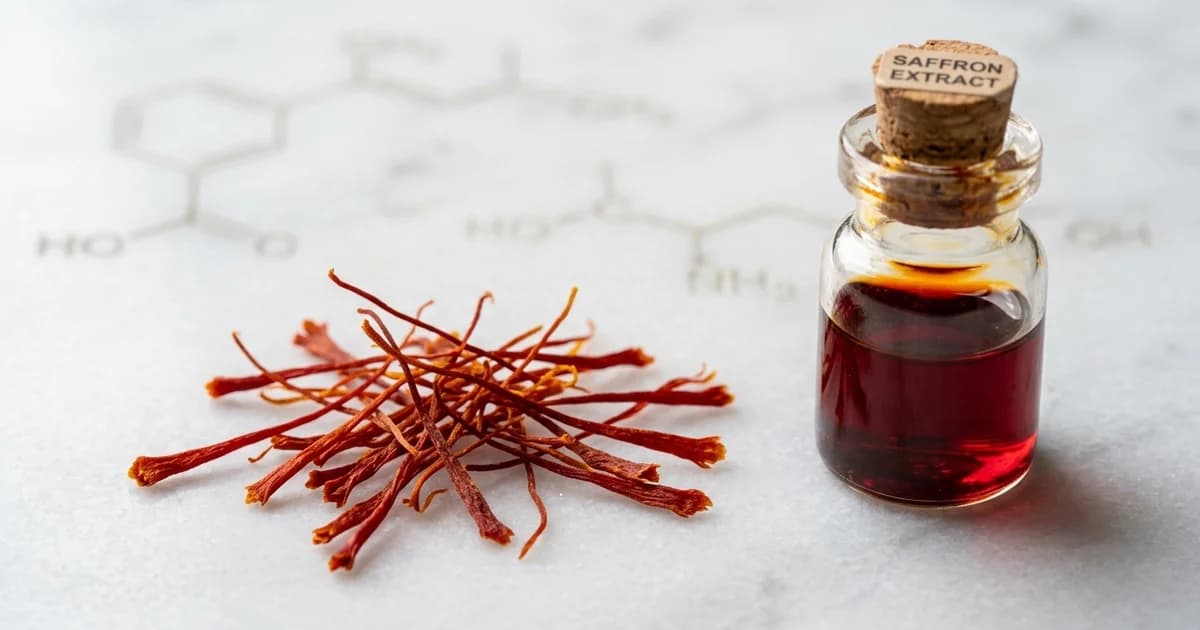
Saffron for Mood: The Kitchen Spice With Antidepressant-Grade Trial Evidence
The most expensive spice in your pantry has a clinical trial record that rivals prescription antidepressants. That is not marketing copy. Across more than a dozen randomized controlled trials, saffron for mood has held its own against drugs like fluoxetine, imipramine, and citalopram in people with mild to moderate depression.
Saffron (Crocus sativus) is the dried red stigma of a purple crocus flower. It takes roughly 150,000 flowers to produce a single kilogram, which is why it often costs more per gram than gold. For centuries it flavored Persian rice and Spanish paella. Only in the last 20 years did researchers start running it through the same trial machinery used to test pharmaceuticals.
What they found is hard to ignore. Here is the actual evidence, the mechanism, the dosing, and the one thing saffron is genuinely bad at.
Key Takeaways
- Saffron 30 mg/day has matched SSRIs in head-to-head trials for mild-to-moderate depression, with fewer side effects.
- The two active compounds, crocin and safranal, appear to influence serotonin and reduce inflammation in the brain.
- affron saffron extract at 28 mg/day improved mood in non-depressed adults with low mood within 4 weeks.
- Saffron works slowly. Budget 4 to 6 weeks before judging it. It is not an acute focus or energy tool.
What the Saffron for Mood Trials Actually Found
Saffron performs comparably to standard antidepressants in mild-to-moderate depression, and it does so with a cleaner side-effect profile. This is the headline finding, and it comes from real comparative trials, not test tubes.
A 2024 meta-analysis published in Nutrition Reviews pooled eight randomized controlled trials comparing saffron directly against SSRIs in adults with depression. Meta-analysis of 8 studies assessing depression outcomes revealed a nonsignificant difference between saffron and SSRIs in reducing depressive symptoms (SMD = 0.10; 95% CI: -0.09 to 0.29). In plain terms, the two were statistically equivalent.
The safety gap is where saffron pulled ahead. With regard to safety, participants receiving saffron had fewer adverse events than the SSRI group. That same review found no meaningful difference for anxiety symptoms either, with saffron again matching the drugs.
The drug-comparison data goes back further. An earlier review of trials run in Iran found that saffron (30 mg/day) and fluoxetine (20 mg/day) were equally effective in reducing depressive symptoms, and the study also revealed that saffron demonstrated fewer side effects. Separate trials reached the same conclusion against imipramine and citalopram.
One caveat worth stating plainly. Many of these early trials were small, short, and conducted in a single country, which is a known limitation of the saffron literature. The 2024 meta-analysis matters precisely because it aggregated the data and the equivalence finding survived.
Crocin and Safranal: How Saffron Works on the Brain
Saffron's mood effects trace back to two compounds: crocin (the carotenoid that gives saffron its red color) and safranal (the molecule behind its aroma). These are the markers reputable extracts standardize to.
The leading hypothesis is that saffron acts on serotonin much like an SSRI does. Research suggests the compounds slow the reuptake of serotonin, dopamine, and norepinephrine, keeping more of these neurotransmitters active in the synapse. According to a comparative review in PMC, saffron appears to work through several pathways at once rather than a single mechanism.
There is a second layer. Saffron is a strong antioxidant, and chronic low-grade inflammation is now tied to depressive symptoms in a meaningful subset of people. Crocin's anti-inflammatory activity may be part of why the spice helps mood, not just its serotonergic effect.
This multi-pathway action is also why saffron takes weeks to build. You are not blocking a receptor for an instant hit. You are gradually shifting neurotransmitter availability and tamping down inflammation, and that takes time.
affron Saffron Extract: The Most-Studied Branded Version
When you read about saffron supplement benefits for mood, much of the recent data comes from one standardized extract: affron, made by Pharmactive and dosed at 28 mg per day.
The original 2017 trial set the template. In this 3 arm study, 128 participants self-reporting low mood but not diagnosed with depression, were given affron at 28mg/day, 22mg/day, or a placebo treatment in a randomized, double-blind, placebo-controlled trial for 4 weeks. The higher dose won. Tension, depression, confusion and fatigue (POMS) diminished in the 28 mg/day treated group, and the 28 mg/day treated group showed a decrease in stress and depression (DASS-21).
A larger 2025 trial pushed the timeline out. Researchers led by Adrian Lopresti recruited adults with subclinical depressive symptoms for a 12-week study. The purpose of this 2-arm, 12-wk, parallel-group, randomized, double-blind, placebo-controlled trial was to examine the effects of supplementation with a saffron extract (Affron) on mood and sleep in adults experiencing subclinical depressive symptoms, with 202 adults aged 18 to 70 supplemented with 28 mg saffron daily or a placebo.
The longer-term result was notable. According to NutraIngredients reporting on the trial, those consuming Affron experienced a 53% drop in low mood symptoms following the three months of supplementation, as measured by the DASS 21.
That matters for one reason: these were people with low mood who had not been diagnosed with clinical depression. The benefit was not limited to a clinical population.
Saffron Dosage: How Much, and What to Look For
The clinically validated dose is narrow and consistent: 28 to 30 mg per day of a standardized saffron extract, split or taken once daily. Going higher does not appear to help, and going much higher introduces risk.
Almost every positive trial landed in this range. The drug-comparison studies used 30 mg/day. The affron studies used 28 mg/day. There is no published evidence that 100 mg outperforms 30 mg for mood.
The safety ceiling is the real reason to respect the dose. The supplement reference site Examine notes that doses above 5 grams (5,000 mg) are considered toxic and doses above 20 grams (20,000 mg) may be lethal. A 30 mg supplement sits far below that threshold, but it explains why "more" is a bad instinct here.
When choosing a saffron supplement, check for these:
- Standardization to crocin and safranal, not just raw "saffron powder" by weight.
- A clinically studied dose around 28 to 30 mg/day.
- A named, trial-backed extract (affron is the most documented) or third-party testing.
- A realistic expectation: give it 4 to 6 weeks.
A safety note, not medical advice: because saffron may affect serotonin, talk to a doctor before combining it with prescription antidepressants. Do not treat a botanical as a reason to stop a prescribed medication.
Saffron vs. Other Mood and Performance Approaches
Saffron occupies a specific lane: a slow-building, serotonin-leaning botanical for mood. It is not interchangeable with stimulants, fast-acting nootropics, or acute focus tools. The table below puts it in context.
| Approach | Primary use | Onset | Best for | Key limitation |
|---|---|---|---|---|
| Saffron (Crocus sativus) | Mood support | 4 to 6 weeks | Low mood, mild-to-moderate depressive symptoms | Slow; does nothing acutely |
| SSRIs (prescription) | Clinical depression | 2 to 6 weeks | Diagnosed depression and anxiety | Side effects; requires a prescription |
| L-theanine | Calm focus | 30 to 60 min | Smoothing stimulant edge, relaxed alertness | Mild on its own |
| Caffeine + L-theanine | Acute focus and energy | 5 to 30 min | Daytime cognitive performance | Not a mood treatment |
| Roon (sublingual pouch) | Fast, sustained focus | 5 to 10 min | All-day performance without jitters or crash | Not a serotonergic mood supplement |
The point is that these tools answer different questions. Saffron asks "how is my baseline mood over weeks?" A caffeine and L-theanine stack asks "how sharp am I in the next eight hours?" Confusing the two leads to disappointment with both.
If you want the deep dives, see our breakdowns on how L-theanine smooths out caffeine and why sustained focus beats the stimulant spike and crash.
Conclusion
Saffron earned its reputation honestly. Across head-to-head trials, a 30 mg daily dose of standardized extract has matched common antidepressants for mild-to-moderate depression while causing fewer side effects, and the affron studies show measurable mood gains even in people who were never diagnosed with anything.
The mechanism is plausible and multi-pronged: crocin and safranal nudge serotonin while crocin's antioxidant activity cools inflammation. None of it is instant. Saffron is a 4-to-6-week project, and judging it after three days guarantees you will conclude it does nothing.
Used the right way, with the right expectations, it is one of the better-evidenced botanicals you can buy. Treat it as a slow baseline lever, not a switch.
Frequently Asked Questions
How long does saffron take to work for mood?
Plan for 4 to 6 weeks of daily use before evaluating it. Saffron works by gradually shifting neurotransmitter availability and reducing inflammation, not by producing an immediate effect. The 2017 affron trial measured benefits at the 4-week mark, and the 2025 trial showed a roughly 53% drop in low-mood symptoms over three months. If you take it once and feel nothing, that is expected. Consistency is the entire game with this spice.
What is the right saffron dosage for mood?
The clinically studied dose is 28 to 30 mg per day of a standardized extract. Drug-comparison trials used 30 mg/day, and the affron studies used 28 mg/day. Higher doses do not show better mood results and increase the risk of side effects. Look for an extract standardized to crocin and safranal rather than a product labeled only by raw saffron weight, since potency depends on those active compounds.
Is saffron as effective as antidepressants?
For mild-to-moderate depression, the comparative trials say it is statistically equivalent. A 2024 meta-analysis of eight randomized controlled trials found no marked difference between saffron and SSRIs in reducing depressive symptoms, and saffron caused fewer adverse events. That said, this applies to mild-to-moderate cases. Saffron is not a replacement for prescribed treatment of clinical depression, and you should never stop a medication without talking to your doctor.
What are crocin and safranal?
They are saffron's two main active compounds. Crocin is the carotenoid pigment that gives saffron its deep red color, and safranal is the volatile molecule responsible for its aroma and flavor. Both appear to influence serotonin, dopamine, and norepinephrine signaling, while crocin also acts as an antioxidant. Quality saffron supplements are standardized to guaranteed levels of these two compounds, which is the best signal that you are getting a clinically relevant dose.
Can I just cook with saffron instead of taking a supplement?
Probably not at the doses studied. Culinary saffron is used in tiny pinches, and the trials used a concentrated 28 to 30 mg standardized extract daily. Reaching a consistent therapeutic dose through cooking alone is impractical and expensive, given saffron's price per gram. The cooking tradition is delicious and harmless, but the mood evidence specifically supports standardized supplements taken at a measured daily dose.
Does saffron help with focus or energy?
No, and this is the most common misunderstanding. Saffron is a slow mood-building botanical, not a stimulant or an acute focus aid. It does nothing for alertness in the moment. If your goal is sharp, sustained daytime focus, that calls for a different category entirely, such as a caffeine and L-theanine approach. Saffron and focus tools solve completely different problems.
Are there side effects to taking saffron?
At the studied dose of around 30 mg/day, saffron is well tolerated and consistently shows fewer side effects than SSRIs in trials. Problems appear at extreme doses far above what any supplement contains. Because saffron may affect serotonin, combining it with prescription antidepressants should be discussed with a physician first. Pregnant individuals in particular should avoid high doses, since large amounts of saffron carry known risks.
Saffron Builds Your Baseline. Roon Sharpens Your Day.
Saffron is a long game. You take it daily for a month or more, and it slowly raises your mood baseline through serotonin and inflammation pathways. That is a real, well-documented benefit. It is also the opposite of what you need at 9 a.m. when you have a hard block of work in front of you.
That gap is where Roon fits. It is a zero-nicotine sublingual pouch built for acute daytime performance, not slow mood support. Each pouch pairs 80 mg caffeine, 60 mg L-theanine, 25 mg methylliberine (Dynamine), and 5 mg theacrine (TeaCrine), with a 5-to-10-minute onset and a 6-to-8-hour window of focus without the jitters, crash, or tolerance buildup of repeated coffee.
To be clear about what it is not: Roon is not a serotonergic mood supplement and it will not replace what saffron does over weeks. Think of them as two separate levers. Saffron tends the baseline. Roon handles the next eight hours. If you want focus you can feel quickly, try Roon.
Written by Roon Team