Pycnogenol (French Maritime Pine Bark Extract)
Roon Team
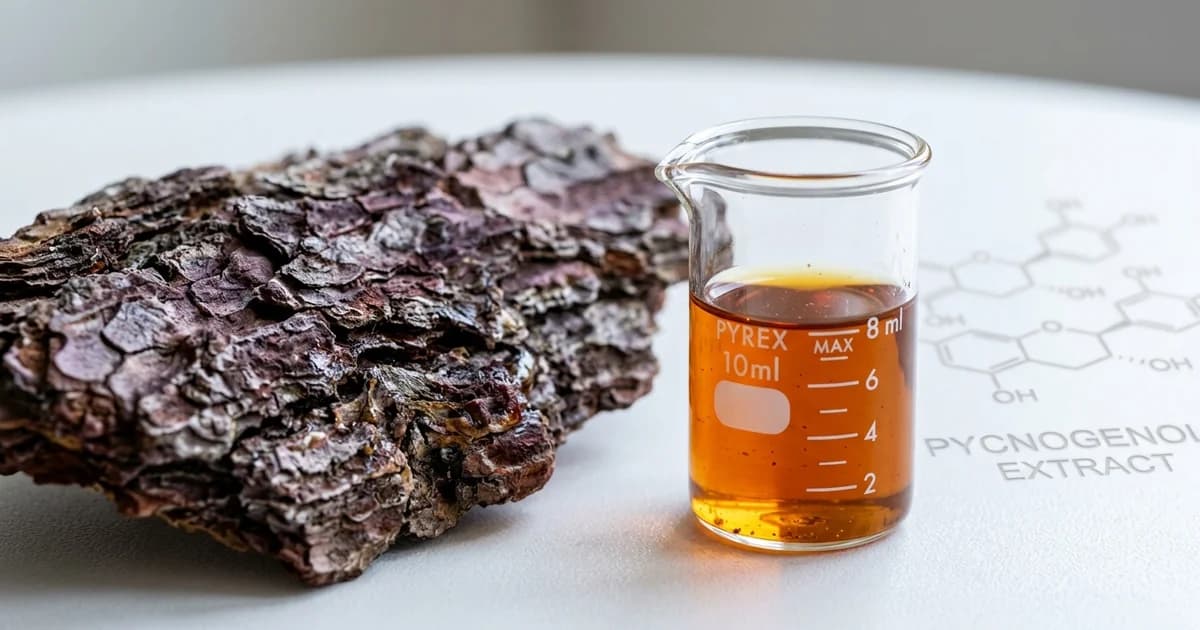
Pycnogenol (French Maritime Pine Bark Extract): What It Actually Does for Attention and Mental Performance
You sit down to study, and forty minutes later you realize you've reread the same paragraph four times. Your attention keeps slipping. Most people reach for more coffee. A smaller, science-literate crowd reaches for pycnogenol, a standardized extract of French maritime pine bark that has been studied specifically for sustained attention and mental performance.
This is not a stimulant. Pycnogenol works on a slower clock, and that distinction matters more than most supplement marketing admits. Understanding it tells you exactly when pine bark extract helps, and when it does nothing at all.
Here is what the research actually says, where the dosage lands, and why students keep showing up in the studies.
Key Takeaways
- Pycnogenol is a patented extract of Pinus pinaster bark, roughly 65 to 75% procyanidins, the same catechin-based compounds found in green tea and cocoa.
- Its cognitive effects build over 4 to 12 weeks, not within an hour. It is a slow-onset ingredient.
- An 8-week student trial tied 100 mg per day to better sustained attention, memory, mood, and higher exam scores.
- The leading mechanism is vascular: pycnogenol supports nitric oxide production and blood flow, which feeds the brain.
- It pairs logically with fast-acting focus tools because the two operate on completely different timelines.
What Pycnogenol Actually Is
Pycnogenol is the trademarked name for a standardized extract from the bark of the French maritime pine, Pinus pinaster, grown in southwest France. The active fraction is a mix of polyphenols. According to a review in Springer's Evidence-Based Integrative Medicine, Pycnogenol is primarily composed of phenolic acids and procyanidins, which are biopolymers of catechin and epicatechin subunits recognized as important nutritional constituents.
In plain terms, pine bark extract is a concentrated dose of the same family of antioxidants you get from tea, dark chocolate, and red wine, standardized to a fixed potency.
That standardization is the point. Generic pine bark powder varies wildly batch to batch. Pycnogenol is held to a consistent procyanidin content, which is why nearly every published cognitive study uses it specifically rather than a no-name extract.
How Pycnogenol Affects the Brain
The leading explanation for pycnogenol cognitive function is vascular: it supports nitric oxide production, which improves blood flow to the brain. Better perfusion means more oxygen and glucose reaching the neurons doing the work.
Per Examine's breakdown of the mechanism, pycnogenol acts as an antioxidant, dampens proinflammatory pathways, and enhances nitric oxide synthesis, which contributes to improved blood flow and capillary integrity. The lead researcher on the student trial put it directly, noting that oxygen-rich blood supply to the brain matters for cognition, and that the vascular improvement from Pycnogenol may explain the benefits.
There is a second layer. ScienceDirect's overview of pycnogenol describes it as a potent antioxidant with high affinity for collagen, where larger procyanidins bind to damaged blood vessel proteins and lower capillary permeability.
So you have two routes working together: more blood flow in, less oxidative wear and tear. Neither happens in five minutes. Both compound over weeks.
The Student Study Everyone Cites
The strongest evidence for pycnogenol attention comes from an 8-week trial in university students that linked 100 mg per day to better sustained attention, memory, mood, and higher exam scores.
The study ran at Pescara University in Italy. As EurekAlert reported, researchers examined 53 Italian university students aged 18 to 27, assigning them to a control group or a test group that took 100 mg of Pycnogenol daily for eight weeks, with mental performance measured by computer-assisted cognitive tests.
The findings were specific. Nutritional Outlook summarized that by the end of the trial, students in the Pycnogenol group showed improvements in markers for sustained attention, memory, and mood, along with reduced anxiety. The official write-up adds that the supplemented students scored higher on university exams than the control group.
This is why pycnogenol students searches exist. The trial sits in exactly the population that cares about attention under pressure: people facing real exams with real stakes.
One caveat worth stating plainly. The research on this ingredient is heavily funded by Horphag Research, the company that makes Pycnogenol. The student data is encouraging, but it is not independent, and the sample was small.
Pycnogenol, Attention, and the ADHD Research
Pine bark extract has also been tested in children with attention difficulties, with results that point in the same direction.
In a randomized, double-blind, placebo-controlled trial, reported by New Hope, children received 1 mg of Pycnogenol per kilogram of body weight each morning for one month. A separate summary notes that this dose for four weeks relieved hyperactivity and improved attention in the children studied, as rated by teachers.
A clarification on compliance: Roon makes no medical claims, and neither should you read this as one. Pycnogenol is a dietary supplement, not a treatment for any condition. The ADHD data is interesting because it reinforces the attention signal across different ages, not because it makes pine bark a therapy.
Pycnogenol Dosage: What the Studies Used
Most cognitive trials use 100 mg of pycnogenol per day for adults, or roughly 1 mg per kilogram of body weight, taken over a span of four weeks or longer. That is the range tied to the attention and memory results above.
A 12-month study in older adults aged 55 to 70 (the COFU3 study) also used 100 mg per day and reported improved cognitive function and reduced oxidative stress with no side effects observed. The pattern holds across age groups: modest daily dose, long runway.
Here is the table that matters for pycnogenol dosage by goal.
| Goal | Typical daily dose | Time to effect | Evidence base |
|---|---|---|---|
| Student attention and memory | 100 mg | 8 weeks | Pescara University trial |
| Adult cognitive function (older) | ~100 mg | Up to 12 months | 55 to 70 age-group study |
| Childhood attention support | ~1 mg/kg | 4 weeks | Randomized ADHD trials |
The takeaway across all three rows: pycnogenol rewards consistency. It is a daily-habit ingredient, not a pre-exam shortcut.
Where Pycnogenol Fits, and Where It Doesn't
Pycnogenol is a long-game ingredient. You take it daily for weeks, and the vascular and antioxidant benefits accumulate quietly underneath your performance.
What it will not do is fix the next 90 minutes. If you have a deadline this afternoon, pine bark extract is the wrong tool. It has no acute stimulant action and no rapid onset to speak of.
That gap is exactly why people often run a slow ingredient like pycnogenol alongside something fast. The two answer different questions. One asks "how is my baseline attention over the semester," the other asks "can I lock in right now." If you want the fast side of that equation, our breakdown of how caffeine and L-theanine work together for focus covers the acute mechanism in detail.
Conclusion
Pycnogenol is one of the better-studied plant extracts for attention, and the evidence points in a clear direction. It supports cognitive function through blood flow and antioxidant action, the results show up in students and older adults alike, and the working dose sits around 100 mg a day taken consistently for weeks.
The honest framing is that pycnogenol is a baseline investment, not a switch you flip. The research is promising but largely industry-funded, so treat it as a reasonable daily addition rather than a sure thing. Read it for what it is: a slow, vascular approach to attention that earns its keep over time, not in the moment you sit down to work.
Frequently Asked Questions
How long does pycnogenol take to work for attention?
Weeks, not minutes. The student trial that found better sustained attention and memory ran for eight weeks at 100 mg per day, and the adult cognitive study ran for twelve months. Pycnogenol works through gradual changes in blood flow and oxidative stress, so it has no meaningful same-day effect on focus. Treat it as a daily supplement you commit to, similar to fish oil or a multivitamin, where the payoff builds over a sustained period.
What is the right pycnogenol dosage for cognitive function?
Adult cognitive studies generally use 100 mg per day. Trials in children with attention difficulties used roughly 1 mg per kilogram of body weight daily, which works out near 70 to 75 mg for a 150-pound person. Higher is not automatically better, and the published cognitive benefits cluster around that 100 mg mark taken for at least four to eight weeks. Always check with a clinician before adding any supplement, especially if you take medication.
Is pycnogenol the same as generic pine bark extract?
No. Pycnogenol is a specific patented extract of French maritime pine bark, standardized to a fixed procyanidin content. Generic pine bark extract can vary in potency from batch to batch. Nearly every published cognitive study used Pycnogenol specifically, so results from those trials do not automatically transfer to cheaper, unstandardized pine bark powders sold under different names.
Does pycnogenol help students with exams?
The most cited evidence comes from a trial of 53 Italian university students who took 100 mg daily for eight weeks and showed better sustained attention, memory, and mood, plus higher exam scores than the control group. The signal is encouraging. The sample was small and the research was industry-funded, so view it as supportive rather than conclusive, and remember it requires weeks of daily use to be relevant before an exam season.
Does pycnogenol have stimulant effects or cause jitters?
No. Pycnogenol contains no caffeine and no stimulants. Its effects come from antioxidant activity and improved blood flow, not from nervous-system stimulation. That means no jitters and no crash, but also no acute lift in alertness. If you want an immediate sense of focus, pycnogenol is not the ingredient that delivers it. It works underneath your performance over time rather than on top of it.
Can you take pycnogenol with caffeine?
There is no known conflict between pycnogenol and caffeine, and they operate on entirely different timelines. Pycnogenol supports baseline attention over weeks, while caffeine acts within minutes. Some people use a daily pine bark extract for the long arc and a caffeine-based tool for acute focus. As always, talk to a healthcare provider about your specific stack, particularly if you have a cardiovascular condition or take blood-pressure medication.
What are the main side effects of pycnogenol?
Pycnogenol is generally well tolerated in studies. The 12-month adult cognitive trial reported no side effects observed, recorded, or described. The most commonly noted issues in broader research are mild digestive upset and occasional dizziness or headache, usually at higher doses. Anyone pregnant, breastfeeding, or on medication that affects blood clotting or blood pressure should consult a clinician before starting it.
Two Timelines: Slow Baseline vs. The Next Hour
Pycnogenol builds attention over weeks through better blood flow and lower oxidative stress. That is its strength and its limit. It does nothing for the meeting you walk into in ten minutes.
Roon lives on the opposite end of that timeline. It is a zero-nicotine sublingual pouch built for acute focus, and it does not contain pine bark extract. The formula pairs 80 mg caffeine with 60 mg L-theanine in a roughly 4:3 ratio, plus 25 mg methylliberine (Dynamine) and 5 mg theacrine (TeaCrine), with onset in 5 to 10 minutes and a 6 to 8 hour window of focus without the jitters or crash. The caffeine and L-theanine pairing is well supported for acute attention, as shown in a 2025 crossover trial in the British Journal of Nutrition.
Think of them as complementary, not competing. A daily pine bark habit invests in your baseline; Roon covers the hour in front of you. If you want the fast layer, try Roon when you need attention now, and let pycnogenol do its slower work in the background.
Written by Roon Team