Phosphatidylserine Sources Compared: Sunflower vs Soy vs Bovine (and Why It Matters)
Three supplements can list "300 mg phosphatidylserine" on the label and deliver three different things. The reason hides in a single word most shoppers skip: the source. The most studied phosphatidylserine sources are sunflower, soy, and bovine brain, and the gap between them is not marketing fluff. It changes what you are actually swallowing.
Phosphatidylserine, or PS, is a phospholipid that sits in the membrane of every cell, concentrated heavily in your brain. Your body makes it. As you age, you make less.
The question buyers get wrong is which raw material a brand used to manufacture it, and whether the famous clinical studies even apply to the version in your hand. Let's settle it.
Key Takeaways
- Bovine brain PS carried the strongest early clinical evidence but was pulled over mad cow disease risk. You will rarely find it today.
- Soy and sunflower PS are made the same way (an enzyme swaps the head group onto a plant phospholipid) and share an almost identical backbone.
- Sunflower PS is the cleaner pick for most people: soy-free, allergen-friendly, and often the preferred commercial form.
- The plant versions lack the DHA-PS species that made bovine brain unique, which matters for how literally you can apply the old research.
Why Phosphatidylserine Source Is the Most Important Word on the Label
The source determines the fatty acid profile, the allergen risk, and how closely your supplement matches published trials. Same compound name, different molecule attached.
Here is the mechanism. Commercial PS is built by transphosphatidylation, an enzyme reaction that takes a base phospholipid (usually lecithin from a plant) and attaches a serine head group. The head group is identical no matter the source. What differs is the tail: the fatty acids riding on the glycerol backbone.
According to a comparison from MyFormulaForge, the chemical forms of PS vary by source, and form selection is one of the more consequential choices in PS supplementation. That sounds dramatic until you see the fatty acid data, and then it makes sense.
The Three Phosphatidylserine Sources, Compared
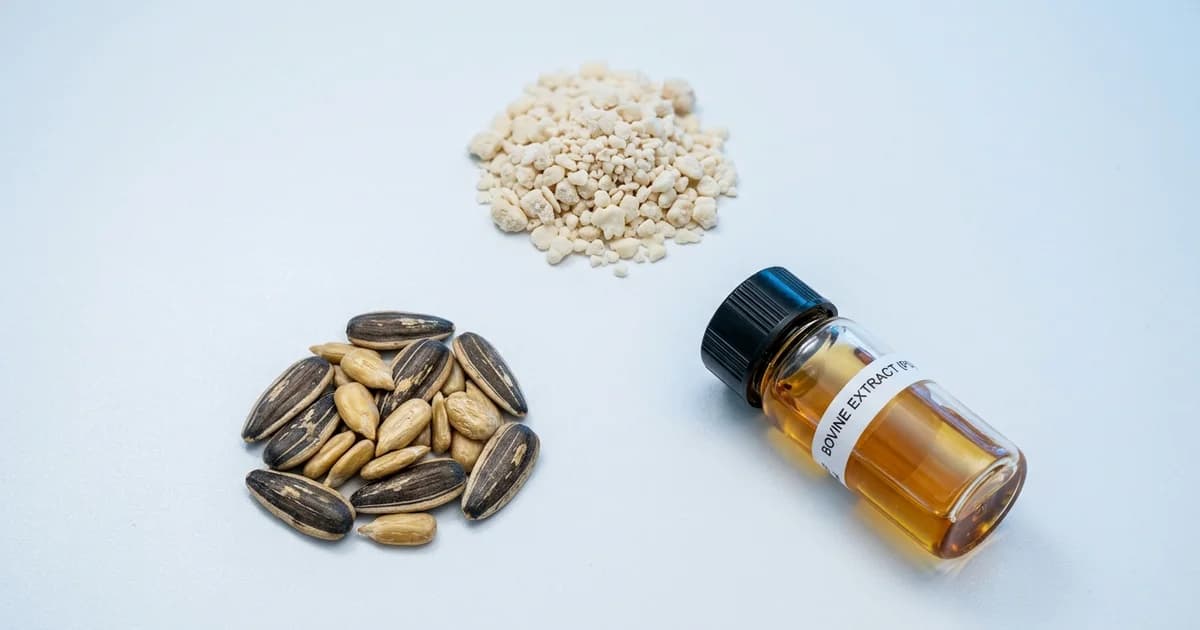
The short version: bovine is historical, soy is common and cheap, sunflower is the modern default. Below is how they line up.
| Source | Status today | Allergen profile | DHA content | Clinical pedigree |
|---|---|---|---|---|
| Bovine brain | Discontinued (BSE risk) | Animal-derived | Naturally contains DHA-PS | Strongest early trials |
| Soy | Widely sold | Soy allergen, often GMO | None | Used in many modern studies |
| Sunflower | Modern standard | Soy-free, allergen-friendly | None | Chemically matched to soy backbone |
Bovine PS: the original, and why it disappeared
Bovine cortex PS is the form behind the most cited cognitive studies, and it is also the form you almost certainly cannot buy. The earliest compelling evidence came from cow-brain PS in the late 1980s and early 1990s.
Dr. Brad Stanfield's review points to Amaducci et al. (1988), one of the first multicenter trials, where patients with early Alzheimer's took 300 mg per day of bovine cortex PS for three months and showed measurable cognitive gains. Strong data. Bad supply chain.
Then mad cow disease changed everything. Metagenics notes that PS was first derived from cattle brain cells, but the "Mad Cow Disease" outbreaks of the late 1990s and early 2000s pushed manufacturers to find plant alternatives. Stanfield's review states plainly that bovine brain PS is no longer commercially available because of those safety concerns.
So when a label leans on "clinically proven phosphatidylserine," ask which form the trial used. Often it was the cow brain version you can no longer purchase.
Soy PS: common, cheap, and the workhorse of modern research
Soy PS became the default replacement after bovine exited, and most current supplements still use it. It is produced by transphosphatidylation from soy lecithin, and it carries the clinical baton for plenty of modern trials.
The drawbacks are practical, not scientific. Soy is a top allergen, and a lot of soy lecithin comes from genetically modified crops. Guanjie Biotech notes that soybean PS is rich in unsaturated fatty acids such as linolenic acid, with a fatty acid makeup that differs from sunflower.
If you avoid soy for dietary, allergy, or GMO reasons, this is where you look elsewhere.
Sunflower PS: the soy-free upgrade most brands switched to
Sunflower phosphatidylserine is the modern default because it delivers the same serine head group without the soy. It is made the identical way, just starting from sunflower lecithin instead.
This matters more than it sounds. Integrative Therapeutics states that PS from sunflower oil is chemically indistinguishable from soy or bovine-sourced oils at the backbone level, which makes it a clean swap for anyone wanting to skip soy or animal sources. MyFormulaForge ranks sunflower phosphatidylserine as its top form on bioavailability grounds, classifying soy as a secondary form.
For most healthy adults choosing the best form of phosphatidylserine, sunflower wins on allergen profile and label cleanliness without giving up the core compound.
The DHA Phosphatidylserine Catch Nobody Mentions
Here is the wrinkle the plant-versus-plant debate skips: bovine brain PS naturally carried DHA-PS, and neither soy nor sunflower does. That is a real difference, not a rounding error.
In the brain, a large share of PS is bound to the omega-3 fatty acid DHA. Bovine cortex PS preserved those DHA-PS species. Research indexed on ScienceDirect confirms bovine cortex PS contains DHA-PS species, which is exactly what the plant-derived transphosphatidylated versions lack.
Fenix Health Science makes the point bluntly: unlike cow-brain PS, soy and sunflower PS do not carry the omega-3 fatty acids EPA and DHA. So a soy or sunflower capsule gives you the serine head group on a different fatty acid tail than the brain's native PS.
Does that erase the benefit? No. Plenty of modern soy and sunflower trials still report cognitive support. But it does mean you cannot copy old bovine results onto a sunflower bottle without an asterisk. If the DHA profile matters to you, the practical move is pairing plant PS with a quality omega-3, or choosing a DHA phosphatidylserine product that adds DHA back into the formula.
How Much, and Does Source Change the Dose?
The studied dose is consistent across sources: roughly 300 mg per day for cognitive support. Source changes the raw material, not the target amount.
Goldman Laboratories summarizes clinical trials showing 300 mg daily over 8 to 12 weeks improving short-term memory recall and executive function, mainly in older adults. The Chemi-Nutra white paper describes 300 mg per day trials in adults with age-related cognitive decline showing gains on memory and learning tasks.
Two things to take from this. The evidence is strongest in aging populations, and consistency over weeks beats a single dose. PS is not a same-day stimulant. It is a slow, structural input.
Conclusion: Read the Source, Not Just the Milligrams
Phosphatidylserine is one of the better-evidenced phospholipids for cognitive support, but the number on the front of the tin tells you almost nothing on its own. The source line on the back does the real work.
Bovine brain PS owns the legacy research and the native DHA-PS profile, yet you cannot reasonably buy it anymore. Soy PS is the affordable, well-studied workhorse with an allergen tradeoff. Sunflower PS is the clean modern default, identical at the backbone and free of soy.
Pick by what you actually need. If you want soy-free, choose sunflower. If you care about the DHA story, add omega-3 or buy a DHA-paired product. And whatever you choose, treat the source as the headline, not the fine print.
Frequently Asked Questions
Is sunflower or soy phosphatidylserine better?
For most healthy adults, sunflower is the better pick because it is soy-free, allergen-friendly, and often non-GMO, while delivering the same serine head group as soy. The two share a nearly identical backbone since both are made by the same enzyme process. Soy still has more direct study volume and costs less. If you have no soy concerns and want maximum research overlap, soy is fine. Otherwise, sunflower is the cleaner default.
Why can't I buy bovine phosphatidylserine anymore?
Bovine brain PS was largely pulled from the market over bovine spongiform encephalopathy, known as mad cow disease. Reviews of the literature note that bovine brain PS is no longer commercially available because of those safety concerns. The irony is that the strongest early cognitive trials used this exact form. Manufacturers shifted to soy and later sunflower as safer, plant-based replacements that avoid any animal-tissue contamination risk.
Does soy or sunflower PS contain DHA?
No. Neither soy nor sunflower phosphatidylserine naturally contains DHA. Only bovine brain PS carried meaningful DHA-PS species, because brain tissue binds a large share of its PS to that omega-3. Plant-derived PS made by transphosphatidylation attaches the serine head group to plant fatty acids instead. If you want the DHA component, pair your plant PS with a fish or algae omega-3, or choose a product that specifically adds DHA back into the formula.
How much phosphatidylserine should I take?
Most clinical studies use about 300 mg per day, often split into two or three doses with meals. Trials running 8 to 12 weeks report improvements in short-term memory and executive function, mainly in older adults. The dose target is the same regardless of whether the PS is from soy or sunflower, since the source changes the raw material, not the studied amount. Consistency over several weeks matters more than any single serving.
Is phosphatidylserine a stimulant for instant focus?
No. PS is a structural phospholipid that supports cell membrane function over time, not a fast-acting stimulant. The benefits in studies show up after weeks of consistent use, not minutes. If you want rapid, same-session focus, PS is the wrong tool. It works more like a long-term input to brain cell health. Stimulant-based focus and structural support are two different jobs, and PS handles the second one.
Is sunflower phosphatidylserine non-GMO and allergen-friendly?
Generally yes. Sunflower PS is soy-free by definition, which removes one of the top food allergens, and sunflower lecithin is often non-GMO since most commercial sunflower is not genetically modified. That combination is the main reason brands switched from soy. Always confirm with the specific product, since manufacturing and certifications vary. But as a category, sunflower PS is the easier fit for people avoiding soy, common allergens, or GMO ingredients.
How Roon Reads a Label Before You Have To
The whole point of comparing phosphatidylserine sources is simple: the name on the front of a supplement rarely tells you what is inside. The source line does. That same habit, checking the actual evidence behind each ingredient instead of the headline claim, is how we built Roon.
Roon is not a phosphatidylserine product, and it will not replace a long-term PS or omega-3 routine. It does one specific job: clean, fast cognitive support when you need to lock in. Each sublingual pouch carries four clinically studied actives, 80 mg caffeine, 60 mg L-theanine, 25 mg methylliberine (Dynamine), and 5 mg theacrine (TeaCrine), tuned for a 5 to 10 minute onset and a 6 to 8 hour window with no jitters, no crash, and no tolerance buildup.
We chose those four the same way you should choose a PS source: by reading the research, not the marketing. If you want focus you can feel without guessing what is in it, try Roon.
Written by Roon Team