Nicotine Toothpicks: Do They Work, and Are They Safe?
Roon Team
Nicotine Toothpicks: Do They Work, and Are They Safe?
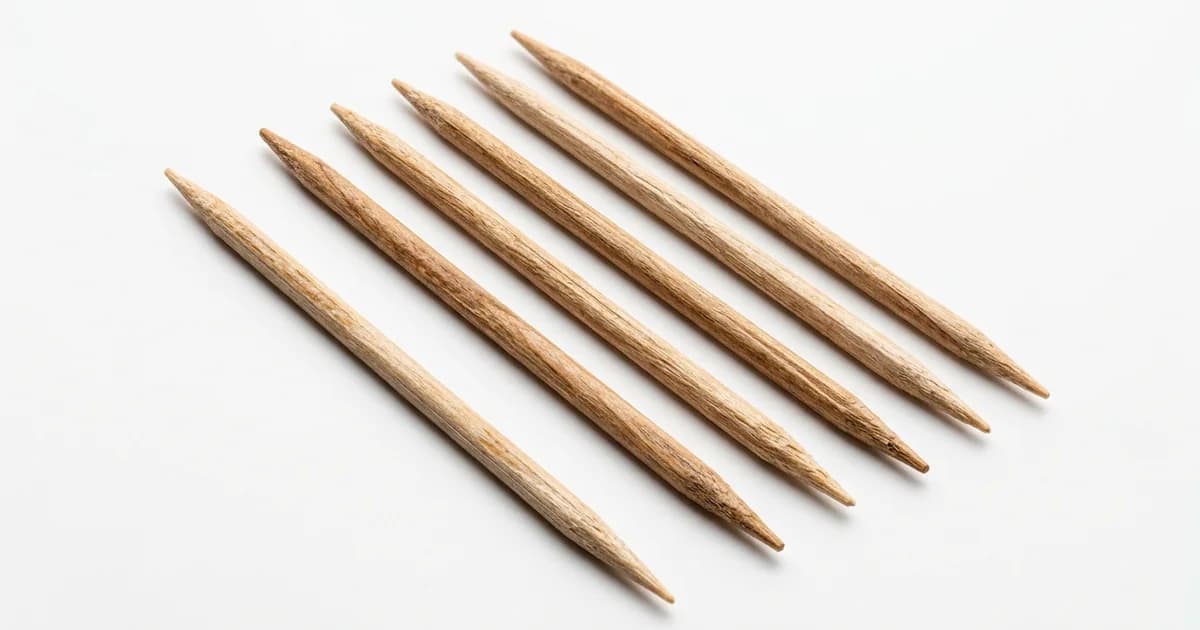
A nicotine toothpick is a wooden pick soaked in liquid nicotine and flavoring that you park between your cheek and gum. You don't chew it for the wood. You hold it there so the nicotine seeps into your saliva and crosses the soft tissue of your mouth. That's the entire pitch: a discreet, smoke-free, spit-free way to get a hit of nicotine while your hands and mouth stay busy.
The category has grown fast because it looks harmless. A toothpick reads as a habit, not a drug. But "looks harmless" and "is harmless" are different claims, and the science on nicotine toothpicks is far less flattering than the branding.
Here's the honest breakdown of whether they work, what they do to your mouth, and what people are actually chasing when they reach for one.
Key Takeaways
- Nicotine toothpicks deliver nicotine through the oral mucosa, similar in principle to gum or pouches, with roughly 2 to 3 mg of nicotine per pick.
- They can blunt a craving, but there is no strong clinical evidence they help people quit smoking, and they are not FDA-authorized cessation products.
- Holding a pick in one spot is linked to gum recession and localized oral tissue damage.
- Nicotine's focus boost is real but short-lived, and it comes bundled with dependence, raised heart rate, and a fast-building tolerance.
- If you want the oral ritual and the alertness without the nicotine, nicotine-free alternatives exist, including caffeine-based sublingual options.
How Nicotine Toothpicks Actually Work
Nicotine toothpicks work by absorption through the lining of your mouth, not through your stomach or lungs. You place the pick between your cheek and gum, and the infused nicotine dissolves into saliva and passes into the bloodstream through the mucous membranes.
According to BRST's nicotine blog, this oral-mucosa route delivers nicotine quickly, in a way that resembles smoking or vaping but without smoke or vapor. It's the same basic mechanism behind nicotine gum and lozenges, repackaged into something that looks like a bar-top habit.
Most brands land in a similar dose range. Zippix, one of the better-known makers, states each toothpick contains 2 mg of plant-derived nicotine, with some flavors carrying 3 mg. For comparison, that puts a single pick in the neighborhood of a piece of low-dose nicotine gum.
The wood is just the delivery stick. The active drug is the nicotine, and the flavor is what makes people keep reaching for the tin.
Do Nicotine Toothpicks Work?
Nicotine toothpicks work at doing one thing: delivering a small, fast dose of nicotine that can quiet a craving and give a brief lift in alertness. Whether they "work" beyond that depends entirely on what you're asking them to do.
If your goal is temporary craving relief, the mechanism is sound. Oral nicotine products have decades of evidence behind them for satisfying cravings in the moment.
If your goal is quitting, the picture changes. Nicotine toothpicks are sold as consumer products, not approved smoking-cessation aids. Stoke's Picks notes plainly that they are consumer nicotine products, not FDA-approved cessation tools. That distinction matters, because approved products like gum and patches were tested specifically for helping people stop.
There's also the focus angle. Plenty of users reach for a pick to concentrate, and the effect is real but thin. Research summarized by Recovered.org explains that at low to moderate doses, nicotine triggers the release of dopamine and norepinephrine, which can sharpen attention and reaction time. That's why smokers say it helps them concentrate.
The catch is what comes next. As Montare Behavioral Health describes, that focus effect fades quickly and tends to drive repeated use, which makes it harder to stay sharp without more nicotine. You're renting alertness, and the rent keeps rising.
Are Nicotine Toothpicks Safe?
Nicotine toothpicks are not a safe habit, even though they carry none of the tar and combustion of cigarettes. The risk sits in two places: the nicotine itself, and the mechanical act of holding a pick against your gums for long stretches.
Start with the mouth. Parking a toothpick in the same spot, hour after hour, concentrates pressure and nicotine on a small patch of tissue. BRST reports that prolonged or excessive use can lead to irritation, gum recession, and loss of periodontal attachment in the areas where the pick is held. Wood splinters and repeated poking add their own hazard.
Then there's the drug. Nicotine is addictive, full stop. It raises heart rate and blood pressure, and it builds tolerance fast, so the dose that satisfied you last month feels weak this month. The FDA's guidance on tobacco and oral health underscores that nicotine products carry real risks to gums and teeth, not just lungs.
There's a quieter risk too: the flavor. Flavored toothpicks in mint, cinnamon, and mocha make the habit pleasant and easy to overdo. Pleasant delivery plus an addictive drug is exactly how a "harmless" pick becomes a 30-a-day dependency.
None of this makes toothpicks worse than smoking. It makes them a nicotine habit with a friendlier costume.
Nicotine Toothpicks vs. Other Options
Here's how nicotine toothpicks stack up against the other formats people use for either craving relief or a focus boost. I've included a nicotine-free focus product, Roon, because a large share of toothpick users are chasing alertness rather than nicotine specifically.
| Product | Active ingredient(s) | Nicotine? | Onset | Primary use | Main drawback |
|---|---|---|---|---|---|
| Nicotine toothpicks (Zippix, BRST) | 2–3 mg nicotine + flavor | Yes | ~5–10 min | Craving relief, oral ritual | Addictive, gum recession, tolerance |
| Nicotine gum | 2–4 mg nicotine | Yes | ~10–15 min | Craving relief, FDA-authorized cessation | Jaw fatigue, dental wear |
| Nicotine pouches | 3–6 mg nicotine + flavor | Yes | ~10–20 min | Craving relief, oral ritual | Addictive, gum irritation |
| Coffee / energy drinks | 80–200 mg caffeine | No | ~20–45 min | Alertness | Jitters, afternoon crash |
| Roon | 80 mg caffeine, 60 mg L-theanine, 25 mg methylliberine (Dynamine), 5 mg theacrine (TeaCrine) | No | 5–10 min | Sustained focus | Not a nicotine substitute or cessation aid |
The pattern is clear. Every nicotine format buys you a familiar trade: quick satisfaction now, dependence and tolerance later. Every caffeine format solves the alertness problem without nicotine, but most bring their own jitters-and-crash tax.
What's Missing Across All of These
Line up the nicotine toothpicks, the gum, and the pouches, and the same three gaps show up in every one.
The gap is nicotine itself. If you're using a pick mainly to focus, you're taking on addiction, elevated heart rate, and fast tolerance to get a benefit you could get from a cleaner stimulant. The focus payoff from nicotine is short and self-defeating, because tolerance erodes it and cravings replace it.
The gap is duration. A 2 to 3 mg pick gives a brief lift, then fades and prompts the next one. There's no sustained window. You end up chaining picks the way smokers chain cigarettes, which is where the gum-recession and dependence risks compound.
The gap is the crash and the jitter tax. Swap to coffee or an energy drink and you drop the nicotine, but you inherit the caffeine-only problems: a shaky peak and an afternoon slump. None of these options give you a smooth, level focus curve with nothing to manage at the end.
So the real question for a lot of toothpick users isn't "which nicotine pick is best." It's "how do I keep the oral ritual and the alertness while dropping the nicotine and the crash entirely."
The Nicotine-Free Way to Keep the Ritual
If the pull of a nicotine toothpick is mostly the pocket-sized ritual and the mental lift, Roon was built for that exact person. It is a zero-nicotine, sublingual cognitive pouch, so you keep the discreet, hands-and-mouth ritual without feeding a nicotine habit.
Roon's stack is four ingredients doing specific jobs: 80 mg caffeine for the alertness base, 60 mg L-theanine to smooth the caffeine and take the edge off jitters, 25 mg methylliberine (Dynamine) for a fast, clean onset, and 5 mg theacrine (TeaCrine) to extend the effect without a hard tolerance ramp. The pairing of caffeine and L-theanine is one of the most studied combinations for calm, focused attention.
Placed under the lip, it starts working in about 5 to 10 minutes and holds a level focus window of 6 to 8 hours, with no jitters, no crash, and no nicotine to become dependent on. That's the whole design: the ritual and the focus, minus the drug that toothpicks are built around.
Be clear on what it is not. Roon is not a smoking-cessation product, it is not FDA-authorized to help you quit, and it will not satisfy a physical nicotine craving. If you're trying to stop nicotine, talk to a clinician about proven tools like the patch, gum, or lozenges. Roon is for the person who wants the focus and the habit without the nicotine in the first place.
The Bottom Line on Nicotine Toothpicks
Nicotine toothpicks do what they say. They deliver a small, quick dose of nicotine through your mouth and can quiet a craving or give a brief edge in focus. That part is real.
The problem is everything attached to that dose. You get an addictive drug, a fast-building tolerance, raised heart rate, and a documented risk of gum recession from holding the pick in place. The flavor makes it easy, and easy is exactly how a casual pick turns into a daily dependency.
If you're using them to quit, know that they aren't authorized for that job. If you're using them to focus, understand that nicotine gives you the least durable focus of any common stimulant, because it fights you with cravings and tolerance the whole way. Decide what you're actually chasing before you open the tin.
Frequently Asked Questions
Do nicotine toothpicks work for quitting smoking?
There's no strong clinical evidence that they help people quit, and they are not FDA-authorized cessation products the way patches, gum, and lozenges are. They can satisfy a craving in the moment, which some people use as a bridge, but that's different from a tested quit tool. If quitting is the goal, ask a clinician about approved options that were studied specifically for cessation.
How much nicotine is in a nicotine toothpick?
Most brands use 2 to 3 mg of nicotine per pick. Zippix, for example, lists 2 mg of plant-derived nicotine per toothpick, with certain flavors reaching 3 mg. That puts a single pick roughly in line with a piece of low-dose nicotine gum, though how much you actually absorb depends on how long you hold it and where you place it.
Are flavored toothpicks safer than the plain nicotine kind?
No. Flavored toothpicks contain the same nicotine as unflavored ones, so the addiction and cardiovascular risks are identical. The flavoring mainly makes the habit more pleasant, which can lead to heavier use. Mint, cinnamon, and mocha don't change what the nicotine does to your gums, your heart rate, or your tolerance.
Can nicotine toothpicks damage your teeth or gums?
Yes, prolonged or heavy use is linked to gum recession and loss of periodontal attachment, especially in the spot where you routinely park the pick. The mechanical pressure and wood splinters add irritation on top of the nicotine's effects on oral tissue. If you notice bleeding, receding gums, or soreness, that's your signal to stop and see a dentist.
Do nicotine toothpicks help you focus?
Briefly. Nicotine prompts the release of dopamine and norepinephrine, which can sharpen attention and reaction time for a short stretch. The effect fades quickly and tends to drive repeated use, so you chase the next pick rather than stay sharp. It's one of the least durable ways to support focus because tolerance and cravings work against you.
Are there nicotine-free alternatives that keep the same ritual?
Yes. If the appeal is the discreet oral habit plus a mental lift, nicotine-free sublingual pouches like Roon deliver caffeine, L-theanine, methylliberine, and theacrine without any nicotine. You keep the pocket-sized ritual and the focus, and you drop the addiction and gum-recession risk. Just note these are focus products, not cessation aids or craving satisfiers.
How long do nicotine toothpicks last?
The nicotine hit is short, often fading within 20 to 30 minutes, which is part of why users reach for another so soon. The wooden pick can physically last much longer, but the active dose does not. That short window is what turns light use into frequent use over the course of a day.
Want the Ritual Without the Nicotine? Here's the Cleaner Trade
If you read this far, odds are you're not chasing nicotine for its own sake. You want the small ritual and the mental sharpness, and the nicotine came along for the ride. That's the exact gap Roon was designed to fill.
Roon is a zero-nicotine, sublingual pouch built around four ingredients: 80 mg caffeine, 60 mg L-theanine, 25 mg methylliberine (Dynamine), and 5 mg theacrine (TeaCrine). It starts in about 5 to 10 minutes and holds a steady focus window of 6 to 8 hours, with no jitters, no crash, and nothing to get hooked on. You keep the discreet, hands-free ritual and lose the drug that toothpicks are built around.
To be straight with you: Roon is not a nicotine substitute and not a quit-smoking aid. If you're working to stop nicotine, use proven cessation tools with a clinician. But if you just want clean focus without the nicotine habit, try Roon and keep the ritual, minus the cost.
Written by Roon Team