Nicotine vs Acetylcholine
Roon Team
Nicotine vs Acetylcholine: How Nicotine Hijacks Your Memory Chemical (and Why Roon Skips It)
Your brain already makes a focus chemical. It's called acetylcholine, and it runs attention, learning, and the speed at which you encode new memories. The relationship between nicotine and acetylcholine is the reason a cigarette or a nicotine pouch feels sharp for a few minutes, and it's also the reason that sharpness comes with a bill.
Nicotine doesn't add a new ability to your brain. It impersonates a molecule you already have, then wears out the locks that molecule was built to open.
Here's the mechanism, what the research actually shows about focus, and why a zero-nicotine approach gets at the same target without the receptor damage.
Key Takeaways
- Nicotine works by mimicking acetylcholine, your brain's native attention and memory signal, and binding to the same nicotinic receptors.
- Short-term, this can sharpen attention. Long-term, the receptors desensitize and the brain upregulates more of them, which drives tolerance and dependence.
- The focus you feel from nicotine is partly real and partly relief from withdrawal, especially in regular users.
- Caffeine and L-theanine support attention and the cholinergic system through different pathways, without the desensitization cycle nicotine creates.
What Acetylcholine Actually Does
Acetylcholine is one of the oldest signaling molecules in the nervous system. It controls muscle movement at the body's periphery, and inside the brain it acts as a master regulator of attention and memory.
When you lock onto a task, cholinergic neurons fire and release acetylcholine across the cortex. That release sharpens the signal-to-noise ratio of whatever you're paying attention to. It helps your brain decide what matters and what to ignore.
This system also sits at the center of learning. Drugs that block acetylcholine impair memory; the cognitive decline in Alzheimer's disease is tied directly to the loss of cholinergic neurons, which is why several Alzheimer's drugs work by raising acetylcholine levels.
So when something hijacks this chemical, it isn't touching a minor pathway. It's pulling the lever your brain uses for focus itself.
Nicotine and Acetylcholine: The Molecular Impersonation
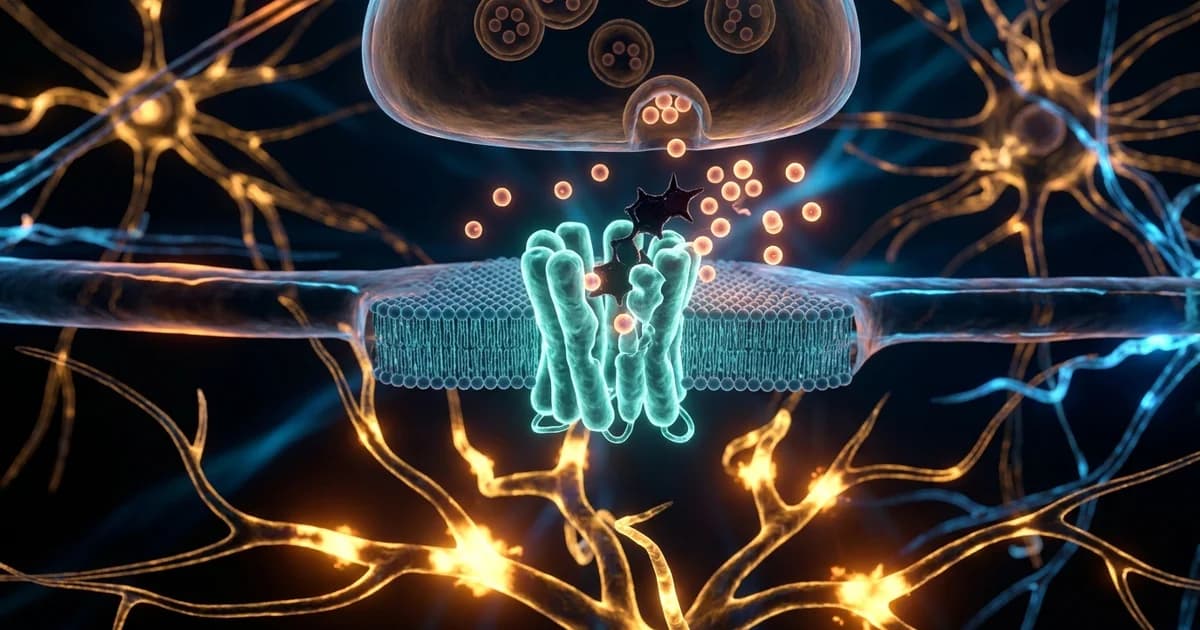
Nicotine works because its shape resembles acetylcholine closely enough to fit the same lock. That lock is the nicotinic acetylcholine receptor, a protein channel named after the very drug that binds it.
The nicotinic acetylcholine receptor sits on neuron surfaces and opens when acetylcholine docks into it. Nicotine slips into that same binding site. Once it does, the channel opens and floods the cell with positive ions, firing the neuron just like the real signal would.
In the brain's reward and attention circuits, this triggers a cascade. Receptors made of α4 and β2 subunits, plus the α7 subtype, drive the release of dopamine and other neurotransmitters tied to motivation and focus. According to research on nicotinic receptors and cognition, these receptors are central to how attention and working memory are tuned in both healthy brains and disease states.
That's the nicotine focus mechanism in one line: a foreign molecule pretends to be your memory chemical and forces your attention circuits to fire.
Does Nicotine Help Focus? The Honest Answer
Yes, briefly, and mostly for things you'd expect. Reviews of the cognitive literature find that nicotine produces small but measurable improvements in attention, processing speed, and certain types of memory, especially for sustained-attention tasks. A review of nicotine's cognitive effects summarizes these gains as real but modest.
There are two large catches.
First, the benefit depends heavily on baseline. One analysis found that nicotine's effect on cognition tracks with starting performance, helping more when attention is already low. It's correction, not superpower.
Second, in regular users a large slice of the "focus" is simply withdrawal relief. Once the brain adapts, going without nicotine creates a fog, and the next dose just clears the fog it created. The user feels enhancement. The brain is mostly returning to baseline.
How Nicotine Affects the Brain Over Time
Here is where the impersonation turns into a problem. Understanding how nicotine affects the brain over weeks and months comes down to two adaptations: desensitization and upregulation.
Acetylcholine Receptor Desensitization
When nicotine binds repeatedly, the receptors stop responding. This is acetylcholine receptor desensitization: the channel enters a closed, unresponsive state even while nicotine is still attached. Structural work on the α7 receptor maps how the receptor shifts into this desensitized shape and only slowly recovers afterward.
Acetylcholine is meant to pulse, fire, and clear in milliseconds. Nicotine lingers, so instead of a clean signal it holds the receptor down until it goes quiet. Your real acetylcholine then has fewer working locks to open.
Upregulation and Tolerance
The brain reacts to all that blunted signaling by building more receptors. Research on nicotine-induced upregulation shows that chronic nicotine increases the number of nicotinic receptors, a change tied directly to addiction.
More receptors plus chronic desensitization is the recipe for tolerance. You need more nicotine to hit the same mark, and the gap between doses feels worse. Work in the Journal of Neuroscience connects this receptor upregulation to both tolerance and the dependence loop. That's the trap: the system that gave you focus now demands maintenance just to feel normal.
Nicotine vs Your Native Cholinergic System
| Factor | Acetylcholine (native) | Nicotine |
|---|---|---|
| Source | Made by your own neurons | External drug |
| Signal duration | Milliseconds, then cleared | Lingers, holds receptor open |
| Receptor effect over time | Stable, self-regulating | Desensitization then upregulation |
| Tolerance | None | Builds steadily |
| Dependence | None | High |
| Net focus effect | Sustainable | Short gain, then maintenance |
The point isn't that nicotine does nothing. It's that nicotine borrows against a system you already own and charges interest.
Supporting Focus Without Hijacking the Lock
If the goal is sharper attention, you don't have to jam a foreign key into your acetylcholine receptors. Two compounds support the same outcome through cleaner routes.
Caffeine doesn't impersonate acetylcholine at all. It blocks adenosine, the molecule that builds up and makes you drowsy, which indirectly raises the activity of several neurotransmitter systems, including cholinergic signaling.
L-theanine, an amino acid from tea, promotes alpha-wave activity linked to calm, alert attention. Paired with caffeine, it smooths the stimulation into steady focus rather than buzz. You can read more about how caffeine and L-theanine work together for sustained attention.
Neither builds tolerance the way nicotine does. Neither desensitizes your acetylcholine receptors. You keep your native focus machinery intact.
The Bottom Line on Nicotine and Your Memory Chemical
Nicotine feels like focus because it counterfeits acetylcholine, the chemical your brain already uses to pay attention and form memories. For a few minutes, the counterfeit passes.
Then the receptors desensitize, the brain builds more of them, and you're left needing the drug to reach a baseline you used to have for free. The early gain is real. So is the debt.
If you want the attention benefit without renting it from a dependence cycle, the smarter target is the system around acetylcholine, not the receptor itself.
Frequently Asked Questions
Is nicotine the same as acetylcholine?
No. Acetylcholine is a neurotransmitter your own neurons produce to control attention, memory, and muscle movement. Nicotine is an external plant compound that happens to resemble acetylcholine closely enough to bind the same nicotinic receptors. It mimics the signal rather than being it, which is why nicotine can fire those receptors but also desensitize and dysregulate them in ways your native acetylcholine never does.
Does nicotine actually improve memory and focus?
Briefly and modestly. Controlled studies show small gains in attention and processing speed, with bigger effects when baseline performance is low. In regular users, much of the perceived focus is relief from withdrawal rather than true enhancement. The short-term lift is real, but it does not scale, and tolerance erodes it as the brain adapts to repeated dosing.
What is acetylcholine receptor desensitization?
It's when nicotinic receptors stop responding even though a molecule is still bound to them. Acetylcholine normally fires receptors in brief pulses and clears fast. Nicotine lingers, holding receptors in a closed, unresponsive state. Over time this blunts your brain's real cholinergic signaling, so your own acetylcholine has fewer working receptors to act on, contributing to tolerance and the need for more nicotine.
Why does nicotine cause tolerance?
Two changes stack up. Repeated nicotine desensitizes receptors, and the brain compensates by building more of them, a process called upregulation. More receptors plus chronic desensitization means each dose does less, so you need more to feel the same effect. This receptor adaptation is one of the mechanisms researchers link directly to nicotine dependence and the difficulty of quitting.
Can you support acetylcholine-driven focus without nicotine?
Yes. Caffeine raises overall neural activity by blocking adenosine, the drowsiness signal, which indirectly supports cholinergic and dopaminergic systems. L-theanine promotes calm, alert attention through alpha-wave activity. Together they support steady focus without binding or desensitizing nicotinic receptors, so you don't build the same tolerance or dependence that chronic nicotine use creates.
Does quitting nicotine reverse the receptor changes?
Largely, yes, over time. Desensitized receptors recover once nicotine clears, and the raised receptor counts from upregulation gradually return toward normal after sustained abstinence. The recovery isn't instant, which is part of why the early days of quitting feel foggy. But the cholinergic system is built to self-regulate, and it tends to rebalance when the constant nicotine signal is removed.
Skip the Hijack, Keep the Focus
This article's whole argument is that nicotine borrows your acetylcholine system and charges interest in the form of desensitization and dependence. Roon was built to get at the same focus target without making that trade.
Roon is a zero-nicotine sublingual pouch. Each one carries 80 mg of caffeine, 60 mg of L-theanine, 25 mg of methylliberine (Dynamine), and 5 mg of theacrine (TeaCrine), a four-ingredient stack designed for a 5 to 10 minute onset and a 6 to 8 hour window of focus with no jitters, no crash, and no tolerance buildup. It supports attention through adenosine and alpha-wave pathways instead of jamming a foreign key into your nicotinic receptors.
To be clear about what it isn't: Roon is not a nicotine-cessation treatment and not a substitute for sleep or for managing a real dependence. It's a cleaner way to get sharp. If you want the focus without renting it from your own brain chemistry, try Roon.
Written by Roon Team