Neutonic Focus Pouches Review: Inside the Chris Williamson
Roon Team

Neutonic Focus Pouches Review: Inside the Chris Williamson and James Smith Nootropic Pouch
Neutonic Focus Pouches are zero-nicotine oral pouches built around 125 mg of Cognizin citicoline and 50 mg of natural caffeine, sold in 20-count pucks for $26.99 per 5-pack (US). That works out to roughly $0.27 per pouch, which makes them the cheapest branded nootropic pouch on the market right now. The formula is clean, the price is aggressive, and the founders have a combined audience north of 10 million followers. But does any of that tell you whether the pouch actually works?
This review covers the full Neutonic Focus Pouches formula, verified pricing, the company behind it, and three specific open questions you should know about before buying.
Key Takeaways
- Cognizin-forward formula: Each Neutonic pouch delivers 125 mg of Cognizin (citicoline) plus 50 mg of caffeine and B vitamins. No L-theanine, no methylxanthine extenders.
- Extremely low price point: At $0.27 per pouch one-time (US), Neutonic undercuts every competitor in the branded nootropic pouch category by a wide margin.
- One flavor, one format: Fresh Mint only, 20 pouches per puck, sold in 5-puck bundles. No single-puck option on the US store at the time of this review.
- The 125 mg citicoline question: Published human trials on citicoline for cognition used 250 mg or 500 mg daily doses. Neutonic's single-pouch dose is half the lowest studied amount, though the brand's own max daily intake (4 pouches) would reach 500 mg.
Who Makes Neutonic Focus Pouches?
Neutonic is a UK company founded in November 2023 in London by four co-founders: James Smith (UK fitness entrepreneur), Chris Williamson (host of the Modern Wisdom podcast), Luke Betts, and Shan Hanif. The brand launched with a nootropic canned drink before expanding into powders, creatine sticks, and now these Focus Pouches.
The company raised $3.7 million at a $20 million valuation in mid-2025, with investors including Codie Sanchez, Dan Martell, Mike Thurston, and Kayla Itsines. In April 2026, Neutonic closed a second round of $6 million at a $60 million valuation, adding Alan Barrett (founder of Grenade), Ross Edgley, and Ollie Marchon to the cap table.
Neutonic's own press materials cite figures like "$10M in sales" and "7.5M+ cans sold," but these are company-supplied claims relayed by trade outlets, not independently audited numbers. The revenue and unit figures should be read with that in mind.
The brand now sells in UK grocery stores, gym chains like Fitness First and Everlast, and Central Market in the US, per its April 2026 press release.
What Is in a Neutonic Focus Pouch?
Each pouch contains three active categories. Here is the full panel as listed on the Neutonic UK product page:
| Ingredient | Amount per Pouch | Notes |
|---|---|---|
| Cognizin (Citicoline) | 125 mg | Patented form of citicoline |
| Natural Caffeine | 50 mg | Roughly half a small cup of coffee |
| Pantothenic Acid (Vitamin B5) | 25% RI | Milligram amount not disclosed on-site |
| Folic Acid (Vitamin B9) | 25% RI | Milligram amount not disclosed on-site |
| Vitamin B12 | 25% RI | Milligram amount not disclosed on-site |
Excipients: Microcrystalline cellulose (bulking agent), MCT oil, flavoring, sodium citrate, sucralose, sodium chloride, silicon dioxide.
The star ingredient here is Cognizin, a patented, branded form of citicoline manufactured by Kyowa Hakko. Citicoline is a precursor to both choline and cytidine, and the published research on it for attention in healthy adults is real. A randomized, double-blind, placebo-controlled trial found that 12 weeks of Cognizin supplementation improved sustained attention and processing speed in healthy adults.
The catch: that trial used 250 mg per day as its dose. The lowest dose with published human cognitive data is also 250 mg, used in a 28-day study on attentional performance in healthy women. A single Neutonic pouch delivers half that, at 125 mg. The brand's own label says "1 serving is 4 pouches," which would total 500 mg of citicoline and 200 mg of caffeine. At four pouches you reach a clinically studied citicoline dose, but you also hit caffeine levels most people would rather avoid in a single sitting.
This is a real tension in the product design, and one that every review of Neutonic pouches should mention: the citicoline dose per pouch sits below the published clinical floor, and reaching that floor requires quadrupling the caffeine intake.
Neutonic Focus Pouches Pricing and Availability
Neutonic sells its Focus Pouches through its own website in separate UK and US stores. Here is what the brand lists:
| Option | Price | Pouches | Price per Pouch |
|---|---|---|---|
| Single puck (US) | $5.40 | 20 | $0.27 |
| 5-pack, one-time (US) | $26.99 | 100 | $0.27 |
| Single puck (UK) | £5.40 | 20 | £0.27 |
| 5-pack, one-time (UK) | £26.99 | 100 | £0.27 |
| 5-pack, Subscribe & Save (UK) | £22.94 | 100 | £0.229 |
Sources: Neutonic US product page, Neutonic UK product page.
The single-puck price offers no volume discount over the 5-pack, at least at the time of this review. The UK subscription takes 15% off and includes a free puck with the first delivery.
One flavor: Fresh Mint. No variety packs, no other options in the pouch line. Neutonic's canned drinks and powder sticks come in multiple flavors, but the pouches are mint-only.
Three Open Questions About Neutonic Focus Pouches
Every product has gaps. These are specific, sourced, and worth knowing.
1. The per-pouch citicoline dose is below published clinical thresholds
This is worth repeating because it is the central design choice. The minimum dose studied for cognitive effects in healthy adults is 250 mg of citicoline daily. Neutonic delivers 125 mg per pouch. To reach 250 mg you need two pouches (100 mg caffeine). To reach the most-studied dose of 500 mg you need four pouches (200 mg caffeine). The brand clearly knows this because it sets the daily maximum at 4 pouches and defines "1 serving" as 4 pouches.
Whether 125 mg of citicoline does anything meaningful on its own is an open question. No published trial has tested that dose in isolation for cognitive performance in healthy adults. That does not mean it is inert, but it does mean Neutonic is asking you to trust an extrapolation, not a data point.
2. US subscription pricing is not clearly listed
The UK store shows a Subscribe & Save option at £22.94 for a 5-pack. The US product page, at the time of our research, does not display a clear subscription price for the pouches specifically. The brand's banner advertises "15% off + Free Focus Pouch Puck with Subscriptions," so a discount likely exists, but the exact US subscription price for pouches is harder to confirm than it should be.
3. No duration-extending mechanism
Neutonic's formula is caffeine plus citicoline plus B vitamins. There is no ingredient in the pouch designed to extend caffeine's active window. No methylliberine, no theacrine, no L-theanine. At 50 mg per pouch, caffeine will follow its standard pharmacokinetic curve: peak plasma in 30 to 60 minutes, noticeable effects for roughly 3 to 4 hours, then a fade. If you want longer coverage, you re-dose, and re-dosing means more caffeine.
This is not a flaw per se. It is a design philosophy: keep each pouch light and let the user titrate. But it is worth understanding that Neutonic is selling a low-dose caffeine pouch with a citicoline add-on, not an extended-release focus product.
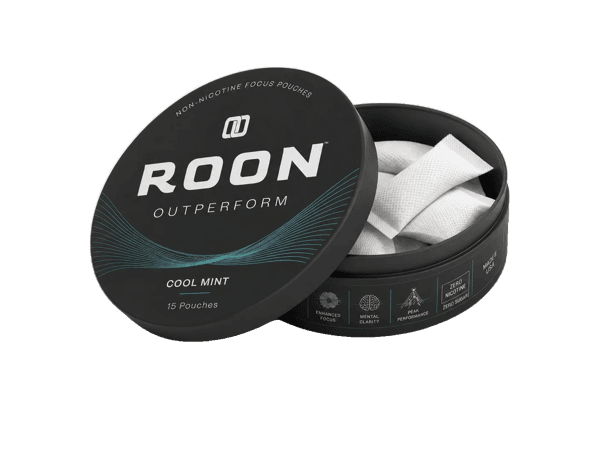 RoonOne pouch RoonOne pouch |  Coffee8 fl oz Coffee8 fl oz |  Energy drink8.4 fl oz can Energy drink8.4 fl oz can |  Nicotine pouchOne pouch Nicotine pouchOne pouch |  Other pouchesNon-nicotine Other pouchesNon-nicotine | |
|---|---|---|---|---|---|
| CaffeineCaffeine | 80 mg | ~95 mg | 200–300 mg | 0 mg | 100–200 mg |
| SynergistsSynergists (L-theanine, Dynamine®, TeaCrine®) | Yes | No | No | No | No |
| Fast onsetFast onset (5 to 10 min) | Yes | No | Sometimes | Yes | Yes |
| Lasts 6-8hLasts 6 to 8 hours | Yes | No | No | No | No |
| No crashNo crash or jitters | Yes | No | No | Sometimes | Sometimes |
| No nicotineNo nicotine | Yes | Yes | Yes | No | Yes |
| No sugarNo sugar | Yes | Yes | No | Yes | Yes |
Neutonic Focus Pouches vs Roon: How Do They Compare?
Two zero-nicotine nootropic pouches, two different strategies. Here is the verified comparison:
| Feature | Neutonic Focus Pouch | Roon |
|---|---|---|
| Caffeine per pouch | 50 mg | 80 mg |
| Primary nootropic | 125 mg Cognizin (citicoline) | 60 mg L-theanine, 25 mg methylliberine (Dynamine), 5 mg theacrine (TeaCrine) |
| Nicotine | Zero | Zero |
| Pouches per tin/puck | 20 | 15 |
| Flavor(s) | Fresh Mint | Cool Mint |
| Onset | 15 to 30 min (brand guidance) | 5 to 10 min |
| Duration claim | Not specified | 6 to 8 hours |
| Price per pouch (one-time) | $0.27 | $1.00 |
| Price per pouch (subscription) | ~£0.23 (UK sub) | $0.61 |
| Max daily pouches | 4 | Not specified on label |
Sources: Neutonic UK product page, Roon product page.
Where Neutonic wins: Price, hands down. At $0.27 per pouch, it costs roughly one-quarter of a Roon pouch at one-time pricing. If you want a cheap, mild caffeine pouch with a citicoline top-up and price is the primary variable, Neutonic is hard to beat.
Where Roon wins: Duration and formula complexity. Roon pairs 80 mg of caffeine with methylliberine (Dynamine), which has been shown in a randomized crossover pharmacokinetic study to slow caffeine's oral clearance and extend its half-life without increasing peak concentration. The result is a felt window of 6 to 8 hours from a single pouch instead of the 3 to 4 hours you would expect from a standard caffeine dose. L-theanine smooths the subjective response, and theacrine (TeaCrine) does not build tolerance the way caffeine does. That is a fundamentally different architecture than caffeine-plus-citicoline.
The trade-off is real. Neutonic is a per-dose value play. Roon is a per-hour value play. If you only need a light nudge for a 90-minute task and you are price-sensitive, Neutonic's math works. If you need a full work session covered without re-dosing, Roon's math works. Both are zero-nicotine, both are mint-flavored, and neither is a substitute for sleep or structured deep work.
The Citicoline-Plus-Caffeine Bet
Neutonic Focus Pouches are a genuinely interesting product in a market full of caffeine-and-nothing-else options. The inclusion of a patented, research-backed ingredient (Cognizin) at a listed dose, priced at $0.27 per pouch, reflects good execution on the basics: transparent labeling, clean excipients, a price point that removes the barrier to trial.
The questions are about what that execution actually delivers per pouch. A 125 mg citicoline dose sits below every published clinical threshold for cognitive effects in healthy adults. A 50 mg caffeine dose will fade in a few hours. There is no duration-extending mechanism. The product's design essentially tells you to use multiple pouches to reach clinical territory, which multiplies caffeine along with citicoline.
None of that makes it a bad product. It makes it a specific product, one built for light, frequent dosing at a low price, not for sustained single-dose coverage. Know which one you need.
Frequently Asked Questions
Do Neutonic Focus Pouches contain nicotine?
No. Neutonic confirms on its own product page that its Focus Pouches contain zero nicotine. The active ingredients are 50 mg of natural caffeine, 125 mg of Cognizin citicoline, and three B vitamins (B5, B9, B12) at 25% of the reference intake per pouch. The format is similar to a nicotine pouch, but the contents are entirely different.
How much caffeine is in a Neutonic Focus Pouch?
Each pouch contains 50 mg of natural caffeine, roughly the amount in a weak cup of coffee or a shot of espresso. The brand allows up to 4 pouches per day, which would total 200 mg. For reference, the European Food Safety Authority and most health bodies set 400 mg as the general daily ceiling for healthy adults.
What is Cognizin and is 125 mg enough?
Cognizin is a patented form of citicoline made by Kyowa Hakko. Published clinical trials on citicoline for attention and cognitive performance in healthy adults have used doses of 250 mg to 500 mg per day. A single Neutonic pouch delivers 125 mg, which is half the lowest studied dose. At two pouches per day (250 mg citicoline, 100 mg caffeine) you enter the studied range.
How many pouches come in a Neutonic puck?
Each puck contains 20 pouches. Neutonic sells the pouches in 5-puck bundles (100 pouches total) through its UK and US online stores. A single puck is available at $5.40 / £5.40.
How long does a Neutonic Focus Pouch last?
Neutonic recommends placing a pouch under the upper lip for 15 to 30 minutes. The brand does not make a specific duration-of-effect claim. Given the 50 mg caffeine dose and the absence of any half-life-extending ingredients, you can reasonably expect the stimulant effect to follow caffeine's normal curve of roughly 3 to 4 hours.
Are Neutonic Focus Pouches available in the US?
Yes. Neutonic operates a dedicated US store at neutonic.com with US pricing ($26.99 for a 5-pack of 100 pouches). The brand also announced US retail placement at Central Market. Availability at additional US retailers may expand following the April 2026 funding round.
How do Neutonic Focus Pouches compare to Roon?
Neutonic delivers 50 mg caffeine and 125 mg citicoline per pouch at $0.27. Roon delivers 80 mg caffeine, 60 mg L-theanine, 25 mg methylliberine, and 5 mg theacrine per pouch at $1.00 one-time ($0.61 on subscription). Neutonic is lighter per dose and far cheaper. Roon is formulated for longer duration per dose (6 to 8 hours) through its methylliberine-caffeine interaction. They solve different problems at different price points.
When You Need 6 Hours From One Pouch, Not 4 From Two
Neutonic built a smart product around a real ingredient at a price that makes trial effortless. If your use case is a light cognitive nudge at your desk, a few times a day, it does the job and costs almost nothing.
But if your workday has a shape, a 6-to-8-hour arc where you need sustained, even focus without re-dosing, you run into Neutonic's structural gap: there is no mechanism in the pouch to extend caffeine's active window.
That is exactly the problem Roon was designed to solve. Each pouch pairs 80 mg of caffeine with 25 mg of methylliberine (Dynamine), which slows caffeine's oral clearance. In a randomized, double-blind, crossover human PK study (n=12), co-administering methylliberine with caffeine cut oral clearance from 41.9 to 17.1 L/hr and extended caffeine's half-life from 7.2 to 15 hours, with no increase in peak concentration (study). Same peak, longer tail. That is why 80 mg, a small-coffee dose, delivers a felt window of 6 to 8 hours instead of 3 to 4.
L-theanine (60 mg) smooths the subjective response. Theacrine (5 mg) does not build tolerance the way caffeine does. Roon still contains caffeine, and caffeine still produces tolerance, full stop. But the overall architecture is designed around duration, not re-dosing.
Roon is not a substitute for citicoline if citicoline is what you are specifically after. It does not contain it. And the longer half-life means you should not take it within 8 hours of bedtime. But if the question is "one pouch, one work session, no crash," Roon is built for that math.
Written by Roon Team