Organic vs Synthetic Caffeine (PurCaf, Green Coffee)
Roon Team
Organic vs Synthetic Caffeine (PurCaf, Green Coffee): Does "Natural" Caffeine Work Differently?
Walk down any supplement aisle and you'll see "organic caffeine from green coffee" stamped on labels in earthy green fonts, priced at a premium. The implication is obvious: natural caffeine is cleaner, safer, better for you. The debate over natural caffeine vs synthetic caffeine has become a marketing battleground, and most of what you read is written to sell you something.
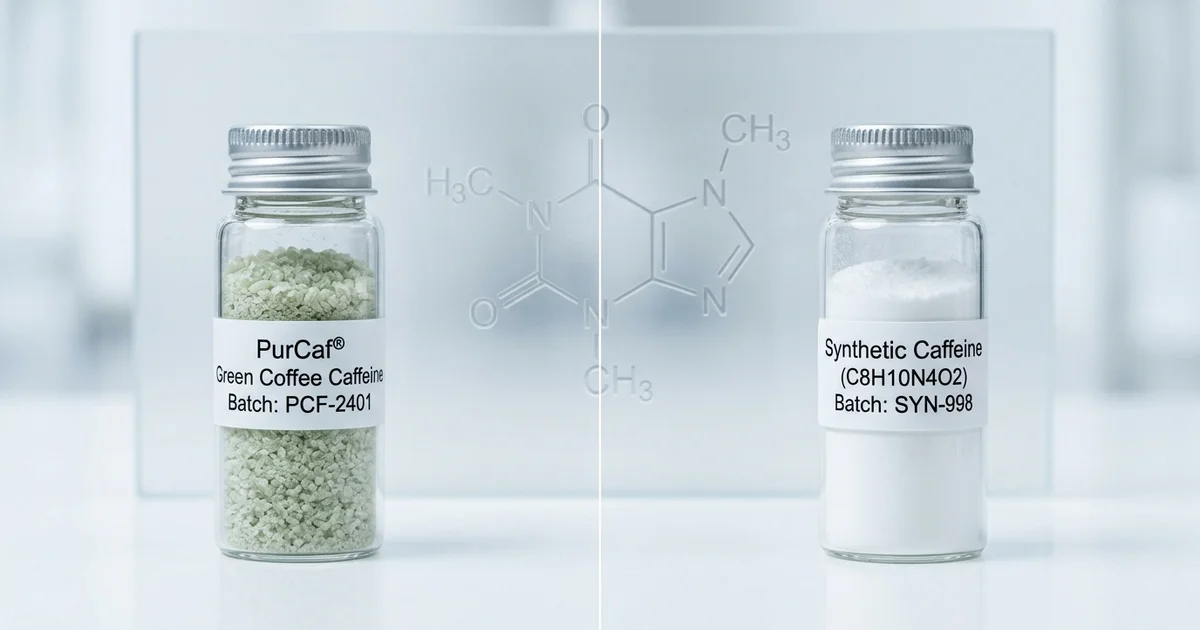
So here's the honest answer up front. The caffeine molecule is the caffeine molecule, whether it came from a coffee bean or a chemical reactor. Once extracted, the caffeine molecule itself is chemically identical to synthetic versions.
But "identical molecule" is not the end of the story. What rides alongside the caffeine, and how fast it hits your bloodstream, can change how you actually feel. Let's separate the chemistry from the copywriting.
Key Takeaways
- Natural and synthetic caffeine share the same molecular formula, C8H10N4O2, and your body cannot tell them apart at the receptor level.
- The real differences are the plant compounds that come along with natural caffeine and the speed of absorption.
- PurCaf green coffee caffeine is a popular "clean label" organic source, valued mostly for marketing and sourcing, not for a different caffeine effect.
- Both forms are safe for most adults up to about 400 mg per day.
- What matters more than "natural vs synthetic" is dose, delivery, and what you stack with it.
Natural Caffeine vs Synthetic Caffeine: Same Molecule, Different Origin Story
At the chemical level, there is no meaningful difference. Both natural and synthetic caffeine have the same molecular formula, C8H10N4O2. Your adenosine receptors, the targets caffeine blocks to make you feel alert, respond to the structure, not the backstory.
Where do the two diverge? In how they're made.
Natural caffeine is pulled from plants. Natural caffeine is found in over 60 plant species including coffee beans, with tea leaves, guarana, yerba mate, and cacao rounding out the common sources.
Synthetic caffeine is built in a lab. Synthetic caffeine is manufactured in laboratories, and production starts with urea as a base material. That sounds alarming until you remember urea is a basic organic compound found in your own body. The finished caffeine is purified to the same standard either way.
So if the molecule is the same, why do people swear natural feels different? Two reasons.
Reason One: The Plant Matrix (What Comes Along for the Ride)
Natural caffeine never arrives alone. When you extract it from a coffee bean, trace plant compounds often come with it, and these are absent in a lab-made powder.
Green coffee is the clearest example. Chlorogenic acids and caffeine are important for flavor formation as well as the health effect of green coffee brews and its extracts. Chlorogenic acids are antioxidants largely destroyed by roasting, which is why green (unroasted) coffee retains more of them.
This is the strongest argument for "natural" caffeine, and it's a real one. You're not just getting caffeine, you're getting a small dose of additional plant chemistry. Whether that trace amount changes your focus in any noticeable way is a different question, and the honest answer is: probably not at the doses used in most pouches and powders.
The matrix matters more for whole foods. A cup of brewed coffee or green tea delivers a package of polyphenols. A highly purified caffeine extract, organic or not, strips most of that away to standardize the dose.
Reason Two: Absorption Speed
This is where the "natural vs synthetic" debate gets interesting, and where the marketing actually has a point.
Several sources argue that synthetic caffeine moves faster. According to these experts, synthetic caffeine will absorb through the digestive system much faster than natural caffeine, which means a quicker spike, but it also means a quicker crash. The plant matrix in natural sources may slow the release slightly.
The research is mixed and modest, though. In one comparison, two natural caffeine sources and a synthetic caffeine control were absorbed about as quickly, although the absorption of synthetic caffeine was slightly slower than that of the two natural types. So the "synthetic spikes faster" claim isn't a settled law of biochemistry. It's a tendency, and a small one.
The bigger takeaway: absorption is driven far more by how you take caffeine than by where the caffeine came from. A pill on an empty stomach behaves differently than caffeine sipped in a latte with food.
Is Natural Caffeine Better? An Honest Comparison
Here's a straight comparison of the common forms, including how a sublingual pouch fits in.
| Caffeine Source | Origin | Onset Speed | Extra Compounds | What You're Really Paying For |
|---|---|---|---|---|
| Synthetic caffeine (anhydrous) | Lab-synthesized | Fast | None | Cheapest, precise dosing |
| PurCaf / green coffee caffeine | Green coffee beans | Moderate | Trace chlorogenic acids | Clean label, sourcing story |
| Brewed coffee | Roasted beans | Moderate | Polyphenols, varies a lot | Ritual, flavor, antioxidants |
| Green tea / matcha | Tea leaves | Slower | L-theanine, catechins | Calmer energy from theanine |
| Sublingual pouch (e.g. Roon) | Caffeine + theanine + Dynamine + TeaCrine | Very fast (5-10 min) | Engineered stack | Delivery speed and a balanced formula |
The pattern is clear. "Organic caffeine" is a sourcing and label decision more than a performance one. If you want antioxidants, drink real coffee or green tea. If you want a precise, fast, controllable dose, the source matters far less than the format.
Is Synthetic Caffeine Safe? And What About PurCaf?
Yes, synthetic caffeine is safe at normal doses, and so is natural caffeine. The regulatory ceiling is the same for both. The FDA cites 400 milligrams a day, about four or five cups of coffee, as an amount not generally associated with negative effects for most healthy adults, according to the FDA. Your liver does not check the origin label.
PurCaf green coffee caffeine earns its place through sourcing, not chemistry. PurCaf is caffeine powder from green coffee beans, made with a proprietary clean-water extraction process that gives it a more neutral taste profile. It's a clean-label ingredient designed to build consumer trust, and it does that job well.
What PurCaf is not is a different stimulant. The caffeine in it works on the same receptors as the cheapest synthetic powder. If you prefer organic, non-GMO sourcing on principle, that's a perfectly good reason to choose it. Just don't expect it to feel categorically different in your head.
What Actually Changes How Caffeine Feels
If the molecule is fixed, four levers do the real work:
- Dose. 80 mg feels nothing like 200 mg. This single factor outweighs source every time.
- Delivery. Swallowed capsules clear the stomach and liver first. Sublingual and buccal absorption skip part of that delay.
- Tolerance. Daily heavy users blunt the effect regardless of source. Cycling and moderate dosing keep caffeine working.
- What you stack it with. This is the most underrated lever, and it's where the natural sources quietly win.
That last point deserves its own line. Green tea feels smoother than a synthetic energy shot not because of "natural caffeine," but because tea contains L-theanine, an amino acid that takes the edge off caffeine's jitters. The calm comes from the companion, not the caffeine.
The Bottom Line on Natural vs Synthetic
Your body cannot tell organic green coffee caffeine apart from lab-made caffeine, because the molecule is the same. The differences people feel come from the trace plant compounds in natural sources, small variations in absorption speed, and most of all the dose, format, and supporting ingredients.
"Natural" is a sourcing choice and a values choice, both legitimate. It is not a performance upgrade on its own. If you want antioxidants and ritual, brew real coffee or green tea. If you want fast, clean, controllable focus, stop obsessing over the origin of the caffeine and start paying attention to how it's delivered and what it's paired with.
The smartest caffeine isn't the most "natural" one. It's the best-formulated one.
Frequently Asked Questions
Is natural caffeine better than synthetic caffeine?
Not in any meaningful chemical sense. The caffeine molecule is identical in both, so your receptors respond the same way. Natural sources may carry trace plant compounds like chlorogenic acids and can absorb slightly more slowly, which some people find smoother. But dose and delivery influence how caffeine feels far more than whether it came from a bean or a lab.
What is PurCaf green coffee caffeine?
PurCaf is a branded organic caffeine ingredient extracted from green (unroasted) coffee beans using a clean-water process. It's popular with supplement brands that want a "clean label" and a natural sourcing story. The caffeine itself behaves like any other caffeine. You're paying for the origin and the label, not a different stimulant effect.
Is synthetic caffeine safe?
Yes, for most healthy adults at normal doses. Synthetic caffeine is purified to the same standard as natural caffeine and acts identically in the body. The FDA considers up to 400 mg per day safe for most adults, and that ceiling applies to both forms. People with heart conditions, pregnancy, or caffeine sensitivity should be more conservative.
Does synthetic caffeine cause a worse crash?
It can, slightly. Some evidence suggests synthetic caffeine may absorb faster, producing a sharper spike and a quicker dropoff, while the plant matrix in natural sources can slow release. The effect is modest and not consistent across studies. A crash usually comes from too high a dose or from caffeine taken without supporting ingredients, more than from the source itself.
Does green coffee bean caffeine have health benefits?
Green coffee bean extract retains chlorogenic acids, antioxidants that roasting normally destroys. These compounds are studied for general health support, though the caffeine portion does not change. If antioxidants are your goal, the benefit comes from the whole green coffee matrix, not from the caffeine being labeled "natural."
Why does green tea caffeine feel calmer than an energy drink?
Because of L-theanine, not the caffeine. Green tea naturally contains this amino acid, which softens caffeine's jittery edge and supports steadier focus. An energy drink with synthetic caffeine and no theanine tends to feel sharper and spikier. The calm is about the companion compound, not whether the caffeine is "natural."
How much caffeine is safe per day?
For most healthy adults, up to roughly 400 mg per day is considered safe, equal to about four 8-ounce cups of brewed coffee. This limit is the same for natural and synthetic caffeine. Individual tolerance varies widely, so sensitivity, sleep, and existing health conditions should guide your personal ceiling.
Stop Chasing the Source, Start Fixing the Delivery
If this article makes one thing clear, it's that the origin of your caffeine is the least interesting variable. What changes the experience is how fast it reaches you and what it's paired with. That's exactly where Roon places its bet, and it has nothing to do with "natural caffeine" marketing.
Roon is a sublingual pouch, so the dose absorbs through the tissue under your lip instead of waiting on your digestive system. Each pouch carries a four-ingredient stack: 80 mg caffeine, 60 mg L-theanine, 25 mg methylliberine (Dynamine), and 5 mg theacrine (TeaCrine). The theanine is there for the same reason green tea feels smoother than an energy shot, and the formula is built for a 5 to 10 minute onset with 6 to 8 hours of steady focus, no jitters, no crash.
Roon is not a coffee replacement for people who love the ritual, and it's not a fix for poor sleep or skipped meals. It's a tool for clean, fast, controllable focus when you need it. If you've been paying a premium for "organic" on the label, try Roon and judge it on delivery instead.
Written by Roon Team