Methylxanthines Explained: The Caffeine, Theobromine
Roon Team
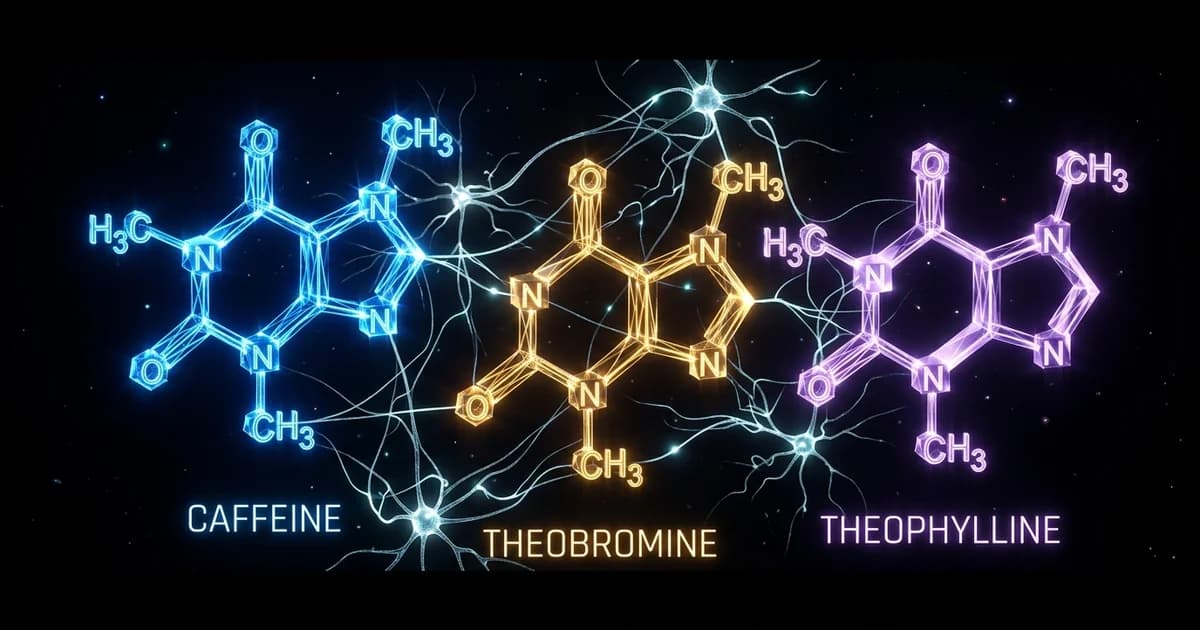
Methylxanthines Explained: The Caffeine, Theobromine, and Theophylline Family
The most widely consumed psychoactive substance on the planet belongs to a small chemical family called the methylxanthines. Caffeine is the famous one. But it has two close relatives, theobromine and theophylline, that quietly shape your morning coffee, your dark chocolate, and a century of asthma medicine.
These three molecules look almost identical on paper. They differ by a methyl group here or there, and yet those tiny structural changes produce very different effects on your brain, your lungs, and your heart.
Understanding the family explains why coffee wakes you up fast, why chocolate gives a softer lift, and why one of these compounds spent decades in hospital pharmacies.
Key Takeaways
- Methylxanthines are a group of natural plant alkaloids that include caffeine, theobromine, and theophylline.
- All three share one main job: they block adenosine receptors, the brakes that build up sleep pressure in your brain.
- Caffeine is the most potent stimulant of the three; theobromine is milder and longer-lasting; theophylline is the most active in the lungs.
- The differences come down to small structural changes, plus how fast your body clears each one.
What Are Methylxanthines?
Methylxanthines are naturally occurring compounds built on a xanthine backbone, with one to three methyl groups attached. They are a subgroup of the xanthine alkaloids, and plants make them as defense chemicals, often to deter insects.
You consume them every day without thinking about it. They show up in coffee beans, tea leaves, cacao, kola nuts, guarana, and yerba mate.
The three that matter most for human biology are caffeine (1,3,7-trimethylxanthine), theobromine (3,7-dimethylxanthine), and theophylline (1,3-dimethylxanthine). Caffeine carries three methyl groups. The other two carry two each, just in different positions.
That small difference in chemistry is the whole story. It changes how each molecule binds to receptors, how long it lingers, and which tissues feel it most.
Caffeine, Theobromine, Theophylline: How the Family Differs
Here is the quick comparison. Each of these methylxanthine stimulants works through the same core pathway but lands differently in the body.
| Compound | Found in | Relative stimulant strength | Approx. half-life | Best known for |
|---|---|---|---|---|
| Caffeine | Coffee, tea, guarana, kola | Strongest CNS effect | ~3 to 5 hours | Alertness, focus, energy |
| Theobromine | Cacao, chocolate | Mild, gentle | Up to ~10 hours | Smooth, sustained lift, vasodilation |
| Theophylline | Tea (small amounts), medicine | Strong on lungs and heart | ~3 to 9 hours | Asthma and airway treatment |
The pattern is clear once you see it. Caffeine hits the brain hardest and fastest. Theobromine is the slow, gentle cousin. Theophylline does its most useful work in the airways.
The Methylxanthine Mechanism: Blocking the Brain's Brakes
The primary methylxanthine mechanism is adenosine receptor antagonism: these molecules block adenosine from binding, which removes the brain's natural sleep signal. This is why a cup of coffee makes fatigue recede.
Adenosine is a byproduct of the energy your cells burn all day. As it accumulates, it binds to receptors and tells your brain to slow down, promoting drowsiness and what scientists call sleep pressure.
Methylxanthines resemble adenosine closely enough to slip into those same receptor sites. They occupy the spot without activating it. Caffeine works by blocking adenosine A2A receptors in the brain, preventing the natural sleep-promoting chemical adenosine from binding to these receptors and making you drowsy. Research demonstrates that caffeine's alerting effects depend on these receptors.
When the brake comes off, other systems speed up. Blocking adenosine lifts its brake on neural activity, increasing alertness and reducing perceived fatigue, and antagonism disinhibits dopaminergic and noradrenergic circuits, improving vigilance, reaction time, and mood drive.
A Second Mechanism at Higher Doses
At larger concentrations, methylxanthines also inhibit enzymes called phosphodiesterases, which raises levels of cellular messengers like cyclic AMP. This contributes to effects in the heart and smooth muscle.
For everyday coffee and chocolate intake, though, adenosine blockade is the main event. The phosphodiesterase effect matters more in medical doses, which is where theophylline comes in.
Theobromine: The Gentle One in Chocolate
Theobromine is the dominant methylxanthine in cacao, and it produces a milder, longer-lasting lift than caffeine. It is the reason a square of dark chocolate feels different from an espresso.
The name is a bit of a trick. Theobromine contains no bromine at all; the word comes from the cacao tree's genus, Theobroma, meaning "food of the gods."
It is a weaker adenosine antagonist than caffeine, so the stimulation is subtler. It also sticks around longer. Theobromine has a longer half-life, staying active in the body for up to 10 hours and supporting sustained focus, and it causes vasodilation, relaxing blood vessels, which may improve blood flow and lower blood pressure slightly.
That vasodilation is part of why cocoa research keeps drawing interest. One reviewer summarized it cleanly: theobromine exhibits a slower onset and longer half-life than caffeine, which may explain its reduced but sustained stimulatory effects.
One warning that pet owners already know: theobromine is toxic to dogs. Their bodies metabolize it far more slowly than humans do, which is why chocolate is dangerous for them.
Theophylline: The Methylxanthine That Became Medicine
Theophylline is the methylxanthine best known as a drug, used for decades to open the airways in asthma and chronic lung disease. It is present in tea in tiny amounts, but its real career was in the pharmacy.
It relaxes the smooth muscle around the bronchial tubes, acting as a bronchodilator. That made it a mainstay of asthma treatment through much of the twentieth century.
The catch is its narrow therapeutic window. The dose that helps and the dose that causes side effects sit uncomfortably close together, so blood levels had to be monitored carefully. Newer inhaled medications have since pushed theophylline to a more limited role.
It is a useful lesson in this family. The same basic chemistry that gives you a pleasant lift from coffee can, in a slightly different molecule at a higher dose, become a tightly controlled medicine.
Why the Family Matters for How You Feel
The reason caffeine remains the go-to of the three is simple. It crosses into the brain efficiently, blocks adenosine strongly, and clears in a few hours, which makes its effects feel sharp and controllable.
Theobromine trades intensity for endurance. Theophylline trades brain effects for airway and cardiac potency.
Your own experience reflects this chemistry. The fast jolt of coffee, the mellow warmth of chocolate, and the medical precision of theophylline are three expressions of the same molecular theme.
Conclusion
Caffeine, theobromine, and theophylline are variations on a single chemical idea. Strip away a methyl group, move another, and you shift a stimulant into a mild mood-lifter or a lung medicine.
What unites them is the adenosine pathway. Each one blocks the brain's sleep signal, with caffeine doing it most forcefully and most usefully for daily focus.
Knowing the family changes how you read a label. Coffee, cocoa, and tea are not random sources of energy. They are different doses of closely related xanthine alkaloids, each with its own rhythm of onset and decline.
Frequently Asked Questions
What are methylxanthines in simple terms?
Methylxanthines are a small group of natural plant compounds that act as mild stimulants. The three you encounter most are caffeine, theobromine, and theophylline. They appear in coffee, tea, chocolate, and several other plants. All three work mainly by blocking adenosine, the chemical that builds up during the day and makes you feel sleepy, which is why they tend to increase alertness.
Is caffeine a methylxanthine?
Yes. Caffeine is the most well-known methylxanthine, with the chemical name 1,3,7-trimethylxanthine. It carries three methyl groups on a xanthine backbone, which is one more than theobromine or theophylline. That structure makes caffeine the strongest central nervous system stimulant in the family and the reason coffee and tea are so effective at reducing fatigue.
What is the difference between caffeine and theobromine?
Both are methylxanthines, but caffeine is a stronger and faster stimulant of the brain. Theobromine, the main active compound in chocolate, is milder and lasts longer in the body, with a half-life of up to ten hours. Theobromine also relaxes blood vessels more noticeably. In short, caffeine feels like a sharp lift while theobromine feels like a gentle, sustained one.
Is theophylline still used as a medicine?
Theophylline was a primary asthma treatment for much of the twentieth century because it relaxes the muscles around the airways. It is still used, but less often, because it has a narrow therapeutic window, meaning the helpful dose and the dose that causes side effects are close together. Newer inhaled medications have largely taken over its role in most patients.
How do methylxanthine stimulants actually work?
The core methylxanthine mechanism is adenosine receptor antagonism. Adenosine normally binds to receptors in your brain and promotes drowsiness as it accumulates. Methylxanthines look enough like adenosine to occupy those receptors without activating them, which removes the sleep signal and increases alertness. At higher doses, they also inhibit phosphodiesterase enzymes, which adds effects in the heart and smooth muscle.
Which foods and drinks contain methylxanthines?
Coffee and tea are the biggest dietary sources of caffeine. Cacao and chocolate are rich in theobromine, with a smaller amount of caffeine. Tea contains trace theophylline alongside its caffeine. Other natural sources include guarana, kola nuts, yerba mate, and some soft drinks and energy products that add caffeine directly.
Are methylxanthines safe?
For most adults, the caffeine found in coffee, tea, and chocolate is well tolerated in moderate amounts. Sensitivity varies, and high doses can cause jitters, a racing heart, or disrupted sleep. Theophylline is the exception, since as a medicine it requires careful dosing. As always, anyone with a heart condition or who is pregnant should talk to a clinician about their intake.
Where Roon Fits in the Xanthine Family
Once you understand the family, a question follows naturally: if caffeine is the strongest of the methylxanthines, how do you get its focus without the spikes and crashes? That is the design problem Roon set out to solve.
Roon is a zero-nicotine sublingual pouch built around 80 mg of caffeine, paired with 60 mg of L-theanine, 25 mg of methylliberine (Dynamine), and 5 mg of theacrine (TeaCrine). The L-theanine pairing is the key. Research on combining the two consistently shows smoother attention with fewer jitters than caffeine alone, which is exactly the rough edge most people want to sand off.
To be clear about what this is and isn't: Roon is a cognitive performance supplement, not a medicine and not a replacement for sleep. It is built for the people who already know caffeine works and want a cleaner version of it, with a 5 to 10 minute onset and a 6 to 8 hour focus window. If you find the science of the xanthine family interesting, try Roon and feel the chemistry for yourself.
Written by Roon Team