Magnesium L-Threonate for Memory and Focus
Roon Team
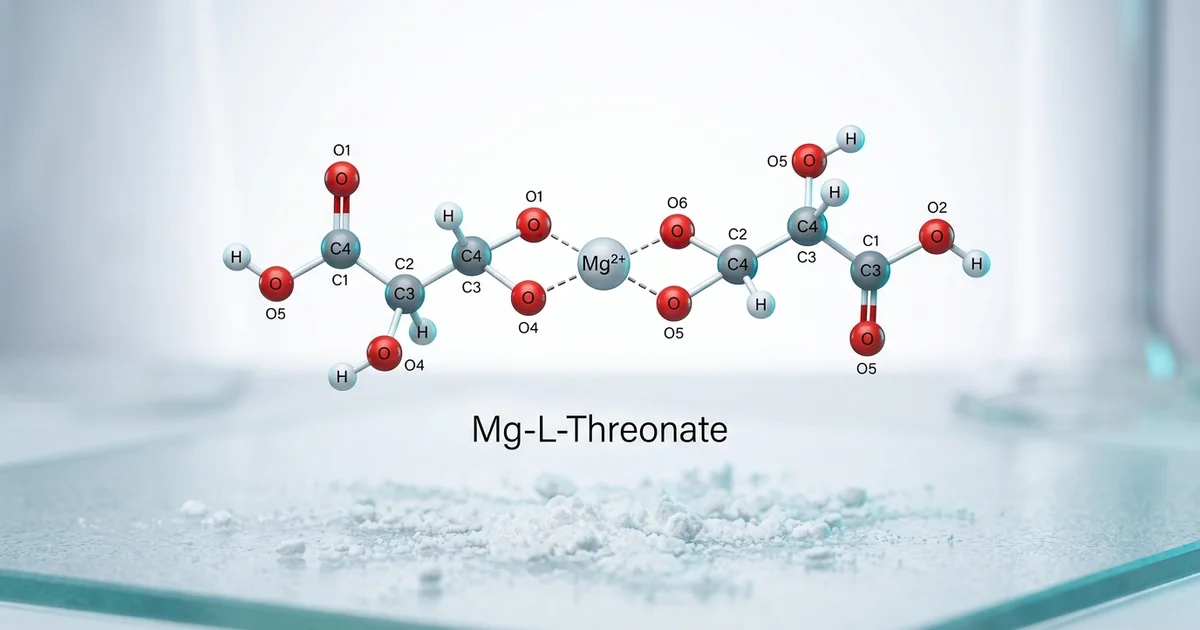
Magnesium L-Threonate for Memory and Focus: What the Magtein Science Actually Shows
Most magnesium supplements never reach your brain in meaningful amounts. That single fact explains why magnesium l-threonate for cognition became one of the most studied nootropic minerals of the last fifteen years.
The compound was engineered at MIT to do one thing other forms struggle with: cross into the central nervous system and raise magnesium levels inside the brain itself. Researchers branded the patented version Magtein. The rest of this article unpacks what the human and animal data really say, where the hype outruns the evidence, and how this slow, structural mineral fits next to faster tools for focus.
Key Takeaways
- Magnesium l-threonate (Magtein) is the form designed to raise brain magnesium, which most common forms do poorly.
- The headline mechanism is synaptic density: more functional connections between neurons, shown first in rodents and supported by human trials.
- In a 2016 randomized trial, older adults with memory complaints improved overall cognition, with researchers estimating a reduction in "cognitive age."
- Effects build over weeks, not minutes. This is a structural play, not an acute focus stimulant.
- It pairs logically with fast-acting focus tools that work on a different timescale.
Why Most Magnesium Never Reaches Your Brain
Here is the problem the Magtein brain story was built to solve. Your brain sits behind the blood-brain barrier, a tightly controlled gate that blocks most molecules from passing freely. Common magnesium salts like oxide and citrate raise blood magnesium, but moving that magnesium across the magnesium brain barrier is a different challenge entirely.
This matters more than it sounds. Magnesium deficiency is widespread, and it gets worse with age. One NHANES analysis found that 83.3% of U.S. adults over 65 were not meeting recommended dietary magnesium intake, with rates varying by ethnic group. Older adults absorb less and excrete more, which compounds the gap.
So researchers asked a sharper question. Not "how do we add magnesium to the body," but "how do we deliver it specifically to the brain." That question produced magnesium l-threonate.
The MIT Origin Story and the Synaptic Density Mechanism
The science traces back to a 2010 paper in the journal Neuron. A team including MIT researchers tested a new compound, magnesium-L-threonate, in rats. The results were striking for a mineral.
According to the 2010 study published in Neuron, raising brain magnesium with this compound enhanced learning, working memory, and both short- and long-term memory in rats, and improved pattern completion in aged animals. The mechanism was the interesting part. Treated rats showed a higher density of synaptic markers in the hippocampus, the brain's memory hub.
That is the core of the magnesium synaptic density argument. Synapses are the junctions where neurons talk to each other. More functional synapses generally means better signal transmission and plasticity, the brain's capacity to form and reshape connections.
Later work sharpened the picture. Follow-up research on L-threonate and intraneural magnesium described how the compound regulates structural and functional synapse density, and a 2024 Nature Communications paper looked at how intracellular magnesium tunes the connectivity of hippocampal synapses. The throughline stays consistent: magnesium inside the neuron supports how efficiently and flexibly the brain wires itself.
Magnesium Threonate and Memory: The Human Trials
Animal data is a starting point, not proof. The question that matters for you is whether magnesium threonate memory benefits show up in people. Here the evidence is promising but still early.
The 2016 Older-Adults Trial
The most cited human study is a randomized, double-blind, placebo-controlled trial led by Guosong Liu, published in the Journal of Alzheimer's Disease in 2016. It tested MMFS-01, the Magtein formulation, in older adults with cognitive concerns.
The results were meaningful. The trial reported a statistically clear improvement in overall cognitive ability versus placebo (p = 0.003), with a large effect size, and that treatment nearly restored executive function in a group that started with notable deficits. Researchers also translated the cognitive scores into an estimated "cognitive age," and the magnesium group showed a multi-year improvement on that measure.
One honest caveat the authors flagged: strong placebo effects on sleep and anxiety made it impossible to isolate the supplement's impact on those outcomes.
The 2025 Healthy-Adults Trial
More recent data extends the work to healthy people. A 2025 randomized, double-blind, placebo-controlled trial published in Frontiers in Nutrition tested Magtein at 1 gram twice daily.
The Frontiers in Nutrition trial found that Magtein was associated with greater improvement in overall cognitive performance compared with placebo, measured on the NIH Toolbox cognition composite. A separate 2022 study in Nutrients on healthy Chinese adults reported similar directional benefits for a Magtein-based formula.
The pattern across trials is encouraging without being conclusive. Effect sizes vary, sample sizes are modest, and most positive trials use the patented Magtein form rather than generic threonate.
Magnesium Threonate Focus vs. Memory: Set Your Expectations Correctly
Here is where most articles mislead you. The magnesium threonate focus angle is real but indirect, and the timeline is the whole story.
Magnesium l-threonate is not a stimulant. It does not produce a sharp, same-day lift in attention the way caffeine does. What it appears to do is support the underlying hardware, synaptic density and plasticity, over a span of weeks. Better hardware can translate into steadier attention and recall, but the change is gradual and structural.
Think of it this way. One tool tunes the engine over time. A different tool gives you horsepower on demand. Confusing the two leads to disappointment.
How Magnesium L-Threonate Compares to Other Cognitive Tools
No single ingredient covers every job. The table below positions magnesium l-threonate honestly against other common options, including fast-acting focus formulas.
| Tool | Primary Job | Onset | Best For |
|---|---|---|---|
| Magnesium L-Threonate (Magtein) | Brain magnesium, synaptic density | Weeks (structural) | Long-term memory and cognitive support |
| Caffeine alone | Acute alertness | 30-45 min | Short-term energy, with crash risk |
| Caffeine + L-theanine | Calm, focused alertness | 30-60 min | Smooth acute focus |
| Roon sublingual pouch | Fast, no-crash focus window | 5-10 min | On-demand deep work, 6-8 hr sustained focus |
| Magnesium citrate/oxide | General body magnesium | N/A for cognition | Sleep, muscle, regularity (poor brain delivery) |
The honest read: magnesium l-threonate and acute focus tools solve different problems on different clocks. If you want a same-day attention boost, a threonate capsule is the wrong instrument. If you want to support brain magnesium and synaptic health over months, it is one of the few forms with a real mechanistic case.
If you are weighing stimulant options, our breakdown of caffeine and L-theanine for focus covers the acute side of the equation in more depth.
Dosing, Safety, and What to Look For
The trials above used roughly 1.5 to 2 grams of magnesium l-threonate per day, often split into two doses, which delivers a relatively small amount of elemental magnesium. Many people take the evening portion before bed, since some report it supports sleep, though the placebo effect on sleep was strong in the 2016 data.
A few practical points:
- Look for Magtein specifically. Nearly all the positive human research used this patented form, not generic L-threonate.
- Be patient. This is a multi-week input. Judging it after three days makes no sense.
- It is not a treatment. Magnesium l-threonate is a dietary supplement. It does not treat, cure, or prevent any disease, including dementia or ADHD, despite early exploratory studies in those populations.
Always check with a clinician before starting any supplement, especially if you take medication or have kidney issues, since the kidneys regulate magnesium.
Conclusion
Magnesium l-threonate earns its reputation for one specific reason: it is the form built to get magnesium into the brain, where most other forms fall short. The mechanism, raising synaptic density and supporting plasticity, is well characterized in animals and backed by promising human trials in both older adults and healthy people.
What it is not is a quick fix. The benefits accrue over weeks of consistent use, working on the brain's structure rather than its moment-to-moment alertness. Set that expectation, choose the studied Magtein form, give it time, and you are using the ingredient the way the science intends. The smartest cognitive routines stack slow, structural inputs with fast, acute ones, because they were never competing for the same job.
Frequently Asked Questions
Does magnesium l-threonate actually cross the blood-brain barrier?
This is the central claim behind the ingredient. Magnesium l-threonate was developed specifically to raise magnesium levels in the central nervous system, which common forms like oxide and citrate do poorly. In the 2010 Neuron study, oral dosing raised cerebrospinal fluid magnesium in rats and increased hippocampal synaptic markers. Human cognitive trials are consistent with brain-level effects, though direct human imaging of brain magnesium remains limited.
How long until magnesium threonate affects memory?
Plan on weeks, not days. The mechanism is structural, building synaptic density and plasticity over time, so it does not produce a same-day effect. The 2016 older-adults trial ran for 12 weeks, and the 2025 healthy-adults trial ran for 6 weeks. If you want a noticeable change, commit to at least a month of consistent daily dosing before judging results.
Is magnesium l-threonate good for focus?
Indirectly, yes, but not the way a stimulant is. It supports the underlying neural hardware that attention relies on, rather than delivering an acute jolt of alertness. Over weeks, steadier synaptic function may support attention and recall. For same-day, on-demand focus, fast-acting tools like caffeine paired with L-theanine are the better fit.
What is Magtein and is it different from generic magnesium threonate?
Magtein is the patented form of magnesium l-threonate originally developed by MIT-affiliated researchers. It matters because nearly all the positive human studies, including the 2016 and 2025 randomized trials, used Magtein rather than unbranded threonate. Generic versions may use the same compound, but they have not been tested the same way, so the published evidence applies most directly to Magtein.
How much magnesium l-threonate should I take?
Human trials typically used about 1.5 to 2 grams of magnesium l-threonate per day, often split into a daytime and an evening dose. That amount provides a modest quantity of elemental magnesium. Start at the lower end, take it consistently, and talk to a clinician first if you have kidney concerns or take prescription medication, since the kidneys manage magnesium balance.
Can magnesium threonate help with age-related cognitive decline?
The research is encouraging but not conclusive. The 2016 trial in older adults with memory complaints showed a statistically clear cognitive improvement versus placebo (p = 0.003) and estimated a reduction in "cognitive age." Early exploratory studies have looked at dementia and other conditions. That said, magnesium l-threonate is a dietary supplement, not a treatment, and it does not cure or prevent any disease.
Is magnesium l-threonate safe to take daily?
For most healthy adults, the studied doses were well tolerated in trials lasting up to 12 weeks. Magnesium from supplements can cause digestive upset at high doses, and people with kidney impairment need to be cautious because their bodies clear magnesium less effectively. As with any daily supplement, run it by your healthcare provider, especially if you are managing an existing condition.
Slow Structure, Fast Focus: Two Different Jobs
Magnesium l-threonate plays a long game. It supports brain magnesium and synaptic density over weeks, which is exactly why it belongs in a foundational routine rather than a pre-meeting ritual. That strength is also its limit. When you need focus in the next ten minutes, a structural mineral cannot help you.
That gap is the job Roon was built for. Roon is a zero-nicotine sublingual pouch with a four-ingredient stack: 80 mg caffeine, 60 mg L-theanine, 25 mg methylliberine (Dynamine), and 5 mg theacrine (TeaCrine). It absorbs fast, with a 5 to 10 minute onset, and is designed for 6 to 8 hours of sustained focus with no jitters, no crash, and no tolerance buildup.
To be clear, Roon is not a magnesium supplement and not a replacement for the weeks-long synaptic support that threonate provides. They run on different clocks for different reasons. Use magnesium l-threonate to support the long-term hardware, and try Roon for the days when you need the focus to show up now.
Written by Roon Team