L-Theanine Side Effects & Safety
Roon Team
L-Theanine Side Effects & Safety: What the Research Actually Says
You probably found L-theanine while looking for something to take the edge off without dulling your brain. An amino acid from green tea that promotes calm focus? Sounds almost too clean. But before you add it to your daily stack, you want to know the full picture on l theanine side effects, safety data, and whether this compound holds up under real scientific scrutiny.
Here's the short answer: L-theanine has one of the strongest safety profiles of any nootropic ingredient on the market. But the long answer is more interesting, and more useful.
Key Takeaways:
- L-theanine has FDA GRAS (Generally Recognized as Safe) status and has been used safely in doses up to 900 mg/day in clinical trials.
- Reported l theanine side effects are rare and mild: occasional headaches, slight drowsiness, or minor GI discomfort.
- Research suggests L-theanine may actually protect liver function rather than harm it.
- There are no known serious adverse events from L-theanine supplementation in the published literature.
What Is L-Theanine, and Why Do People Take It?
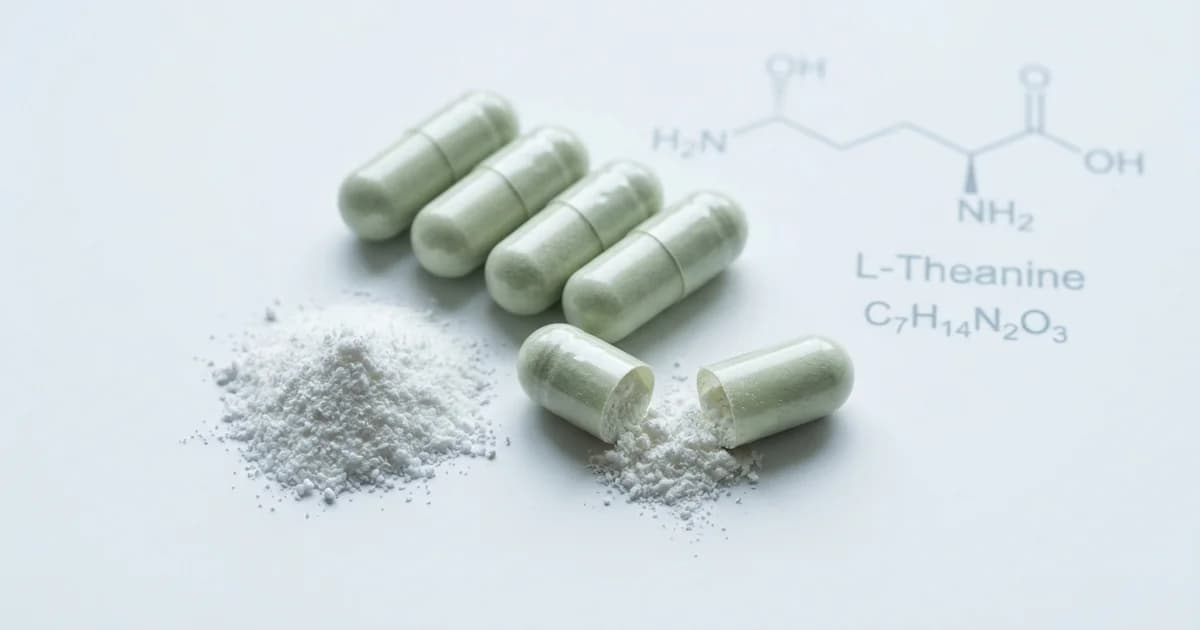
L-theanine is a non-protein amino acid found primarily in Camellia sinensis, the tea plant. L-theanine crosses the blood-brain barrier and influences several neurotransmitter systems, including GABA, serotonin, and dopamine. That's why a cup of green tea feels different from a cup of coffee: the L-theanine modulates the caffeine hit.
Most people supplement L-theanine for one of three reasons: stress reduction without sedation, sharper focus (especially paired with caffeine), or better sleep quality. Clinical studies have examined doses ranging from 100 to 900 mg per day across these use cases.
The compound has been consumed in tea for thousands of years. As a standalone supplement, L-theanine has been commercially available since the mid-1990s. That's a long track record for a nootropic ingredient.
L Theanine Side Effects: What the Evidence Shows
Let's get specific. The most commonly reported l theanine side effects in clinical trials and user reports include:
| Side Effect | Frequency | Severity | Notes |
|---|---|---|---|
| Headache | Uncommon | Mild | More common in new users or at higher doses |
| Drowsiness | Uncommon | Mild | Dose-dependent; more likely above 400 mg |
| Nausea | Rare | Mild | Usually linked to taking it on an empty stomach |
| Dizziness | Rare | Mild | Typically resolves quickly |
| GI discomfort | Rare | Mild | Minimal reports in clinical settings |
According to Cleveland Clinic, reported l theanine side effects include headaches, dizziness, nausea, and diarrhea, but these are "relatively uncommon and tend to be mild."
WebMD notes that doses of up to 900 mg daily have been safely used for 8 weeks in clinical settings. That's a wide safety margin considering most supplements deliver between 100 and 200 mg per serving.
A 2025 systematic review published in Nutritional Neuroscience examined L-theanine supplementation trials and found few adverse events reported across included studies, even at the highest dose of 900 mg/day and over eight-week dosing periods.
The bottom line: is L-theanine safe? Based on the available clinical data, yes. L theanine side effects are among the mildest of any nootropic compound in the research literature.
L Theanine Side Effects on Liver Health: Separating Fact from Fear
Search "l-theanine liver" and you'll find a mix of concern and confusion. Some of that anxiety comes from people conflating L-theanine with other green tea extracts, particularly EGCG, which has been linked to liver stress at high doses.
L-theanine itself tells a very different story. A 2024 study published in Foods (MDPI) found that L-theanine supplementation actually attenuated EGCG-induced liver injury in mice, reducing serum levels of the hepatic enzymes ALT and AST. In other words, L-theanine appeared to protect the liver from damage caused by other compounds.
Separate research has shown that L-theanine protected hepatocytes (liver cells) against ethanol-induced toxicity both in vitro and in vivo. The mechanism involved preserving mitochondrial membrane potential and preventing cytochrome c release.
According to Consensus.app's analysis of the literature, L-theanine has not been associated with liver toxicity in available research, and studies consistently show protective effects against various forms of liver injury.
So the l theanine side effects on your liver appear to be essentially nonexistent based on current evidence. If anything, the data points in the opposite direction.
L Theanine Side Effects with Long-Term Use: Is Chronic Supplementation Safe?
This is where most people get nervous, and it's a fair question. Plenty of compounds are safe for a week but problematic for a year.
The longest controlled trial data we have comes from an 8-week open-label study in patients with major depressive disorder, which concluded that chronic L-theanine administration was safe and had multiple beneficial effects on depressive symptoms, anxiety, sleep disturbance, and cognitive function.
A 2024 randomized, double-blind, placebo-controlled trial found that 28 days of L-theanine supplementation was safe and well tolerated, with all adverse events resolved by the end of the study period. Out-of-range laboratory values and changes in vital signs were deemed not clinically relevant.
Beyond formal trials, consider the epidemiological angle. Populations in Japan and China have consumed L-theanine through daily tea drinking for centuries. Green tea contains roughly 20 to 60 mg of L-theanine per cup, and heavy tea drinkers may consume 200+ mg daily through diet alone.
The honest caveat: we don't have 5-year randomized controlled trials on isolated L-theanine long-term use at supplement doses. But the combination of clinical trial data, toxicology studies, and centuries of dietary exposure paints a reassuring picture regarding l theanine side effects over time.
L Theanine Side Effects Weighed Against Benefits: A Balanced Look
Here's a straightforward breakdown of the l theanine side effects and benefits based on the current evidence:
The Pros
- Calm without sedation. L-theanine promotes alpha brain wave activity, the same pattern associated with relaxed alertness. You feel less stressed without feeling sleepy.
- Pairs well with caffeine. A study in Nutritional Neuroscience found that the combination of 97 mg L-theanine and 40 mg caffeine improved accuracy during task switching and increased subjective alertness while reducing tiredness.
- Strong safety profile. FDA GRAS status, minimal l theanine side effects in clinical trials, and no known serious adverse events.
- No tolerance buildup reported. Unlike many psychoactive compounds, L-theanine doesn't appear to require dose escalation over time.
The Cons
- Mild l theanine side effects are possible. Headaches and drowsiness can occur, though they're uncommon and typically dose-dependent.
- Limited long-term trial data. Most controlled studies run 4 to 8 weeks. Longer-duration RCTs would strengthen the evidence base.
- May interact with certain medications. WebMD reports that L-theanine may interact with blood pressure medications and sedatives like diazepam, lorazepam, and zolpidem.
- Not enough data for pregnancy. RxList and other sources note that there isn't sufficient reliable data on L-theanine safety during pregnancy or breastfeeding.
Who Should Watch for L Theanine Side Effects?
While L-theanine is well-tolerated by most adults, a few groups should check with a healthcare provider first:
- People on blood pressure medications. L-theanine may lower blood pressure on its own. Stacking L-theanine with antihypertensive drugs could cause blood pressure to drop too low.
- People taking sedatives or sleep medications. The calming effects of L-theanine could amplify sedation from drugs like benzodiazepines or Z-drugs.
- Pregnant or breastfeeding women. The NCBI LactMed database notes that while amounts found in green tea are likely acceptable during nursing, high-dose supplemental L-theanine should be approached with caution, especially with newborns or preterm infants.
- Anyone scheduled for surgery. Because of potential blood pressure effects, some practitioners recommend stopping L-theanine supplementation two weeks before a scheduled procedure.
If you don't fall into any of these categories, L-theanine at standard doses (100 to 400 mg/day) carries very little risk of l theanine side effects based on the published data.
The Right Dosage Window to Minimize L Theanine Side Effects
Getting the dose right matters for any supplement. Clinical research on L-theanine has used a wide range:
- 100 to 200 mg/day for focus and cognitive performance (especially combined with caffeine)
- 200 to 400 mg/day for stress and anxiety reduction
- Up to 900 mg/day in clinical trial settings for sleep and mood support
The Alzheimer's Drug Discovery Foundation notes that the majority of clinical studies have used 200 mg/day, making that a reasonable starting point for most people.
The FDA granted L-theanine GRAS status (Generally Recognized as Safe), which means L-theanine meets the safety threshold for use in food and beverages, not just supplements.
Getting L-Theanine the Smart Way
L-theanine works best as part of a considered daily routine, not something you take randomly when you remember. And L-theanine performs even better when paired with the right complementary ingredients.
That's the logic behind Roon, a zero-nicotine sublingual pouch built around a stack of L-theanine, caffeine (80 mg), theacrine, and methylliberine. The L-theanine sharpens caffeine's focus benefits and promotes calm alertness via alpha-wave activity. The theacrine and methylliberine extend the duration without the crash or tolerance buildup that comes with caffeine alone.
If you're already confident that l theanine side effects pose minimal concern and want a clean, convenient way to get L-theanine daily, Roon puts the dose right where it belongs: under your lip and into your system in minutes. No pills, no brewing, no guesswork.