L-Phenylalanine: The Amino Acid One Step Upstream of Dopamine
Roon Team
L-Phenylalanine: The Amino Acid One Step Upstream of Dopamine
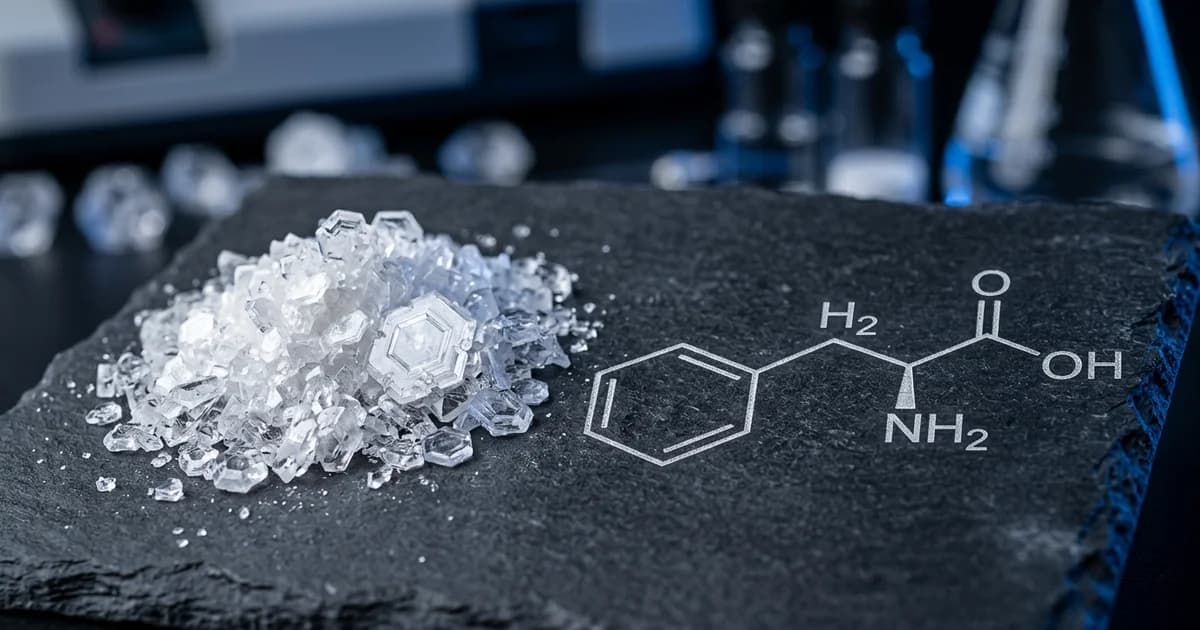
Your brain builds dopamine on an assembly line, and L-phenylalanine sits at the very front of it. It is the raw material that gets converted into tyrosine, which then becomes L-DOPA, which finally becomes dopamine. Most discussions about focus and motivation start at tyrosine. They skip the step before it.
That step is the subject here. The l-phenylalanine benefits people chase, sharper focus, better mood, steadier drive, all trace back to this one chemical conversion happening in your liver and brain.
So is taking it actually worth it? The honest answer is more interesting than the supplement labels suggest.
Key Takeaways
- L-phenylalanine is an essential amino acid, meaning your body cannot make it and you must get it from food or supplements.
- It converts to tyrosine, the direct precursor to dopamine and norepinephrine, via the enzyme phenylalanine hydroxylase.
- For cognitive and stress-related goals, tyrosine is the better-studied precursor. The human evidence for it is far stronger.
- People with phenylketonuria (PKU) must avoid phenylalanine entirely. This is non-negotiable.
What Is Phenylalanine?
Phenylalanine is one of the nine essential amino acids your body cannot synthesize on its own. You eat it every day. It shows up in meat, fish, eggs, dairy, soy, nuts, and seeds, basically anything protein-rich.
It comes in a few forms. L-phenylalanine is the natural form your body uses to build proteins and neurotransmitters. D-phenylalanine is a synthetic mirror-image form studied mostly for pain. DL-phenylalanine (DLPA) is a 50/50 blend of the two.
When people ask what is phenylalanine doing in their supplement stack, the answer almost always comes back to one molecule downstream: dopamine.
Phenylalanine and Dopamine: The Upstream Connection
The link between phenylalanine dopamine chemistry is direct, and it runs through a single conversion step. Your liver and kidneys use an enzyme called phenylalanine hydroxylase (PAH) to turn phenylalanine into tyrosine.
That conversion is the whole story. Phenylalanine is an essential AA in mammals, and its conversion into tyrosine is key for the production of thyroid hormones and catecholamines. Catecholamines include dopamine, norepinephrine, and epinephrine, the chemicals behind drive, alertness, and the acute stress response.
The enzyme doing the work is fussy. The conversion into tyrosine is tightly regulated by the enzyme phenylalanine hydroxylase (PAH), an enzyme that requires tetrahydrobiopterin (BH4) as a cofactor, and molecular dioxygen as a substrate. Without enough of that BH4 cofactor, the line slows down.
Location matters too. The expression of PAH is restricted to the liver and kidney, major organs involved in AAs metabolism. So phenylalanine has to clear that liver step before it can feed the dopamine pathway at all.
Here is the practical takeaway. If your goal is more dopamine raw material, phenylalanine works one step earlier in the chain than tyrosine. Whether that extra step helps you or just adds a bottleneck is the real question.
Phenylalanine vs Tyrosine: Which Precursor Should You Pick?
For focus and stress performance, tyrosine is the stronger choice based on human research. The phenylalanine vs tyrosine debate usually ends here, and it ends in tyrosine's favor.
The reason is simple. Tyrosine sits one step closer to dopamine, so it skips the liver conversion entirely. It also carries far more direct human evidence behind it.
Tyrosine's main job is protecting performance under pressure. DA and NE are depleted under stressful conditions, which can compromise cognitive function. L-Tyrosine supplementation may help alleviate acute stress-induced cognitive decline by restoring catecholamine levels in the brain.
The effect shows up in controlled settings. In one stress-simulation trial, the L-tyrosine group made markedly fewer missed responses than the placebo group on the Stroop challenge. That is a measurable cognitive edge under load.
Phenylalanine, by contrast, has a thinner human file for focus specifically. Its supporting research clusters around mood and pain, not acute cognitive performance. So if l-phenylalanine for focus is your only goal, tyrosine is the more evidence-backed pick.
Side-by-Side Comparison
| Factor | L-Phenylalanine | L-Tyrosine |
|---|---|---|
| Position in dopamine pathway | Two steps upstream | One step upstream (direct precursor) |
| Requires liver conversion | Yes (via PAH enzyme) | No |
| Strength of human focus evidence | Limited | Stronger, especially under stress |
| Studied for mood | Yes (DLPA, older studies) | Yes |
| Studied for pain | Yes (D-form / DLPA) | No |
| Safe for people with PKU | No | Generally yes |
| Typical use case | Mood, niche pain protocols | Acute stress, focus, performance |
Phenylalanine and Mood
The strongest case for phenylalanine is mood, not focus. The phenylalanine mood research goes back decades and centers on the DL form rather than pure L.
The classic example is an early open trial of DL-phenylalanine in people with depression, published in the Journal of Neural Transmission. It reported improvement in a subset of patients, which kept interest in the compound alive for years.
That said, an open study is a weak form of evidence. There is no placebo group and no blinding, so you cannot rule out expectation effects. Newer, rigorous trials never built on it the way they did for tyrosine.
So treat the mood angle as plausible but unproven. The mechanism makes sense given the dopamine and norepinephrine pathway, but the human data has not matured into anything you can lean on hard.
Phenylalanine for Focus: What the Evidence Actually Supports
There is no strong human trial showing L-phenylalanine sharpens focus on its own. The mechanism is reasonable. The direct proof is missing.
This is the gap that matters. A precursor only helps if a shortage of raw material is actually limiting your dopamine production. For most healthy, well-fed people, it probably is not, because you already eat plenty of phenylalanine in normal protein.
Tyrosine research found its niche by targeting a specific scenario: acute stress that drains catecholamines faster than your body replaces them. Phenylalanine has not been mapped to a comparable, well-defined use case for cognition.
If you want a precursor for focus, start with the one that has the data. Phenylalanine is interesting biochemistry, not a proven focus tool.
The PKU Warning You Cannot Ignore
People with phenylketonuria must avoid phenylalanine completely. This is the one hard rule, and it overrides any benefit discussion.
PKU is a genetic disorder where the PAH enzyme does not work, so phenylalanine builds up to toxic levels. Phenylalanine isn't a health concern for most people. However, for people who have the genetic disorder phenylketonuria (PKU) or certain other health conditions phenylalanine can be a serious health concern. Phenylalanine can cause intellectual disabilities, brain damage, seizures and other problems in people with PKU.
This is why your diet soda carries a label. Federal regulations require that any beverage or food that contains aspartame bear this warning: "Phenylketonurics: Contains phenylalanine." That warning exists specifically to protect this group.
If you have PKU, skip every phenylalanine supplement and choose a different approach. If you are unsure of your status, talk to a doctor before supplementing.
How to Think About Adding It
Phenylalanine is a precursor, not a stimulant. It does not have an onset time or a felt "kick." It quietly feeds a pathway, and the result, if any, is indirect.
That makes it a poor choice if you want something you can actually notice. Precursors work in the background. Whether the background work translates to a real-world effect depends heavily on whether you were short on the raw material to begin with.
For most people, the smarter move is to get phenylalanine from a normal protein-rich diet and reserve targeted supplementation for tyrosine, which has the better track record for cognitive goals.
Conclusion
L-phenylalanine is real biochemistry sitting at the top of the dopamine assembly line. It converts to tyrosine, which feeds the catecholamine pathway behind focus, drive, and mood.
But upstream is not the same as better. For cognitive and stress-related goals, tyrosine is the more direct, more studied precursor, and it skips the liver conversion entirely. Phenylalanine's clearest evidence lives in older mood research, which never matured into strong proof.
And for anyone with PKU, it is simply off the table. The honest verdict: phenylalanine is fascinating as a concept and modest as a tool. If you want a dopamine precursor that earns its place, the data points to tyrosine first.
Frequently Asked Questions
What does L-phenylalanine actually do in the body?
L-phenylalanine is an essential amino acid that your body uses to build proteins and neurotransmitters. Its most relevant role is conversion to tyrosine, the direct precursor to dopamine and norepinephrine. That conversion happens in the liver and kidneys through the enzyme phenylalanine hydroxylase, which needs the cofactor BH4 to work. Beyond neurotransmitters, it also feeds production of thyroid hormones.
Is L-phenylalanine or L-tyrosine better for focus?
Tyrosine is the better choice for focus based on human evidence. It sits one step closer to dopamine and skips the liver conversion that phenylalanine requires. Tyrosine also has stronger research, especially for protecting cognitive performance under acute stress, where catecholamines get depleted. Phenylalanine has a thinner human file for focus specifically, so tyrosine is the more reliable pick.
Can phenylalanine help with mood?
Possibly, but the evidence is weak. The main support comes from older open studies of DL-phenylalanine in people with depression, which reported some improvement. Open trials lack placebo controls and blinding, so they cannot rule out expectation effects. The dopamine and norepinephrine mechanism is plausible, but rigorous modern trials never confirmed a strong mood benefit. Treat it as unproven.
Who should avoid phenylalanine?
Anyone with phenylketonuria (PKU) must avoid phenylalanine entirely. In PKU, the conversion enzyme does not function, so phenylalanine builds up to levels that can cause serious harm including brain damage and seizures. This is why aspartame-containing products carry a "contains phenylalanine" warning. If you have PKU or are unsure of your status, consult a doctor before using any phenylalanine supplement.
Do I already get enough phenylalanine from food?
Almost certainly, if you eat a normal diet. Phenylalanine is found in meat, fish, eggs, dairy, soy, nuts, and seeds, so most people consume plenty through everyday protein. A precursor supplement only helps when a shortage of raw material is limiting production, which is uncommon in well-fed, healthy adults. That is one reason the case for supplementing it is modest.
What is the difference between L-, D-, and DL-phenylalanine?
L-phenylalanine is the natural form your body uses to build proteins and neurotransmitters. D-phenylalanine is a synthetic mirror-image form studied mostly for pain modulation. DL-phenylalanine (DLPA) combines both in a 50/50 blend and appears in the older mood research. For dopamine-related goals, the L form is the relevant one, since it feeds the tyrosine conversion pathway.
Where Phenylalanine Fits, and Where It Doesn't
We keep an honest ingredient library because precursors get oversold, and phenylalanine is a clear example. It is genuine upstream chemistry, but the human data for focus points to tyrosine first. We would rather tell you that than sell you a story.
Roon is built on ingredients with the strongest evidence for sustained, jitter-free focus, not on speculative precursors. Each Roon pouch pairs 80 mg caffeine and 60 mg L-theanine with 25 mg methylliberine (Dynamine) and 5 mg theacrine (TeaCrine), delivered sublingually for a 5 to 10 minute onset and a 6 to 8 hour window with no crash and no tolerance buildup.
To be clear, Roon is not an amino acid precursor and it will not "raise dopamine" the way a tyrosine protocol aims to. It is a fast, clean focus tool. If you want effects you can actually feel on a deadline, try Roon and keep the precursor experiments for a separate goal.
Written by Roon Team