Is Sucralose Keto Friendly? Net Carbs, the Splenda Packet Trap, and What the Insulin Studies Actually Show
Is Sucralose Keto Friendly? Net Carbs, the Splenda Packet Trap, and What the Insulin Studies Actually Show
Is sucralose keto friendly? Pure sucralose, the compound itself, has no meaningful carbohydrates and zero calories. It will not add to your net carb count. But the answer changes when you reach for a Splenda packet, because those packets contain dextrose and maltodextrin as bulking agents, each one carrying roughly 1 gram of carbohydrate and about 3 calories. And there is a second, less obvious question underneath the carb math: a handful of human trials suggest sucralose may affect insulin sensitivity, which matters if your reason for eating keto is keeping insulin low.
Here is what actually holds up, and what does not.
Key Takeaways
- Pure sucralose has essentially zero net carbs. At the tiny doses used in foods and supplements, the compound itself contributes no carbohydrate and no calories.
- Splenda packets are not pure sucralose. Each one contains dextrose and maltodextrin fillers that add roughly 1 g carbohydrate and 3 calories, which can add up if you use several per day.
- No published trial has measured sucralose's direct effect on blood ketone levels. That specific experiment has not been done.
- The insulin evidence is mixed. Some RCTs show reduced insulin sensitivity with sucralose; others show no change. The effect appears to depend on dose, duration, and whether sucralose is consumed alongside carbohydrates.
The Carb Math: Pure Sucralose vs. Splenda Packets
Sucralose is roughly 600 times sweeter than sugar. Because so little is needed to sweeten anything, the compound itself adds no measurable carbohydrate at the doses used in food and supplement products.
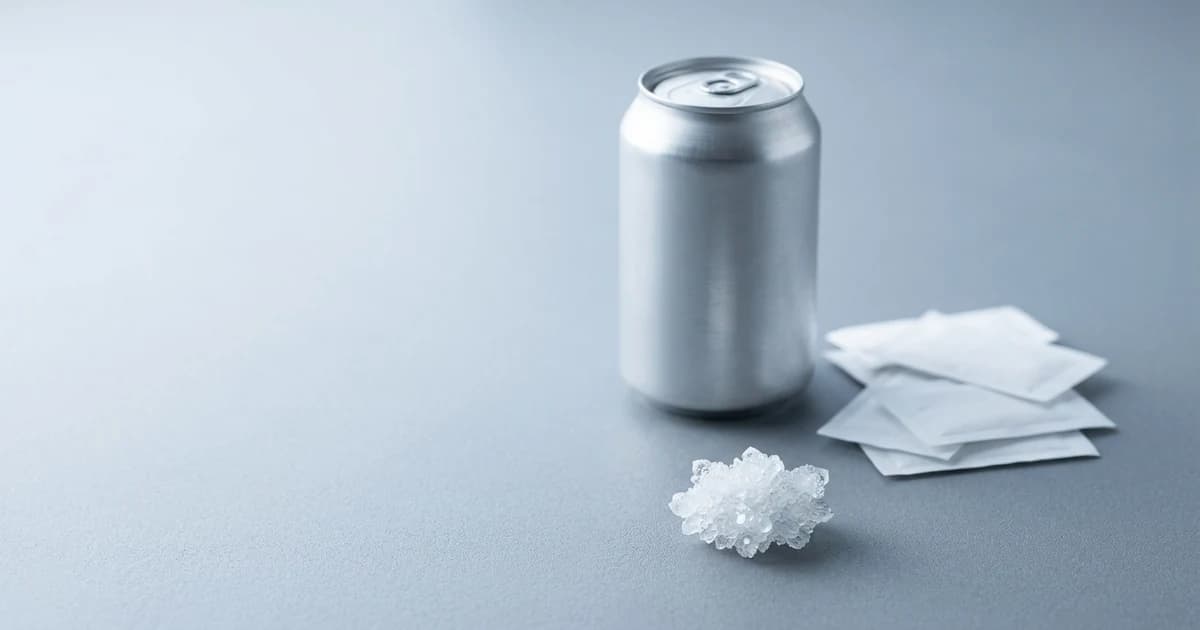
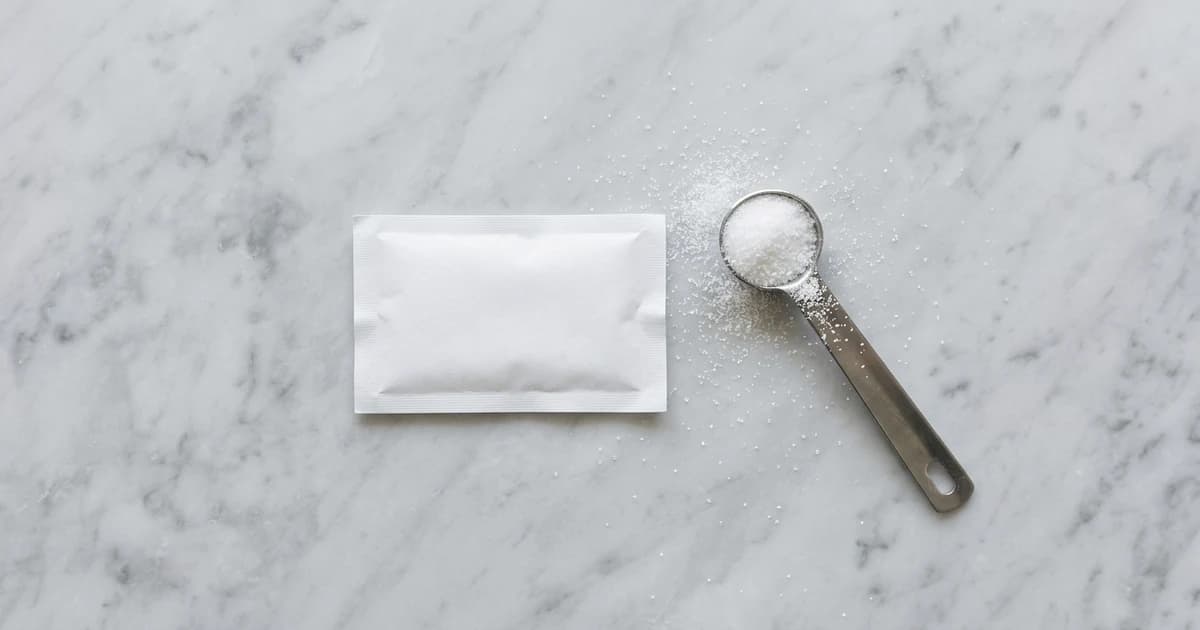
The confusion starts at the Splenda packet. Since the actual amount of sucralose in a packet is microscopic, the manufacturer adds dextrose and maltodextrin for volume and pourability. Splenda's own FAQ confirms this: maltodextrin and dextrose "provide volume and texture." Those fillers are simple sugars and starches, not sugar alcohols, so they count fully toward net carbs on a keto diet.
| Product | Sucralose | Bulking Agents | Carbs per Serving | Calories per Serving |
|---|---|---|---|---|
| Pure sucralose (liquid or powder) | Yes | None | ~0 g | 0 |
| Splenda Original Packet | Yes | Dextrose, maltodextrin | <1 g (roughly 0.9 g) | ~3 |
| Splenda Liquid | Yes | None | 0 g | 0 |
| Sucralose in a supplement or beverage | Yes (trace) | Varies by product | Typically 0 g | Typically 0 |
One packet is negligible. Five packets in a morning coffee adds roughly 4 to 5 grams of carbohydrate and about 15 calories, entirely from the filler, not the sucralose. For someone targeting 20 to 30 g net carbs per day, that is 15 to 25% of the budget before any food.
A useful rule: FDA labeling rules allow amounts under 5 calories per serving to be rounded to zero and total carbohydrate under 1 g to be listed as "less than 1 gram." The packet technically qualifies, so the label is not lying, but the carbs are real.
Does Sucralose Kick You Out of Ketosis?
By the carb-counting definition, pure sucralose will not. It does not raise blood glucose through any carbohydrate mechanism because there is no carbohydrate present.
But there is a gap in the evidence that deserves a straight answer: no published human trial has directly measured sucralose's effect on blood or breath ketone concentrations. The experiment that would settle the question, giving subjects sucralose vs. placebo and then measuring beta-hydroxybutyrate levels, has not been run. Anyone claiming sucralose "kicks you out of ketosis" or that it "has no effect on ketosis" is extrapolating.
What we can look at instead is the insulin data, because insulin is the primary hormonal switch that suppresses ketogenesis.
The Insulin Evidence: Three Trials Worth Knowing
Keto works, in part, by keeping insulin low enough for the liver to produce ketone bodies. If sucralose raised insulin, that would matter even though it adds no carbs. The evidence here is genuinely mixed.
Romo-Romo et al., 2018 (American Journal of Clinical Nutrition)
This 14-day randomized controlled trial gave 66 healthy adults sucralose at 15% of the FDA's acceptable daily intake (ADI) or a control. The sucralose group showed a 17.7% median decrease in insulin sensitivity compared to the control group (p = 0.04), measured by a modified intravenous glucose tolerance test. That is a meaningful reduction over just two weeks.
Dalenberg et al., 2020 (Cell Metabolism)
This trial found that sucralose consumed alongside a carbohydrate impaired glucose metabolism over two weeks. The critical detail for keto dieters: sucralose consumed alone did not produce this effect. If you are eating very low carb, the Dalenberg findings are less directly relevant to you, because the impairment required the combination of sweetener plus carbohydrate.
Méndez-García et al., 2022 (Microorganisms)
In this 10-week trial with 40 healthy young adults, the group consuming 48 mg sucralose per day (compared to water) showed an 8% rise in glucose area under the curve during an oral glucose tolerance test (p = 0.02) and a 32% rise in peak insulin at 30 minutes, alongside shifts in gut microbiome composition. This was not a keto-diet study, but the insulin increase is the kind of signal that matters to someone trying to keep insulin at baseline.
The Counterweight: Grotz et al., 2003 (Journal of the American Dietetic Association)
A 3-month RCT in subjects with type 2 diabetes found no significant differences in HbA1c, fasting plasma glucose, or fasting C-peptide between sucralose and placebo groups. Chronic metabolic effects are not consistent across all study populations and designs. The picture is not uniformly negative.
| Study | Duration | Subjects | Key Finding |
|---|---|---|---|
| Romo-Romo 2018 | 14 days | 66 healthy adults | 17.7% decrease in insulin sensitivity |
| Dalenberg 2020 | 2 weeks | Healthy adults | Impaired glucose metabolism only when sucralose + carb combined |
| Méndez-García 2022 | 10 weeks | 40 healthy young adults | 8% rise in glucose AUC, 32% rise in peak insulin |
| Grotz 2003 | 3 months | Type 2 diabetes patients | No change in HbA1c or fasting glucose |
What Keto Forums Report vs. What the Evidence Supports
Browse any keto subreddit and you will find people reporting that sucralose stalled their weight loss or triggered sugar cravings. These are self-reports, not controlled evidence. No trial has measured "weight loss stall" or "craving intensity" as a primary endpoint in response to sucralose specifically.
That said, dismissing the pattern entirely is also not scientific. The Méndez-García trial did document gut microbiome shifts with sucralose consumption, and the full insulin and blood sugar evidence is worth reading separately. Newer research on sweetener-driven hunger signals adds another layer; see the 2025 hunger and brain study for that data. Whether these changes translate to meaningful effects on fat loss in someone already eating low carb is an open question, not a settled one.
How to Read a Label for Hidden Carbs
If you want to use sucralose on keto and keep the carb count at true zero, skip the packets and look for:
- Liquid sucralose drops (no bulking agents needed in liquid form)
- Products sweetened with sucralose directly, where it appears as an ingredient in the formulation rather than as a tabletop sweetener with fillers
- Avoid anything listing dextrose or maltodextrin as the first ingredient. In Splenda packets, dextrose is actually the primary ingredient by weight, with sucralose as a small fraction
The FDA's ADI for sucralose is 5 mg per kilogram of body weight per day. For a 70 kg (154 lb) adult, that is 350 mg per day. Most people consuming a few sweetened products daily stay well under this threshold.
For context on how sucralose compares with stevia and other keto-friendly sugar substitutes, those are separate conversations worth having.
Conclusion
Sucralose and keto compatibility comes down to which definition of "keto friendly" you are using. By the carb-counting standard, pure sucralose is fine: zero net carbs, zero calories, no glucose load. By the broader metabolic standard, the picture is less certain. A few well-designed RCTs have found measurable changes in insulin sensitivity and glucose handling, though not all studies agree, and none have directly tested the effect on ketone production.
The practical answer for most healthy people eating keto: pure sucralose in moderate amounts is unlikely to disrupt ketosis through carbohydrate alone. Whether the insulin-sensitivity findings matter at typical real-world doses, in the context of a very low carb diet, remains genuinely unresolved. If you want to be conservative, use less. If you notice subjective changes, trust your glucometer over a forum post.
Frequently Asked Questions
Does sucralose have net carbs?
Pure sucralose has no meaningful carbohydrate content. It is roughly 600 times sweeter than sugar, so the amount used in any product is too small to contribute measurable carbs or calories. Splenda packets are different: each contains about 0.9 g carbohydrate from dextrose and maltodextrin fillers. Liquid sucralose and products formulated with pure sucralose have effectively zero net carbs.
Does sucralose spike insulin?
The evidence is mixed. A 2018 RCT found a 17.7% decrease in insulin sensitivity over 14 days, and a 2022 trial found a 32% rise in peak insulin at 30 minutes during glucose testing. A 3-month trial in diabetic subjects found no change in fasting glucose or HbA1c. Individual responses appear to vary.
Will Splenda kick me out of ketosis?
The sucralose in Splenda will not add carbs. The dextrose and maltodextrin in each packet will. One packet contributes roughly 1 g of carbohydrate. If you use three to five packets per day, that is 3 to 5 g of net carbs from fillers alone. Use liquid sucralose or a product formulated without bulking agents to avoid this entirely.
Is sucralose worse than stevia for keto?
Neither has meaningful carbohydrates in pure form. Stevia's main advantage in keto forums is that it has not produced the same insulin-sensitivity findings in trials. However, sucralose compared with stevia involves trade-offs in taste, availability, and formulation. Neither is clearly "worse" by the carb-counting standard alone.
How much sucralose is safe per day?
The FDA's acceptable daily intake is 5 mg per kg of body weight. For a 70 kg adult, that is 350 mg per day. Most people using sucralose-sweetened products consume far less. If you have diabetes, are pregnant, or take medication that affects blood sugar, talk to your prescriber or dietitian before making sweetener decisions.
Does sucralose affect gut bacteria?
The Méndez-García 2022 trial found shifts in gut microbiome composition after 10 weeks of sucralose at 48 mg per day. Changes included altered ratios of Firmicutes and Bacteroidetes. Whether these shifts affect ketosis or metabolic health in a clinically meaningful way for healthy people at typical doses is not yet established.
Can I use sucralose while intermittent fasting?
Pure sucralose has zero calories and will not break a caloric fast. The insulin question, discussed above, is separate and unresolved. For more on fasting compatibility, see how Roon's formula is built and ketones, fasting, and focus research.
A Zero-Sugar Pouch, Disclosed Plainly
Roon oral pouches are sweetened with sucralose. Not the bulked tabletop kind with dextrose and maltodextrin, but sucralose as a direct ingredient in the formulation. Zero sugar, zero calories, zero carbs. That is the carb-math answer, and it is straightforward.
The honest caveat: no study has tested oral-pouch-format sucralose and ketosis specifically, and the insulin-sensitivity trials discussed in this article apply to sucralose generally, including the sucralose in Roon. This article is not going to pretend otherwise. If the insulin-sensitivity findings concern you, that concern applies here too.
What Roon is: a zero-nicotine oral pouch built for sustained focus, with caffeine, L-theanine, methylliberine, and theacrine in a sublingual format designed for a 6 to 8 hour window. What it is not: a keto supplement, a metabolic aid, or a product with any ketosis-related claims. It simply does not add carbs to your day. If that fits your framework, try it.
Related from Roon
- How Roon's formula is built
- The full insulin and blood sugar evidence
- Sucralose compared with stevia
- Insulin, glucose, and mental focus
Written by Roon Team