How to Focus for Hours Without Coffee or Energy Drinks (a Practical Playbook)
Roon Team
How to Focus for Hours Without Coffee or Energy Drinks (a Practical Playbook)
Most people reach for a third coffee when their concentration breaks. The smarter move is to figure out why it broke in the first place.
Learning how to stay focused for hours has less to do with caffeine and more to do with how you structure your time, your environment, and your body's natural energy cycles. Twenty years ago, the average person held attention on a single screen for about two and a half minutes before switching; today it is just 47 seconds, according to attention researcher Dr. Gloria Mark, who shared that figure in an interview with Allwork.space.
That collapse is not a character flaw. It is a design problem, and design problems have fixes. This playbook gives you the ones that actually hold up under research.
Key Takeaways
- Your brain runs on roughly 90-minute focus cycles. Work with them instead of fighting them.
- Sustained attention drops measurably when you are even mildly dehydrated, so water beats a fourth espresso.
- Single-tasking, a stripped-down environment, and a short walk do more for deep work than any drink.
- Caffeine works best when it is paired and dosed, not poured by the mug.
Why Coffee and Energy Drinks Fail You by 2 P.M.
Coffee gives you a fast lift and an equally fast letdown. Caffeine blocks adenosine, the molecule that builds up through the day and makes you feel tired. The catch is that adenosine keeps accumulating in the background. When the caffeine clears, all of it lands at once, which is the slumped, foggy feeling people call the crash.
Energy drinks make this worse with sugar. You get a glucose spike, then a dip that feels like exhaustion. Stack two or three of these across a workday and you ride a sawtooth of highs and lows, none of which is real focus.
The bigger issue is that coffee treats focus as a fuel problem. It mostly is not. Focus is a structure problem, an environment problem, and a recovery problem. Caffeine can support good systems, but it cannot replace them.
How to Stay Focused: The 90-Minute Rule
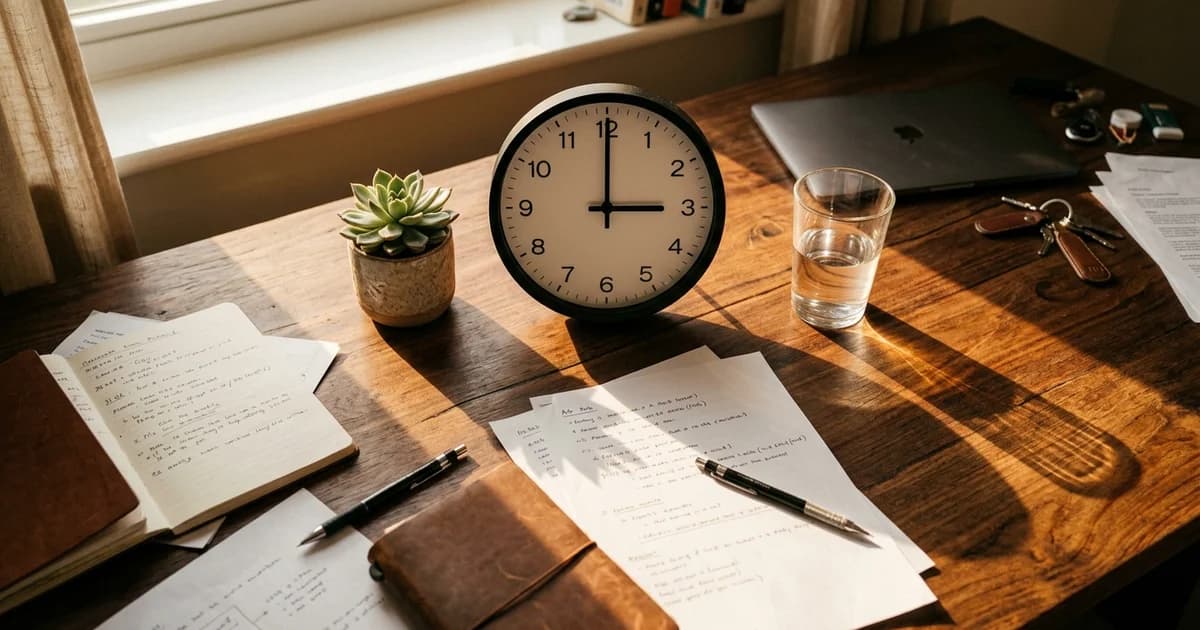
Work in 90-minute blocks, then rest for 15 to 20 minutes. This is the single most useful change you can make, and it comes straight from how your brain is wired.
In the 1950s, sleep researcher Nathaniel Kleitman identified what he called the basic rest-activity cycle, a roughly 90-minute rhythm that governs the transitions between light sleep, deep sleep, and REM during the night and keeps running through your waking hours.
In practice, your attention rises, peaks, and fades on a predictable arc. Pushing past the fade with more coffee gives you diminishing returns and a worse crash later. Stopping to recover resets the cycle.
Here is how to run it:
- Pick one task before you start. Not three. One.
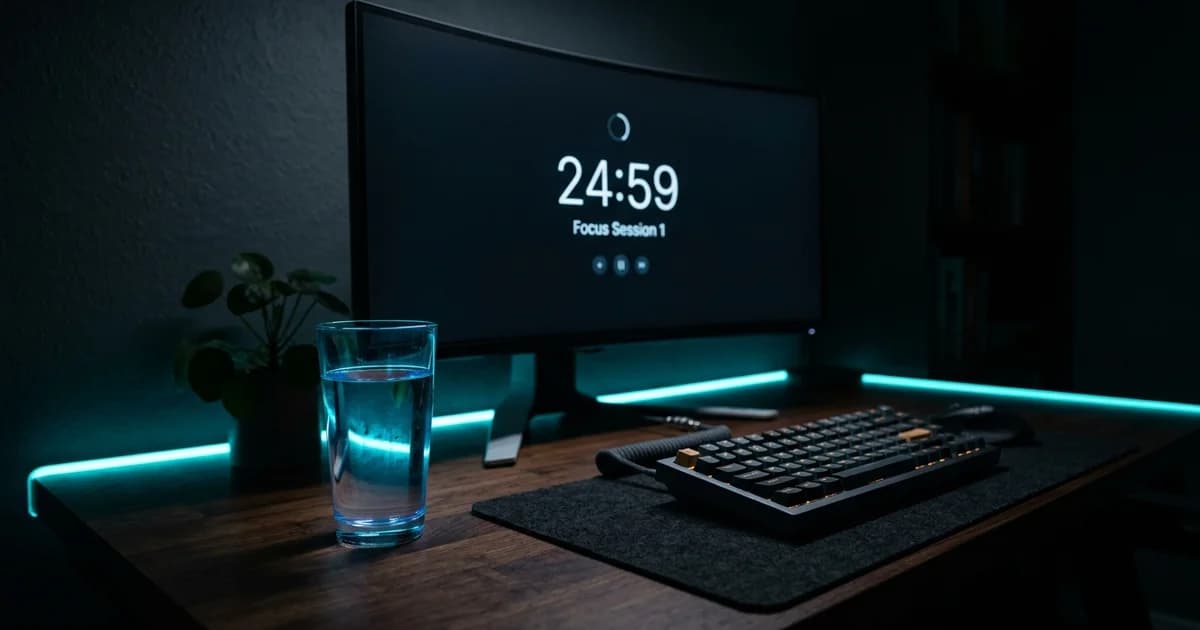
- Set a timer for 90 minutes and work without switching.
- When the timer ends, leave your desk. Walk, stretch, look out a window.
- Take a real 20-minute break with no screens before the next block.
Do two or three of these blocks and you will out-produce a full day of distracted, caffeinated grinding.
How to Stay Focused at Work When Everything Wants Your Attention
The fastest way to focus at work is to remove choices, not add willpower. Your environment decides most of your behavior before you ever consciously try.
Knowing how to stay focused at work comes down to friction. Make distraction harder and deep work easier.
- Kill the notification stack. Phone on do-not-disturb, in another room if possible. Every ping costs you minutes of recovery, not seconds.
- Single-task on purpose. Multitasking is task-switching, and each switch taxes your attention. Close every tab that is not the job in front of you.
- Batch shallow work. Answer email and messages in two or three set windows, not continuously.
- Use a visible cue. Headphones on, door closed, or a simple "in focus" status tells others and yourself that this block is protected.
None of this requires more energy. It requires fewer decisions.
How to Stay Focused While Studying
To stay focused while studying, study actively and study hydrated. Passive rereading feels productive and teaches you almost nothing.
If you are figuring out how to stay focused while studying, the research points in two directions: how you engage with material, and how you maintain your body.
Active recall and spaced practice keep your brain working hard, which is exactly what holds attention. Quiz yourself, close the book and write what you remember, and space your sessions across days instead of cramming.
Then there is water, which students chronically underrate. Penn State researchers found that mild, everyday dehydration hurt sustained attention without people even noticing. The research team found that typical dehydration, the levels that occur during nonstrenuous everyday activities, reduced individuals' abilities to pay attention for tasks over 14 minutes.
Long study sessions are exactly the "tasks over 14 minutes" that suffer. A glass of water beside the desk is a focus tool.
How to Stay Focused on a Single Task
Define "done" before you begin, and you will stop drifting mid-task. Vague goals invite wandering attention because the brain has nothing concrete to lock onto.
The skill of how to stay focused on a task starts with a clear finish line. "Work on the report" is an invitation to stall. "Write the first 600 words of the report intro" gives your mind a target.
A short walk before a hard task also helps. Movement raises blood flow and alertness, which is why people often have their best ideas walking rather than sitting. Pair a clear target with a quick reset and the task stops feeling like a wall.
How to Focus for Hours Without Coffee
You do not need stimulants to focus for hours. You need a stack of habits that protect attention and a body that is not working against you.
Here is the short version of how to focus for hours without coffee:
- Sleep seven to nine hours. Nothing on this list beats sleep, and nothing replaces it.
- Run 90-minute focus blocks with real breaks.
- Drink water before you feel thirsty.
- Eat protein and fat at lunch instead of fast carbs to avoid the afternoon dip.
- Move your body every couple of hours, even for five minutes.
- Get morning light, which anchors your alertness for the day.
If you still want a focus aid, the goal is precision, not volume.
Focus Methods and Aids Compared
Not every approach to focus is equal. Here is an honest comparison of the common options, including where a measured supplement fits.
| Method | Onset | Duration | Crash Risk | Best For |
|---|---|---|---|---|
| Black coffee | 20-30 min | 3-5 hrs | Moderate to high | A quick morning lift |
| Energy drinks | 15-30 min | 2-4 hrs | High (sugar) | Short bursts, poor for deep work |
| 90-minute blocks | Immediate | All day | None | The structural foundation |
| Hydration + protein lunch | Gradual | All day | None | Avoiding the afternoon slump |
| L-theanine + caffeine | 30-45 min | 3-4 hrs | Low | Calm, steady focus |
| Roon sublingual pouch | 5-10 min | 6-8 hrs | None reported | On-demand deep work without the cup |
The drink-based options share one weakness: they spike and fade. A balanced amino-acid-and-caffeine pairing fixes part of that. Research indexed on PubMed found that L-theanine taken with caffeine sharpened attention during demanding work. The present results suggest that L-theanine in combination with caffeine helps to focus attention during a demanding cognitive task.
That pairing is the reason a smart focus aid uses L-theanine to round off caffeine's rough edges rather than relying on caffeine alone.
The Bottom Line on Lasting Focus
Focus is not something you buy by the cup. It is something you build by the hour.
Work with your 90-minute cycles, strip distractions out of your environment, drink water before you are thirsty, move your body, and protect your sleep. Do those five things and you will hold attention longer than any energy drink could ever give you. Stimulants, used well, are a small accelerant on top of a system that already works. They are never the system itself.
The people who concentrate for hours are rarely the ones drinking the most coffee. They are the ones who designed their day so that deep work is the path of least resistance.
Frequently Asked Questions
How long can a person realistically focus at one time?
Most people can sustain genuine deep focus for about 90 minutes before attention naturally fades. This matches the basic rest-activity cycle, the roughly 90-minute rhythm your brain follows around the clock. Beyond that window, returns drop sharply and a short break restores more performance than pushing through. Plan two or three of these blocks a day rather than one long, exhausting stretch, and you will get more done with less mental fatigue.
Is it bad to rely on coffee to focus every day?
Daily coffee is not dangerous for most people, but relying on it to focus has limits. Caffeine blocks adenosine temporarily, then that tiredness signal returns all at once, which produces the afternoon crash. Coffee also builds tolerance, so the same cup does less over time. It works best as a small accelerant on top of good sleep, hydration, and structure, not as a substitute for any of them.
Does drinking water actually improve concentration?
Yes, especially on longer tasks. Penn State researchers found that even mild, everyday dehydration reduced people's ability to sustain attention on tasks lasting more than 14 minutes. Most study sessions and work blocks fall well past that mark. Keeping water at your desk and drinking before you feel thirsty is one of the cheapest, most reliable focus tools available, and it works whether or not you use any other aid.
What is the best alternative to energy drinks for studying?
Active recall plus hydration plus 90-minute study blocks beats any energy drink. Energy drinks spike your blood sugar and then drop it, which feels like exhaustion mid-session. For a measured lift without the sugar crash, an L-theanine and caffeine pairing keeps focus steadier. The combination has been shown to improve attention during demanding tasks while reducing the jittery edge that caffeine alone can cause.
Why do I crash in the afternoon even after coffee?
The afternoon crash comes from adenosine rebound and blood-sugar swings. While caffeine masks tiredness, adenosine keeps building behind it, so when the caffeine clears you feel the full backlog at once. A high-carb lunch makes it worse by spiking and dropping glucose. Swap fast carbs for protein and fat, hydrate, and take a short walk after eating to flatten the curve and hold attention through the afternoon.
How does exercise help focus?
Short bouts of movement raise blood flow and alertness, which supports sustained attention. A five-minute walk between focus blocks resets your energy without caffeine and often clears mental fog faster than a coffee would. You do not need a full workout. Standing, stretching, or walking during your 20-minute breaks is enough to keep your concentration sharp across multiple work sessions in a day.
On-Demand Focus, Without the Fourth Coffee
Everything above is the foundation: sleep, 90-minute blocks, water, movement, single-tasking. When the structure is in place and you still want a clean cognitive layer on top, that is where a precise focus aid earns its spot.
Roon is a zero-nicotine sublingual pouch built for exactly that moment. Each pouch pairs 80 mg caffeine with 60 mg L-theanine, plus 25 mg methylliberine (Dynamine) and 5 mg theacrine (TeaCrine), the same caffeine-and-theanine logic the research supports, in dosed amounts rather than a guessed-at cup. Because it is absorbed under the lip, it kicks in within 5 to 10 minutes and is designed to hold for 6 to 8 hours with no jitters, no crash, and no tolerance buildup.
To be clear, Roon is not a substitute for sleep or for the habits that make deep work possible. It supports focus; it does not manufacture it from nothing. Build the system first, then try Roon for the days when you want the work to start the moment you sit down.
Written by Roon Team