How to Calm Nerves and Stay Sharp Before a Big Presentation

How to Calm Nerves and Stay Sharp Before a Big Presentation
Your slides are done. You know the material cold. And then, ten minutes before you walk in, your heart starts pounding, your hands go cold, and your mind goes blank.
Learning how to calm nerves before a presentation is not about pretending you feel relaxed. It is about managing your physiology so the adrenaline works for you instead of hijacking your brain. The fear is almost universal. Roughly 75% of the population reports a fear of public speaking, and about 25% experience extreme fear when speaking in public.
The good news: nerves are a chemical event, not a character flaw. And chemistry responds to specific, repeatable inputs.
Key Takeaways
- Pre-presentation nerves are an adrenaline and cortisol response, not a sign you are unprepared.
- The fastest way to calm down before a presentation is to lengthen your exhale, which activates your parasympathetic nervous system.
- Trying to feel "calm" often backfires. Reframing nerves as excitement performs better in controlled studies.
- Caffeine without an amino acid like L-theanine can amplify the exact jittery symptoms you are trying to suppress.
What Actually Happens to Your Body Before You Speak
Stage fright is your fight-or-flight system misreading a conference room as a threat. When your brain perceives social danger, it floods your body with adrenaline and cortisol, which speeds up your heart rate, quickens your breathing, and pulls blood toward your large muscles.
This is why your hands shake and your voice tightens. The same surge that would help you sprint from a predator is now making it hard to remember your opening line.
Here is the part most people miss. That arousal is not inherently bad. It sharpens attention and reaction time. The problem starts only when the response runs unchecked and tips from "alert" into "overwhelmed." Your job before a presentation is not to kill the arousal. It is to keep it in the useful zone.
How to Calm Nerves Before a Presentation: The Physiology-First Method
The most reliable way to calm nerves before a presentation is to control your breath, because breathing is the one branch of your nervous system you can consciously override. Everything else follows from there.
1. Lengthen Your Exhale (the 4-7-8 method)
Exhaling longer than you inhale is the fastest manual brake on a racing heart. The technique: breathe in through your nose for four seconds, hold for seven, then exhale slowly through your mouth for eight.
Researchers believe the extended exhalation stimulates the vagus nerve, which switches on the parasympathetic "rest and digest" system. A 2022 study published in Physiological Reports found significant improvements in heart rate variability and reductions in systolic blood pressure after practicing the technique. Run three or four cycles in the hallway before you walk in.
2. Stop Telling Yourself to Calm Down
This sounds backwards, so stick with me. Trying to force calm asks your body to drop from high arousal to low arousal in minutes, which rarely works under pressure.
Harvard Business School researcher Alison Wood Brooks tested this directly. In her 2014 paper in the Journal of Experimental Psychology: General, participants who said "I am excited" before public speaking consistently performed better, felt more confident, and were perceived as more competent by observers, because both anxiety and excitement are high-arousal emotions that activate the body in similar ways. You are not faking it. You are relabeling the same engine.
3. Move Before You Speak
Pent-up adrenaline wants an outlet. A brisk two-minute walk, a few flights of stairs, or even shaking out your hands burns off the excess so it does not surface as a trembling voice.
Movement also resets your posture. Standing tall with open shoulders signals safety to your own brain, which feeds back into a steadier physiological state.
4. Anchor Your Attention Outward
Anxiety thrives on self-focus. The moment you start monitoring your own heartbeat or wondering if people can see your hands shake, the loop tightens.
Shift your attention to something external and concrete. Name three objects in the room. Make eye contact with one friendly face. Read your opening line off the page. Giving your brain a specific task starves the anxiety loop of fuel.
How to Relax Before a Presentation Without Going Numb
The goal of learning how to relax before a presentation is sharpness, not sedation. You want the edge that makes you articulate, just without the static that makes you forget your own name.
This is where most quick fixes fail. A glass of wine the night before or a heavy dose of an anti-anxiety routine can dull the exact cognitive sharpness you need on stage.
A smarter approach pairs a calming layer with a focus layer. Below is how the common pre-presentation tools stack up.
| Method | Onset | Calms Nerves | Keeps You Sharp | Crash Risk |
|---|---|---|---|---|
| 4-7-8 breathing | 1-2 min | Yes | Neutral | None |
| Anxiety reappraisal ("I'm excited") | Instant | Indirect | Yes | None |
| Black coffee alone | 30-45 min | No (can worsen jitters) | Yes, briefly | Yes |
| L-theanine + caffeine | 30-45 min | Yes | Yes | Low |
| Roon sublingual pouch (80mg caffeine, 60mg L-theanine, 25mg Dynamine, 5mg TeaCrine) | 5-10 min | Yes | Yes, 6-8 hrs | None reported |
Why Coffee Alone Can Make Your Nerves Worse
A black coffee before a high-stakes talk is a gamble. Caffeine is 99 percent absorbed within 45 minutes of ingestion, with peak plasma concentrations occurring between 15 and 120 minutes after oral ingestion. That timing variability means your peak jitters could land mid-presentation.
Caffeine also raises heart rate and can heighten that exact "wired" feeling your nerves are already producing. Stacking a stimulant on top of an adrenaline spike is how a manageable buzz turns into shaking hands.
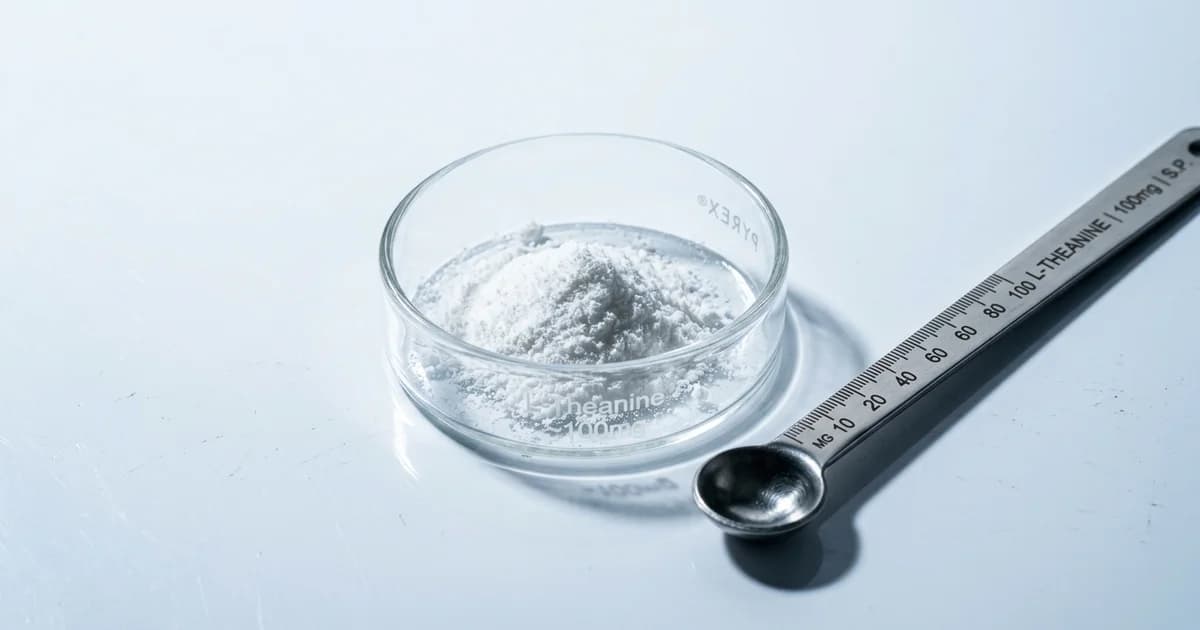
L-theanine, an amino acid found in tea, changes the equation. Research on the combination of L-theanine and caffeine shows it improves cognitive performance and increases subjective alertness while smoothing out the rough edges of caffeine alone. The theanine takes the tremor out of the focus.
A Simple 30-Minute Pre-Presentation Routine
You do not need all of this. You need a sequence you trust. Here is a tested order of operations for the final half hour.
- T-minus 30 min: Take your focus tool, whether that is tea or a measured caffeine-theanine combination, so it peaks as you start speaking.
- T-minus 15 min: Do a two-minute brisk walk or stair climb to burn off excess adrenaline.
- T-minus 5 min: Run three cycles of 4-7-8 breathing in a quiet spot.
- T-minus 1 min: Tell yourself, out loud if you can, "I am excited." Then read your opening line one final time.
- Go: Lock eyes with one friendly face and start.
If you want to go deeper on building reliable focus before high-pressure moments, our guide on how to stay focused under pressure breaks down the cognitive side in more detail.
Conclusion
Pre-presentation nerves are not a flaw to eliminate. They are a surge of adrenaline you can redirect. The people who look composed on stage are not feeling something different from you. They have simply learned to channel the same chemistry.
Slow your exhale to pull the parasympathetic brake. Relabel the buzz as excitement instead of fighting it. Move to burn off the excess, and aim your attention outward. Then pair that calm with a clean source of focus so you stay sharp without tipping into static. Do that, and the nerves stop being the enemy and start being fuel.
Frequently Asked Questions
How do I calm down before a presentation in just five minutes?
Use the 4-7-8 breathing technique. Inhale through your nose for four seconds, hold for seven, and exhale slowly for eight, repeating three or four times. The long exhale stimulates your vagus nerve and activates the parasympathetic nervous system, which lowers your heart rate within minutes. Pair it with one external focus point, like reading your opening line, to break the anxiety loop.
Is it better to feel calm or excited before public speaking?
Excited. Harvard research found that people who said "I am excited" before speaking outperformed those who tried to calm down. Anxiety and excitement are both high-arousal states with similar physical symptoms, so relabeling the feeling is far easier than forcing your body into a low-arousal calm. Reappraisal lets you keep the alertness while dropping the dread.
Does caffeine help or hurt presentation anxiety?
It depends on the dose and what it is paired with. Caffeine alone can raise your heart rate and amplify the jittery, wired feeling that nerves already cause, especially since peak concentration timing varies widely between people. Pairing caffeine with L-theanine smooths those rough edges while keeping the focus benefits, which is why the combination is a popular tool among presentation anxiety tips.
What are the best presentation anxiety tips for last-minute prep?
Lengthen your exhale with paced breathing, do two minutes of movement to burn off adrenaline, reframe nerves as excitement, and anchor your attention on something external. Avoid loading up on coffee right before you speak, since the peak can land mid-talk. Prepare your opening line so well that you can deliver it on autopilot if your mind blanks.
Why do my hands shake before I present?
Shaking hands come from the adrenaline your fight-or-flight system releases when it perceives social pressure as a threat. The surge primes your muscles for action they do not need, so the energy surfaces as a tremor. Physical movement beforehand burns off the excess, and slow breathing reduces the underlying arousal that drives it.
How can I stay focused before a big presentation without crashing?
Choose a focus aid with a predictable onset and no sugar or sedative load. Caffeine paired with L-theanine supports alertness while reducing the jitters of caffeine alone. Time it to peak as you begin speaking, around 30 minutes ahead for most oral sources, and avoid heavy carbs right before, which can cause an energy dip mid-talk.
The Discreet Focus Layer for High-Stakes Moments
Every technique above manages the nerves. The harder problem is staying sharp for the full length of a talk, the Q&A, and the hallway conversations that follow, without a stimulant crash hitting halfway through.
That is the specific gap Roon is built for. It is a zero-nicotine sublingual pouch with a four-ingredient stack: 80mg caffeine, 60mg L-theanine, 25mg methylliberine (Dynamine), and 5mg theacrine (TeaCrine). The caffeine and L-theanine pairing gives you alertness without the tremor, and the sublingual format means a 5 to 10 minute onset instead of waiting 45 minutes for a coffee to kick in. It is designed for 6 to 8 hours of focus with no jitters and no crash, and it fits in a pocket for the moment right before you walk in.
To be clear, Roon is not a substitute for breathing work, preparation, or knowing your material. It is the focus layer that sits on top of all of it. If you want steady sharpness for your next big moment, try Roon before your next presentation.
Related from Roon
- Coffee Breath: Why It Happens and How to Get Rid of It Fast
- How to Stop Shaking When Nervous: Why Coffee Makes It Worse
- Dry Mouth When Nervous: What Stops Saliva Before a Speech
Written by Roon Team