How Long Before a Workout Should You Take Caffeine? (Why Sublingual Beats the 45-Minute Wait)
Roon Team
How Long Before a Workout Should You Take Caffeine? (Why Sublingual Beats the 45-Minute Wait)
Most lifters dose caffeine before workout the wrong way. They slam a scoop or a coffee, scroll their phone for 20 minutes, then start their warm-up while the caffeine is still climbing toward its peak in their bloodstream. The big set arrives. The caffeine hasn't.
The standard advice says take it 45 to 60 minutes out. That number isn't wrong, but it's built around how slowly a capsule or a coffee actually absorbs. Change the delivery method and you change the math entirely.
Here's the timing that actually matches your body's pharmacology, and why where you put the caffeine matters as much as when.
Key Takeaways
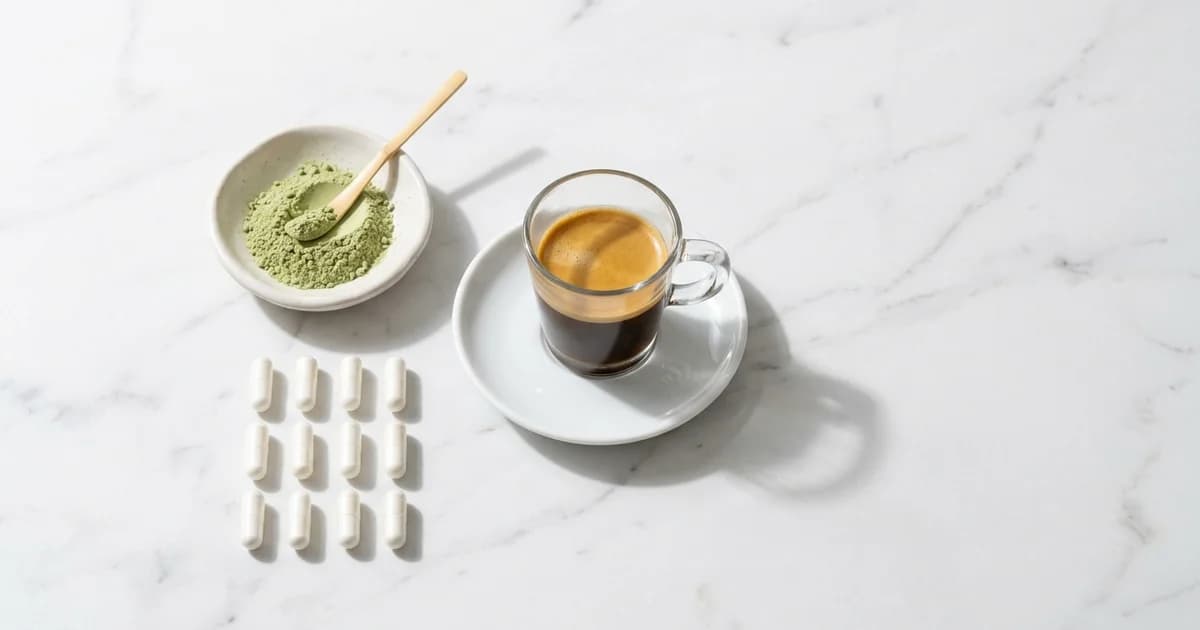
- For a swallowed dose (coffee, capsule, powder), take caffeine before workout roughly 45 to 60 minutes ahead, since blood levels typically peak around 30 to 120 minutes after ingestion.
- The research-backed performance dose sits at 3 to 6 mg per kg of body weight, not a fixed scoop.
- Higher doses near 9 mg/kg add side effects without adding benefit.
- Sublingual and buccal delivery (pouches, gum) absorb through the mouth lining, so onset can land in 5 to 10 minutes instead of 45.
- The "right" timing depends entirely on the source of your caffeine.
How Long For Pre Workout To Kick In?
A swallowed caffeine dose usually peaks in your blood between 30 and 120 minutes, with most people landing near the 45 to 60 minute mark. That's the honest answer to how long for pre workout to kick in when it comes in a capsule, powder, or coffee.
The reason is the route. When you swallow caffeine, it has to pass through your stomach and get absorbed in your small intestine before it reaches circulation. A 2018 pharmacokinetics review in the Journal of Caffeine and Adenosine Research describes this absorption-and-distribution lag in detail, which is why the effect builds gradually rather than hitting instantly.
So if you down a pre-workout and feel something in five minutes, a chunk of that is anticipation and the cold drink, not peak caffeine in your muscles and brain. The real curve is still rising.
When To Take Caffeine Before Workout: The 45-to-60 Minute Rule
For a swallowed dose, take caffeine 45 to 60 minutes before you train. This is the most studied and most reliable window for oral caffeine.
The International Society of Sports Nutrition position stand reviewed the evidence and was direct about it. The most commonly studied timing is 60 minutes pre-exercise, and the review states plainly that optimal timing depends on the source of caffeine. That last clause is the part everyone ignores, and it's the whole point of this article.
That 60-minute number assumes you swallowed a pill or a coffee. It's a workaround for slow gut absorption, not a magic property of caffeine itself. The molecule doesn't care what the clock says. It cares how fast it reaches your blood.
When to take pre workout before gym, practically
If your session is at 6:00 PM, dose your swallowed caffeine around 5:00 to 5:15 PM. That puts peak blood levels in the early-to-middle part of your training, which is usually when you want them for your heaviest compound work.
Lifting first thing in the morning changes the question of when to take pre workout before gym only slightly. Take it on the way in, give it 30 to 45 minutes through your warm-up, and the curve will be climbing into your working sets.
How Much Caffeine Before Workout?
The performance-backed dose is 3 to 6 mg of caffeine per kilogram of body weight, not a one-size scoop. This is the clearest, most replicated finding in the literature on how much caffeine before workout.
The ISSN position stand spells out the range. It reports that caffeine consistently improves exercise performance at 3 to 6 mg/kg of body mass, with a minimal effective dose possibly as low as 2 mg/kg.
Run the numbers for your own body weight:
| Body weight | Low end (3 mg/kg) | High end (6 mg/kg) |
|---|---|---|
| 60 kg (132 lb) | 180 mg | 360 mg |
| 75 kg (165 lb) | 225 mg | 450 mg |
| 90 kg (198 lb) | 270 mg | 540 mg |
| 100 kg (220 lb) | 300 mg | 600 mg |
More is not better past a point. The same review found that very high doses near 9 mg/kg come with a high rate of side effects and don't seem to add any performance benefit over the standard range.
If you get jittery, anxious, or wired, drop toward the bottom of the range. The benefits for strength, sprinting, and endurance show up well before you hit the doses that wreck your sleep and spike your heart rate.
Why Sublingual Beats the 45-Minute Wait
Sublingual and buccal caffeine skips the gut. Instead of passing through your stomach and intestine, it absorbs directly through the thin, blood-rich tissue under your tongue and inside your cheek, which can drop onset to roughly 5 to 10 minutes.
This is the same logic behind why some medications are designed to dissolve under the tongue. Bypass the digestive route, reach the bloodstream faster. Caffeine gum studies have shown the same speed advantage over swallowed forms, which is why buccal delivery keeps showing up in sports nutrition research.
For training, that speed flips your whole pre-workout plan. You no longer have to predict where you'll be in an hour. You dose closer to go-time and the effect arrives with you.
Oral vs sublingual caffeine timing, side by side
| Caffeine source | Route | Typical onset | When to take before training |
|---|---|---|---|
| Coffee | Swallowed | 30 to 60 min | 45 to 60 min before |
| Pre-workout powder | Swallowed | 30 to 60 min | 45 to 60 min before |
| Caffeine capsule | Swallowed | 45 to 90 min | 60 min before |
| Caffeine gum | Buccal | 10 to 20 min | 15 to 20 min before |
| Sublingual pouch (e.g. Roon) | Sublingual | 5 to 10 min | 10 to 15 min before |
The point isn't that one source is universally best. It's that your timing has to match your route. A 60-minute wait makes sense for coffee and makes no sense for a pouch.
The Caffeine Plus L-Theanine Angle
Pairing caffeine with L-theanine smooths out the edge most people hate about a pre-workout hit. L-theanine is an amino acid found in tea leaves, and it takes the jagged stimulation of pure caffeine and rounds it off.
The combination tends to give you the alertness and reaction time from caffeine with less of the racing, anxious feeling. For training, that means cleaner focus on the bar instead of a buzzy, scattered head. A common ratio in the research is roughly 1:1 or 2:1 caffeine to theanine.
This matters more for the mental side of training, your drive, your focus between sets, your reaction time, than for raw force production. If your problem is showing up flat and distracted, this pairing is the lever to pull.
Common Timing Mistakes
A few patterns quietly sabotage people who otherwise dose correctly.
- Dosing too late for a swallowed source. Taking coffee five minutes before a heavy session means peak caffeine arrives during your cool-down.
- Stacking caffeine on top of caffeine. Coffee, then a scoop, then an energy drink puts you well past 6 mg/kg and into the jitter zone.
- Ignoring the cutoff. Caffeine has a long half-life. An evening dose can still be in your system at bedtime and shred your sleep quality.
- Chasing tolerance with bigger doses. If your usual amount stops working, the fix is usually a short reset, not more milligrams.
Conclusion
Timing caffeine before a workout is really a question about absorption, not the clock. A swallowed dose peaks slowly, so the classic 45-to-60-minute wait exists to give your gut time to catch up. Match the dose to your body weight, stay in the 3 to 6 mg/kg range, and respect the long tail that follows you toward bedtime.
The smarter move is to match timing to delivery. Sublingual and buccal sources reach your blood in minutes, which means you can dose close to your warm-up and feel it land on your first working set. The fastest route wins the race, and your training is the thing that benefits.
Frequently Asked Questions
How long before a workout should I take caffeine?
For coffee, powder, or capsules, take it about 45 to 60 minutes before training, since swallowed caffeine usually peaks in your blood between 30 and 120 minutes. For faster sources like gum or a sublingual pouch, you can take it 10 to 20 minutes out because they absorb through the mouth lining instead of the gut. The right timing depends on your source, not a single universal number.
How much caffeine should I take before a workout?
The research-supported range is 3 to 6 mg per kilogram of body weight. For a 75 kg (165 lb) person, that's roughly 225 to 450 mg. Start at the low end if you're caffeine-sensitive or new to dosing. Doses near 9 mg/kg tend to add side effects like jitters and a racing heart without adding performance benefit.
How long does pre-workout take to kick in?
A swallowed pre-workout typically takes 30 to 60 minutes to reach peak effect because the caffeine has to absorb through your digestive tract first. You may feel a light buzz sooner, but that early sensation is partly anticipation and the cold drink, not peak caffeine. Buccal and sublingual products bypass the gut and tend to kick in within 5 to 20 minutes.
When should I take pre-workout before the gym in the morning?
Take it on your way in or during the start of your warm-up. Give a swallowed source 30 to 45 minutes so blood levels are climbing into your working sets. If you train fasted, a smaller dose can feel stronger, so adjust down if you get jittery on an empty stomach.
Is it better to take caffeine on an empty stomach before training?
Caffeine absorbs slightly faster on an empty stomach, but it can also feel harsher and may cause stomach discomfort for some people. If you train fasted and tolerate it well, that's fine. If it leaves you anxious or queasy, having a small amount of food or pairing caffeine with L-theanine usually smooths the experience.
Does caffeine before a workout affect sleep?
It can, because caffeine has a long half-life and lingers for hours. A late-afternoon or evening dose may still be active at bedtime and reduce your sleep quality. If you train in the evening, keep the dose lower and consider faster-clearing or lower-total-caffeine options so you're not paying for tonight's session with tomorrow's fatigue.
Should I combine caffeine with L-theanine for training?
If pure caffeine makes you feel jittery or scattered, yes. L-theanine, an amino acid from tea, takes the edge off caffeine while keeping the alertness and reaction time benefits. A common ratio is around 1:1 or 2:1 caffeine to theanine, which tends to deliver cleaner focus without the racing, wired feeling.
The Focus Layer Your Pre-Workout Forgets
This article is about absorption beating the clock, and that's exactly the gap Roon is built to fill. It's a zero-nicotine, no-tingle sublingual pouch that absorbs through the lining of your mouth, so the onset lands in roughly 5 to 10 minutes instead of the 45-minute wait a coffee or capsule demands. You tuck it in on the walk to the rack, not an hour before.
Each pouch carries a focused stack: 80 mg caffeine, 60 mg L-theanine, 25 mg methylliberine (Dynamine), and 5 mg theacrine (TeaCrine), tuned for mental drive and reaction time across a 6 to 8 hour window with no jitters, no crash, and no tolerance creep. That's the cognitive side of training, your focus between sets and your sharpness on the bar.
Be clear about what it is. Roon is the fast focus and energy layer, not a full pre-workout, so it won't deliver the pump, creatine, or beta-alanine of a loaded scoop. If you want the head right while keeping your stack clean, try Roon as the part of your pre-workout that actually shows up on time.
Written by Roon Team