How Old Do You Have to Be to Buy Caffeine Pouches?
Roon Team
How Old Do You Have to Be to Buy Caffeine Pouches?
If you walked into a gas station and grabbed a tin of caffeine pouches off the shelf next to the nicotine ones, you might assume the cashier will card you. Most won't.
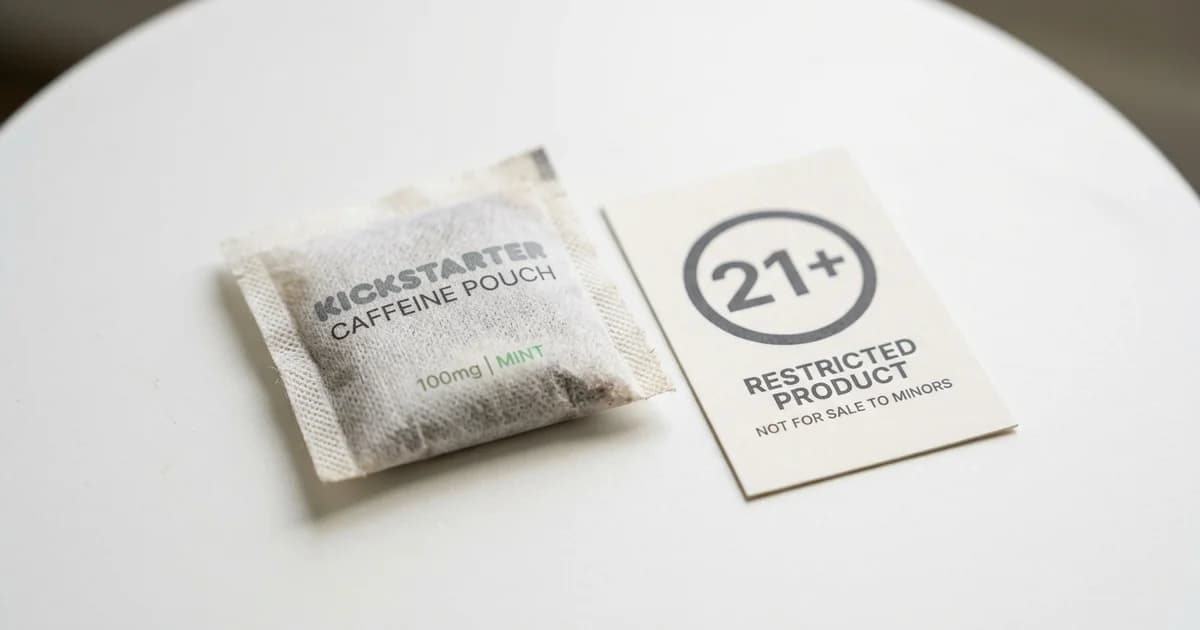
So how old to buy caffeine pouches, legally? In the United States, there is no federal minimum age. The two products look nearly identical, but the law treats them very differently, and the reason comes down to a single ingredient.
This guide breaks down the actual rules, why they exist, what health authorities recommend for younger people, and where individual retailers set their own limits.
Key Takeaways
- There is no federal age limit to buy caffeine pouches in the U.S. because they contain no nicotine and no tobacco.
- Nicotine pouches require you to be 21 under federal Tobacco 21 law. Caffeine pouches are regulated as food, not tobacco.
- Many retailers voluntarily set an 18+ policy even though the law does not force them to.
- Health groups advise that kids under 12 avoid caffeine entirely and that teens cap intake near 100 mg per day.
How Old to Buy Caffeine Pouches: The Short Answer
There is no federal minimum age to buy caffeine pouches in the United States. They contain zero nicotine and zero tobacco, so the laws that gate nicotine products behind a 21+ counter simply do not apply to them.
This surprises people because the format is borrowed straight from nicotine pouches. Same tin, same little white pouch you tuck under your lip, often the same shelf. The physical resemblance does the heavy lifting on the assumption, and the assumption is wrong.
Classification in U.S. product law follows the ingredient, not the shape. A caffeine pouch is treated more like caffeinated gum, an energy mint, or a dietary supplement. None of those carry a federal purchase age either.
Why Nicotine Pouches Are 21+ but Caffeine Pouches Are Not
The dividing line is nicotine. Nicotine is regulated under federal tobacco law, and in December 2019 the federal minimum purchase age for tobacco and nicotine products in the U.S. rose from 18 to 21 under the "Tobacco 21" rule.
That law covers cigarettes, cigars, smokeless tobacco, vapes, and nicotine pouches. Anything containing nicotine or derived from tobacco falls under it.
Caffeine pouches skip that entire category. Caffeine is regulated as a food ingredient by the FDA, and the agency sets no purchase age for it. That is the whole mechanism behind the caffeine pouches age limit question: no nicotine means no Tobacco 21 trigger.
Here is the same idea in plain terms.
| Product type | Key regulated ingredient | Federal purchase age (U.S.) | Regulated as |
|---|---|---|---|
| Nicotine pouch | Nicotine | 21 | Tobacco product |
| Caffeine pouch | Caffeine | None | Food / dietary supplement |
| Energy drink | Caffeine | None | Food / dietary supplement |
| Caffeinated gum or mint | Caffeine | None | Food |
Can Minors Buy Caffeine Pouches?
Legally, yes. In most of the U.S. there is nothing stopping a minor from buying caffeine pouches, which is exactly what worries a lot of parents and clinicians. The gap between what the law allows and what health authorities recommend is wide.
The can minors buy caffeine pouches question has a clean legal answer and a messier practical one. No federal statute blocks the sale. Enforcement, when it exists at all, comes from a store's own policy or from state-level rules that mostly target energy drinks rather than pouches specifically.
Lawmakers have started paying attention. On March 31, 2025, Congress reintroduced H.R. 2511, the Sarah Katz Caffeine Safety Act, which would require foods and dietary supplements with more than 10 mg of caffeine to disclose the milligram amount and carry an advisory that the recommended daily limit for healthy adults is 400 mg.
That bill is about labeling and research, not age gates. Still, the law firm Perkins Coie notes it would also expand federal research into the health effects of caffeine and fund a public outreach campaign about overconsumption. It signals where regulatory attention is drifting.
What Health Authorities Actually Recommend
The absence of a law does not mean caffeine is fine for everyone. Pediatric guidance is unusually direct on this point.
According to the American Academy of Pediatrics, via Children's Hospital of Richmond at VCU, children 12 and under should have no caffeinated beverages at all, and adolescents should stay under 100 mg of caffeine per day. That 100 mg cap is roughly one standard 8-ounce cup of home-brewed coffee.
The same guidance flags why. A pediatrician there noted that caffeine can cause agitation and irritability in kids and can raise the risk of sudden cardiac events in people with known or unknown heart conditions.
The AAP has separately said adolescents should not consume energy drinks, and reporting from AAP News links those drinks to anxiety, poor sleep, and inattention in young people. A single caffeine pouch often carries more caffeine than a teen's entire recommended daily ceiling, which is the core of the concern.
For adults, the reference point is different. The FDA considers up to 400 mg of caffeine per day generally safe for healthy adults, about four 8-ounce cups of coffee. Pregnancy, certain medications, and individual sensitivity all push that number lower, and only a clinician can set your personal limit.
Retailer Policies and the 18+ Standard
Even without a legal requirement, plenty of sellers card anyway. Setting a caffeine pouch age minimum of 18 has become a common voluntary standard, especially online.
Some brands are explicit about it. One European retailer, NEOpouches, states it only sells caffeine pouches to customers 18 and older, citing public health advice about caffeine and young people, even though it acknowledges the law does not require the limit.
The weak spot is enforcement. A UK safeguarding group points out that so-called age checks online often amount to ticking a box to confirm you are over 18, which any teenager can do. The same group flags that pouches get marketed on platforms popular with teens, sometimes with beginner-friendly framing and dessert-style flavors.
So the practical caffeine pouches age limit you encounter depends less on statute and more on where you shop.
Does It Vary by Country and State?
Yes, and it is shifting. No U.S. federal age law exists for caffeine pouches, and no single European Union rule governs them either.
In the UK and across much of the EU, caffeine pouches are classified as food supplements rather than controlled substances, so there is no legal purchase age. Countries like Germany, France, and Sweden leave it to individual shops, and most default to 18+ voluntarily.
Momentum is building in a stricter direction, though it targets energy drinks first. Several U.S. states, including proposals in Connecticut, Delaware, and Maine, have floated bills to restrict energy drink sales to minors. Whether that framework eventually captures caffeine pouches is an open question, so it is worth checking your local rules rather than assuming.
The Bottom Line on Age and Caffeine Pouches
The legal answer is simple: in the U.S. and most of Europe, there is no minimum age to buy caffeine pouches, because they contain no nicotine and are regulated as food rather than tobacco. That is why they sit outside the 21+ rules that govern the nicotine pouches they resemble.
The responsible answer is more careful. Health authorities recommend zero caffeine for children under 12 and a strict daily cap for teens, and many retailers voluntarily hold the line at 18. A product being legal to sell is not the same as it being appropriate for every buyer.
If you are an adult deciding whether caffeine pouches fit your routine, the useful questions are dose, timing, and how your body handles stimulants, not whether a cashier will card you.
Frequently Asked Questions
Do you have to be 21 to buy caffeine pouches?
No. The 21+ requirement in the U.S. applies to nicotine and tobacco products under the federal Tobacco 21 rule. Caffeine pouches contain no nicotine and no tobacco, so that law does not cover them. They are regulated as food or dietary supplements, which carry no federal purchase age. Some retailers set their own 18+ policy, but that is a business choice, not a legal mandate.
Is there any legal age limit to buy caffeine pouches in the U.S.?
There is no federal minimum age. Caffeine is regulated as a food ingredient by the FDA, and the agency has not set a purchase age for products containing it. A few states have proposed bills targeting energy drink sales to minors, but those efforts generally focus on drinks rather than pouches. Local rules can change, so it is worth checking your state's current status.
Can minors buy caffeine pouches?
In most places, minors can legally buy caffeine pouches because no law prohibits the sale. That does not mean it is advisable. The American Academy of Pediatrics recommends no caffeine for children 12 and under and under 100 mg per day for adolescents. A single pouch can exceed a teen's recommended daily limit, which is why many sellers voluntarily restrict purchases to adults.
Why do caffeine pouches look like nicotine pouches if the rules are different?
The pouch format was popularized by nicotine products, and caffeine brands adopted the same delivery method because it works. The resemblance is cosmetic. Legal classification follows the active ingredient, not the packaging. Nicotine triggers tobacco law and a 21+ age gate, while caffeine is treated like the stimulant in coffee, gum, or energy mints, none of which carry a federal age restriction.
How much caffeine is safe for an adult per day?
The FDA considers up to 400 mg of caffeine per day generally safe for healthy adults, roughly four 8-ounce cups of coffee. That figure is a population-level reference, not a target. Pregnancy, some medications, heart conditions, and plain individual sensitivity all lower the practical limit. If you are unsure about your own ceiling, ask a clinician rather than relying on a general number.
Do online stores actually check your age?
Often not in a meaningful way. Many online age checks simply ask you to confirm you are over 18 by clicking a box, which offers little real barrier. Some retailers use stronger verification, but enforcement varies widely. Because the format appeals to younger buyers, this gap has drawn criticism from safeguarding and public health groups.
Are the rules the same in the UK and Europe?
Broadly, yes, with local variation. In the UK and much of the EU, caffeine pouches are classified as food supplements and carry no legal purchase age. Countries like Germany, France, and Sweden leave the decision to individual retailers, most of whom voluntarily require buyers to be 18 or older. There is no single EU-wide age rule for caffeine pouches at this time.
For Adults Who Want the Dose Dialed In, Not Just Legal
If you have read this far, you are almost certainly on the adult side of this question, and your real concern is not the checkout counter. It is how a stimulant behaves once it is in your system.
That is the lane Roon is built for. It is a zero-nicotine, sublingual caffeine pouch for adults, formulated with 80 mg caffeine, 60 mg L-theanine, 25 mg methylliberine (Dynamine), and 5 mg theacrine (TeaCrine) per pouch, and designed for a fast 5 to 10 minute onset with 6 to 8 hours of focus, no jitters, and no crash. It is not a substitute for sleep, and it is not appropriate for children, teens, or anyone a clinician has told to limit caffeine.
If you are an adult who has decided caffeine pouches belong in your routine, Roon is worth a look for the formula rather than the format alone.
Written by Roon Team