Grape Seed Extract and Cognition: What Proanthocyanidins Actually Do for Processing Speed and Attention
Grape seed extract sits in a strange place in the supplement aisle. Most people know it as a heart or skin antioxidant, not a focus aid. But the research on grape seed extract cognition has quietly grown, and the most interesting signals point at two specific functions: how fast your brain processes information, and how well you hold your attention.
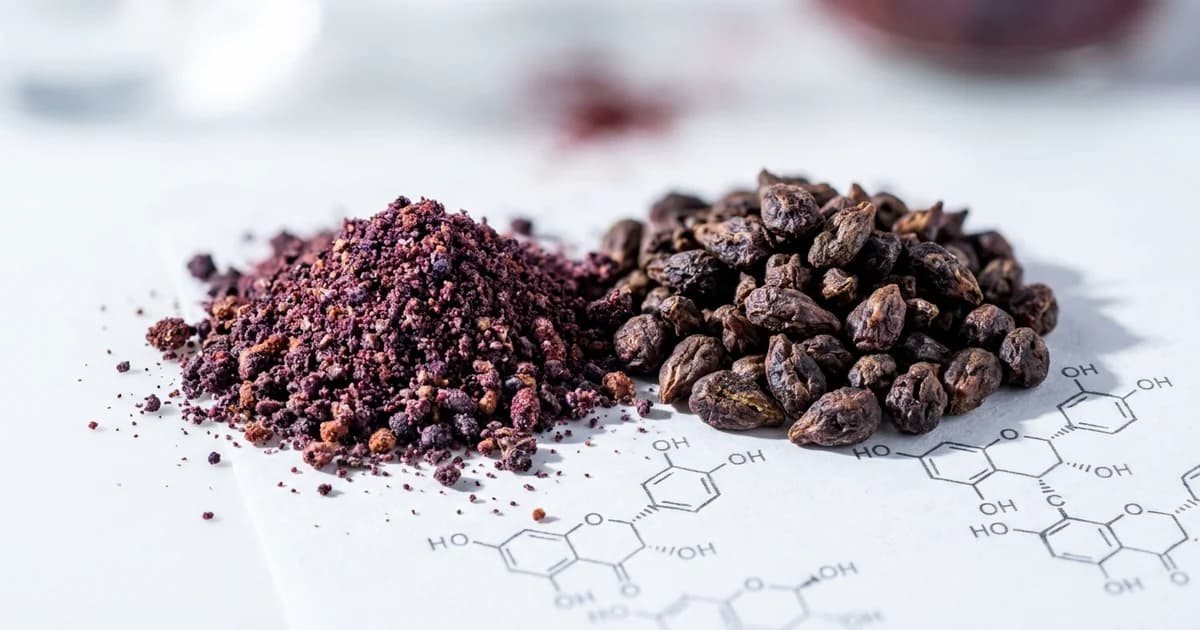
The active compounds doing the work are called proanthocyanidins. They are a class of plant polyphenols, and grape seeds happen to be one of the densest sources on the planet.
This is not a stimulant. It will not light up your afternoon the way coffee does. What it might do is slower, quieter, and built on a different mechanism entirely.
Key Takeaways
- Grape seed proanthocyanidins are concentrated polyphenols studied mainly for vascular and antioxidant effects, with emerging cognitive data.
- The strongest human evidence is in older adults, where standardized grape extracts improved attention, memory, and processing-related measures.
- A standardized grape extract showed a selective attention improvement within 90 minutes of a single dose in one trial.
- Grape seed extract is a slow-build, foundational ingredient, not an acute focus tool.
What Grape Seed Proanthocyanidins Are
Proanthocyanidins are chains of flavanol units, the same building blocks found in cocoa, green tea, and pine bark. In grape seeds they cluster into oligomers, sometimes labeled OPCs (oligomeric proanthocyanidins). The shorter chains absorb more readily than the long ones.
Their headline trait is antioxidant capacity. As a proanthocyanidins antioxidant source, grape seed extract neutralizes reactive oxygen species, the unstable molecules that accumulate with age and metabolic stress. Procyanidins have antioxidative properties that may protect against age-related brain oxidative stress.
That matters for the brain specifically, because neural tissue burns huge amounts of oxygen and is unusually vulnerable to oxidative damage.
How Grape Seed Extract Reaches the Brain
Here is the honest part. Proanthocyanidins are not famous for easy absorption. The large oligomers mostly stay in the gut, where microbes break them into smaller metabolites that enter circulation.
So the effect is indirect. You are not flooding your bloodstream with intact grape compounds. You are generating smaller phenolic metabolites and reducing oxidative load systemically, including in the vessels that feed your brain. That mechanism explains the timing. Grape seed extract behaves like a foundation you pour over weeks, not a switch you flip in minutes.
Grape Seed Extract, Cognition, and Processing Speed: The Human Evidence
The clearest grape seed extract brain data comes from trials in older adults, where there is more cognitive ground to gain.
A 2024 randomized, double-blind, placebo-controlled trial published in the journal Foods tested a standardized grape extract (Cognigrape) in 96 healthy older adults. This trial aimed to investigate, with a double-blind, placebo-controlled clinical trial on 96 healthy older adults, the efficacy of once-daily 250 mg of a standardized grape (Vitis vinifera L.) juice extract (Cognigrape) in improving short- and long-term cognitive functions.
The results were broad. The results revealed marked improvements across multiple cognitive domains, particularly immediate and delayed memory, visuospatial abilities, language, and attention, with improvements occurring within just 14 days, which continued to improve after 84 days of supplementation.
The attention finding is worth pausing on. According to the published trial, the extract produced a measurable change on a selective attention test within 90 minutes of the first dose, alongside the longer-term gains. That hints at both an acute and a cumulative layer, though the durable benefits clearly built over time.
A separate community trial in elderly adults with mild cognitive impairment used grape seed procyanidins extract specifically. This study hypothesized that grape seed procyanidins extract (GSPE) would have a favorable effect on cognitive function in elderly people with mild cognitive impairment (MCI). A community-based, randomized, double-blind, placebo-controlled trial was conducted. Participants in the active arm took 320 mg per day.
What about processing speed directly?
Grape rarely travels alone in research, and the grape seed processing speed signal is strongest when grape is paired with related polyphenols. A 2023 trial in Frontiers in Psychology tested a grape and blueberry extract (Memophenol) in older adults with mild cognitive impairment. Compared to the placebo, Memophenol supplementation was associated with greater improvements in the speed of information processing (p = 0.020), visuospatial learning (p = 0.012), and the BRIEF-A global score (p = 0.046).
That is a real, statistically meaningful processing speed result, though grape was one of two ingredients.
The young, healthy population is murkier
If you are 25 and sharp, the picture is less convincing. A randomized, placebo-controlled trial from the University of Reading gave 400 mg of grape seed polyphenol extract to healthy adults aged 18 to 30. Cognitive function was assessed acutely at baseline and 2, 4 and 6 h post consumption, and chronically at 6 and 12 weeks with a computerised battery of multiple cognitive tests.
The outcome was mixed. GSPE was associated with some improvements in reaction time (acutely) and psychomotor skill (chronically), however the placebo was also associated with some benefits to reaction time. In other words, the benefit in young, already-healthy brains is small to negligible.
This is a common pattern in nootropic research. Compounds that protect against decline show up most when there is decline to protect against.
Grape Seed Extract vs Other Antioxidant Polyphenols
Grape seed extract belongs to a family. Here is how it compares to its closest relatives and to an acute focus tool, so you can see where it fits.
| Ingredient | Primary mechanism | Onset | Best use case |
|---|---|---|---|
| Grape seed proanthocyanidins | Antioxidant, vascular support | Weeks (slow build) | Long-term brain and vascular maintenance |
| Pine bark extract (Pycnogenol) | Antioxidant, nitric oxide, blood flow | Weeks | Circulation and attention support |
| Blueberry anthocyanins | Antioxidant, neuroprotective | Weeks | Memory and processing speed support |
| Caffeine + L-theanine | Adenosine block, calm alertness | 5 to 30 min | Acute, on-demand focus |
| Roon (sublingual pouch) | Caffeine, L-theanine, methylliberine, theacrine | 5 to 10 min | Acute, sustained focus without the crash |
The first three rows are foundational players. They work on the same antioxidant and vascular themes, and they reward consistency over months. The last two rows are a different category entirely: fast, felt, and built for a specific window of the day.
How Much Grape Seed Extract, and Is It Safe?
Human cognitive trials have used roughly 250 to 400 mg per day of standardized extract. The grape seed procyanidins trial in MCI used 320 mg daily. These doses ran for weeks to months without notable safety problems in the published reports.
Grape seed extract is generally well tolerated. The most common reports are mild and digestive. As with any polyphenol that supports blood flow, talk to your doctor first if you take blood thinners or blood pressure medication.
Look for an extract standardized to its proanthocyanidin content, usually expressed as a percentage. The standardization is what separates a studied product from grape-flavored filler.
Conclusion
Grape seed extract is a maintenance ingredient, not a focus switch. Its proanthocyanidins work through antioxidant defense and vascular support, and the human evidence for cognition is strongest in older adults and those with measurable cognitive decline, where attention and processing speed both improved in controlled trials.
For a healthy young brain, the acute gains are thin. The real argument for grape seed extract is the long game: protecting the vascular and oxidative environment your brain depends on, dose after dose, over months. Treat it as part of a foundation, not as the thing that gets you through a 3 p.m. wall.
Frequently Asked Questions
Does grape seed extract improve attention?
In older adults, yes, in controlled trials. A standardized grape extract improved attention scores in healthy older adults, with changes on a selective attention test appearing within 90 minutes of the first dose and broader gains over 14 to 84 days. In young, healthy people the attention benefit is much smaller and less consistent, since there is less cognitive decline to offset.
How long does grape seed extract take to work for cognition?
Plan in weeks, not minutes. Proanthocyanidins are slow-build compounds. The clearest human trials measured benefits at 14 days and saw them strengthen out to 84 days. One trial did detect an acute selective attention shift around 90 minutes, but the durable cognitive effects accumulate with daily use over a month or more.
What is the difference between grape seed extract and proanthocyanidins?
Proanthocyanidins are the active polyphenol compounds. Grape seed extract is one of the richest natural sources of them. When you buy grape seed extract for the brain, you are really buying proanthocyanidins, which is why quality products list a standardized proanthocyanidin percentage on the label.
How much grape seed extract should I take for the brain?
Human cognitive studies have used about 250 to 400 mg per day of a standardized extract, with one mild cognitive impairment trial using 320 mg daily. Choose a product standardized to its proanthocyanidin content, and check with a healthcare provider, especially if you take blood thinners or blood pressure medication.
Is grape seed extract a stimulant?
No. Grape seed extract contains no caffeine and produces no jolt. It supports the brain through antioxidant and vascular pathways, which build slowly. If you want immediate, felt focus, you need a different category of ingredient, such as caffeine paired with L-theanine.
Can grape seed extract help processing speed?
There is encouraging evidence, strongest when grape is combined with related polyphenols. A grape and blueberry extract improved the speed of information processing in older adults with mild cognitive impairment in a 2023 placebo-controlled trial. Grape seed extract alone shows a weaker, less consistent processing speed signal in healthy young adults.
Where Grape Seed Extract Ends and Acute Focus Begins
Grape seed extract plays the long game. It is a vascular and antioxidant foundation you build over months, and the cognitive payoff, where it shows up, is gradual and protective. Nothing about that mechanism delivers focus in the next ten minutes, and the research is honest about it.
That is exactly the gap Roon is built for. Roon is a zero-nicotine sublingual pouch with four ingredients designed for acute performance: 80 mg caffeine, 60 mg L-theanine, 25 mg methylliberine (Dynamine), and 5 mg theacrine (TeaCrine). It works in 5 to 10 minutes and holds for 6 to 8 hours, with no jitters and no crash. It is the counterpart to a slow-build polyphenol, not a replacement for one.
Think of it as two layers. Keep your antioxidant foundation, whether that is grape seed, pine bark, or blueberry, for the long-term maintenance. Reach for Roon when you need focus on demand. Try Roon for the days that actually require the output.
Written by Roon Team