Gotu Kola (Centella asiatica): Calm, Acetylcholine
Roon Team
Gotu Kola (Centella asiatica): Calm, Acetylcholine, and the Honest Cognitive Verdict
Most herbs marketed for the brain promise the world and deliver a footnote. Gotu kola is more interesting than that, and also more complicated.
The honest take on gotu kola cognitive benefits is this: the calming, anti-anxiety side of the plant has the strongest human support, the memory claims rest on a thin stack of small trials, and the popular "it's a natural acetylcholinesterase inhibitor" story is mostly built on test tubes and computer models, not on people. Worth knowing before you spend money on it.
Here is what the science actually says, where it holds up, and where the marketing runs ahead of the evidence.
Key Takeaways
- Gotu kola (Centella asiatica) is a traditional Ayurvedic and Southeast Asian herb whose active compounds are triterpenes: asiaticoside, madecassoside, asiatic acid, and madecassic acid.
- The anxiety evidence is the most credible, with a few small placebo-controlled and clinical studies showing reduced anxiety and stress markers.
- The memory evidence is real but limited, mostly small trials in older adults and post-stroke patients.
- The acetylcholinesterase angle is largely preclinical: lab and molecular-docking data, not strong human outcomes.
- It is not a fast-acting focus tool. Effects, where present, build over weeks.
What Gotu Kola Actually Is
Gotu kola is a low-growing wetland plant used for centuries across India, China, and Southeast Asia. In Ayurveda it carries a reputation as a longevity and "brain" herb, which is exactly the kind of folklore that deserves skepticism and a literature search.
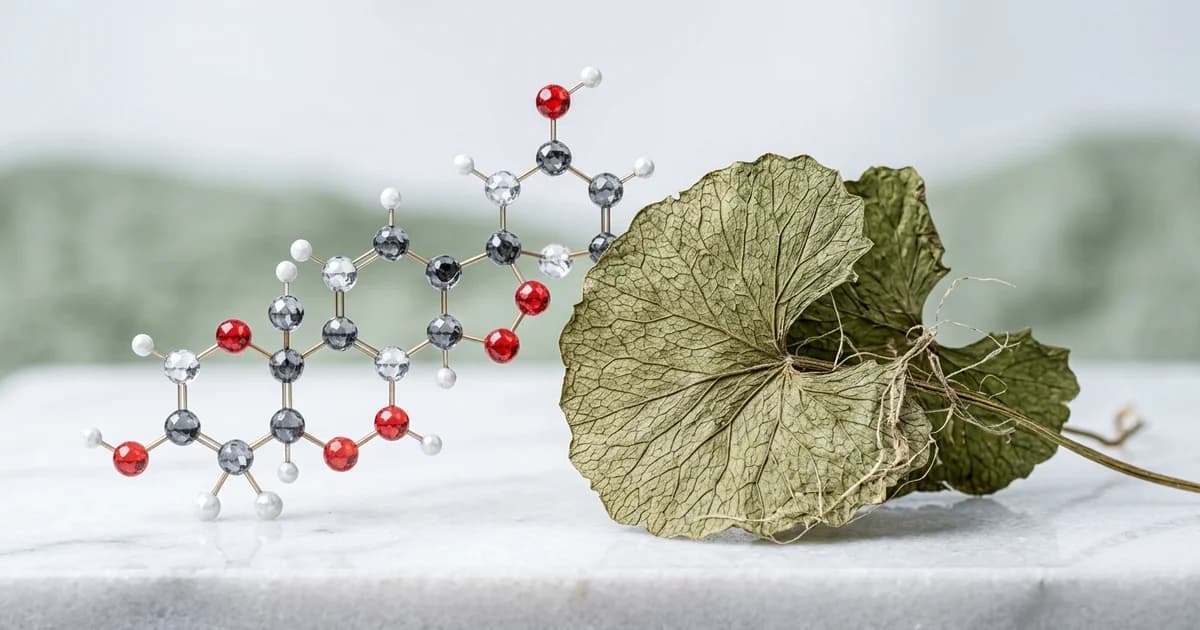
The biology lives in four triterpene saponins: asiaticoside, madecassoside, asiatic acid, and madecassic acid. These are the molecules researchers point to when they talk about the centella asiatica brain story, and they are the ones tested in nearly every mechanism study.
Quality matters here more than with most supplements. Triterpene content varies wildly depending on where and how the plant is grown, which is one reason results across studies are hard to compare.
Gotu Kola Cognitive Benefits: Sorting Signal From Noise
The strongest claim you can make from current human data is modest: gotu kola may support a calmer baseline and may offer small memory gains in specific populations over weeks of use. That is a real finding. It is not the same as "boosts your brain."
Let me break the evidence into the three claims people actually care about.
Gotu Kola and Anxiety
This is where the human evidence is most convincing. A frequently cited double-blind, placebo-controlled study by Bradwejn and colleagues reported that gotu kola reduced the acoustic startle response, a physiological marker tied to anxiety and fear reactivity.
A later clinical study on generalized anxiety disorder found that Centella asiatica meaningfully reduced anxiety, stress, and associated low mood in participants. The effects were statistically strong within the study, though the sample was small and open in design.
So the gotu kola anxiety angle is the best-supported use case. Two caveats: the trials are small, and "supports a calmer state" is not the same as treating an anxiety disorder. If anxiety is disrupting your life, that is a conversation for a clinician, not a pouch or a capsule.
Gotu Kola and Memory
The gotu kola memory claim is plausible but thinly evidenced. The most cited human work comes from small randomized trials in older adults and recovering patients.
One often-referenced randomized, placebo-controlled trial in older adults tested daily doses of 250, 500, and 750 mg, and the higher doses were associated with better memory performance and self-reported mood, as summarized by Banyan Botanicals' research roundup. A separate trial in post-stroke patients reported cognitive improvements at 750 mg and 1,000 mg per day over six weeks.
Notice the pattern. The wins show up in vulnerable populations, at fairly high doses, over weeks. There is little here to suggest a healthy 28-year-old will notice sharper recall by Friday.
Gotu Kola and Neuroprotection
Animal and cell research is the most enthusiastic part of the gotu kola file. Studies report that the plant's compounds support antioxidant activity, dendritic growth, and mitochondrial function, including work showing Centella asiatica promotes antioxidant gene expression and mitochondrial respiration in experimental models.
Interesting. Also a long way from your kitchen table. Rodent neuroprotection rarely translates one-to-one to human cognition, and honest writing should say so.
The Acetylcholinesterase Question
Gotu kola's reputation as a cholinergic herb rests on gotu kola acetylcholinesterase research that is almost entirely preclinical. The theory is clean: inhibit acetylcholinesterase, the enzyme that breaks down acetylcholine, and you preserve more of the neurotransmitter tied to learning and memory.
Lab assays support the idea in principle. Research has screened asiaticoside content and acetylcholinesterase inhibitory activity across plants grown in different regions, and computational modeling has explored how Centella asiatica compounds bind acetylcholinesterase.
Here is the problem. Binding in a docking simulation and inhibiting an enzyme in a dish do not prove a meaningful effect in a living human brain at a normal supplement dose. The pharmaceutical AChE inhibitors used in clinical settings are potent, dose-controlled drugs. A botanical extract is not a clean substitute, and no large human trial has shown gotu kola meaningfully raising acetylcholine to drive cognition.
Treat the asiaticoside acetylcholinesterase story as a promising mechanism, not a proven benefit.
How Gotu Kola Compares to Other Cognitive Ingredients
Gotu kola plays a different game than stimulant or fast-onset nootropics. It is a slow, calm-leaning herb, not an acute focus switch. The table below puts it in context.
| Ingredient | Primary mechanism | Onset | Best-supported use | Human evidence strength |
|---|---|---|---|---|
| Gotu kola (Centella asiatica) | Triterpenes; possible AChE modulation; calming | Weeks | Anxiety support, modest memory in older adults | Small trials, mixed |
| L-theanine | Alpha brain waves, calm-focus | 30-60 min | Smoothing stimulant edge, relaxed attention | Moderate |
| Caffeine | Adenosine receptor antagonism | 15-45 min | Alertness, reaction time | Strong |
| Bacopa monnieri | Cholinergic, antioxidant | Weeks | Memory consolidation with chronic use | Moderate |
| Methylliberine (Dynamine) | Adenosine/dopamine route | 5-15 min | Fast energy without long half-life | Emerging |
The takeaway: if you want clean, fast, all-day focus, gotu kola is the wrong tool. If you want a slow-building, calm-supporting herb and you are patient, it has a defensible place. For more on the fast route, see our breakdown of how caffeine and L-theanine work together and our deeper look at adenosine-targeting compounds.
How People Actually Use It
Doses in the human trials typically ran from 250 mg to 1,000 mg per day of standardized extract, with most benefits appearing at the higher end after several weeks.
A few honest pointers:
- Standardization is everything. Look for extracts that state triterpene or asiaticoside content. Raw leaf powder is a gamble.
- Patience beats expectation. This is a chronic-use herb. Skip it if you want same-day results.
- It can be sedating for some. Pair that with its calming reputation and you can see why it is not a daytime productivity stimulant.
The Honest Verdict on Gotu Kola
Gotu kola earns a qualified yes for calm and a cautious maybe for memory. The anxiety and stress data are the most credible part of its file, the memory benefits are real but small and population-specific, and the cholinergic story is still mostly a laboratory hypothesis.
If you came looking for a fast cognitive lever, this is not it. The plant works slowly, leans calming, and rewards consistency rather than acute dosing. That is a legitimate role, just a narrow one, and far from the cure-all its marketing sometimes suggests.
Buy it for what the evidence supports, not for what a supplement label hopes you will believe.
Frequently Asked Questions
Does gotu kola actually improve memory?
The human evidence is limited but not empty. Small randomized trials in older adults and post-stroke patients have reported memory improvements at 750 mg or higher per day after several weeks. There is little evidence it sharpens memory in healthy young adults, and effects build slowly rather than appearing within a single dose.
Is gotu kola good for anxiety?
This is its best-supported use. A double-blind study found gotu kola reduced the acoustic startle response, and a clinical study reported lower anxiety, stress, and related low mood. The trials are small, so treat it as support for a calmer baseline, not a treatment for a diagnosed anxiety disorder. Talk to a clinician if anxiety affects daily life.
How does gotu kola affect acetylcholine?
In theory, gotu kola compounds like asiaticoside may inhibit acetylcholinesterase, the enzyme that breaks down acetylcholine. That idea comes from lab assays and molecular-docking models, not from large human trials. No strong clinical data confirms that gotu kola meaningfully raises acetylcholine to drive cognition in people, so the mechanism stays promising but unproven.
How long does gotu kola take to work?
Weeks, not minutes. Nearly every positive human study used daily dosing over four to eight weeks or longer. Gotu kola is a chronic-use herb that builds effects gradually. If you want a same-day focus or energy lift, gotu kola is the wrong category of ingredient.
What is the active compound in gotu kola?
The main actives are four triterpene saponins: asiaticoside, madecassoside, asiatic acid, and madecassic acid. Asiaticoside is the one most often measured and studied. Triterpene content varies a lot by growing region and processing, which is why standardized extracts are more reliable than raw leaf powder.
Is gotu kola a stimulant?
No. It contains no caffeine and leans calming rather than activating. Some users even find it mildly sedating. That makes it closer to a relaxation-and-recovery herb than to a focus or energy ingredient, and it pairs poorly with the expectation of acute alertness.
Is gotu kola safe?
In controlled trials testing it alone, no serious adverse effects were commonly reported, according to the Alzheimer's Drug Discovery Foundation's Cognitive Vitality review. That said, the long-term safety data is thin, some sources note liver-related caution, and it can interact with medications. Check with a clinician before regular use, especially if you take other drugs.
Where the Calm-Herb Story Ends and the Focus Tool Begins
If you take one thing from this, take the framework. Gotu kola is a slow, calm-leaning botanical with its strongest evidence in anxiety support, softer evidence in memory, and a cholinergic mechanism that lives mostly in the lab. That is a useful ingredient for the right goal. It is not a fast, reliable focus tool, and pretending otherwise does readers a disservice.
Roon takes the opposite route on purpose. Instead of betting on the slow cholinergic pathway, it targets the catecholamine and adenosine systems with a four-ingredient sublingual pouch: 80 mg caffeine, 60 mg L-theanine, 25 mg methylliberine (Dynamine), and 5 mg theacrine (TeaCrine). The design goal is a 5 to 10 minute onset and 6 to 8 hours of steady focus with no jitters, no crash, and no tolerance buildup.
To be clear, Roon is not a calming herb and not a substitute for managing anxiety, sleep, or a clinician's advice. It is built for acute, sustained focus, which is a different job than the one gotu kola is suited for. If that is the problem you are solving, try Roon.
Written by Roon Team