Glycine for Sharper Days: The Next-Morning Cognition Angle
Roon Team
Glycine for Sharper Days: The Next-Morning Cognition Angle
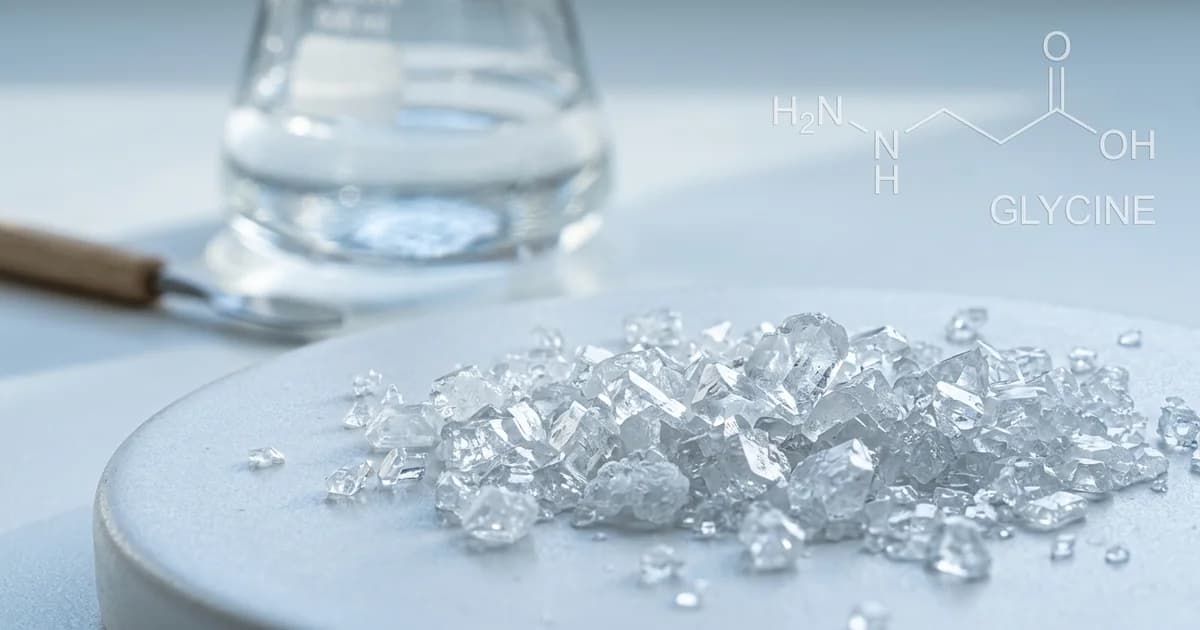
Most people hunting for glycine daytime alertness benefits are looking in the wrong place. They want a stimulant. Glycine is the opposite of a stimulant. It is one of the simplest amino acids your body makes, and the reason it shows up in conversations about focus has nothing to do with how it feels during the day.
It works the night before.
Glycine taken before bed appears to deepen sleep and shorten the time it takes to fall asleep. Better sleep is what sharpens the next morning. That distinction matters, because if you treat glycine like a daytime nootropic, you will be disappointed.
Key Takeaways
- Glycine does not directly stimulate alertness. It supports sleep quality, and quality sleep drives next-day cognition.
- In a controlled trial, 3 g of glycine before bed reduced daytime fatigue in people who were partially sleep-deprived.
- The leading mechanism involves a small drop in core body temperature, which signals the brain that it is time to sleep.
- Glycine pairs well with good sleep habits. It does not replace them, and it is not a stimulant.
What Glycine Actually Does for Daytime Alertness
Glycine improves glycine daytime alertness indirectly by improving the sleep that precedes the day. It is not caffeine. You will not feel a lift 20 minutes after taking it.
Glycine is a non-essential amino acid, meaning your body produces it on its own. It plays a role as a neurotransmitter in the brain and as a building block for proteins like collagen. In the context of sleep, the interesting part is what it does to your body temperature and your brain's sleep signaling.
The research on glycine cognition is small but consistent. The studies that matter most looked at people who were not sleeping enough, then measured how they felt and performed the next day.
The Study That Started the Conversation
The strongest evidence for glycine next day performance comes from a 2012 trial published in Frontiers in Neurology. Researchers restricted healthy volunteers to 25% less sleep than usual for three straight nights, which is a realistic version of a bad work week.
Before bed, participants took either 3 grams of glycine or a placebo. The glycine group reported a meaningful reduction in fatigue and a trend toward less daytime sleepiness, measured on standard visual analog scales.
The takeaway is narrow but useful. When sleep is cut short, glycine seems to blunt some of the daytime damage. This is the core of the glycine fatigue sleep restriction story, and it is why glycine keeps coming up in performance circles.
Why Better Sleep Means Sharper Thinking
Sleep is when your brain consolidates memory, clears metabolic waste, and resets attention systems. Shortchange it, and the first things to go are focus, reaction time, and working memory.
This is the chain that makes glycine focus a reasonable phrase, even though glycine itself is not a focus drug. The logic runs in one direction. Glycine helps sleep, and sleep helps focus.
Earlier work backs the sleep half of that chain. A 2007 study in Sleep and Biological Rhythms found that 3 g of glycine before bed improved subjective sleep quality and shortened sleep latency, confirmed with polysomnography. People fell asleep faster and rated their sleep as better.
For context on why this matters at scale, researchers note that roughly 30% of the general population deals with some form of insomnia. A simple amino acid that nudges sleep latency down is worth understanding.
How Glycine Affects the Brain Before Bed
Glycine appears to lower core body temperature slightly by increasing blood flow to your extremities. That heat release is one of the body's natural cues for sleep onset.
Your core temperature drops as you fall asleep under normal conditions. Glycine seems to assist that process, which may explain the faster sleep latency seen in the polysomnography data. This is the most cited explanation for how glycine brain effects translate into better rest.
The second piece is glycine's role as a neurotransmitter. It acts at receptor sites involved in calming the nervous system and also at NMDA receptors tied to learning and memory. The full picture is not settled, but the temperature mechanism is the one with the clearest support.
Glycine vs Other Sleep-and-Focus Ingredients
Glycine sits in a category of "sleep first, focus second" ingredients. It is helpful to see where it lands next to the more familiar names, including a daytime focus option for contrast.
| Ingredient | Primary Job | Onset | Daytime or Nighttime | Best For |
|---|---|---|---|---|
| Glycine | Improve sleep quality and sleep latency | The night before | Nighttime | Next-day clarity after short sleep |
| Magnesium glycinate | Relaxation and sleep support | The night before | Nighttime | People low in magnesium |
| Melatonin | Shift sleep timing | 30 to 60 min | Nighttime | Jet lag, delayed sleep schedules |
| L-theanine | Calm focus, takes the edge off stimulants | 30 to 60 min | Either | Smoothing out caffeine |
| Roon (caffeine + L-theanine + Dynamine + TeaCrine) | Direct daytime focus | 5 to 10 min | Daytime | Sustained focus during the actual workday |
The point of the table is simple. Glycine and the daytime focus tools solve different problems. One protects your sleep, the other powers your hours awake. Smart people use both, in the right order.
How to Use Glycine for Next-Day Cognition
Lead with the dose the studies used. Both key trials used 3 grams of glycine taken shortly before bed, dissolved in water or taken in capsule form.
A few practical notes:
- Timing: Take it 30 to 60 minutes before you plan to sleep.
- Consistency: Sleep effects tend to show up over consecutive nights, not from a single dose.
- Pairing: It mixes fine with magnesium or a wind-down routine. It is not a sedative, so it will not knock you out.
- Expectations: Judge it by how you feel and perform the next day, not by how sleepy it makes you tonight.
Glycine is generally well tolerated at these doses. As with any supplement, talk to your doctor if you are pregnant, nursing, or managing a medical condition.
The Bottom Line on Sleep-Driven Performance
Glycine is not a daytime stimulant, and treating it like one misses the point. Its value runs through your sleep. Take it before bed, protect the hours that repair your brain, and the payoff arrives the next morning as cleaner focus and less fatigue.
The evidence is modest in size but pointed in one clear direction. When sleep is short, glycine helps soften the cognitive hit. When sleep is already solid, it helps you fall asleep faster and rate the night better. Either way, the day that follows is the real test.
Frequently Asked Questions
Does glycine make you alert during the day?
Not directly. Glycine is not a stimulant and produces no immediate lift the way caffeine does. Its connection to daytime alertness runs through sleep. By helping you fall asleep faster and improving sleep quality, glycine sets up better focus and lower fatigue the following day. If you want an effect you can feel within minutes, glycine is the wrong tool.
How much glycine should I take before bed?
The human trials used 3 grams of glycine taken roughly 30 to 60 minutes before sleep, either dissolved in water or in capsules. That dose improved subjective sleep quality, shortened sleep latency, and reduced next-day fatigue in sleep-restricted volunteers. Start at the studied dose rather than guessing higher, and give it several consecutive nights before judging the results.
Will glycine help if I am already sleeping well?
It can still shorten the time it takes to fall asleep. The 2007 polysomnography study included people without major sleep complaints and still found faster sleep latency and better subjective quality. The dramatic next-day fatigue benefits, though, showed up mainly in people who were sleep-deprived. If your sleep is already strong, expect smaller gains.
Can glycine replace my morning coffee?
No. Glycine and caffeine do completely different jobs. Glycine works the night before by supporting sleep, while caffeine acts during the day by blocking adenosine and raising alertness. Think of glycine as protecting the foundation and your daytime focus tool as building on it. They are complementary, not interchangeable.
Is glycine safe to take every night?
Glycine is a non-essential amino acid your body already makes, and the 3 gram bedtime dose is generally well tolerated in the published studies. Side effects at this dose are uncommon and mild. That said, talk to your doctor before starting nightly use if you are pregnant, nursing, taking medication, or managing a health condition.
How fast does glycine work for sleep?
Some effects, like a slight drop in core body temperature and faster sleep onset, can appear the same night you take it. The clearer daytime benefits, such as reduced fatigue and sleepiness, tend to build across several consecutive nights. Judge glycine by how you function the next morning rather than by how sedated you feel at bedtime.
If You Want Daytime Focus, Start With the Night Before
This article makes one argument worth repeating: your sharpest days are built on your previous night's sleep. Glycine earns its place in that picture because it supports the sleep that drives glycine next day performance. It is a nighttime move, not a daytime one.
That is exactly where Roon picks up. Roon is not a sleep aid, and it contains no glycine. It is a zero-nicotine, sublingual cognitive performance pouch built for the hours you are awake, with 80 mg caffeine, 60 mg L-theanine, 25 mg methylliberine (Dynamine), and 5 mg theacrine (TeaCrine). Onset lands in 5 to 10 minutes, and it is designed for 6 to 8 hours of sustained focus with no jitters and no crash.
The honest framing is this. Protect your sleep with the right nighttime habits, then bring a clean daytime tool to the hours that count. If you have the sleep half handled and want steady focus on top of it, try Roon for the workday and let glycine handle the night.
Written by Roon Team