Ginkgo Biloba: Benefits, Dosage, and What the Science Actually Says
Roon Team
Ginkgo Biloba: Benefits, Dosage, and What the Science Actually Says
Ginkgo biloba is the most-studied herbal supplement for the brain, and the evidence is more complicated than the bottle promises. It can help certain people in measurable ways. It does almost nothing for others.
The plant itself is a living fossil, one of the oldest tree species on Earth, and its leaf extract has been sold as a memory aid for decades. The question worth answering is narrower: who actually benefits, at what dose, and on what timeline.
Short version: ginkgo is a slow circulation play, not a focus switch. If you want the honest read on ginkgo biloba benefits, the dose that matters, and where the science falls apart, here it is.
Key Takeaways
- The clinically tested extract is EGb 761, standardized to 24% flavonoid glycosides and 6% terpene lactones. Generic "ginkgo" capsules may not match it.
- The proven dose is 120 to 240 mg per day, usually split into two doses, taken for at least 8 to 12 weeks.
- Benefits show up mostly in people with mild dementia or cognitive impairment, not in healthy adults.
- In healthy people, the best meta-analysis found effects on memory, attention, and executive function that were close to zero.
- Ginkgo works slowly over weeks and can raise bleeding risk, so it is a long-game tool, not a same-day one.
What Ginkgo Biloba Actually Is
Ginkgo biloba is an extract made from the leaves of the Ginkgo biloba tree, and the version that matters in research is a specific, standardized preparation called EGb 761.
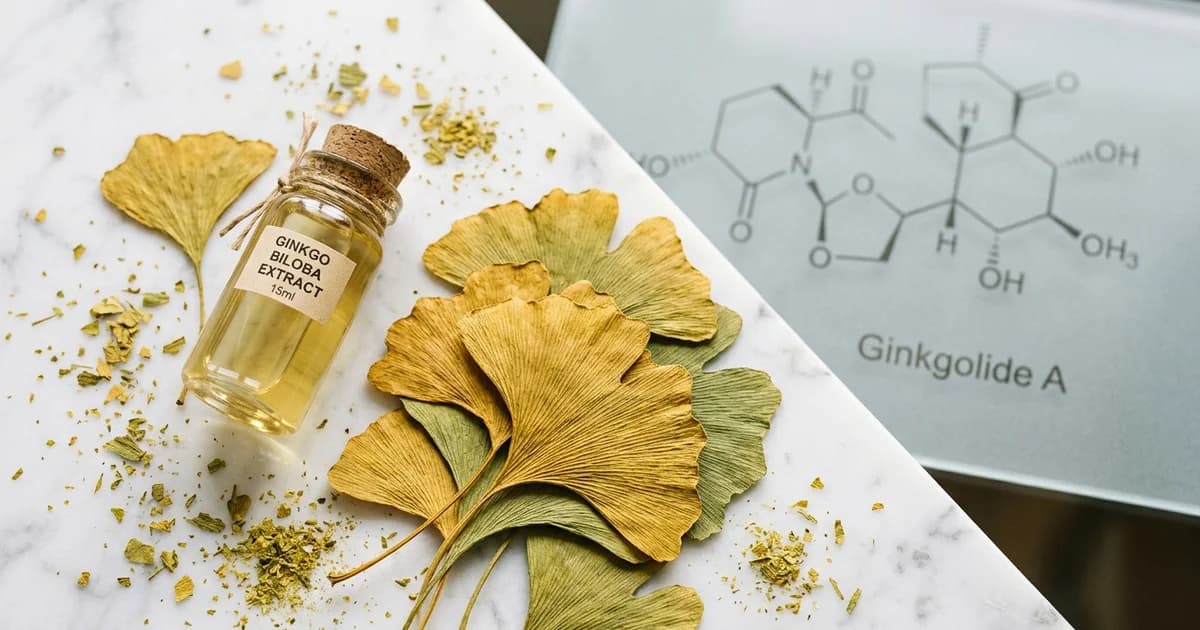
That distinction is the whole game. Most clinical trials did not test a random ginkgo capsule. They tested EGb 761, which is standardized to roughly 24% flavonoid glycosides and 6% terpene lactones (the ginkgolides and bilobalide). According to a pharmacology review in PMC, the standard clinical dose of EGb 761 is 120 mg taken once or twice daily.
The active compounds split into two families. Flavonoid glycosides act as antioxidants. The terpene lactones, especially ginkgolide B, affect platelet activity and blood flow. Both groups are why ginkgo gets pitched for circulation.
When you buy a bargain-bin ginkgo product, you often have no idea what ratio you are getting. That is the first reason results in the real world disappoint.
How Ginkgo Works: Cerebral Blood Flow and Antioxidant Effects
The leading theory is that ginkgo supports cerebral blood flow and protects neurons from oxidative stress, two slow, structural effects rather than a quick stimulant kick.
A pilot study from Johns Hopkins used quantitative MR perfusion imaging to measure brain blood flow before and after ginkgo, and found increases in certain brain regions in healthy older adults. It was small, so treat it as a signal, not proof.
The proposed mechanisms are reasonable. Ginkgolides influence platelet aggregation, which can improve microcirculation. The flavonoids mop up free radicals. In theory, better-perfused, less-stressed brain tissue performs better over time.
But mechanism is not outcome. A supplement can do interesting things to blood vessels in a scanner and still fail to make you sharper in daily life. That gap is exactly where ginkgo gets interesting.
Ginkgo for Memory: What the Evidence Shows
Here is the honest split. Ginkgo for memory shows modest benefit in people who already have cognitive decline, and almost nothing in healthy people hoping for an edge.
In dementia and cognitive impairment
This is where ginkgo earns its keep. A systematic review and meta-analysis on PubMed found that, in patients with dementia, EGb 761 improved cognition and daily functioning compared to placebo, with the cognition difference favoring ginkgo by a meaningful margin.
A more recent picture holds up. In March 2026, Georgetown University reported on an updated review of dozens of studies, concluding that ginkgo may offer modest short-term improvements for people with dementia, while showing little to no benefit for those with mild cognitive impairment or subjective memory complaints.
In healthy adults
This is where the marketing collapses. A 2012 meta-analysis examining whether ginkgo enhances cognition in healthy people found effect sizes that were non-marked and close to zero for memory, executive function, and attention. The authors reported no ascertainable positive effects across the cognitive domains they tested.
So if you are a healthy 30-year-old taking ginkgo to ace a presentation, the data says you are mostly buying hope.
The prevention question
Ginkgo also fails as a dementia preventive. The Ginkgo Evaluation of Memory (GEM) study followed more than 3,000 older adults on 240 mg per day. As summarized by the NCCIH, 240 mg daily was ineffective at reducing the development of dementia and Alzheimer's disease in older people. More participants in the ginkgo group developed dementia than in placebo, with no marked difference between them.
Ginkgo Biloba Dosage: How Much and How Long
The evidence-backed ginkgo dosage is 120 to 240 mg of standardized EGb 761 per day, split into two or three doses, taken consistently for at least 8 to 12 weeks.
A quantitative analysis in PMC notes the approved daily dose of EGb 761 is 120 to 240 mg in two or three doses, typically recommended for at least 8 weeks. Patience is the price of entry here.
More is not better. According to GoodRx, studies have tested doses from 80 mg to 720 mg daily, but doses above 240 mg per day are not recommended because of higher risk of side effects and interactions.
| Dosage detail | What the research says |
|---|---|
| Standard daily dose | 120 to 240 mg of EGb 761 |
| Schedule | Split into 2 to 3 doses per day |
| Time to effect | About 4 to 6 weeks of daily use |
| Upper limit | Avoid going above 240 mg/day |
| Extract to look for | Standardized EGb 761 (24% flavonoids, 6% terpenes) |
On timing, ginkgo is not a same-day product. GoodRx notes it takes about 4 to 6 weeks to see an effect, and works best taken daily over the long term.
Safety, Side Effects, and Interactions
Ginkgo is generally well tolerated, but the real concern is bleeding risk, especially if you take blood thinners.
The terpene lactones that may help circulation also reduce platelet aggregation. Mayo Clinic warns that ginkgo biloba may raise your bleeding risk if you also take a blood thinner such as aspirin.
Common, milder side effects include headache, dizziness, and stomach upset. Anyone on anticoagulants, antiplatelet drugs, or facing surgery should talk to a doctor before starting ginkgo. None of this is medical advice, just the established cautions.
Where Ginkgo Fits: A Slow Tool, Not a Fast One
Ginkgo belongs in a specific category: long-horizon brain maintenance for the right person. It is not a focus aid you reach for before a meeting.
If your goal is acute mental performance in the next 30 minutes, ginkgo is the wrong tool, since it needs weeks to do anything measurable. If your goal is long-term circulatory support and you are in a population that benefits, it has a real case. Match the tool to the timeline. For more on the difference between same-day focus and slow nootropics, see our guides on the science of caffeine and L-theanine and how to build a clean focus routine.
The Honest Verdict on Ginkgo
Ginkgo biloba is a legitimate supplement with a narrow, real use case and a lot of overselling around it. The standardized EGb 761 extract, at 120 to 240 mg per day for weeks, shows modest benefit for people with dementia or existing cognitive decline.
For healthy adults chasing a quick edge, the best data points to roughly nothing. It will not prevent dementia, and it will not sharpen a normal brain by Friday's deadline.
The takeaway is about expectations. Ginkgo plays a slow game measured in weeks and months, and it carries a genuine bleeding-risk caveat. Judge it on that timeline, not on the promise printed on the box.
Frequently Asked Questions
Does ginkgo biloba actually improve memory?
It depends entirely on who is taking it. In people with mild dementia or cognitive impairment, standardized EGb 761 shows modest, measurable improvement in cognition and daily function. In healthy adults, the strongest meta-analysis found effects on memory close to zero. Ginkgo is not a reliable memory booster for people whose brains are already working normally.
How long does ginkgo biloba take to work?
About 4 to 6 weeks of consistent daily use, and sometimes longer. Ginkgo works through slow mechanisms like blood flow and antioxidant support, not acute stimulation. You will not feel anything in the first hour or even the first week. If you expect same-day effects, you will be disappointed, because the science points to a multi-week timeline.
What is the right ginkgo biloba dosage?
The evidence-backed dose is 120 to 240 mg of standardized EGb 761 per day, split into two or three doses. Doses above 240 mg per day are not recommended because side-effect and interaction risk climbs without added benefit. Look specifically for EGb 761 standardized to 24% flavonoid glycosides and 6% terpene lactones, since generic ginkgo may not match the studied extract.
Is ginkgo biloba safe?
For most healthy people it is generally well tolerated, with occasional headache, dizziness, or stomach upset. The main concern is bleeding risk. Ginkgo can reduce platelet aggregation, so it may raise bleeding risk when combined with blood thinners like aspirin or warfarin. If you take anticoagulants or have surgery scheduled, talk to your doctor first.
Can ginkgo biloba prevent dementia or Alzheimer's?
No. The large Ginkgo Evaluation of Memory study followed more than 3,000 older adults on 240 mg daily and found it ineffective at reducing the development of dementia and Alzheimer's disease. There was no marked difference between ginkgo and placebo. Ginkgo may help symptoms in people who already have dementia, but it does not prevent the disease.
What is EGb 761 and why does it matter?
EGb 761 is the specific standardized ginkgo extract used in most clinical trials, standardized to roughly 24% flavonoid glycosides and 6% terpene lactones. It matters because random ginkgo capsules may contain different, untested ratios of active compounds. When research reports a benefit from ginkgo, it almost always studied EGb 761, not a generic product.
Does ginkgo biloba increase cerebral blood flow?
There is some evidence it can. A pilot study using MR perfusion imaging found ginkgo increased blood flow in certain brain regions in healthy older adults. The mechanism is plausible, since ginkgolides affect platelets and microcirculation. That said, changing blood flow in a scanner does not guarantee better thinking in daily life, and the human cognitive evidence in healthy people stays weak.
If You Need Focus Today, Ginkgo Is the Wrong Timeline
Everything above points to one conclusion: ginkgo is a slow, weeks-to-months circulation play. That is a real use case, but it has nothing to do with locking in for the next eight hours of work.
Roon solves a different problem on a different clock. It contains no ginkgo and works by a faster route: caffeine blocking adenosine for alertness, L-theanine smoothing out the edge, plus methylliberine (Dynamine) and theacrine (TeaCrine) for cleaner, longer energy. The full sublingual pouch holds 80 mg caffeine, 60 mg L-theanine, 25 mg Dynamine, and 5 mg TeaCrine, delivered under the lip for roughly 5 to 10 minute onset and 6 to 8 hours of focus with no jitters, no crash, and no tolerance buildup.
To be clear, Roon is not a substitute for ginkgo's long-game brain maintenance, and ginkgo is no help when you need to think clearly right now. Different timelines, different tools. If your problem is today, try Roon.
Written by Roon Team