Eleuthero (Siberian Ginseng): The Stamina Adaptogen
Roon Team
Eleuthero (Siberian Ginseng): The Stamina Adaptogen and the HPA Axis
Siberian ginseng is not ginseng. That single fact explains most of the confusion around it, and once you clear it up, the real eleuthero benefits become much easier to evaluate honestly.
The plant is Eleutherococcus senticosus, a thorny shrub native to the forests of northeastern Asia. It earned the "ginseng" label through marketing and a loose botanical family resemblance, not because it shares the active compounds that make true Panax ginseng work. Eleuthero brings its own toolkit, and that toolkit points in an interesting direction: stress resilience and stamina.
This is a science deep dive, not a sales pitch. Here is what the evidence actually supports, where it falls short, and how eleuthero interacts with your stress hormones.
Key Takeaways
- Eleuthero is not true ginseng. It belongs to the same plant family as Panax ginseng but is a different genus with different active compounds called eleutherosides.
- Its main calling card is the stress response. Eleuthero is classified as an adaptogen, meaning it helps your body push back against physical and mental stress, largely through the HPA axis.
- The stamina evidence is promising but messy. Several endurance studies show benefits, but many carry methodological flaws that keep the science from being settled.
- Onset is slow. Adaptogens like eleuthero build over weeks. They are not same-day energy tools.
What Eleuthero Actually Is (and Why the Ginseng Name Misleads You)
Eleuthero and true ginseng share a family but not a genus. Both sit in the Araliaceae plant family, yet Eleutherococcus senticosus and Panax ginseng are different plants with different chemistry. The "Siberian ginseng" name took hold during the Soviet research era and stuck, which is why so many shoppers assume the two are interchangeable. They are not.
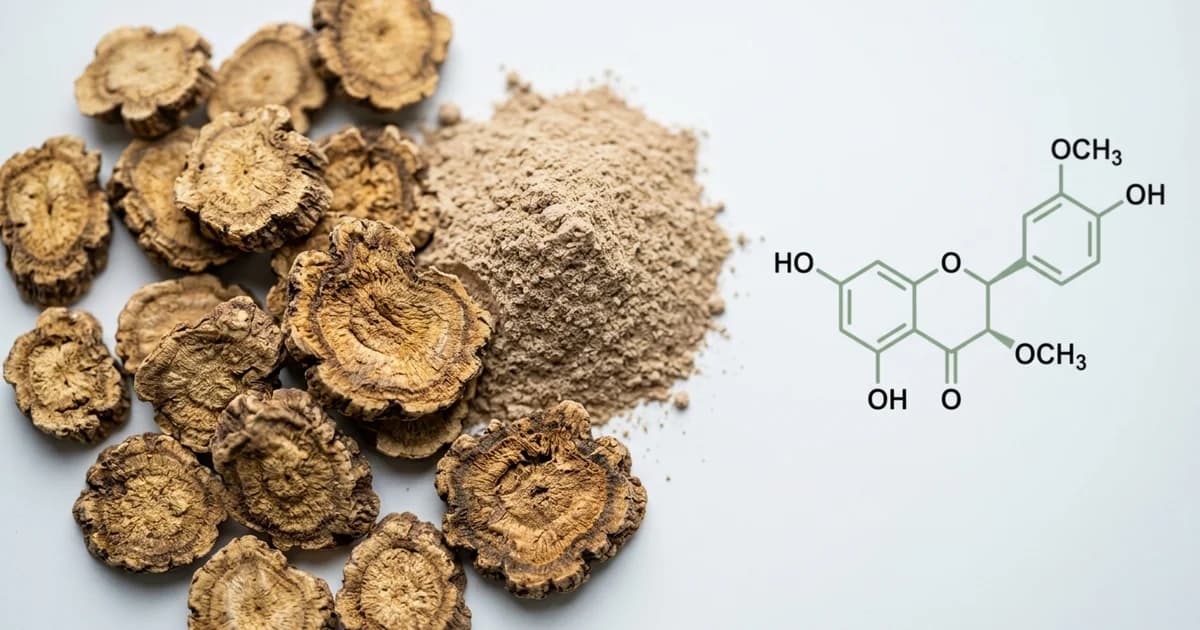
True ginseng owes its activity to compounds called ginsenosides. Eleuthero owes its activity to a separate group of molecules called eleutherosides, along with polysaccharides and other constituents.
A 2025 review in Frontiers in Pharmacology cataloged eleuthero's phytochemistry and its adaptogenic profile in detail, treating it as a distinct medicinal plant rather than a ginseng substitute. If you buy eleuthero expecting Panax effects, you bought the wrong root.
The Eleutherosides Question
Eleutherosides are the markers most supplement brands standardize to, usually eleutheroside B and eleutheroside E. They function as a quality benchmark more than a guaranteed dose of effect.
Here is the honest caveat. The concentration of eleutherosides varies widely between products and harvests, and the science has not pinned down a single "active" compound responsible for every benefit. Adaptogenic activity likely comes from several constituents working together, which makes standardization useful but imperfect.
Eleuthero Benefits and the HPA Axis
The central eleuthero benefit is stress adaptation, and the mechanism runs through your hypothalamic-pituitary-adrenal (HPA) axis. This is the command chain that governs cortisol release when you face physical, mental, or environmental pressure.
To understand why that matters, you need the definition of an adaptogen. The criteria come from Soviet pharmacologist Israel Brekhman, who set three: an adaptogen must produce a non-specific state of resistance in the body to physical, emotional or environmental stress, and have a normalizing effect on the body helping to restore normal function. Eleuthero was one of the original plants studied under that framework.
Modern pharmacology has given that old idea a measurable backbone. Research led by Alexander Panossian describes how adaptogens regulate the body's stress system at two levels. The stress-protective activity of adaptogens is associated with regulation of homeostasis on the system level via several mechanisms linked to the hypothalamic-pituitary-adrenal axis, and on the cellular level via activation of molecular chaperones such as hsp70.
In plainer terms, eleuthero appears to help your stress response stay balanced rather than spike and crash. According to a review by Panossian and colleagues, the main mediators of well-known plant adaptogens including ginseng, Rhodiola, and Eleutherococcus are neuropeptide Y, cortisol, heat shock proteins, and nitric oxide.
This is why eleuthero stress support is framed around resilience, not sedation. It does not switch off your stress; it helps your system handle it.
Siberian Ginseng and Fatigue: What the Studies Show
The picture on Siberian ginseng fatigue is genuinely mixed, and that honesty matters. Some research supports it, and at least one well-run trial did not.
On the positive side, reviews note that people with mild to moderate fatigue have reported better concentration and performance after taking eleuthero, with some clinical findings suggesting benefit for moderate fatigue in chronic fatigue syndrome.
But the strongest counterpoint comes from a controlled trial summarized by Examine. One study assessing the efficacy of eleuthero failed to find any overall marked differences between eleuthero and placebo in reducing fatigue over two months of treatment.
The takeaway is not "eleuthero does nothing." It is that the effect, if present, is moderate and most likely shows up in people who are already running on a depleted stress system rather than in healthy, well-rested adults.
Eleuthero and Endurance: The Stamina Reputation
Eleuthero's reputation as a stamina herb rests on real data, but the data has real problems. This is the most important nuance in the entire eleuthero conversation.
A frequently cited review evaluated the herb across multiple endurance trials. The review found that three studies suggested Eleutherococcus senticosus substantially improves cardiovascular fitness, fat metabolism, and endurance performance, but each of those reports contained severe methodological flaws.
More encouragingly, a later eight-week supplementation study reported meaningful gains. In that trial, subjects' VO2 peak increased 12 percent, endurance time improved 23 percent, and peak heart rate rose 4 percent, with the authors describing it as the first well-conducted study showing that eight-week eleuthero supplementation enhances endurance capacity.
Eight weeks. That number is the key to using eleuthero correctly.
Why Onset Is Slow
Adaptogens work by nudging your stress and recovery systems over time, not by hitting a receptor for a quick lift. The endurance gains showed up after weeks of consistent use, not after a single dose.
If you want stamina from eleuthero, treat it like training, not like a pre-workout. Consistency is the active ingredient.
How Eleuthero Compares to Other Stress and Energy Tools
Eleuthero sits in a different category from fast-acting focus tools, and mixing those categories is where people get disappointed. The table below maps the honest differences.
| Tool | Primary mechanism | Onset | Best use case |
|---|---|---|---|
| Eleuthero (Siberian ginseng) | HPA axis modulation, eleutherosides | Builds over weeks | Long-term stress resilience and stamina |
| Panax ginseng | Ginsenosides | Days to weeks | Energy and cognitive support |
| Rhodiola rosea | HPA axis, fatigue resistance | Days to weeks | Acute and chronic stress fatigue |
| Caffeine + L-theanine | Adenosine blockade, calm alertness | 30-60 minutes | Same-day focus |
| Roon sublingual pouch | Caffeine, L-theanine, methylliberine, theacrine | 5-10 minutes | Same-day sustained focus, no crash |
The point is simple. Eleuthero and a fast-acting focus tool are not competitors. They answer different questions. One asks "how do I become more resilient over months," the other asks "how do I lock in for the next six hours."
If you want a deeper read on the fast-acting side of that equation, our breakdown of how caffeine and L-theanine work together covers the same-day mechanism in detail.
Dosing, Safety, and Quality
Eleuthero is generally well tolerated, but a few practical notes keep you out of trouble. Standardized extracts typically target eleutheroside B and E content, so check the label for that benchmark rather than trusting "Siberian ginseng" alone.
Most people tolerate eleuthero well, though some report mild restlessness or trouble sleeping if they take it late in the day. As with any supplement that touches your stress hormones, talk to a clinician if you are pregnant, on blood pressure medication, or managing a hormone-sensitive condition.
Quality varies wildly in this category. Because the ginseng name attracts cheap imitations, buying from a brand that publishes its sourcing and standardization is worth the premium.
The Bottom Line on Eleuthero
Eleuthero is a legitimate adaptogen with a specific job: helping your body adapt to stress over time, mostly by tuning the HPA axis. Its stamina reputation has real support, especially the eight-week endurance data, but the broader evidence base is uneven and some fatigue trials came up empty.
Use it the right way and your expectations stay grounded. This is a slow, cumulative tool for resilience, not a switch you flip on a hard morning. The people who get the most from eleuthero are the ones who take it consistently for weeks and judge it by how they handle stress, not by how they feel in the first hour.
And remember the naming trap. Siberian ginseng is its own plant with its own chemistry, and treating it like Panax ginseng sets you up to misjudge what it can do.
Frequently Asked Questions
Is Siberian ginseng the same as regular ginseng?
No. Siberian ginseng (Eleutherococcus senticosus) and true ginseng (Panax ginseng) belong to the same plant family but are different genera with different active compounds. True ginseng works through ginsenosides, while eleuthero works through eleutherosides and other constituents. They are not interchangeable, and the shared name is a historical labeling quirk rather than a botanical fact.
What are the main eleuthero benefits?
The best-supported eleuthero benefits center on stress adaptation and stamina. As an adaptogen, it helps the body resist physical and mental stress, largely by modulating the HPA axis and stress hormones like cortisol. Some endurance research shows improved cardiovascular fitness and endurance time, though the evidence quality is mixed and the effects build over weeks rather than appearing immediately.
How long does eleuthero take to work?
Weeks, not minutes. The endurance benefits in the strongest human trial showed up after eight weeks of consistent supplementation. Adaptogens like eleuthero work by gradually tuning your stress and recovery systems, so they are poorly suited to same-day energy needs. If you need a fast, reliable lift, eleuthero is the wrong tool for that specific job.
Does eleuthero actually help with fatigue?
Sometimes, and mostly in people who are already depleted. Some reviews report better concentration and reduced exhaustion in people with mild to moderate fatigue. But at least one controlled trial found no marked difference between eleuthero and placebo for fatigue over two months. The realistic expectation is a moderate effect that favors stressed or fatigued users over healthy, well-rested ones.
What are eleutherosides?
Eleutherosides are the marker compounds used to standardize eleuthero products, most often eleutheroside B and eleutheroside E. They serve as a quality benchmark and a rough proxy for potency. No single eleutheroside fully explains the herb's effects, which appear to come from several constituents acting together, so standardization helps but does not guarantee a precise dose of benefit.
Is eleuthero safe to take daily?
For most healthy adults, eleuthero is well tolerated with daily use, though some people notice mild restlessness or disrupted sleep if they take it late. Because it interacts with stress hormones, anyone pregnant, on blood pressure medication, or managing a hormone-sensitive condition should consult a clinician first. Choosing a standardized product from a transparent brand reduces the risk of low-quality or mislabeled material.
Names Matter, and So Does Timing
Siberian ginseng is not ginseng, and that distinction is the whole point of this article. Getting the name right means getting your expectations right. Eleuthero is a slow, cumulative resilience tool that works on your stress system over weeks. It is genuinely useful for what it does, and genuinely useless as a same-day focus fix.
That gap is exactly where a different approach lives. Roon takes the opposite path: a sublingual pouch built for same-day performance, with 80 mg caffeine, 60 mg L-theanine, 25 mg methylliberine (Dynamine), and 5 mg theacrine (TeaCrine). Onset lands in 5 to 10 minutes, the focus window runs 6 to 8 hours, and the L-theanine is there to buffer the stimulant so you skip the jitters and the crash.
To be clear, Roon is not an adaptogen and not a replacement for the long-term stress resilience eleuthero is built for. If your goal is multi-week stress adaptation, eleuthero is the category. If your goal is locking in for the next several hours without a crash, that is the problem Roon was designed to solve. Try Roon when timing is the thing you actually care about.
Written by Roon Team