DMAE (Dimethylaminoethanol): What the Science Actually Says
Roon Team
DMAE (Dimethylaminoethanol): What the Science Actually Says
DMAE has been sold as a focus aid for over half a century, and the story attached to it is almost too tidy. It crosses into your brain, turns into acetylcholine, and your thinking gets sharper. The most cited DMAE benefits all trace back to that single mechanism.
Here is the problem. The mechanism, as usually told, is wrong.
That does not make DMAE worthless. It means the gap between the marketing and the actual data is wide enough to drive a truck through, and you deserve to see both sides before you spend a dime.
Key Takeaways
- Dimethylaminoethanol is a cholinergic compound found naturally in fish like sardines and anchovies.
- The popular "DMAE becomes acetylcholine in your brain" story was largely disproven decades ago.
- Human evidence for cognition is thin, mostly old, and often funded or framed around a discontinued prescription drug.
- DMAE is generally well tolerated at 100 to 200 mg, but it is not a stack staple with strong clinical backing.
What Is DMAE?
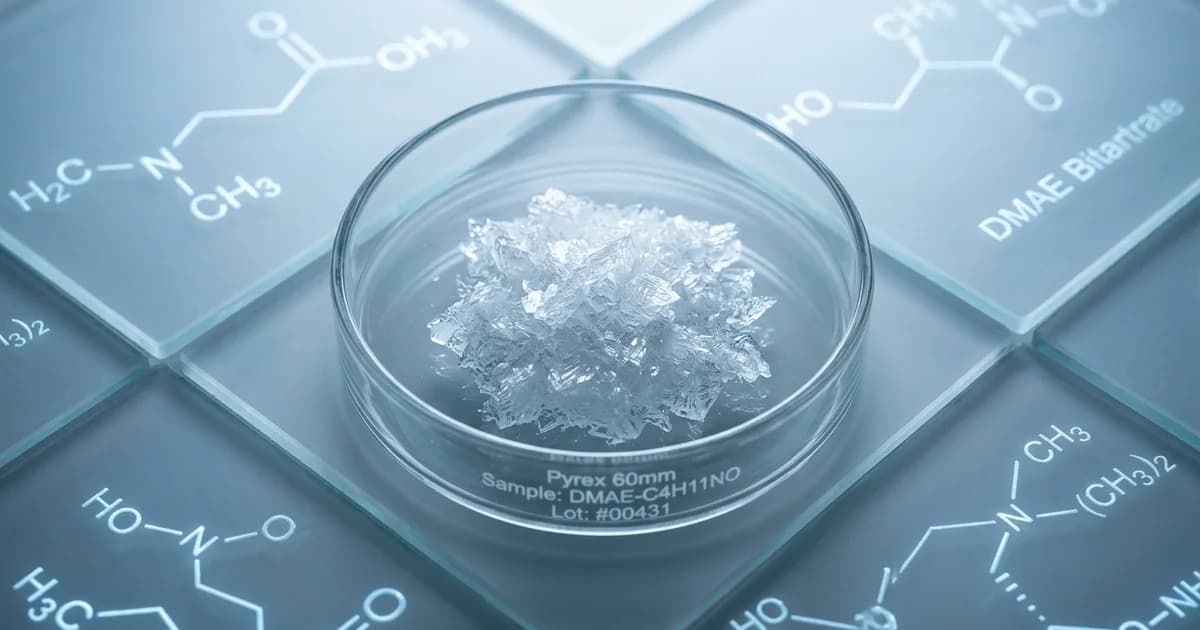
DMAE (dimethylaminoethanol, sometimes written DMEA or sold as DMAE bitartrate) is a small molecule chemically related to choline. Your body makes tiny amounts of it, and you also get trace quantities from oily fish.
Structurally, DMAE has one fewer methyl group than choline. That single difference is the whole basis of its reputation. The theory goes that the smaller molecule slips across the blood-brain barrier more easily than choline does, delivering raw material for acetylcholine right where you want it.
It also shows up in topical skincare, marketed for skin firming. That is a separate use with its own evidence, and it has nothing to do with the cognitive claims we are testing here.
The DMAE Acetylcholine Story, and Why It Falls Apart
The headline claim is simple: DMAE raises brain acetylcholine. The data say otherwise.
The cleanest version of the marketing pitch is that DMAE crosses into the brain, gets converted to choline, and choline becomes acetylcholine. According to Holistic Nootropics, landmark work by Jope and Jenden in 1979 took that apart, showing DMAE is not methylated into choline in brain tissue and that neither acute nor chronic DMAE dosing changed brain acetylcholine levels.
So where does it go? The same source explains that instead of becoming acetylcholine, DMAE gets built into cell membranes as a compound called phosphatidyldimethylethanolamine. In plain terms, it changes the membrane, not the neurotransmitter pool.
The federal toxicology literature is just as cautious. A review hosted on the NIH's PubMed Central notes the brain-conversion pathway is not well understood, that full absorption and metabolism data in humans are not available, and that in rats, brain concentrations of DMAE stayed low compared with other organs, suggesting limited entry into the brain.
That is the opposite of a confident mechanism. The DMAE nootropic label rests on a process nobody has cleanly shown in people.
So how might it do anything at all?
There are two plausible backup explanations, and both are modest. DMAE may stabilize cell membranes, and it may act as an antioxidant that helps clear waste pigments like lipofuscin from aging cells. Nootropics Expert describes this neuroprotective angle, noting DMAE is structurally similar to choline but not a direct precursor to acetylcholine.
These are interesting effects. They are not the same as the alertness boost the dmae acetylcholine marketing promises, and they have not been shown to translate into reliable cognitive gains in healthy adults.
The DMAE Benefits the Evidence Actually Supports in Humans
The honest summary on dmae evidence: it is sparse, dated, and mostly tied to a drug that no longer exists on the US market.
For years DMAE was sold in the United States as a prescription product called Deaner (deanol) for attention and behavioral issues. It was eventually pulled from the market, and the trials behind it would not pass for solid evidence today. They were small, old, and full of confounding variables.
Modern, well-controlled trials in healthy people are close to nonexistent. As Science Insights puts it, DMAE's better-blood-brain-barrier-penetration advantage over plain choline is still theoretical in humans, and choline supplements carry a larger evidence base for cognitive support.
Plenty of users swear DMAE sharpens their focus, and self-reports matter. But a compound around since the 1950s should have a cleaner human dataset by now, and it simply does not.
DMAE Side Effects and Safety
Most people tolerate DMAE well at typical doses, but it carries real cautions that the focus-aid marketing tends to skip.
The commonly cited range is 100 to 200 mg per day, used short-term or intermittently. Reported dmae side effects at higher doses include headaches, muscle tension, insomnia, and overstimulation, the same overstimulation pattern you would expect from any cholinergic that you push too hard.
A few cautions deserve a hard stop. Nootropics Expert advises against DMAE during pregnancy and in people with epilepsy or bipolar disorder. The federal toxicology review also flagged that DMAE could interfere with choline transport and metabolism, which is part of why it is treated carefully in developmental contexts.
None of this makes DMAE dangerous for a healthy adult taking a modest dose. It does mean the risk-to-reward math looks worse once you account for how thin the upside evidence is.
DMAE vs Better-Studied Focus Ingredients
If your goal is cleaner, more reliable focus, DMAE is rarely the strongest tool in the box. Here is how it stacks up against ingredients with deeper human data.
| Ingredient | Primary mechanism | Human evidence quality | Best use case |
|---|---|---|---|
| DMAE | Membrane stabilization, antioxidant; not a confirmed acetylcholine booster | Weak, dated, mostly tied to a discontinued drug | Optional cholinergic add-on |
| Caffeine | Adenosine receptor antagonist | Strong, extensive | Alertness and reaction time |
| L-theanine | Promotes alpha brain waves, smooths caffeine | Strong, especially paired with caffeine | Calm, focused energy |
| Citicoline (CDP-choline) | Direct choline donor for acetylcholine | Moderate to strong | Memory and attention support |
| Methylliberine (Dynamine) | Purine alkaloid, fast-acting energy | Emerging, growing | Quick clean lift |
The pattern is hard to miss. The ingredients with the cleanest data tend to work through mechanisms researchers can actually measure. DMAE keeps showing up in stacks more on the strength of its history than the strength of its trials.
If you want to understand the most reliable pairing on that list, our breakdown of how caffeine and L-theanine work together walks through why that combination earns its reputation, and our guide to choosing a focus supplement that actually holds up covers what to look for beyond the marketing.
Conclusion
DMAE is a case study in how a clean-sounding mechanism can outlive the data behind it. The idea that it floods your brain with acetylcholine is the part everyone repeats, and it is also the part the research never confirmed.
What is left is a compound with plausible membrane and antioxidant effects, a thin and aging human evidence base, and a safety profile that is fine for most adults but worth respecting. That is not a reason to panic if you have used it. It is a reason to be skeptical of any product that leans on DMAE as a headline focus ingredient.
The smarter move is to favor ingredients whose effects you can actually trace from mechanism to measurable result. Sharp thinking should be built on data you can check, not a story that sounds good.
Frequently Asked Questions
Does DMAE actually increase acetylcholine?
Not in the way the marketing claims. The popular story says DMAE converts to choline and then to acetylcholine in the brain, but research dating back to 1979 showed it is not methylated into choline in brain tissue and did not raise brain acetylcholine levels. Any benefits more likely come from membrane stabilization and antioxidant activity, which are modest and not well demonstrated in healthy people.
Is DMAE a good nootropic?
It is a weak one by current standards. DMAE has been around since the 1950s, yet the human evidence remains thin, old, and largely tied to a prescription drug that was pulled from the US market. Some users report sharper focus, but better-studied options like citicoline, caffeine, and L-theanine deliver more predictable results through mechanisms researchers can measure.
What is a typical DMAE dose?
Most sources suggest 100 to 200 mg per day, used short-term or intermittently rather than continuously. Tolerance can build, so many users cycle it. Higher doses raise the odds of headaches, muscle tension, and overstimulation without a matching increase in benefit.
What are the main DMAE side effects?
At moderate doses, most healthy adults tolerate DMAE well. Reported side effects include headaches, muscle tightness, insomnia, and a wired, overstimulated feeling, usually at higher doses. It should be avoided during pregnancy and by people with epilepsy or bipolar disorder, and it may interfere with how the body handles choline.
Is DMAE the same as choline?
No, though they are close relatives. DMAE has one fewer methyl group than choline, which is the basis for the theory that it crosses the blood-brain barrier more easily. That theoretical advantage has not been confirmed in humans, and direct choline donors like citicoline have a stronger evidence base for cognitive support.
Why was DMAE sold as a prescription drug?
It was once marketed in the United States as Deaner (deanol) for attention and behavioral concerns. It was later removed from the market, and the trials supporting it were small and dated by modern standards. That history is a big reason DMAE still carries a reputation that its current evidence does not fully earn.
Does DMAE work for skin?
DMAE appears in topical skincare marketed for firming, which is a separate use from the cognitive claims. The skin research stands on its own and does not validate any focus or memory benefit, so the skincare data is not relevant if you are evaluating DMAE as a brain supplement.
Why Proven Beats Popular
DMAE is the perfect example of an ingredient that earned its spot in focus stacks through repetition, not results. The mechanism sounds great. The human evidence never caught up. If you have been weighing DMAE as a cognitive add-on, the takeaway is simple: a compound this old should have better proof by now.
That is the standard we hold ourselves to at Roon. Instead of a long list of weakly evidenced extras, Roon uses four ingredients that researchers can actually characterize: 80 mg caffeine, 60 mg L-theanine, 25 mg methylliberine (Dynamine), and 5 mg theacrine (TeaCrine). The sublingual pouch is built for a 5 to 10 minute onset and 6 to 8 hours of steady focus, without the jitters, the crash, or the tolerance creep.
Roon is not a substitute for sleep, real training, or a sound diet, and it will not turn weak science into strong science. What it will do is give you a focus tool built on ingredients you can verify, not a story you have to take on faith. If clean, traceable effects matter to you, try Roon and judge it the same way you should judge DMAE: by the evidence.
Written by Roon Team