DL-Phenylalanine (DLPA) and Mood: A Careful Look at the Evidence
DL-phenylalanine benefits get talked about with a confidence the science has not earned. Search the supplement forums and you will find DLPA pitched as a natural antidepressant, a pain reliever, and a mood lifter, often in the same paragraph. The mechanism sounds elegant. The human data is thin.
This is an ingredient worth understanding precisely, because the gap between what DLPA might do and what it has been shown to do is wide. That gap is the whole story.
So let's separate the biochemistry from the marketing.
Key Takeaways
- DLPA is a 50/50 mix of two molecules: L-phenylalanine (a building block for dopamine and norepinephrine) and D-phenylalanine (linked to endorphin-protecting effects).
- The mood research is old and weak. The most-cited depression trials are over 40 years old, small, and lacked placebo controls.
- The enkephalinase mechanism is real but understudied in humans for mood specifically.
- People with PKU must avoid it entirely. Phenylalanine is toxic to them.
- The honest read: promising biochemistry, not proven mood benefits.
What DLPA Actually Is
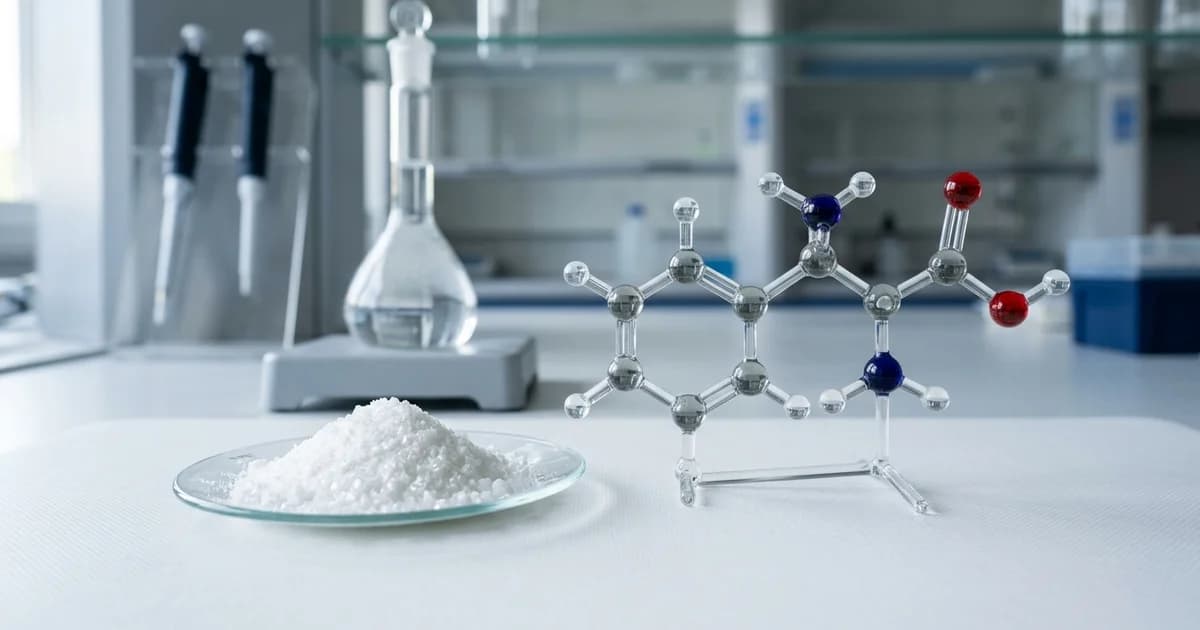
DLPA is a racemic blend, meaning it contains equal parts of two mirror-image forms of the same amino acid. One half is L-phenylalanine. The other half is D-phenylalanine. Your body treats them very differently.
L-phenylalanine is an essential amino acid you get from protein-rich food. Your body uses phenylalanine to make tyrosine, and to make the hormones epinephrine and norepinephrine, as well as the neurotransmitter dopamine. All are important in controlling your mood and stress responses.
D-phenylalanine is the more unusual half. It is not used to build proteins. Its proposed value comes from a completely different route involving the body's own painkilling peptides.
That split is the key to the whole dlpa vs l-phenylalanine question, which we will get to below.
The Dopamine Logic Behind DLPA for Mood
The case for dlpa for mood starts with dopamine. Dopamine drives motivation and the capacity to feel pleasure, and blunted dopamine signaling shows up in many descriptions of low mood.
The reasoning is simple. There have been many studies on whether phenylalanine can benefit certain medical conditions, including depression, because of its connection to dopamine. Dopamine controls pleasure, and the inability to experience pleasure is a common symptom of depression.
L-phenylalanine converts to tyrosine, tyrosine converts to L-DOPA, and L-DOPA converts to dopamine. Give the body more raw material, the theory goes, and it can build more of the neurotransmitter.
It is a clean hypothesis. Clean hypotheses do not always survive contact with clinical data, and this one has barely been tested in modern, controlled conditions.
DLPA and Enkephalinase: The D-Form Mechanism
The most interesting part of DLPA is the D-form, and the term you will see attached to it is dlpa enkephalinase inhibition. Here is what that means in plain language.
Your body makes its own opioids: endorphins and enkephalins. These bind to receptors in the brain and spinal cord and reduce pain while improving emotional resilience. The catch is that they break down fast, chewed up by specific enzymes so your nervous system does not stay overstimulated.
D-phenylalanine is proposed to slow those enzymes down. According to a clinical overview from MedCentral, the amino acid d-phenylalanine slows the action of the enzymes, particularly carboxypeptidase A or endorphinase and enkephalinase, that degrade the endorphins. Slow the breakdown, and your own endorphins linger longer.
This mechanism was studied seriously decades ago. D-phenylalanine's endorphin-protective properties were researched and confirmed in the 1980s in trials conducted at the Chicago Medical School by pharmacology professor Seymour Ehrenpreis. Most of that work focused on pain, not depression.
So the dlpa enkephalinase story is biochemically credible. It is also mostly a pain-and-analgesia story, and applying it to mood is an inference, not a finding.
The Actual Mood Evidence (And Why It's Weak)
Here is the part most product pages skip. The clinical evidence for dl-phenylalanine depression is small, dated, and methodologically shaky.
Two trials get cited again and again. According to a review from SelfDecode Supplements, DL-phenylalanine at 75 to 200 mg per day for 20 days resolved the symptoms of depression in 12 out of 20 patients. A second trial reported that lower doses of the same supplement, 50 to 100 mg daily for 15 days, restored normal mood in 17 out of 23 depressed patients who didn't respond to standard treatment.
Those numbers look encouraging until you read the caveat. The same review states plainly that the above studies are over 40 years old and lack placebo controls, and we should take their results with a large grain of salt. One of those papers appeared in the Journal of Neural Transmission, per a summary from Dr. Axe, but age and weak design are the deciding factors here, not the journal name.
The bottom line on dlpa evidence is uncomfortable for sellers. No valid clinical evidence supports the use of DLPA for any of the conditions reviewed. What exists is preliminary, uncontrolled, and decades old.
That is not the same as saying DLPA does nothing. It means nobody has proven that it does something, which is a different and more honest claim.
DLPA vs L-Phenylalanine vs D-Phenylalanine
If the D-form drives the endorphin mechanism and the L-form drives the dopamine mechanism, why take the blend at all? That is the core of dlpa vs l-phenylalanine confusion.
Here is how the three forms compare on what we actually know.
| Form | What it does in the body | Primary proposed use | Strength of evidence |
|---|---|---|---|
| L-phenylalanine | Builds tyrosine, dopamine, norepinephrine, epinephrine | Mood, focus, stress response | Mechanism strong, mood trials weak |
| D-phenylalanine | Slows enkephalinase and related enzymes | Pain, endorphin support | Studied for pain in the 1980s, not mood |
| DLPA (50/50) | Both routes at once | Mood and pain combined | Two old, uncontrolled depression trials |
The honest summary: DLPA is 50% D-phenylalanine so it might deliver the same benefits as the D-form, but there is no clinical evidence to back this up, and some people use DLPA to lose weight despite the lack of clinical data to support it.
If you want the dopamine pathway, L-phenylalanine or tyrosine is the more direct choice. If you want the pain pathway, the D-form is the studied one. The blend is a bet on both, with proof of neither.
Safety and the One Hard Rule
Most healthy adults tolerate phenylalanine from food without issue, but there is one absolute contraindication that overrides everything else.
If you have phenylketonuria (PKU), you cannot take this. PKU is a genetic condition where the body cannot break phenylalanine down, so it builds up to toxic levels. According to the Cleveland Clinic, phenylketonuria is a rare genetic disease that causes the amino acid phenylalanine to build up in the body, and too much phenylalanine is toxic, which without treatment can cause brain damage.
This is exactly why, as the Mayo Clinic notes, aspartame is added to many products, and in the United States any product with aspartame must carry a warning about phenylalanine to help people with PKU avoid it.
Beyond PKU, talk to a clinician before combining phenylalanine with antidepressants, MAO inhibitors, or stimulant medications. Drug interactions here are not trivial.
The Verdict on DLPA's Evidence
DLPA sits in a familiar place in supplement science: a believable mechanism wrapped around a hollow core of human data. The dopamine logic is sound. The enkephalinase mechanism is real and was confirmed for pain decades ago. The depression trials are too old and too poorly designed to lean on.
That does not make DLPA useless. It makes it unproven for mood, which is a claim sellers rarely print on the tin.
Treat it as a candidate worth watching, not a conclusion. If you try it, do so with clear eyes, a clinician's input, and the understanding that you are running an experiment the literature has not yet run properly. Good supplement decisions start with honest evidence, not hopeful biochemistry.
Frequently Asked Questions
Is DLPA proven to treat depression?
No. The studies most often cited for dl-phenylalanine depression are over 40 years old, small, and lacked placebo controls. They reported improvement in many patients, but without proper controls those results cannot be trusted as proof. Current reviews state that no valid clinical evidence supports DLPA for depression or other conditions. The biochemical rationale is reasonable, but reasonable mechanisms regularly fail when finally tested in rigorous trials.
What is the difference between DLPA and L-phenylalanine?
L-phenylalanine is the natural form found in protein-rich food, and your body uses it to build tyrosine, dopamine, and norepinephrine. DLPA adds an equal amount of D-phenylalanine, which is not used to build proteins and instead is proposed to slow the enzymes that break down endorphins. In short, DLPA targets two pathways at once, while L-phenylalanine focuses on the dopamine route.
What does enkephalinase have to do with DLPA?
Enkephalinase is one of the enzymes that breaks down your body's own opioid peptides. The dlpa enkephalinase idea is that D-phenylalanine slows this enzyme, letting endorphins and enkephalins last longer. This mechanism was studied at the Chicago Medical School in the 1980s, mostly for pain relief rather than mood. It is biochemically credible but has not been confirmed for depression in modern trials.
Who should never take DLPA?
Anyone with phenylketonuria (PKU) must avoid all phenylalanine, including DLPA, because their body cannot break it down and it builds to toxic levels. People taking MAO inhibitors, other antidepressants, or stimulant medications should consult a clinician first because of interaction risk. Pregnant and breastfeeding people should also avoid it without medical guidance. When in doubt, treat the warning label on aspartame products as a signal that applies to you.
What are the supposed DLPA benefits?
The most discussed dl-phenylalanine benefits are improved mood, reduced symptoms of depression, and pain relief through endorphin support. The dopamine connection drives the mood claims, and the enkephalinase mechanism drives the pain claims. The problem is evidence. The mood research is old and uncontrolled, and the pain research, while better, is decades old and focused on clinical pain settings rather than everyday use.
Is DLPA the same as a focus or energy supplement?
No. DLPA is an amino acid aimed at dopamine and endorphin pathways, not a stimulant. It will not give you the fast, clean focus that comes from a researched caffeine and L-theanine combination. If steady attention is your goal, the evidence base for caffeine plus L-theanine is far stronger than the dlpa evidence for mood. They are different tools for different jobs.
Why "Clinically Backed" Should Be the Bar, Not the Slogan
DLPA is a useful case study in reading supplements honestly. The mechanism is real, the marketing is loud, and the human evidence is quiet. That gap is exactly where most of the supplement market lives, and it is the gap we built Roon to stay out of.
Roon is not a phenylalanine product, and it is not a treatment for depression, anxiety, or any medical condition. It is a sublingual cognitive performance pouch built around four ingredients with a real research footprint: 80 mg caffeine, 60 mg L-theanine, 25 mg methylliberine (Dynamine), and 5 mg theacrine (TeaCrine). The design target is simple and measurable, roughly 6 to 8 hours of steady focus with no jitters, no crash, and no tolerance creep.
The principle is the one this article argues for. If a mechanism is promising but unproven, say so. If an ingredient has earned its place in clinical data, that is the bar. If you want focus you can feel in 5 to 10 minutes, backed by ingredients that have actually been studied, try Roon.
Written by Roon Team