Dicaffeine Malate (Infinergy): Does "Buffered, Smooth-Release" Caffeine Hold Up?
Roon Team
Dicaffeine Malate (Infinergy): Does "Buffered, Smooth-Release" Caffeine Hold Up?
Open almost any pre-workout label and you'll find dicaffeine malate listed under a trademarked name like Infinergy, usually right next to plain caffeine. The pitch is seductive: same energy, gentler ride, no crash, no jitters. A buffered, slow-release version of the molecule you already love.
The chemistry is real. The marketing claims around it are mostly not.
Here's what dicaffeine malate actually is, what the malic acid does (and doesn't) do, and why "buffered caffeine" is one of the more durable myths in the supplement aisle.
Key Takeaways
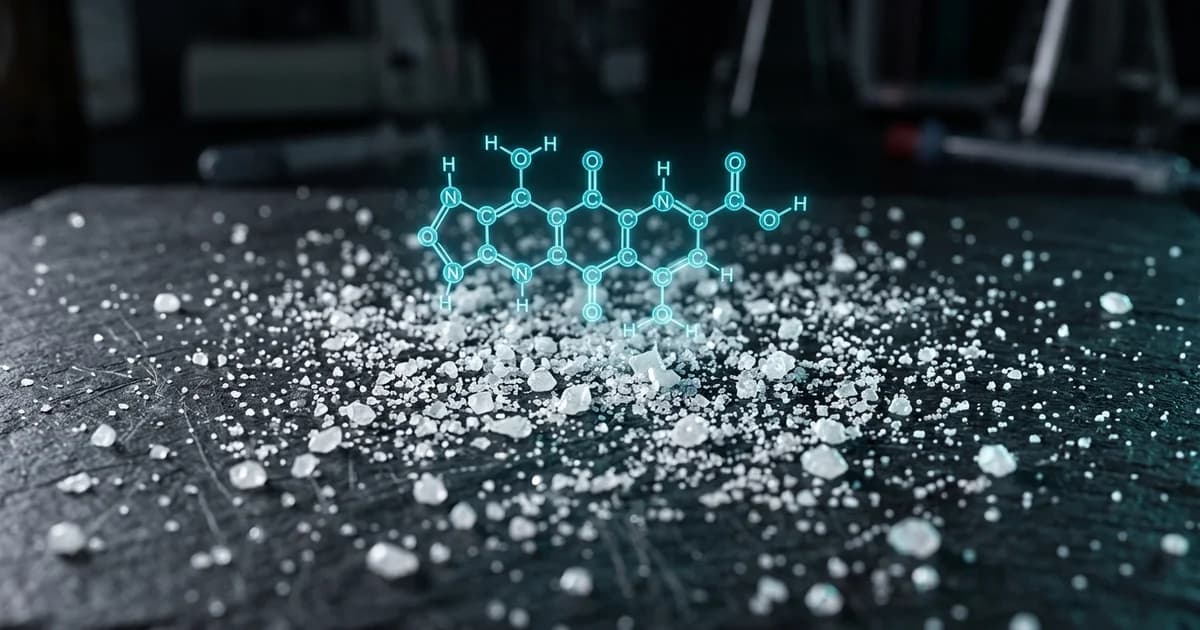
- Dicaffeine malate is two caffeine molecules bonded to one molecule of malic acid. By weight it's roughly 75% caffeine, 25% malic acid.
- Infinergy is the trademarked branded form of dicaffeine malate sold to supplement companies.
- There are no human pharmacokinetic studies showing dicaffeine malate has a different half-life or absorption curve than caffeine anhydrous.
- The "no crash" and "smooth-release" claims are marketing, not measured outcomes.
- Real duration comes from stacking compounds with different half-lives, not from one molecule wearing a salt.
What Is Dicaffeine Malate?
Dicaffeine malate is a salt that pairs caffeine with malic acid, the same organic acid that gives green apples their tartness. The "di" means two caffeine molecules attach to each malic acid molecule. Infinergy is simply the branded, trademarked version that ingredient suppliers sell to manufacturers.
By weight, the compound lands around 75% caffeine and 25% malic acid. So 100 mg of dicaffeine malate delivers roughly 75 mg of actual caffeine. That ratio matters, because a label touting "200 mg dicaffeine malate" is really giving you about 150 mg of caffeine, not 200.
Malic acid plays a role in the Krebs cycle, your cells' energy production pathway, and brands lean on that biochemistry to imply the malate "fuels" your workout. The amount in a caffeine salt is trivial compared to what your body already cycles through. Don't expect a metabolic boost from it.
The "Buffered" and "Smooth-Release" Claim, Examined
The core claim is that the malic acid buffers stomach acidity and slows caffeine release, producing smoother energy with no crash. There is no published human data supporting a slower release curve.
Here's the problem with the slow-release story. A salt is not a time-release capsule. When dicaffeine malate hits your stomach, the acidic environment dissociates it back into free caffeine and free malic acid almost immediately. Once that happens, your body absorbs the caffeine the same way it absorbs caffeine from any other source.
Caffeine is one of the most studied molecules on earth. It absorbs fast, reaching peak blood levels in roughly 30 to 60 minutes regardless of source, and your liver clears it on a fixed schedule set by your genetics, not by the acid it arrived with.
So the dicaffeine malate half life is, for all practical purposes, the half life of caffeine. In healthy adults that runs about 3 to 5 hours, though it stretches longer in slow metabolizers, pregnant women, and people on certain medications. The malate doesn't extend it.
What about the gentler stomach feel? That part has a kernel of truth. Malic acid can buffer the harsh acidity of pure caffeine, so people with sensitive stomachs sometimes report less irritation. That's a tolerability benefit, not a pharmacokinetic one. It changes how the caffeine feels going down, not how long it lasts.
Dicaffeine Malate vs Caffeine Anhydrous
On absorption, peak, and duration, dicaffeine malate and caffeine anhydrous behave the same once the salt dissociates. The differences are dose math and stomach comfort, not energy curves.
Caffeine anhydrous is dehydrated caffeine, essentially pure and fast-acting. It's the cheapest and most predictable form, which is why it dominates pre-workouts and energy products. The knock against it is that it can feel sharp, both in the gut and in the rush-and-drop energy pattern at higher doses.
Dicaffeine malate softens that edge for some users. It costs more, delivers less caffeine per milligram on the label, and carries no proven duration advantage. Here's the honest side-by-side.
| Feature | Caffeine Anhydrous | Dicaffeine Malate (Infinergy) |
|---|---|---|
| Caffeine by weight | ~100% | ~75% |
| Onset to peak | ~30–60 min | ~30–60 min |
| Half life | ~3–5 hrs | ~3–5 hrs (same caffeine) |
| Proven slow release? | No | No |
| Stomach comfort | Can feel sharp | Often gentler |
| Cost per mg caffeine | Low | Higher |
| "No crash" claim verified? | No | No |
The crash people blame on caffeine anhydrous usually isn't about the molecule's form. It's about dose, the adenosine rebound as caffeine clears, and the lack of anything to smooth the descent. Swapping to a malate salt doesn't fix any of that.
So Where Does "No Crash Caffeine" Actually Come From?
No crash caffeine is an engineering problem, not a single-ingredient solution. You solve it with what you pair caffeine with and how you spread the dosing, not by bonding it to an acid.
The crash has two main drivers. First, a steep blood-caffeine drop after a high single dose. Second, the adenosine that built up while caffeine was blocking its receptors, which floods back the moment caffeine clears.
Two strategies genuinely soften that landing:
- Pair caffeine with L-theanine. This amino acid from tea takes the edge off caffeine's stimulation. The combination is well documented to support attention and reduce the jittery feeling, which is why the caffeine and L-theanine pairing is a staple of serious focus formulas.
- Layer compounds with different half lives. Instead of front-loading one fast molecule, you combine a fast stimulant with slower-clearing ones. The effect tapers instead of dropping off a cliff.
That second strategy is the one dicaffeine malate pretends to offer and can't deliver. A salt of one molecule still clears on one timeline.
What Dicaffeine Malate Is Worth, and What It Isn't
Dicaffeine malate isn't a scam, and it isn't useless. It's a legitimate caffeine source that can sit easier on a sensitive stomach, and for some people that alone justifies the premium.
What it is not is a slow-release, crash-proof upgrade. Strip away the trademark and the Infinergy caffeine in your pre-workout is caffeine with a tart acid attached, absorbing and clearing on the same clock as the cheaper powder. If a brand charges more and counts on you assuming the malate buys you extra hours, that's a labeling story, not a biological one.
Read the dose math, respect the half life, and judge any "no crash" product by its full formula rather than one branded ingredient.
Frequently Asked Questions
Is dicaffeine malate stronger than regular caffeine?
No. Per milligram, dicaffeine malate is actually weaker on caffeine content, since only about 75% of its weight is caffeine. The other 25% is malic acid, which has no stimulant effect. A gram of dicaffeine malate gives you roughly 750 mg of caffeine, while a gram of caffeine anhydrous gives close to 1,000 mg. The "stronger" impression comes from marketing, not from a higher caffeine load.
Does dicaffeine malate really prevent a crash?
There's no human data showing it does. Once the salt dissociates in your stomach, the caffeine is absorbed and cleared on the same schedule as any other caffeine. A crash is mostly about dose size, how fast blood levels fall, and adenosine rebound. Malic acid doesn't change those mechanics. Smoother energy comes from formula design, like pairing caffeine with L-theanine, not from the salt itself.
What is the dicaffeine malate half life?
For practical purposes it matches caffeine's half life, about 3 to 5 hours in healthy adults. The body breaks the salt apart almost immediately, leaving plain caffeine to follow its normal clearance curve. Slow metabolizers, pregnant women, and people on certain medications can clear it considerably slower, but that variability is driven by your liver enzymes, not by the malate.
Is Infinergy the same thing as dicaffeine malate?
Yes. Infinergy is a trademarked branded form of dicaffeine malate that ingredient suppliers sell to supplement manufacturers. When you see Infinergy on a label, you're looking at the same compound: two caffeine molecules bonded to one malic acid molecule. The trademark signals a specific supplier's version, not a chemically different ingredient.
Why do brands use dicaffeine malate instead of plain caffeine?
Two reasons. It can be gentler on sensitive stomachs because malic acid buffers caffeine's harsh acidity, and it carries a premium, science-sounding name that reads well on a label. Some formulators also like blending caffeine sources to create a label that looks more sophisticated. None of those reasons involve a proven duration or anti-crash advantage.
Is dicaffeine malate better than caffeine anhydrous for focus?
Not inherently. The caffeine you absorb is identical, so the cognitive effect tracks the actual caffeine dose, not the source. If dicaffeine malate sits better in your stomach, you might tolerate it more comfortably. For sustained focus, what matters far more is whether the product pairs caffeine with calming and longer-acting compounds rather than which caffeine salt it uses.
How Roon Solves Duration Honestly
This article's whole point is that you can't stretch one caffeine molecule by bonding it to an acid. Duration is a stacking problem, and that's exactly the gap Roon was built around.
Instead of dressing up caffeine as slow-release, Roon layers compounds with genuinely different half lives. Each sublingual pouch carries 80 mg caffeine for the fast lift, 60 mg L-theanine to smooth the edge, 25 mg methylliberine (Dynamine) for quick onset, and 5 mg theacrine (TeaCrine), which clears slowly enough to carry the back half of the curve. The result is built for 6 to 8 hours of steady focus with no jitters, no crash, and no tolerance buildup, with onset in 5 to 10 minutes through the cheek lining.
Roon is not a replacement for sleep, and it won't undo a bad week of recovery. What it offers is a smarter answer to the problem dicaffeine malate only pretends to solve. If you've been chasing "no crash" energy through clever caffeine salts, try Roon and feel what layered half lives actually do.
Written by Roon Team