CoQ10 for Brain Energy: What the Mitochondria-Cognition Evidence Really Shows
Roon Team
CoQ10 for Brain Energy: What the Mitochondria-Cognition Evidence Really Shows
Your brain burns roughly 20% of your body's energy while making up about 2% of its weight. That energy runs on mitochondria, and mitochondria run on a molecule called coenzyme Q10. So the logic behind taking CoQ10 for the brain writes itself: feed the cellular furnaces, sharpen the mind.
The biochemistry is real. The clinical story is messier.
A growing pile of CoQ10 supplements promise mental clarity and an end to brain fog. But the most important question for anything labeled a "brain energy" molecule is rarely asked: does the molecule actually reach the brain? With oral CoQ10, the honest answer is that we still don't know.
Key Takeaways
- CoQ10 is essential to mitochondrial energy production, and brain tissue is one of the most energy-hungry tissues you have.
- Oral CoQ10 crossing the blood brain barrier in humans has not been directly demonstrated. Most evidence comes from animals.
- Ubiquinol absorbs better than ubiquinone in the gut, but better blood levels do not guarantee better brain levels.
- For fast, reliable cognitive support, how a compound is delivered matters as much as what it is.
What CoQ10 Actually Does Inside a Cell
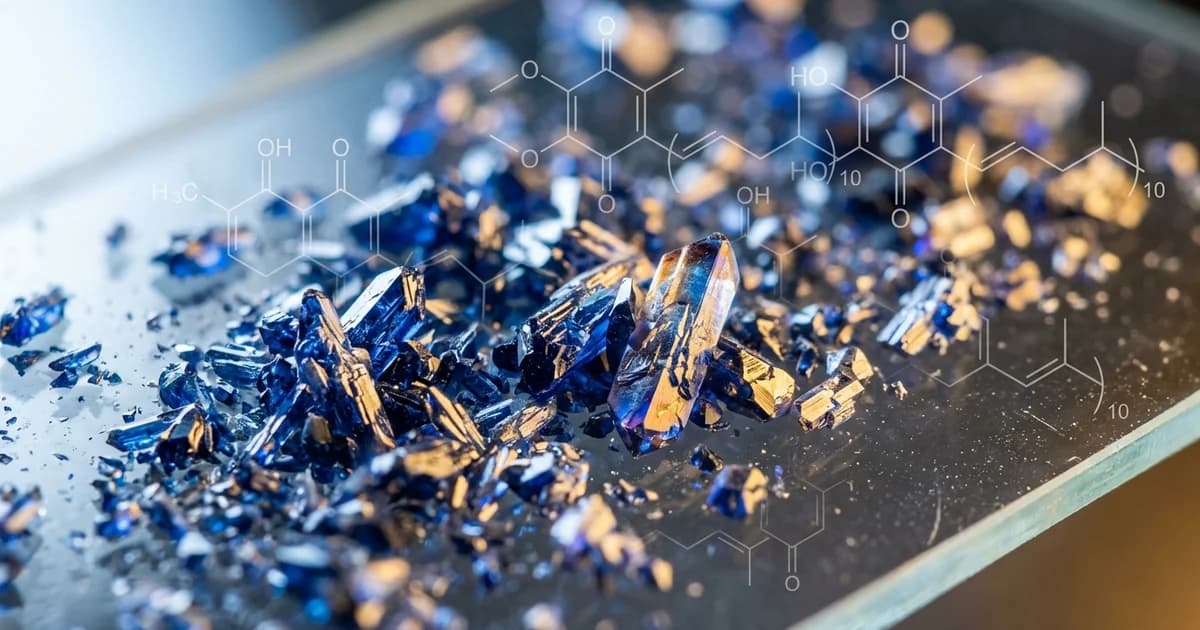
CoQ10 is a cofactor in the electron transport chain, the assembly line your mitochondria use to make ATP, the cell's energy currency. CoQ10 is a lipophilic molecule located in all biological membranes of the human body and serves as a component for the synthesis of ATP and a life-sustaining cofactor for three complexes of the electron transport chain in the mitochondria.
It pulls double duty. Beyond shuttling electrons, CoQ10 functions as a powerful antioxidant, safeguarding cellular structures from oxidative damage, giving it a dual role in both bioenergetics and antioxidant defense.
This is why the brain keeps coming up. Neurons fire constantly, and constant firing demands constant ATP. When energy production falters, neurons are vulnerable. That single fact is the foundation of nearly every claim you'll read about CoQ10 and cognition.
Why Aging Brains Get Less CoQ10
Your body makes its own CoQ10, but production does not stay flat for life. Optimum CoQ10 production occurs around 25 years of age, with a subsequent age-related decline that varies across tissues; in heart tissue, production at age 65 is approximately half that of younger adults.
There is a catch in the brain data, and it's worth being precise about. At present, there is no comparable data for changes in CoQ10 levels in the human brain as a function of normal aging. The heart decline is well documented. The brain decline is inferred, not measured.
Some prescriptions can drop your levels further. Statins, among the most widely used drugs in the world, block the same biochemical pathway your body uses to build CoQ10, which lowers circulating levels as a side effect.
The Question Everyone Skips: CoQ10 and the Blood Brain Barrier
Here is the part most "brain energy" marketing quietly ignores. A molecule can only help your brain if it gets into your brain. The blood brain barrier is a tightly controlled border, and CoQ10 is a large, fat-loving molecule that does not slip across it easily.
The most recent review of the evidence is blunt about this gap. To date there have been no studies identifying carriers or receptors for CoQ10 in the human brain, and no clinical studies have directly demonstrated that orally administered CoQ10 crosses the blood brain barrier in humans.
That uncertainty may explain a frustrating pattern in the literature. While there is evidence for CoQ10's efficacy in animal models of neurological disorders, randomized controlled trials of CoQ10 in Parkinson's, Alzheimer's, and ALS have had disappointing outcomes, which may reflect the uncertainty over whether CoQ10 can access the blood brain barrier in humans.
In other words, the molecule works in a petri dish and in mice. In people swallowing capsules, the brain results keep coming up short. The leading suspect is delivery, not mechanism.
There is a sliver of indirect evidence the other way. Clinical reports from Musumeci and Lamperti described marked improvement in cerebellar function in children and young adults following CoQ10 supplementation of 300 to 3000 mg per day, which implies that supplemental CoQ10 was able to cross the blood brain barrier in those subjects. Note the dose range. That is far above what a typical brain-fog capsule contains.
Ubiquinol vs Ubiquinone: A Real Difference That Solves the Wrong Problem
CoQ10 comes in two forms, and the ubiquinol vs ubiquinone debate is the most common rabbit hole shoppers fall into. Ubiquinone is the oxidized form. Ubiquinol is the reduced, "active" form your body uses directly.
Ubiquinol does absorb better from the gut. A comparison study in healthy subjects found ubiquinol roughly doubled plasma CoQ10 versus an equal dose of ubiquinone, and reviews put its absorption advantage at about 2 to 4 times in older adults and cardiac patients.
But ubiquinol has a flaw. Its principal challenge is oxidative instability, which leads to rapid conversion back to ubiquinone under ambient conditions, complicating long-term storage.
Here's why this matters for your brain specifically. Better gut absorption raises CoQ10 in your blood. It does not prove the molecule reaches your neurons. The ubiquinol vs ubiquinone question optimizes the first step of a route that may stall at the border. Solving stomach absorption does nothing for the blood brain barrier problem.
So Should You Take CoQ10 for Brain Fog?
Let's be direct about CoQ10 and brain fog. CoQ10 supports general cellular energy and is well studied for heart health and statin-related muscle symptoms. Those are legitimate uses backed by human trials.
For sharpening focus today, on a deadline, the case is weaker. CoQ10 is not a fast-acting cognitive tool. It accumulates slowly, its brain delivery is unproven, and the doses linked to any central nervous system effect are large. If your brain fog comes from poor sleep, dehydration, or an energy dip at 3 p.m., CoQ10 is not the lever to pull first.
It is a long-term cellular-maintenance supplement. It is not an acute focus aid. Treating it like the latter is where most disappointment starts.
How CoQ10 Compares to Common Focus Ingredients
Here is an honest comparison of how CoQ10 stacks up against ingredients people actually reach for when they need to concentrate. The point is not that one wins everything. It's that they solve different problems on different timelines.
| Ingredient | Primary Role | Onset | Crosses BBB Readily (Humans) | Best For |
|---|---|---|---|---|
| CoQ10 (ubiquinol/ubiquinone) | Mitochondrial cofactor, antioxidant | Weeks (cumulative) | Not demonstrated | Long-term cellular energy support |
| Caffeine | Adenosine receptor blocker | 5 to 45 min | Yes | Acute alertness |
| L-theanine | Calming amino acid, smooths caffeine | 30 to 60 min | Yes | Focus without jitters |
| Methylliberine (Dynamine) | Fast-acting purine alkaloid | Fast | Yes | Quick, clean energy |
| Theacrine (TeaCrine) | Longer-acting purine alkaloid | Slower, sustained | Yes | Extended energy, low tolerance buildup |
| Roon (4-ingredient sublingual pouch) | Caffeine + L-theanine + Dynamine + TeaCrine | 5 to 10 min | Yes (all four are CNS-active) | 6 to 8 hours of sustained focus, no crash |
The pattern is hard to miss. The ingredients with proven, fast central nervous system activity are the ones that act on the brain directly and are known to cross the barrier. CoQ10 sits in a different category entirely.
The Real Lesson: Delivery Decides Everything
The CoQ10 story is a useful warning for anyone shopping for "brain energy." A perfect mechanism on paper means nothing if the molecule can't reach the tissue that needs it.
CoQ10 has the mechanism. What it lacks, in humans, is proven delivery to the brain. Caffeine, L-theanine, and the purine alkaloids have both. That gap, mechanism versus delivery, is the entire game.
For more on how the brain's most reliable focus combination works, see our breakdown of how caffeine and L-theanine work together and our guide to beating the afternoon energy crash.
Conclusion
CoQ10 is a genuinely important molecule. It powers the mitochondria that keep your neurons firing, and it doubles as an antioxidant. The biochemistry is not in doubt.
The doubt is about geography. Despite decades of research, no human study has directly shown that oral CoQ10 reaches the brain in meaningful amounts, and human trials in neurological conditions have mostly underwhelmed. The most likely reason is that the molecule struggles to cross the blood brain barrier.
So treat CoQ10 as what the evidence supports: a slow, systemic, cellular-support supplement, not a fast cognitive tool. When you need focus on demand, choose ingredients that are proven to reach the brain and act quickly. With any "brain energy" claim, the first question to ask is never what's in it. It's whether what's in it can actually get where it needs to go.
Frequently Asked Questions
Does CoQ10 cross the blood brain barrier?
In humans, this has not been directly proven. No clinical studies have demonstrated that orally administered CoQ10 crosses the blood brain barrier in humans, and no carriers or receptors for CoQ10 have been identified in the human brain. Animal studies suggest some penetration is possible, and one high-dose study implied access to the cerebellum, but the everyday capsule dose has no such evidence behind it.
Is ubiquinol better than ubiquinone for the brain?
Ubiquinol absorbs better in the gut. Studies put its absorption advantage at roughly 2 to 4 times that of ubiquinone, and one healthy-subject trial saw it about double plasma CoQ10. But better blood absorption does not equal better brain delivery. For brain-specific goals, the form difference is less important than the unsolved blood brain barrier problem they both share.
Can CoQ10 fix brain fog?
Probably not quickly. CoQ10 builds up slowly and supports general cellular energy rather than acute alertness. If your brain fog stems from a midday energy dip, poor sleep, or dehydration, faster-acting and brain-penetrant ingredients are a more direct fix. CoQ10 is better understood as long-term cellular maintenance than a same-day focus aid.
Why do CoQ10 brain trials keep failing?
Randomized trials of CoQ10 in Parkinson's, Alzheimer's, and ALS have had disappointing outcomes, which may reflect uncertainty over whether CoQ10 reaches the brain in humans. The mechanism is sound in cells and animals. The breakdown appears to happen at delivery, when people swallow it and it has to cross into brain tissue.
Does CoQ10 decline with age?
Yes, though the precise brain data is limited. Production peaks around age 25, then declines with age; in heart tissue, levels at 65 are roughly half those of younger adults. For the human brain specifically, there is no comparable data on how CoQ10 levels change with normal aging.
What does CoQ10 actually do in the body?
CoQ10 is a fat-soluble molecule found in all your cell membranes that helps synthesize ATP and acts as a cofactor for three complexes of the mitochondrial electron transport chain. It also works as an antioxidant. In short, it helps your cells make energy and protects them from oxidative damage.
When the Molecule Can't Reach the Brain, Delivery Is the Whole Argument
The CoQ10 problem is not really about CoQ10. It's about a pattern that repeats across the supplement aisle: compounds with elegant mechanisms that never reliably reach the tissue they're supposed to help. A brain energy molecule that can't cross the blood brain barrier in humans is solving the wrong half of the problem.
That delivery-first thinking is the reason Roon exists. Roon is a zero-nicotine sublingual pouch built around four ingredients that are already known to reach the brain and act there: 80 mg caffeine, 60 mg L-theanine, 25 mg methylliberine (Dynamine), and 5 mg theacrine (TeaCrine). The sublingual format is designed for fast absorption, with onset in roughly 5 to 10 minutes and a window of 6 to 8 hours of sustained focus, no jitters and no crash.
To be clear, Roon does not contain CoQ10, and it is not a long-term mitochondrial supplement or a substitute for sleep, hydration, or a sensible health routine. It's built for the moments you need focus on demand. If you've been chasing brain energy through molecules that stall at the border, try Roon and feel what delivery plus a CNS-active stack actually does.
Written by Roon Team