Citicoline vs Choline: Which Choline Source Actually Reaches Your Brain
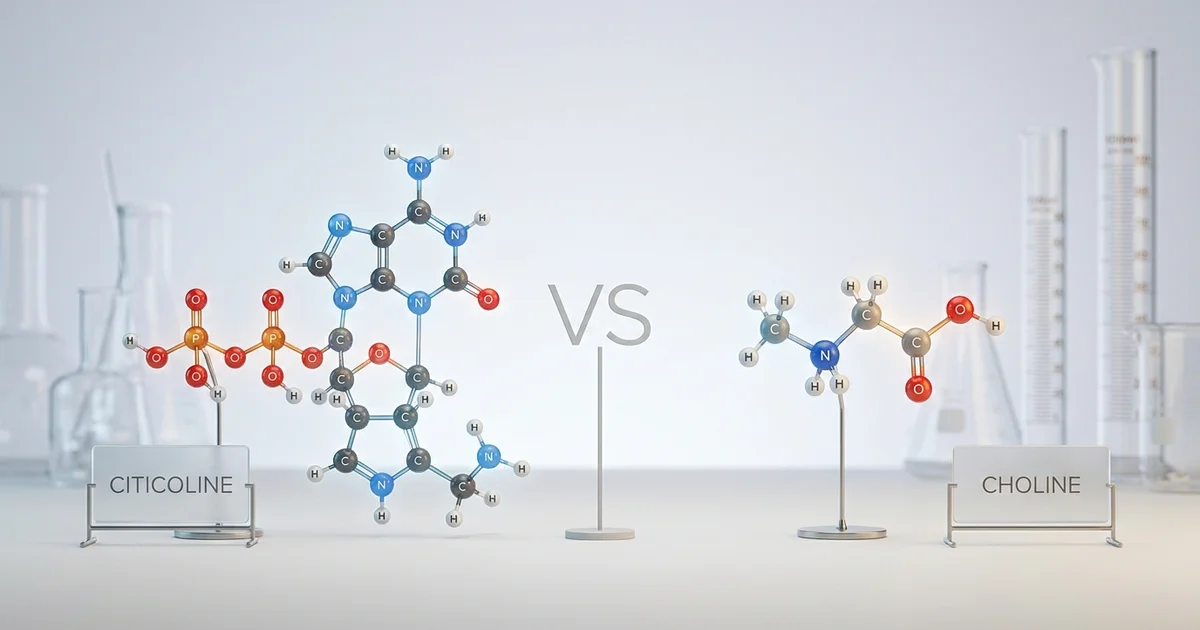
Choline is the raw nutrient your brain uses to build acetylcholine and cell membranes. Citicoline (CDP-choline) is a more usable delivery form: one molecule that breaks down into choline plus cytidine, supplying both the building block your neurons need and a precursor for membrane synthesis. In the citicoline vs choline debate, the deciding factor is not how much choline a label promises, but how much of it survives digestion and crosses into brain tissue. On that measure, citicoline and alpha-GPC outperform cheaper forms like choline bitartrate.
That gap matters because most "choline" supplements on the shelf use the form least likely to reach your neurons. The form you choose changes the outcome more than the dose printed on the tin.
This article is for informational purposes only and is not medical advice. If you have health concerns, are pregnant or breastfeeding, or are trying to cut down on caffeine or quit nicotine, talk to a healthcare provider. If you are experiencing persistent cognitive symptoms such as memory loss, confusion, or difficulty concentrating, see a doctor before self-supplementing. These can signal underlying conditions that a supplement will not address.
Key Takeaways
- Choline is a nutrient; citicoline is a delivery form. Citicoline (CDP-choline) provides choline and cytidine, which the body converts to uridine for membrane phospholipid synthesis.
- Bioavailability varies widely by form. Citicoline and alpha-GPC reach the brain efficiently; choline bitartrate has poor blood-brain barrier penetration despite a high choline percentage on paper.
- Use citicoline for sustained cognitive support; use alpha-GPC when you want a denser, faster choline load. Plain dietary choline (eggs, liver) covers your baseline nutrient needs.
- Roon contains no choline. It is a caffeine and L-theanine focus tool, and it pairs cleanly with a choline source rather than replacing one.
Citicoline vs Choline: The Core Difference in One Paragraph
Citicoline wins the citicoline vs choline comparison because it delivers more than choline alone. "Choline" describes the essential nutrient itself, found in eggs, liver, and soybeans, and packaged into supplements as salts like choline bitartrate or choline chloride. Citicoline, short for cytidine diphosphate-choline, is a compound your body already makes as an intermediate in building phosphatidylcholine, the main fat in neuronal membranes. Swallow it, and it splits into choline and cytidine, then reassembles inside cells. According to a pharmacological and clinical review by Secades and Lorenzo, absorption by the oral route is virtually complete, with bioavailability approximately the same as by the intravenous route, and its components distribute throughout the body before crossing into the brain.
The cytidine half is the part cheaper choline sources cannot offer. In humans it converts to uridine, and both feed the Kennedy pathway that manufactures new membrane phospholipids. So citicoline supports two processes at once: neurotransmitter precursor supply and structural membrane repair.
How Bioavailability and Brain Penetration Actually Differ
The choline percentage on a label tells you almost nothing about how much reaches your brain. Choline bitartrate is roughly 41 percent choline by weight, which looks efficient, but a large share never crosses the blood-brain barrier intact and instead gets metabolized by gut bacteria or used peripherally. Alpha-GPC and citicoline are the two forms repeatedly singled out as the most brain-penetrant, which is why they dominate clinical research while choline bitartrate is mostly studied for general nutrient adequacy.
Here is how the common sources compare on the metrics that matter.
| Choline source | What it provides | Bioavailability | BBB penetration | Best use | Evidence level |
|---|---|---|---|---|---|
| Citicoline (CDP-choline) | Choline + cytidine (becomes uridine) | High; oral absorption near-complete | Strong | Sustained cognitive and memory support | Strong (multiple human RCTs) |
| Alpha-GPC | Choline (~40% by weight) + glycerophosphate | High | Strong | Fast, dense choline load; pre-training | Moderate to strong |
| Choline bitartrate | Choline (~41% by weight) only | Moderate; much used peripherally | Poor | Correcting baseline choline intake | Low for cognition |
| Dietary choline (eggs, liver) | Choline only, with co-nutrients | Variable, food-dependent | Indirect | Meeting daily nutrient needs | Strong for adequacy |
| Roon pouch | No choline; 80mg caffeine, 60mg L-theanine, 25mg Dynamine, 5mg TeaCrine | Sublingual, 5-10 min onset | N/A (not a choline source) | Acute focus and alertness | N/A for choline |
Roon belongs in this table only to set expectations clearly: it is not a choline product. It is a caffeine and L-theanine focus tool that people often stack alongside a choline source, not in place of one.
What the Human Research Shows for Citicoline
Citicoline has the deepest human evidence base of any choline form marketed for cognition. A systematic review and meta-analysis in Nutrients examined citicoline across cognitive-decline populations and found it associated with improvements on cognitive assessment scores, supporting its role in helping maintain memory in aging adults. The signal was consistent enough across trials for the authors to treat citicoline as a credible candidate for cognitive support rather than a fringe ingredient.
The benefit is not limited to older or impaired brains. A randomized study on citicoline, vigilance, and visual working memory reported that supplementation helped sustain attention and working-memory performance, with the authors linking the effect to neuronal activation and reduced oxidative stress. Doses in the cognitive literature commonly run from 250 mg to 500 mg per day, and citicoline carries a well-documented tolerability profile in those ranges, as summarized by Healthline's overview of citicoline.
When to Use Each Choline Source
Match the form to the job, not to the price. If your goal is daily cognitive support with the strongest human evidence, citicoline is the default choice. If you want a denser, faster-hitting choline load, often stacked before mental or physical training, alpha-GPC is the better tool, and our deep-dive on alpha-GPC covers its dosing and timing in detail.
- Citicoline: sustained memory and attention support; the most-studied cognitive form.
- Alpha-GPC: acute, high-density choline delivery; popular pre-performance.
- Choline bitartrate: useful mainly for closing a basic dietary choline gap, not for a cognitive edge.
- Food-first choline: two large eggs deliver a meaningful share of your daily choline target and should anchor your baseline before any supplement.
One practical note on stacking. Caffeine and L-theanine work on a different mechanism than choline. They shape alertness and calm focus rather than supplying membrane or neurotransmitter raw material, which is why a focus tool and a choline source can sit side by side without overlapping.
Conclusion: The Form Decides the Outcome
The citicoline vs choline question resolves cleanly once you stop reading the choline percentage and start asking what reaches the brain. Choline is the essential nutrient; citicoline is the form that delivers it efficiently while adding cytidine for membrane synthesis. For daily cognitive support, citicoline carries the strongest human evidence, alpha-GPC offers a faster and denser choline load, and choline bitartrate is best reserved for correcting plain dietary shortfalls. Buy the form that matches your goal, cover your baseline with food first, and treat the label's choline percentage as the least useful number on the package.
Frequently Asked Questions
Is citicoline better than choline?
Citicoline is a more usable form than basic choline salts for cognitive goals. It delivers choline plus cytidine, absorbs efficiently, and reaches the brain well, while cheaper forms like choline bitartrate have poor blood-brain barrier penetration. For meeting daily nutrient needs, ordinary dietary choline from eggs or liver is sufficient. For targeted cognitive support backed by human trials, citicoline is the stronger pick.
What is the difference between citicoline and choline bitartrate?
Choline bitartrate is a simple choline salt, roughly 41 percent choline by weight, that supplies choline only. Citicoline supplies choline plus cytidine, which becomes uridine and supports membrane phospholipid synthesis. The bigger practical difference is delivery: citicoline reaches the brain efficiently, while much of choline bitartrate is metabolized peripherally or by gut bacteria before it can act centrally.
How much citicoline should I take?
Human cognitive studies most commonly use 250 mg to 500 mg of citicoline per day, and it is generally well tolerated in those ranges. The right amount depends on your goal and your overall diet, so start low and stay within label directions. Speak with a qualified healthcare professional before adding any new supplement, especially if you take medication or have a health condition.
Does citicoline cross the blood-brain barrier?
Yes. After oral dosing, citicoline is almost fully absorbed and splits into choline and cytidine, which circulate and then reach the brain, where they help rebuild phosphatidylcholine in neuronal membranes. This brain penetration is the main reason citicoline outperforms choline bitartrate for cognitive purposes, despite both containing a similar choline percentage by weight.
Can I get enough choline from food?
For baseline nutrient needs, often yes. Eggs, liver, soybeans, and meat are rich choline sources, and a food-first approach should anchor your intake before any supplement. Many people still fall short of recommended daily amounts. Supplemental forms like citicoline or alpha-GPC are used less to fix a deficiency and more to pursue a specific cognitive goal with a brain-penetrant form.
Is citicoline the same as alpha-GPC?
No. Both are brain-penetrant choline sources, but they differ in structure and use. Alpha-GPC delivers a denser, faster choline load and is popular before training. Citicoline delivers choline plus cytidine and has the deeper human evidence base for sustained cognitive support. Many people pick one based on goal: alpha-GPC for acute density, citicoline for daily, research-backed support.
Does Roon contain choline?
No. Roon contains no choline of any kind. Each pouch holds 80 mg caffeine, 60 mg L-theanine, 25 mg methylliberine (Dynamine), and 5 mg theacrine (TeaCrine). It is a sublingual focus tool that works through a different mechanism than choline, so it complements a citicoline or alpha-GPC routine rather than replacing it.
Why Your Focus Layer and Your Choline Layer Are Two Separate Tools
This article makes one argument: the form of choline you choose decides whether it reaches your brain. That argument also clarifies where a product like Roon fits, and where it does not. Roon contains no choline. It will not supply the raw material your neurons use to build acetylcholine or repair membranes, and it is not a substitute for citicoline, alpha-GPC, or a choline-rich diet.
What Roon does is work on a separate layer of cognition: acute alertness and calm, sustained attention. Each sublingual pouch delivers 80 mg caffeine, 60 mg L-theanine, 25 mg methylliberine (Dynamine), and 5 mg theacrine (TeaCrine), with onset in roughly 5 to 10 minutes and a focus window built to run 6 to 8 hours without a crash. Zero nicotine.
If you already run a choline source for the structural side of brain support, Roon is the focus tool that sits cleanly beside it. Try it on a day you need attention on demand, not as a replacement for the nutrient layer this article is about.
By Roon Team