Caffeine + L-Theanine vs the Roon Stack: What Theacrine and Methylliberine Actually Add
Roon Team
Caffeine + L-Theanine vs the Roon Stack: What Theacrine and Methylliberine Actually Add
Caffeine and L-theanine is the most copied combo in cognitive performance, and for good reason. The two molecules cover each other's weak spots. Caffeine pushes alertness, L-theanine smooths the edge, and you get focus without feeling wired.
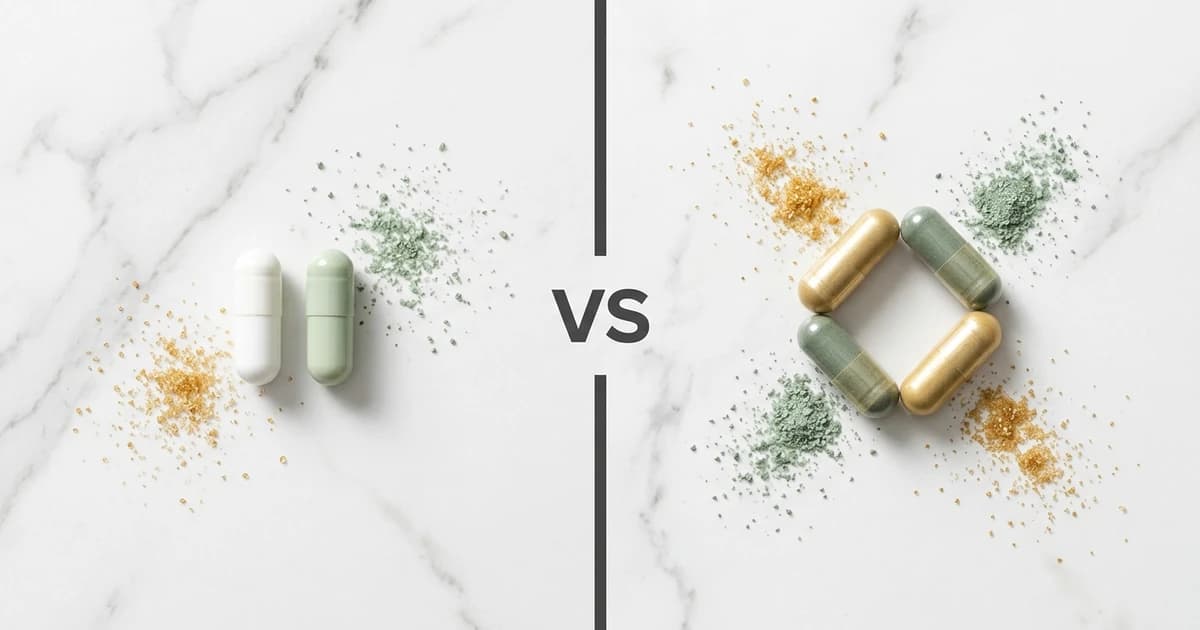
So why would anyone touch a formula that already works? Because the caffeine l-theanine vs Roon stack question isn't about replacing the classic 2-stack. It's about what happens when you add two more compounds that solve the two problems caffeine never could: it fades too fast, and your body adapts to it.
This is a breakdown of what theacrine and methylliberine bring to the table, and where the math stops being theoretical.
Key Takeaways
- The caffeine + L-theanine 2-stack is well-supported for attention and calm alertness, but caffeine still drives the duration and tolerance problems.
- Theacrine adds a longer, steadier energy curve and, in one 8-week trial, showed no measurable tolerance buildup.
- Methylliberine (Dynamine) appears to extend and smooth the experience, with research pointing to mood and "feel" benefits more than raw cognition.
- Roon's 4-ingredient stack keeps the proven base and layers the two co-factors on top, in a sublingual pouch.
The 2-Stack Everyone Already Trusts
Caffeine plus L-theanine works because the two molecules pull in complementary directions. Caffeine blocks adenosine receptors to raise alertness. L-theanine, an amino acid from tea, nudges your brain toward a calmer, more focused state at the same time.
The research backs this up. A systematic review in the journal Plants (PMC) found that the caffeine and L-theanine combination improves attention and alertness, with the theanine helping to take the rough edge off pure caffeine.
One frequently cited crossover trial inside that review used 200 mg of L-theanine and 160 mg of caffeine in healthy adults, and measured improvements in attention against tea, caffeine alone, and placebo. The takeaway is simple. The 2-stack is real, and it earns its reputation.
So if it's this good, what's missing?
The Two Problems Caffeine Can't Fix on Its Own
Caffeine has two structural flaws, and L-theanine doesn't touch either one.
Problem one: it doesn't last. Caffeine peaks fast and then declines, which is why a mid-morning pouch or coffee often leaves you reaching for another by early afternoon. The 2-stack feels clean, but the clock still runs out.
Problem two: your body adapts. Use caffeine daily and you build tolerance. The dose that worked last month feels weaker this month, so you climb. That escalation is the part most "caffeine theanine upgrade" conversations skip.
L-theanine improves how caffeine feels. It does nothing for how long it works or whether it keeps working over time. That's the gap theacrine and methylliberine are there to close.
What Theacrine Adds
Theacrine, sold as TeaCrine, is the answer to the tolerance problem. It's a purine alkaloid structurally related to caffeine, so it touches similar dopamine and adenosine pathways, but it behaves differently in two ways that matter.
First, duration. A randomized, double-blind crossover pilot trial in PMC reported that a single 200 mg dose of theacrine produced subjective increases in energy, focus, and concentration. The energy curve reads as steadier than caffeine's spike-and-fade.
Second, and this is the headline of what theacrine adds, tolerance resistance. In an 8-week safety study of 60 healthy adults taking theacrine daily at doses up to 300 mg, researchers found no evidence of tolerance development or habituation. Caffeine users, by contrast, typically need to raise the dose every few weeks to hold the same effect.
Dose response matters here too. A 2024 study in Scientific Reports examined theacrine's effects on cognitive performance, which keeps the picture honest. Theacrine is a support player, not a megadose stimulant, which is exactly why a small amount alongside caffeine makes sense.
That combination of a steadier curve and minimal habituation is the foundation of any serious no tolerance caffeine stack.
What Methylliberine (Dynamine) Adds
Methylliberine, branded Dynamine, is the fast, smoothing layer. It's another purine alkaloid found in the same kola nut family as theacrine, and it's thought to work quickly while reinforcing the "feel-good" side of stimulation.
Be precise about the evidence, though. A 2023 study in the NIH's PMC library found that methylliberine ingestion improved various indices of affect but did not measurably improve cognitive function in healthy adults. Translation: the strongest signal so far is on mood and how the experience feels, not on raw test scores.
So why include it? Because the methylliberine benefits show up best in combination. Research on how caffeine and methylliberine interact in the body suggests methylliberine influences the overall duration and tone of a stimulant experience rather than acting as a standalone brain-booster.
Paired with caffeine and theacrine, it rounds out the front end and the mood layer. On its own, it's an interesting molecule. In a stack, it earns its 25 mg.
Caffeine + L-Theanine vs the Roon Stack: The Comparison
Here's the caffeine l-theanine vs Roon stack breakdown, side by side. Roon is included because it's the formula this article is built around, positioned honestly on its real strengths.
| Feature | Caffeine + L-Theanine (2-Stack) | Roon 4-Ingredient Stack |
|---|---|---|
| Active ingredients | Caffeine + L-theanine | 80 mg caffeine, 60 mg L-theanine, 25 mg methylliberine (Dynamine), 5 mg theacrine (TeaCrine) |
| Calm, jitter-free focus | Yes, this is its strength | Yes, same theanine base |
| Onset | Depends on format (coffee/capsule) | 5 to 10 minutes (sublingual) |
| Duration | Limited by caffeine's curve | Designed for 6 to 8 hours sustained focus |
| Tolerance resistance | None added by theanine | Theacrine targets the tolerance problem |
| Mood / "feel" layer | Indirect | Methylliberine adds affect support |
| Format | Coffee, pills, powders | Sublingual pouch, no water needed |
The point isn't that the 2-stack is bad. It's that the 2-stack is the base, and theacrine plus methylliberine are the two co-factors that address its blind spots.
Why the Sublingual Format Changes the Equation
Most caffeine + L-theanine users take pills or drink coffee, which means waiting on digestion. A sublingual pouch absorbs through the tissue under your lip, so the active compounds reach you faster.
That's how you get a 5 to 10 minute onset instead of the 30-to-45 minute wait typical of a capsule. For a longer lasting focus stack, fast in and slow out is the ideal shape, and the format is part of why that's achievable.
If you want to go deeper on the base pairing, the science of how caffeine and L-theanine work together at Roon is the cleanest place to start before layering on the extras.
How to Think About Upgrading Your Stack
Start with what you already know works. If caffeine + L-theanine keeps you calm and focused, you don't throw it out.
You ask a sharper question. Are you fading by 2 p.m.? Are you slowly creeping your caffeine dose upward? Those are the two signals that you've outgrown the 2-stack and that theacrine and methylliberine have something to offer.
If neither problem applies to you, the classic 2-stack is plenty. Honesty matters more than upsell.
The Bottom Line on the 2-Stack and Its Two Missing Pieces
Caffeine + L-theanine is a genuinely good combination, supported by real research on attention and calm alertness. It just stops short on two fronts: caffeine fades fast, and your body adapts to it over time.
Theacrine answers the tolerance question, with one 8-week trial showing no habituation. Methylliberine answers the front-end and mood question, with evidence pointing to "feel" benefits more than raw cognition. Add them to the proven base and you keep everything the 2-stack does well while closing the two gaps it can't close alone.
That's the whole argument. Four ingredients, two of which exist specifically to fix the limits of the first two.
Frequently Asked Questions
Is the caffeine + L-theanine 2-stack still worth using on its own?
Yes. The 2-stack is well-supported for calm, focused alertness, and a systematic review in PMC backs its effect on attention. If you don't fade in the afternoon and you aren't slowly raising your caffeine dose, the classic pairing may be all you need. The argument for adding theacrine and methylliberine is about duration and tolerance, not about the 2-stack being ineffective.
What does theacrine add that L-theanine doesn't?
Different jobs. L-theanine smooths how caffeine feels in the moment. Theacrine targets duration and tolerance instead. In an 8-week study of 60 adults, theacrine showed no measurable tolerance buildup at daily doses up to 300 mg, which is the opposite of caffeine's usual pattern. So the two ingredients aren't competing. They cover separate weaknesses.
Does methylliberine actually improve focus?
The honest answer is nuanced. A 2023 study in PMC found methylliberine improved measures of affect, meaning mood and how the experience feels, but did not measurably improve cognitive test scores in healthy adults. Its value shows up most in combination, where it appears to influence the duration and tone of a stimulant experience rather than acting as a standalone cognition booster.
Can you build a no-tolerance caffeine stack?
You can build a stack that resists tolerance better. Caffeine itself still causes adaptation with daily use. Theacrine is the piece that helps, since human research has shown minimal habituation over weeks of daily use. Pairing a moderate caffeine dose with theacrine is a reasonable way to slow the dose-creep cycle, though no stimulant stack is completely immune over the long run.
How much caffeine is in Roon compared to a coffee?
Each Roon pouch contains 80 mg of caffeine, roughly the amount in a small cup of coffee. The difference is the supporting cast: 60 mg L-theanine for calm, 25 mg methylliberine for the front end and mood, and 5 mg theacrine for duration and tolerance resistance. The goal is a smoother, longer curve from a moderate caffeine dose rather than a bigger jolt.
Why a sublingual pouch instead of a pill?
Speed. Sublingual absorption through the tissue under your lip skips part of the digestive delay, which is why the onset lands in the 5 to 10 minute range rather than the 30 to 45 minutes typical of a capsule. For a focus tool you want fast on the front end and slow on the back end, the format is part of how that shape gets built.
The Two Co-Factors That Finish the Classic Stack
If you already love caffeine + L-theanine, you understand the base. This article is really about the two pieces that base is missing: a duration fix and a tolerance fix.
That's the formula thesis behind Roon. It keeps the proven 2-stack of 80 mg caffeine and 60 mg L-theanine, then adds 25 mg methylliberine (Dynamine) and 5 mg theacrine (TeaCrine) to push the curve out to 6 to 8 hours and slow the tolerance creep that pure caffeine causes. It comes as a sublingual pouch with a 5 to 10 minute onset, built for focus without the jitters or the crash.
To be clear about what it isn't: Roon is a dietary supplement, not a fix for poor sleep or a replacement for the basics. If your afternoons keep falling apart on the classic 2-stack, it's a sensible next step. Try Roon when the 2-stack stops carrying you to the end of the day.
Written by Roon Team