Caffeine + L-Theanine for Athletes: The Calm-Focus Stack Behind Better Reaction Time
Roon Team
Caffeine + L-Theanine for Athletes: The Calm-Focus Stack Behind Better Reaction Time
Most athletes treat caffeine like a switch. More milligrams, more output. Then they wonder why their hands shake on the line and their heart rate spikes before the gun goes off.
The fix is not less caffeine. It is pairing it with the right amino acid. An l theanine pre workout strategy gives you the alertness of caffeine without the wired, scattered feeling that wrecks fine motor control and reaction time. The two work as a pair, and the research on that pairing has gotten sharper over the past year.
This guide breaks down what L-theanine actually does next to caffeine, what the latest athlete studies found, how to dose it, and where it fits in your training.
Key Takeaways
- L-theanine and caffeine together sharpen reaction time and attention more than caffeine alone, with one 2025 trial showing roughly 40 milliseconds faster responses.
- L-theanine smooths out the jittery edge of caffeine without dulling the energy, which matters for any sport that needs steady hands.
- The popular ratio is roughly 2:1 theanine to caffeine, though athletic protocols often run closer to 1:1 with a moderate caffeine dose.
- It is a focus and reaction-time tool, not a pump or strength booster. Recent athlete data shows the benefits are cognitive, not muscular.
What L-Theanine and Caffeine Actually Do Together
L-theanine is an amino acid found almost exclusively in tea leaves, and caffeine is the stimulant you already know. Taken together, they produce calm alertness: the focus of caffeine without the agitation.
Caffeine works by blocking adenosine receptors, the brain chemicals that build up and make you feel tired. That same mechanism speeds up your heart and can leave you feeling tense. L-theanine takes the opposite path. It increases alpha brain wave activity, the pattern linked to a relaxed but attentive state, and it appears to blunt some of caffeine's overstimulating effects.
The result is a state athletes actually want. Awake, locked in, but not vibrating. This is why the l theanine and caffeine combination has moved from biohacker forums into serious sports nutrition conversations.
The Reaction-Time Research That Matters
The strongest case for this stack is reaction time, and a 2025 trial put a number on it. Researchers tested an L-theanine and caffeine combination in sleep-deprived adults using a traffic-hazard task and measured the speed of their responses.
According to the study published in the British Journal of Nutrition, the combination improved both accuracy and reaction time, with participants responding about 40 milliseconds faster than on placebo. As one analysis of the data points out, 40 milliseconds is the gap between making a play and missing it, since the brain processes perception in roughly 20 to 40 millisecond cycles.
That edge shows up in skill sports too. A double-blind, placebo-controlled trial in elite curling athletes found that combined caffeine and L-theanine produced the best shooting scores and cognitive performance across guard, draw, and take-out shots, beating either ingredient alone and the placebo.
The takeaway is consistent. When a sport rewards precise timing and decision-making under pressure, the pair outperforms caffeine by itself.
Be Honest About What It Does Not Do
This stack will not make you stronger or push your endurance ceiling higher. The recent athlete data is clear about its limits, and ignoring that is how supplements lose credibility.
A 2026 randomized crossover study of competitive athletes, published in Frontiers in Nutrition, found the performance effects were task-specific and limited in size. Caffeine did not beat placebo on any outcome in that particular trial, and there was no meaningful change in aerobic endurance, handgrip strength, or hand-eye coordination.
So treat caffeine and l theanine as a cognitive layer. It supports focus, alertness, and reaction speed. It is not a substitute for training your aerobic base or your strength.
How to Dose an L-Theanine Pre Workout
The common starting point is 100 to 200 mg of L-theanine paired with a moderate caffeine dose, taken 30 to 60 minutes before training. From there you adjust to your body and your sport.
Two numbers anchor the conversation. For caffeine, sports nutrition research consistently lands on 3 to 6 mg per kilogram of body weight for performance, with higher doses raising side-effect risk without reliable extra benefit. For L-theanine, the cognitive sweet spot in human studies sits in the 100 to 200 mg range.
The Ratio Question
You will see the 2:1 ratio repeated everywhere: twice as much theanine as caffeine. That balance leans heavily toward the calming side and works well for general focus.
Athletic protocols often run tighter, closer to 1:1, because you want caffeine's drive without losing your edge. A pouch with 80 mg caffeine and 60 mg L-theanine, for example, sits near that training-friendly ratio rather than the calm-first 2:1.
Timing and Onset
Standard capsules and powders need 30 to 60 minutes to kick in because they pass through your stomach first. Sublingual formats absorb through the tissue under your tongue, which is why they can start working in 5 to 10 minutes. If you warm up fast, onset speed matters.
L-Theanine Pre Workout Benefits at a Glance
Here are the l theanine pre workout benefits that the research actually supports, separated from the marketing noise:
- Faster reaction time in tasks that demand quick decisions.
- Steadier focus without the scattered, anxious feeling high-dose caffeine can bring.
- Smoother energy curve, since theanine takes the harsh edge off the caffeine spike.
- Better fine motor control for precision sports like shooting, curling, and esports.
- No nicotine and no sugar, depending on the format you choose.
What it does not do: build muscle, raise your VO2 max, or replace a real warm-up.
How Caffeine + L-Theanine Compares to Other Pre-Workout Options
Most pre-workouts chase the pump and the buzz. The calm-focus stack chases your head. Here is how the common options stack up for a training-focused athlete.
| Option | Main effect | Jitter risk | Best for | Notable limit |
|---|---|---|---|---|
| Caffeine alone | Raw alertness, energy | High | Quick endurance boost | Shaky hands, crash |
| Caffeine + L-theanine | Calm focus, faster reaction time | Low | Precision, decision sports | No strength or pump effect |
| Full stim pre-workout powder | Energy, pump, blood flow | Medium to high | Heavy lifting volume | Bloat, long onset, crash |
| Nicotine pouches (off-label) | Stimulant focus | Medium | Nothing recommended | Addictive, not a sports aid |
| Roon sublingual pouch | Calm focus, sustained drive | Low | Mental drive, reaction time | Not a pump or strength product |
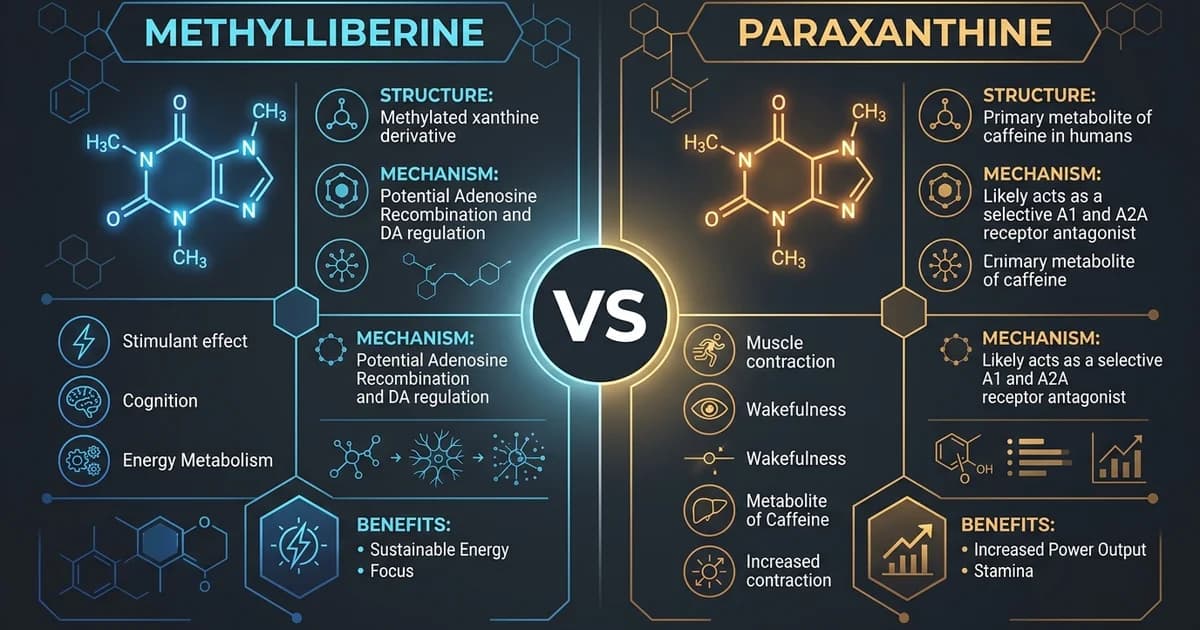
Roon belongs in the focus column, not the pump column. Its formula uses 80 mg caffeine, 60 mg L-theanine, 25 mg methylliberine (Dynamine), and 5 mg theacrine (TeaCrine), built for a 5 to 10 minute onset and a 6 to 8 hour window without the crash. More on that below.
If you want to go deeper on the energy side, our guides to caffeine that avoids the crash and focus without the jitters cover the supporting ingredients in detail.
The Edge Is in Your Head, Not Your Pump
The calm-focus stack does one thing very well. It sharpens how fast and how clearly you respond under pressure, while taking the shake out of caffeine. The athlete research backs the reaction-time and attention benefits, and it is equally honest that the effect is cognitive, not muscular.
So stop chasing bigger stimulant doses. Pair caffeine with L-theanine, dose it sensibly, and time it to your warm-up. The win is a steadier, faster brain on the field, the platform, or the screen.
Frequently Asked Questions
Is L-theanine good as a pre-workout?
Yes, when your sport rewards focus and reaction time. L-theanine paired with caffeine supports calm alertness and faster responses, which helps in precision and decision-heavy training. It will not boost strength or endurance on its own, so think of it as a mental-performance layer that sits alongside your usual pre-workout, not a replacement for one.
What is the best ratio of L-theanine to caffeine?
The most cited ratio is 2:1 theanine to caffeine, which leans toward calm. Athletes often prefer a tighter balance closer to 1:1 to keep caffeine's drive while smoothing the edge. A practical example is 60 mg L-theanine with 80 mg caffeine. Start moderate, see how your hands and heart rate feel, then adjust.
Will L-theanine reduce caffeine's energy boost?
No. L-theanine takes the jittery, anxious edge off caffeine without canceling the alertness. Research on the combination shows improved attention and reaction time compared to caffeine alone, which means you keep the energy and lose the tension. That is the whole point of pairing them rather than dosing caffeine by itself.
How long before a workout should I take it?
Capsules and powders need 30 to 60 minutes since they digest first. Sublingual pouches absorb under the tongue and can start working in 5 to 10 minutes. Match the timing to your warm-up. If you ramp up quickly, a faster-onset format gives you a more usable window of focus.
Does the caffeine and L-theanine stack help with reaction time?
The evidence points to yes. A 2025 trial found the combination improved reaction time by about 40 milliseconds and boosted accuracy versus placebo. A separate study in elite curlers found the pair produced the best shooting and cognitive scores. For sports that hinge on split-second timing, that is a meaningful edge.
Can I just drink tea instead?
Tea contains both compounds, which is why the combination was discovered there. But a cup gives you roughly 25 to 50 mg caffeine and a small amount of theanine, well below the doses used in performance studies. To hit research-backed amounts, you would need several cups, which is impractical before training. A measured supplement is more precise.
Is it safe to use before every workout?
For most healthy adults, moderate caffeine with L-theanine is well tolerated. Stay within sensible caffeine limits, account for coffee and tea you already drink, and avoid late-day dosing that disrupts sleep. If you have a heart condition, are pregnant, or take medication, check with a doctor first. This is general information, not medical advice.
The Focus Layer Most Pre-Workouts Skip
Standard pre-workouts are built for the pump. They flood you with stimulants and blood-flow ingredients, then leave your reaction time to chance. If your sport lives in your head, that is the wrong target.
Roon is built for the calm-focus side of the equation. Each sublingual pouch carries 80 mg caffeine, 60 mg L-theanine, 25 mg methylliberine (Dynamine), and 5 mg theacrine (TeaCrine), absorbed under the tongue for a 5 to 10 minute onset and a 6 to 8 hour window with no jitters, no crash, and no tolerance buildup. It is nicotine-free and has none of the tingle or burn of a heavy stim powder.
Be clear on what it is. Roon is a mental-drive and reaction-time layer, not a full pre-workout and not a strength or pump product. Use it for the cognitive edge, keep your training and nutrition doing the heavy lifting, and try Roon on the days your focus needs to fire faster than the competition.
Written by Roon Team