How to Stop Tilting: Staying Calm and Locked In During Ranked Under Pressure
Roon Team
How to Stop Tilting: Staying Calm and Locked In During Ranked Under Pressure
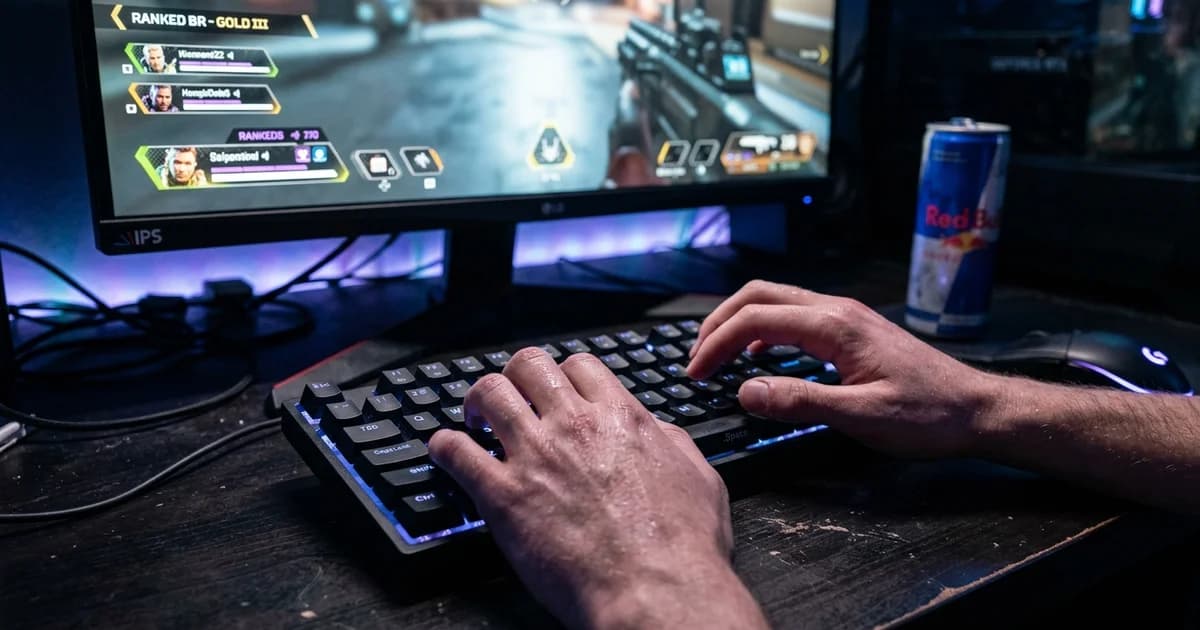
You int a 1v1 you should have won. The next teamfight, you facecheck a bush you already know is warded. Your aim feels heavier, your decisions feel angrier, and somehow your MMR is now the enemy's problem. That spiral has a name, and learning how to stop tilting is the difference between climbing and feeding your rank back to the void.
Tilt is not a character flaw. It is a measurable shift in how your brain and body respond to pressure, and it follows rules you can actually work with.
This guide breaks down what tilt is, why it wrecks your gameplay, and seven tactics that hold up when the lobby is on fire.
Key Takeaways
- Tilt is an emotional state of frustration that degrades decision-making, not just "being mad." Researchers now study it as poor emotional control linked directly to worse performance.
- Competitive gaming spikes your heart rate and blood pressure like real stress does, even though you are sitting still.
- The fastest fixes are behavioral: shorten your session, reset between games, and stop chasing losses.
- A calm nervous system reacts faster and reads the map better. Steady focus beats hype every time.
Tilt Meaning in Gaming: What's Actually Happening
Tilt is a state of emotional frustration where your decision-making collapses while your confidence stays high. The term migrated from poker, where a "tilted" player keeps betting badly because they are chasing a loss instead of reading the table.
The tilt meaning in gaming is nearly identical. You stop playing the game in front of you and start playing the game you wish you had. You force fights to "prove" you are good. You blame the jungler, the netcode, the matchmaker, anyone but the next decision.
For a long time this was gamer folklore. Now it has a research base. A 2025 paper in Cyberpsychology, Behavior, and Social Networking examined tilt and the coping strategies players use, treating it as a real problem of emotion regulation rather than a meme. Earlier work from the same group framed tilt as poor emotional control tied to worse in-game performance.
So when someone asks about tilt meaning gaming in a Discord thread, the honest answer is this: it is your stress response hijacking your strategy.
Why Ranked Pressure Hits Harder Than Casual
Your body does not know that ranked is "just a game." It reacts to competition the way it reacts to threat.
Researchers measured this directly. A 2024 study titled "Heartbeats and high scores" put FIFA and League of Legends players through competitive matches and tracked their physiology. Despite sitting in a chair, players showed significant increases in mean heart rate and peripheral systolic and diastolic blood pressure during competitive matches.
The researchers concluded that despite the sedentary nature of esports, the psychophysical demands during competition trigger a cardiovascular and autonomic stress response.
That matters for your rank. Elevated heart rate and a flooded stress system narrow your attention, shorten your patience, and make you reach for the high-risk play. The pressure is real, even if the danger is not.
This is why how to not tilt in ranked is mostly a question of managing your nervous system, not your keybinds.
How to Stop Tilting: 7 Tactics That Actually Work
Here is the part you came for. These are ordered roughly from "do this immediately" to "build this into your routine." None of them require you to be a monk.
1. Set a Loss Limit Before You Queue
Decide your stop number before the session, not during it. Two losses in a row, you stand up. Three, you are done for the day.
The reason this works: once you are tilted, your judgment about whether you are tilted is the first thing to go. A rule you set while calm protects you from the version of you that is on fire. You will hate the rule in the moment. Obey it anyway.
2. Use a Hard Reset Between Games
The 90 seconds between matches is where ranked is won or lost. Most players spend it stewing over the last game. Do the opposite.
Stand up. Look at something more than 20 feet away to relax your eyes. Take five slow breaths with a long exhale, which nudges your nervous system out of fight-or-flight. The goal is to walk into the next game as a new player, not as the loser of the last one.
3. Audit Your Tilt Triggers
You do not tilt at random. There is a pattern. Maybe it is a specific champion, a duo flaming in chat, or queuing after a bad day at work.
For one week, note the exact moment your mood flips. Most players find two or three repeat offenders. Once you can name the trigger, you can build a rule around it. Tilted by chat? Mute all at champ select, every game, no exceptions.
4. Reframe the Loss as Data
A loss is information, not a verdict on your worth. The climbing player asks one question after a defeat: "What was my single worst decision, and what would I do instead?"
This pulls you out of the emotional loop and into a problem-solving one. It also kills the urge to instantly requeue out of spite, which is how three-loss streaks become eight-loss streaks.
5. Fix Your Body Before Your Build
Hydration, food, and sleep do more for your win rate than any new rune page. A dehydrated, under-slept brain tilts faster and recovers slower. This is not motivational fluff. It is basic physiology.
If your hands get cold and sweaty under pressure and your aim drifts, that is your stress response showing up in your fingertips. Calm body, steady crosshair.
6. Slow the Game Down Inside Your Head
Tilt makes everything feel fast and urgent. Skilled players feel the opposite under pressure: the game seems to slow because they are reading it instead of reacting to it.
You build this by narrating your decisions. "I'm low, I back now, I don't greed this wave." Talking through the next correct play, even silently, keeps your prefrontal cortex in charge instead of your panic.
7. Manage Your Inputs, Including Caffeine
What you put in your body before a session shapes how you handle pressure. A double energy drink might feel great in the first game and turn into shaky hands and a racing heart by game four.
The smarter approach is steady, clean focus that lasts the whole session without a spike-and-crash pattern. More on that below, because the ingredient pairing here is well studied.
The Calm-Focus Problem: Why Energy Drinks Make Tilt Worse
Most gaming "energy" products solve the wrong problem. They push raw stimulation, which adds to the same stress response that is already driving your tilt.
High-dose caffeine alone raises heart rate and can amplify the jittery, anxious feeling that turns frustration into full tilt. You get more alert and more on edge at the same time. That is the worst combination for a clutch 1v1.
The fix is pairing caffeine with L-theanine, an amino acid in tea. The research on this combo is consistent. A foundational study found that 100 mg of l-theanine combined with 50 mg of caffeine improved accuracy on a visuo-spatial attention task and decreased background alpha activity compared with placebo. Reviews of the pairing report better speed and accuracy on sustained-attention tasks.
L-theanine also dampens the stress side of the equation. Research summarized by Life Extension describes how L-theanine produced greater alpha wave activity compared to placebo, showing a higher level of alert relaxation without drowsiness, along with greater decreases in salivary cortisol.
Translation for ranked: caffeine for reaction time, L-theanine to keep the stress response from tipping into tilt.
Comparison: Common Anti-Tilt Focus Options
If you are choosing a focus aid for long ranked sessions, here is how the common options stack up on what actually matters: steady focus, a calm nervous system, and no mid-session crash.
| Option | Onset | Duration | Crash / Jitter Risk | Calm-Focus Profile |
|---|---|---|---|---|
| Energy drinks (high caffeine, high sugar) | 15-45 min | 2-4 hrs | High | Poor. Spikes alertness and stress together |
| Coffee (black) | 20-40 min | 3-5 hrs | Moderate | Moderate. Alert but no calming agent |
| L-theanine alone | 30-60 min | 2-3 hrs | Very low | Calm but minimal alertness boost |
| Pre-workout | 20-40 min | 3-6 hrs | High | Poor. Built for the gym, not focus |
| Roon sublingual pouch (caffeine + L-theanine + Dynamine + TeaCrine) | 5-10 min | 6-8 hrs | Low | Strong. Pairs stimulant with calming agent, no crash |
The pattern is clear. The options built for raw energy carry the highest crash and jitter risk, which is exactly what you do not want when a single misclick decides your promos.
The Bottom Line on Staying Locked In
Tilt is not bad luck or a soft mindset. It is a stress response that quietly rewires your decisions while convincing you that you are playing fine. The players who climb are not the ones who never feel it. They are the ones who built guardrails before they sat down: a loss limit, a reset routine, a muted chat, and a body that is fed, hydrated, and steady.
Master those, and ranked stops feeling like a coin flip. The pressure is still there. You just stop letting it play your account for you.
Frequently Asked Questions
What does tilt mean in gaming?
Tilt is a state of emotional frustration where your decision-making degrades while your confidence stays high. It comes from poker and describes a player who keeps making bad plays because they are chasing a loss. In gaming, a 2025 study in Cyberpsychology, Behavior, and Social Networking treats it as a real problem of emotion regulation linked to worse in-game performance, not just casual frustration.
Is tilting a real thing or just an excuse?
It is real and measurable. Research shows competitive gaming triggers a genuine stress response, including higher heart rate and blood pressure, even though you are sitting still. That stress narrows your attention and pushes you toward risky decisions. Tilt is your physiology affecting your strategy, which is very different from using it as an excuse to stop trying.
How do I stop tilting in the middle of a ranked session?
Set a loss limit before you queue and honor it. Between games, stand up, look at something far away, and take five slow breaths with long exhales to calm your nervous system. Mute any chat that triggers you. The key is using rules you set while calm, because your judgment about whether you are tilted is the first thing to break down once you are.
Does caffeine make tilt worse?
High-dose caffeine on its own can. It raises heart rate and can amplify the jittery, anxious feeling that turns frustration into full tilt. The research-backed fix is pairing caffeine with L-theanine, which supports alert relaxation and helps blunt the stress response. That combination keeps you sharp without stacking extra edge onto an already stressed system.
How long does it take to recover from being tilted?
It varies, but a full reset usually takes longer than the 90 seconds between games, which is why a real break matters. Stepping away for 10 to 20 minutes lets your heart rate and stress hormones settle. If you have lost two or three in a row, the fastest recovery is often ending the session entirely and returning the next day with a clear head.
Can better focus actually improve my rank?
Yes, indirectly but reliably. Steady focus keeps you reading the game instead of reacting in panic, and a calm nervous system supports faster, cleaner decisions under pressure. You will not climb on focus alone, since mechanics and game knowledge still matter most. But removing tilt and fatigue from the equation lets the skill you already have actually show up on the scoreboard.
Steady Focus, Not More Hype: What Roon Is For
Everything above points to one truth: the enemy of ranked is not low energy, it is a stress response that tips into tilt. That is the exact problem Roon was built around.
Roon is a zero-nicotine sublingual pouch with a four-ingredient stack: 80 mg caffeine, 60 mg L-theanine, 25 mg methylliberine (Dynamine), and 5 mg theacrine (TeaCrine). The caffeine and L-theanine pairing is the same calm-focus combination the research above describes, designed for sharp reaction time without the jittery, sweaty-hands feeling that high-dose energy drinks bring. It kicks in within 5 to 10 minutes and holds for 6 to 8 hours with no crash and no tolerance buildup, which suits a long climb better than a spike-and-fade energy drink.
To be clear, Roon is not a substitute for sleep, a loss limit, or muting a toxic lobby. Those habits do the heavy lifting. Roon just keeps your focus steady and your nervous system calm so the good habits have something to work with. Try Roon for your next ranked session and see how the back half of your queue holds up.
Written by Roon Team