What to Take Before a Deep Work Session: A Pre-Focus Protocol That Isn't Just Coffee
Roon Team

What to Take Before a Deep Work Session: A Pre-Focus Protocol That Isn't Just Coffee
Coffee is a blunt instrument. It wakes you up, then it spikes you, then it drops you, and somewhere in the middle you actually got some work done. If you want the best supplement for focus before a two-hour stretch of real concentration, you need something more precise than a second cup.
Deep work has a specific physiological demand. You need fast onset, you need it to last, and you need it to not betray you with an afternoon crash. Most people reach for caffeine alone and wonder why their focus feels jagged.
This is a pre-focus protocol built on what the research actually supports. Not a cabinet full of pills. A short, deliberate stack you take before you sit down.
Key Takeaways
- Caffeine alone produces jitter and a predictable crash. Pairing it with L-theanine smooths both out.
- The most-studied focus stack combines caffeine, L-theanine, and purine alkaloids like methylliberine and theacrine.
- Timing matters as much as ingredients. Onset speed determines whether you start your session sharp or wait 40 minutes for a pill to kick in.
- A good pre-focus protocol supports concentration. It does not replace sleep, and it cannot fix a broken work system.
Why Coffee Alone Falls Short for Deep Work
Caffeine works by blocking adenosine, the molecule that builds up through the day and makes you feel tired. The problem is what happens when it wears off. Caffeine has a half-life of about five hours in the average adult, and when it clears, the backed-up adenosine floods your receptors at once, which is the crash you feel around 3 p.m.
There is a second problem. Caffeine alone raises alertness, but it also raises the background noise. Heart rate ticks up, hands get a little shaky, and your attention scatters toward every notification.
Deep work needs the opposite of scatter. It needs sustained, narrow attention, and that is a different physiological state than simply being awake.
The Pre-Focus Stack: What Actually Works
The best supplement for focus before deep work is not a single ingredient. It is a small combination that handles alertness, calm, and duration at the same time. Here are the four that hold up under research.
Caffeine + L-Theanine: The Foundation
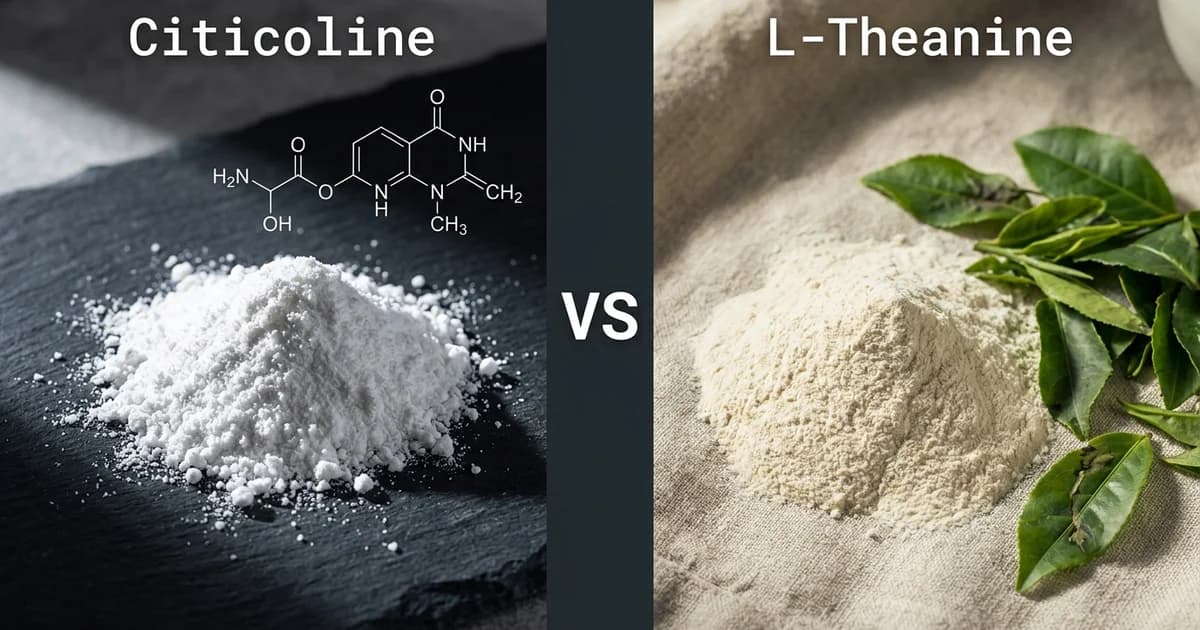
This is the most reliable pairing in the focus literature, and it is the base of almost every serious pre-focus stack. L-theanine is an amino acid found in tea that increases alpha brain wave activity, a state of calm alertness without sedation.
Paired with caffeine, it takes the edge off. A frequently cited study found that 97 mg of L-theanine with 40 mg of caffeine helped focus attention during a demanding cognitive task better than either alone. Later work in the British Journal of Nutrition suggested the combination works by suppressing mind wandering and the drift of attention toward distractions.
That last part matters for deep work specifically. The job of a focus stack is not just energy. It is keeping you on the page.
Methylliberine and Theacrine: The Duration Layer
Caffeine fades. Two lesser-known purine alkaloids, methylliberine (sold as Dynamine) and theacrine (sold as TeaCrine), extend the useful window and soften the comedown.
A randomized crossover study in male egamers tested caffeine against a combination of caffeine, Dynamine, and TeaCrine. The combination improved cognitive performance and reaction time without interfering with mood. Translation: it added sharpness without adding anxiety.
Theacrine has one more useful trait. A 2016 safety study following daily TeaCrine use for eight weeks reported that, unlike caffeine, it did not appear to produce tolerance. You do not need to keep escalating the dose to get the same effect.
What About "Focus Vitamins"?
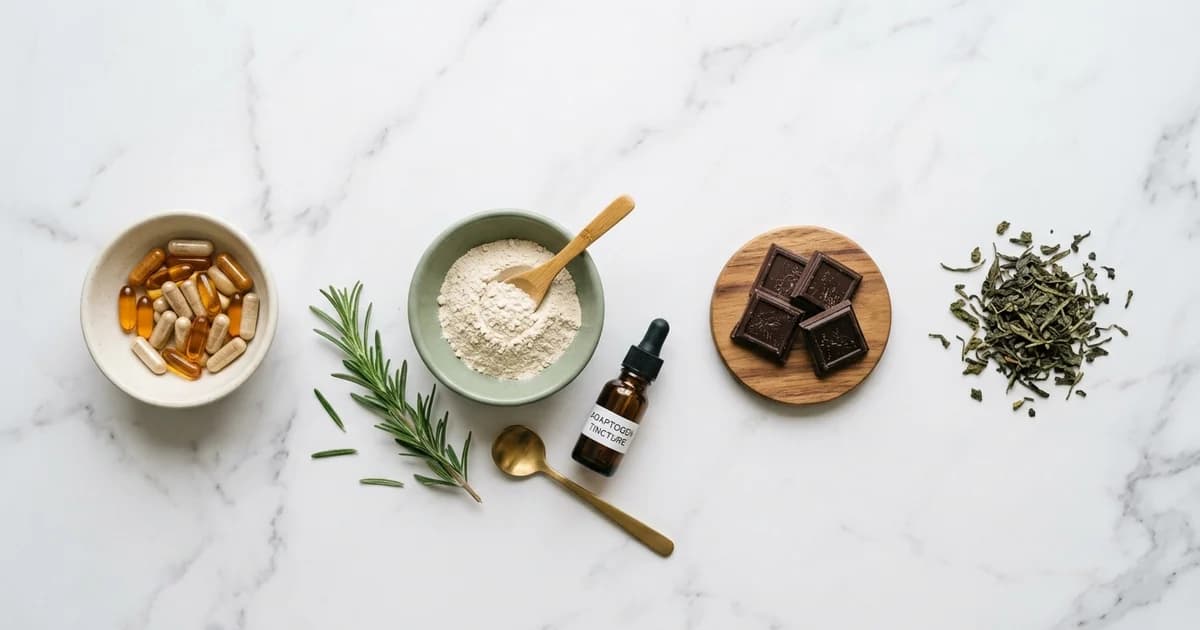
If you searched for the best vitamins for focus, here is the honest answer: vitamins are foundational, not acute. B vitamins, vitamin D, omega-3s, and magnesium support long-term brain function, and a deficiency will absolutely drag your concentration down.
But you do not feel a B12 capsule kick in 10 minutes before a writing sprint. Vitamins fix the floor. They do not give you the on-demand lift that supplements for concentration are designed for.
So run both tracks. Cover your nutritional bases daily, and use a targeted stack right before the work that demands it.
Comparing Your Pre-Focus Options
Here is how the common choices stack up for someone deciding what to take before deep work.
| Option | Onset | Duration | Crash Risk | Best For |
|---|---|---|---|---|
| Black coffee | 20–40 min | 3–5 hrs | High | A quick jolt, not sustained focus |
| Energy drink | 15–30 min | 2–4 hrs | High (sugar + caffeine) | Convenience, poor for deep work |
| Caffeine + L-theanine capsule | 30–60 min | 4–5 hrs | Low | Calm focus on a budget |
| Standalone L-theanine | 30–45 min | 2–3 hrs | None | Calming without stimulation |
| Roon sublingual pouch | 5–10 min | 6–8 hrs | None designed in | Fast, sustained deep work |
The pattern is clear. Pills and powders work, but they make you wait, and most of them either crash you or run out before a long session does.
How to Time Your Pre-Focus Protocol
Timing is the part most people get wrong. The goal is to be sharpest when you sit down, not 40 minutes into the session.
- Set your start time. Decide when the deep work block begins.
- Account for onset. Swallowed pills take 30 to 60 minutes. Sublingual products absorb in roughly 5 to 10 minutes because the ingredients pass through the tissue under your tongue straight into the bloodstream, skipping digestion.
- Match duration to the task. A 90-minute sprint and a four-hour project need different windows. Caffeine alone fades fast. A caffeine, L-theanine, and purine-alkaloid stack carries longer.
- Protect the back end. Stop caffeine intake roughly six to eight hours before bed so it does not wreck your sleep, which would sabotage tomorrow's focus.
The cost of getting this wrong is real. Research from the University of California, Irvine found that workers need an average of 23 minutes and 15 seconds to fully refocus after an interruption. A pre-focus protocol that holds steady for hours is partly insurance against that reset tax.
The Hard Limit: Supplements Don't Replace the Basics
No stack beats sleep. If you slept five hours, the best you can do is partially patch the gap. L-theanine and caffeine helped sleep-deprived adults respond more accurately and quickly in one study, but partial rescue is not the same as rest.
The same goes for your systems. A focus supplement cannot close 14 browser tabs for you or silence your phone. Attention spans are already strained, and Microsoft's 2025 Work Trend Index reported that 80% of workers feel they lack the time or energy to do their jobs effectively.
A supplement helps you spend the energy you have more cleanly. It is one input, not the whole equation.
Conclusion
The best pre-focus protocol is simple. Skip the second coffee, and use a small, evidence-backed stack instead: caffeine for alertness, L-theanine to keep it calm and pointed, and purine alkaloids like methylliberine and theacrine to stretch the window and soften the landing.
Time it to your start, match the duration to the task, and protect your sleep on the back end. Then handle the unglamorous part. Get your rest, cover your daily nutrition, and build a workspace that does not fight you. The chemistry sharpens good habits. It does not invent them.
Frequently Asked Questions
What is the best supplement for focus before deep work?
The most reliable choice combines caffeine with L-theanine, often with methylliberine and theacrine added for duration. Caffeine drives alertness, L-theanine keeps it calm and focused, and the purine alkaloids extend the effect while reducing the crash. This combination is better supported by research for sustained concentration than caffeine alone, which tends to spike and then drop you within a few hours.
How is L-theanine different from caffeine?
Caffeine is a stimulant that blocks adenosine to make you feel alert. L-theanine is a calming amino acid from tea that raises alpha brain waves, producing relaxed focus without drowsiness. On their own they pull in different directions. Together they balance, giving you the alertness of caffeine without as much of the jitter, restlessness, or scattered attention that caffeine alone often causes.
Do focus vitamins actually work?
Vitamins support concentration over the long term, not in the moment. B vitamins, vitamin D, omega-3s, and magnesium are foundational, and a deficiency can clearly hurt your focus. But they do not produce a noticeable lift in the minutes before a work session. For acute, on-demand focus, a targeted stack works faster. For baseline brain health, cover your daily nutrition consistently.
Will I build a tolerance to a focus stack?
Caffeine builds tolerance, so the same dose does less over time. Theacrine appears different. A 2016 safety study following eight weeks of daily TeaCrine use reported no tolerance buildup, unlike caffeine. Combining caffeine with theacrine and methylliberine may help maintain the effect at a steady dose. Still, cycling your caffeine intake and taking occasional breaks remains smart practice.
How long before deep work should I take a supplement?
It depends on onset speed. Swallowed capsules and coffee take 30 to 60 minutes to peak, so plan ahead. Sublingual products absorb in about 5 to 10 minutes because they enter the bloodstream through tissue under the tongue. Match the timing to your start so you are sharpest when you begin, not still waiting for it to work partway into the session.
Can a focus supplement replace sleep?
No. Caffeine and L-theanine can partially offset the focus loss from a bad night, and research backs that for sleep-deprived adults, but partial rescue is not real rest. Chronic short sleep degrades memory, attention, and mood in ways no supplement fixes. Treat a focus stack as a tool for spending your available energy well, not as a substitute for the rest your brain actually needs.
Where the Chemistry Meets the Moment You Sit Down
Everything above points to the same gap. The science of focus is settled, but the delivery is usually clumsy. You wait 40 minutes for a pill, you fight a crash before the work is done, or you escalate your caffeine until it stops working.
Roon was built for that gap. It is a zero-nicotine sublingual pouch with the four ingredients the research keeps pointing back to: 80 mg caffeine, 60 mg L-theanine, 25 mg methylliberine (Dynamine), and 5 mg theacrine (TeaCrine). It absorbs in 5 to 10 minutes and is designed for 6 to 8 hours of steady focus with no jitters, no crash, and no tolerance buildup.
To be clear about what it is and isn't: Roon supports focus on demand. It is not a substitute for sleep, and it will not fix a broken work system. Get those right, then use Roon for the moment you actually sit down to do the hard thing.
Written by Roon Team