Caffeine and Cortisol: Does Coffee Spike Your Stress Hormone?
Roon Team
Caffeine and Cortisol: Does Coffee Spike Your Stress Hormone?
Your morning coffee does raise cortisol. That part is real, and the studies are clear. The question worth asking is whether that bump actually matters for a healthy person, or whether the internet has turned a small, well-understood physiological response into a problem it was never meant to be.
The short answer on caffeine and cortisol: caffeine reliably increases cortisol secretion, but the effect shrinks the more regularly you consume it, and the dose you take matters more than the timing. Most of the panic online ignores both facts.
So let's look at what the research actually says, then talk about what you should do with your cup.
Key Takeaways
- Caffeine raises cortisol, your primary stress hormone, in a dose-dependent way.
- Habitual coffee drinkers develop partial tolerance, so the cortisol response blunts over time.
- An overnight gap is often enough to partly reset that tolerance, which is why the first coffee of the day hits hardest.
- Dose drives the response. Lower, moderate amounts of caffeine produce a smaller spike than 300 to 600 mg loads.
- L-theanine, the amino acid in green tea, can soften the stress edge that caffeine creates.
What Cortisol Actually Does
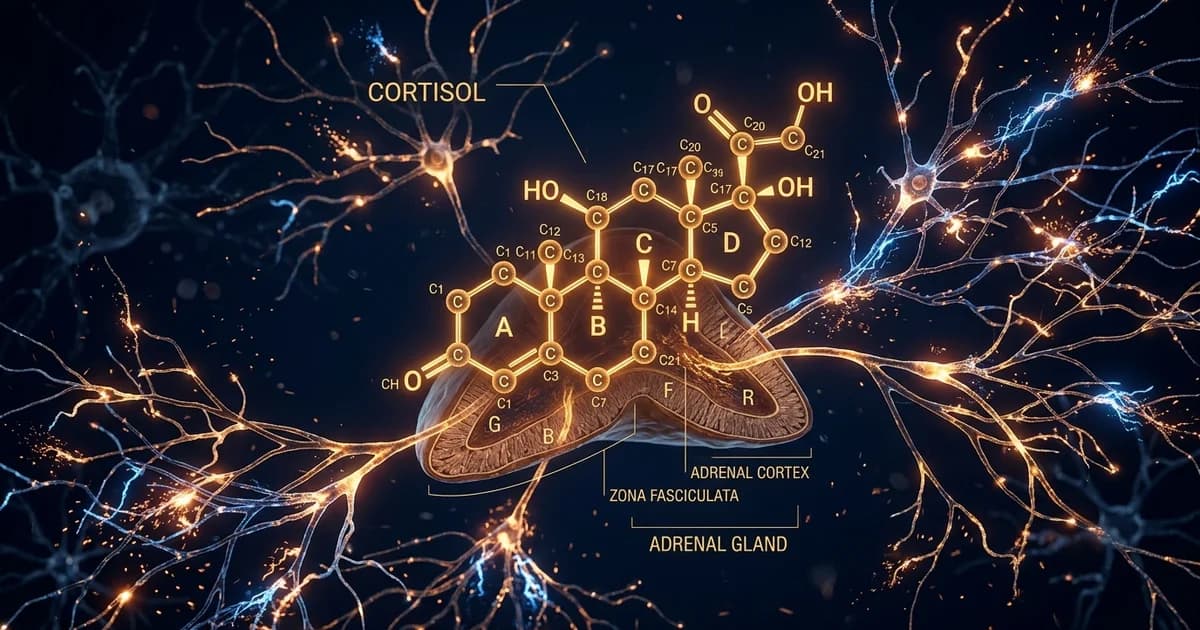
Cortisol is not the villain it gets cast as. It is a steroid hormone your adrenal glands release on a daily rhythm, and you need it to wake up, regulate blood sugar, and respond to stress.
Levels follow a predictable curve. They surge in the 30 to 45 minutes after you wake, a pattern researchers call the cortisol awakening response. The cortisol awakening response (CAR) is an increase of about 50% in cortisol levels occurring 30–45 minutes after waking in the morning in some people.
After that morning peak, cortisol tapers across the day and bottoms out around midnight. A short-lived rise from coffee is not the same thing as chronically raised cortisol, and conflating the two is where most of the fear comes from.
Does Caffeine Raise Cortisol? What the Studies Show
Yes, caffeine raises cortisol, and the best evidence comes from controlled trials rather than blog speculation. The question of does caffeine raise cortisol has a clear answer, with important caveats about dose and habit.
The cleanest data comes from William Lovallo's lab. In a double-blind crossover trial, caffeine increases cortisol secretion in people at rest or undergoing mental stress, and the researchers tested the cortisol response to caffeine challenge after controlled levels of caffeine intake.
Here is the setup. Men (N = 48) and women (N = 48) completed a double-blind, crossover trial conducted over 4 weeks, and on each week subjects abstained for 5 days from dietary caffeine and instead took capsules totaling 0 mg, 300 mg, and 600 mg/day in 3 divided doses.
The result confirms the coffee cortisol spike is real. After 5 days of caffeine abstinence, caffeine challenge doses caused a strong increase in cortisol across the day. In plain terms, a clean break from caffeine set up a sharp cortisol jump once it returned.
So the caffeine stress hormone link is not a myth. Your body reads caffeine partly as a mild stressor, and it answers with cortisol.
The Part the Headlines Skip: Caffeine Cortisol Tolerance
Your body adapts. This is the single most important fact about caffeine cortisol tolerance, and it is the piece that fearmongering articles almost always leave out.
When you drink coffee every day, the cortisol response to a given dose gets smaller. The Lovallo data showed the biggest cortisol jumps happened after a stretch of abstinence, not during steady daily intake. The body that is used to caffeine reacts less to it.
There is a mechanism behind this. It is likely that an overnight abstinence, as used in this study, is partially sufficient to overcome tolerance formation in the central nervous system adenosine receptor system.
That last point explains a lot. The reason your first cup of the day feels like the strongest is that the overnight gap partly resets your sensitivity. By your second or third cup, the cortisol effect has faded considerably.
When to Drink Coffee for the Cortisol Question
The popular advice says to delay your coffee 90 minutes after waking so you don't stack caffeine on top of your natural cortisol peak. It sounds smart. The evidence for it is thinner than the confidence behind it.
The logic is reasonable on paper. Your cortisol is already high right after waking, so adding caffeine could pile on. But the studies measuring when to drink coffee cortisol outcomes have not shown that this timing trick produces meaningful long-term benefits for healthy people.
A more useful framing: the dose and your tolerance level matter more than whether you wait until 9 a.m. If you drink coffee daily, your morning cortisol response is already blunted by habit.
If you want a practical rule, it is this. Pick a moderate dose, keep it consistent, and don't load 400 mg into a single sitting after a week off. Sudden large doses after abstinence are what produce the sharpest spikes.
Dose Is the Real Lever
A 600 mg/day challenge is a different animal than a single moderate cup. The high arm of the Lovallo trial split 600 mg/day into three 200 mg doses, which is far more than most people drink at once.
For context, a standard cup of brewed coffee holds roughly 80 to 100 mg of caffeine. A 200 mg dose is closer to a large energy drink or a double espresso, and the cortisol response scales with the load.
This is why blanket statements about coffee and stress fall apart. The person slamming four large coffees by noon is having a very different hormonal experience than the person sipping one moderate cup. If you care about your cortisol response, the amount you take is the dial worth turning first.
How L-Theanine Changes the Equation
Caffeine rarely travels alone in nature. In tea, it comes paired with L-theanine, an amino acid that takes the edge off the stimulant response, and the pairing has real data behind it.
In a randomized, double-blind, placebo-controlled crossover trial, researchers tested an L-theanine-based drink against a cognitive stressor. The primary outcome measure, subjective stress response to a cognitive stressor, was found to be markedly reduced one hour after administration of the active nutrient drink containing 200 mg of l-theanine.
The mechanism is calming without sedation. L-theanine promotes alpha brain wave activity, the state linked to relaxed alertness, which is why people who combine it with caffeine report focus without the wired, anxious feeling.
It is worth being honest here. A separate four-week L-theanine trial had no marked effect on cortisol or immunoglobulin A levels in the saliva or serum, which was inconsistent with previous studies reporting effects on salivary cortisol. The cortisol data is mixed, but the consistent finding is that L-theanine softens the subjective stress and jitter that caffeine alone can cause.
Caffeine Source and the Cortisol Response: A Quick Comparison
Not all caffeine delivery is equal. Here is how common sources stack up on dose, the likely cortisol edge, and the crash that follows.
| Source | Typical caffeine | Paired L-theanine? | Cortisol edge | Crash risk |
|---|---|---|---|---|
| Drip coffee (1 cup) | 80–100 mg | No | Moderate | Moderate |
| Large energy drink | 150–300 mg | No | Higher | High |
| Pre-workout scoop | 150–350 mg | Rarely | Higher | High |
| Green tea (1 cup) | 30–50 mg | Yes (naturally) | Low | Low |
| Roon sublingual pouch | 80 mg | Yes (60 mg) | Lower-moderate | Low |
The pattern is straightforward. Lower doses paired with L-theanine sit at the gentler end of the cortisol and crash spectrum, while large unbuffered loads sit at the rough end.
The Honest Bottom Line on Coffee and Stress
Caffeine raises cortisol. That is settled. What is not settled is the idea that your daily coffee is quietly wrecking your stress hormones.
For a healthy adult drinking moderate amounts, tolerance blunts the response, dose keeps it in check, and an overnight reset explains why the first cup hits hardest. The headlines built a crisis out of a normal, short-lived physiological bump.
If you are anxious, sleeping poorly, or chasing a third or fourth large coffee to function, the cortisol conversation matters more for you. For most people, the better move is a moderate dose, a consistent habit, and ingredients that keep the edge off rather than a stopwatch timing your first sip.
Frequently Asked Questions
Does coffee raise cortisol every time you drink it?
Not equally. Caffeine raises cortisol most strongly after a period of abstinence, which is why your first cup of the day produces the biggest response. With daily intake, your body develops partial tolerance and the cortisol bump shrinks. The Lovallo research found the largest spikes followed five days of caffeine abstinence, not steady daily use, so a habitual drinker's response is meaningfully smaller than the worst-case headlines suggest.
How much caffeine does it take to spike cortisol?
Dose drives the response. The controlled trials showing strong cortisol increases used doses up to 200 mg taken three times a day, which is far above a single moderate cup of coffee at roughly 80 to 100 mg. Smaller doses produce smaller cortisol responses. If you want to limit the spike, the amount you consume in one sitting is the most direct lever you can adjust.
Should I wait 90 minutes after waking to drink coffee?
The 90-minute delay is popular advice, but the evidence that it produces lasting benefits for healthy people is weak. The reasoning is that caffeine stacks onto your natural morning cortisol peak. In practice, your dose and tolerance level matter more than the exact timing. If you drink coffee daily, habit already blunts your morning cortisol response, so the timing trick offers little.
Does L-theanine lower cortisol?
The cortisol data is mixed. Some trials show L-theanine reduces salivary cortisol after a stressor, while others found no marked change over several weeks. What is consistent is that L-theanine reduces the subjective feeling of stress and softens the jittery edge caffeine can cause. It supports a calmer, more focused state rather than acting as a reliable cortisol-lowering agent.
Is the caffeine and cortisol link a reason to quit coffee?
For most healthy adults, no. The cortisol rise from moderate coffee is short-lived and blunts with regular use. The concern grows if you drink very large amounts, struggle with anxiety, or sleep poorly. In those cases, reducing your dose or pairing caffeine with L-theanine is more practical than quitting outright.
Does decaf affect cortisol?
Decaf contains only trace caffeine, so it produces little to no caffeine-driven cortisol response. If you enjoy the ritual of coffee but want to limit the caffeine stress hormone effect later in the day, decaf is a reasonable swap. The cortisol concern with coffee is tied to the caffeine content, not the coffee itself.
When the Cortisol Worry Outsizes the Dose
This article makes one argument: for a healthy person drinking moderate amounts, the cortisol response to caffeine is real but small, blunted by tolerance, and driven mostly by dose. The fix is rarely a stopwatch. It is a sensible amount of caffeine, ideally paired with something that smooths the stress edge.
That is the thinking behind Roon. Each sublingual pouch delivers a moderate 80 mg of caffeine alongside 60 mg of L-theanine, plus 25 mg of methylliberine (Dynamine) and 5 mg of theacrine (TeaCrine). The L-theanine is there to take the edge off the stimulant response, which is the same pairing that makes tea feel calmer than coffee.
To be clear, Roon does not lower cortisol, and it is not a fix for poor sleep or chronic stress. It is a moderate, buffered dose built for 6 to 8 hours of focus without the jitters or crash that large unbuffered caffeine loads bring. If the cortisol question has you rethinking your fourth coffee, that is the more useful place to start. Try Roon when you want steady focus without the rough edge.
Written by Roon Team