Brain Fog Meme: Why Millions Laugh at the Thing That's Wrecking Their Focus
Roon Team
Brain Fog Meme: Why Millions Laugh at the Thing That's Wrecking Their Focus
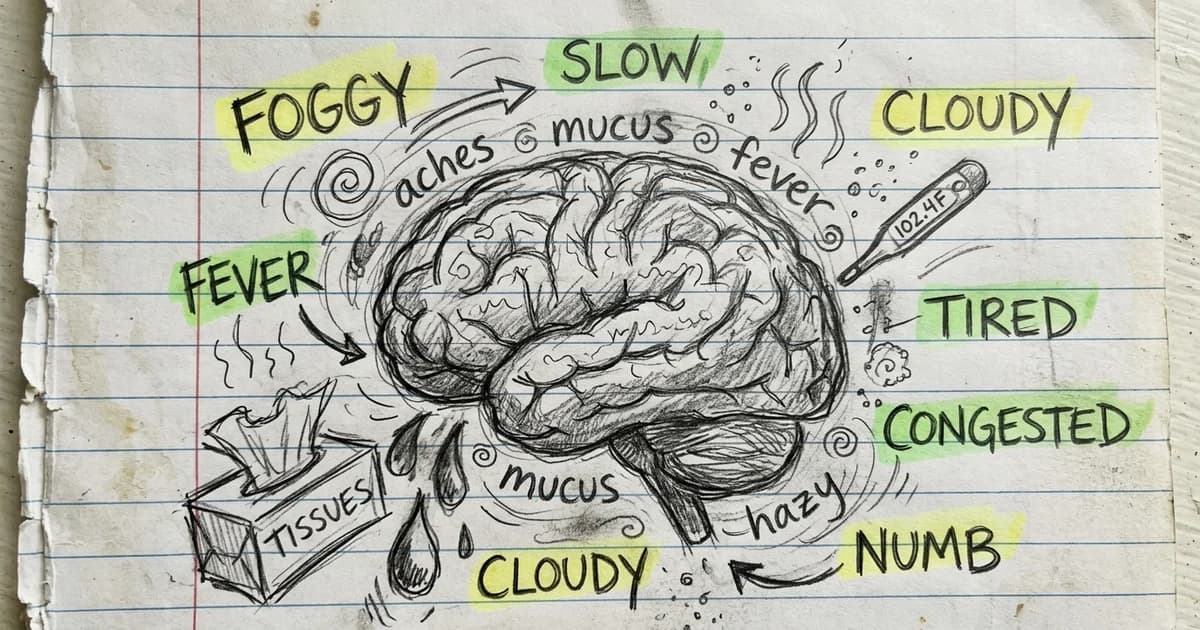
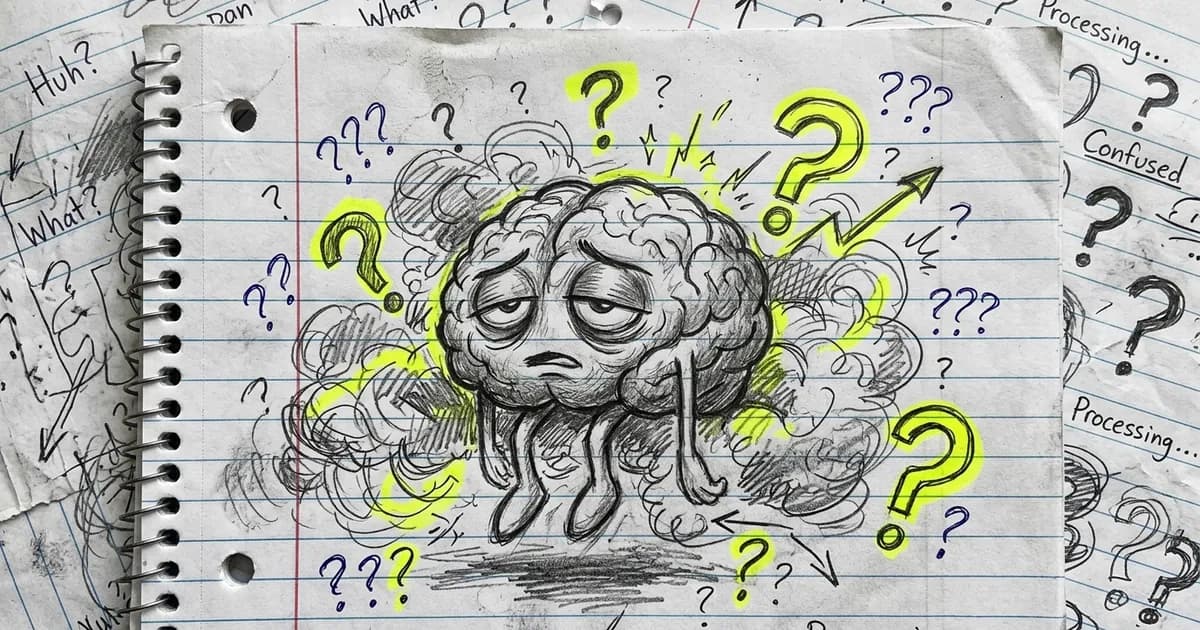
You've seen it. The meme where someone walks into a room and immediately forgets why. The one where a person stares at their screen for ten minutes, reads nothing, and calls it "working." The brain fog meme has taken over every corner of the internet, from TikTok compilations to Pinterest boards to Reddit threads with thousands of upvotes. And the reason it resonates is simple: an alarming number of people actually live this way.
The joke lands because it's barely a joke. Brain fog, the colloquial term for that thick, sluggish feeling where your thoughts move like they're wading through wet cement, affects far more people than most realize, though telling brain fog from ordinary sleepiness is its own question. A 2024 study published in Frontiers in Human Neuroscience surveyed 25,796 participants and found that 28.2% reported experiencing brain fog. The most common associated symptom? Difficulty focusing or concentrating.
So yeah, the memes are funny. But the condition behind them is worth understanding.
Key Takeaways
- Brain fog memes are popular because they describe a real, widespread cognitive issue, not just laziness or a bad day.
- Nearly 1 in 3 people report experiencing brain fog, with difficulty concentrating as the top associated symptom.
- Common causes include sleep deprivation, chronic stress, poor nutrition, and post-viral inflammation.
- Targeted nutritional compounds like L-Theanine and caffeine can support focus and mental clarity.
Why the Brain Fog Meme Hits So Hard
Scroll through any brain fog meme collection on Pinterest or TikTok and you'll notice a pattern. The humor isn't absurdist. It's autobiographical. People share memes about putting their phone in the fridge, forgetting a word mid-sentence, or re-reading the same paragraph four times because their brain simply refused to process it.
The format works because each brain fog meme normalizes something that feels isolating. When you can't think straight and everyone around you seems fine, it's easy to assume you're broken. A meme that says "me trying to remember what I was doing three seconds ago" with a picture of a confused dog tells you: this happens to other people too.
Sites like The Mighty have curated entire galleries of brain fog memes specifically for people dealing with chronic illness. The comments on these posts read less like joke reactions and more like support groups. That tells you something about how deep this problem runs.
The Brain Fog Meme Categories You'll Recognize
These memes generally fall into a few recurring types:
- The Blank Stare: Someone sitting at a desk, eyes open, brain offline. Usually captioned with something like "me pretending to work while my brain loads at 2%."
- The Forgotten Task: Walking into a room with zero memory of why. A universal experience that somehow never stops being funny.
- The Word Search: Trying to recall a basic word and ending up describing the object instead. "You know, the thing... the cold box... the fridge."
- The Re-Read Loop: Reading the same sentence, email, or Slack message multiple times without absorbing a single word.
If you've ever tagged a friend in one of these, you already know: the brain fog meme is less comedy and more confession.
What Brain Fog Actually Is (And What It Isn't)
Brain fog isn't a medical diagnosis. It's a symptom cluster, a collection of cognitive complaints that tend to travel together. The most common descriptions include feeling "forgetful," "cloudy," and having "difficulty thinking," according to research published in PMC that examined how patients describe the experience. In that study, 91% of respondents described brain fog as "forgetful," and 88% reported "difficulty focusing."
It's not the same as being tired, though fatigue often accompanies it. And it's not a sign of low intelligence. Brain fog can hit anyone, from students pulling late nights to executives managing high-stress portfolios. The Frontiers study found that brain fog sufferers were spread across age groups, though they skewed slightly older (mean age 35.7 vs. 32.8 for non-sufferers) and were more likely to be female.
What brain fog is, at a neurological level, is your brain struggling to maintain efficient communication between neurons. Think of it like trying to run demanding software on a computer with too many background processes eating up the RAM.
The Real Causes Behind Every Brain Fog Meme
The memes are funny, but the concrete causes behind brain fog are worth knowing. Here's what's actually going on when your brain checks out.
Sleep Deprivation
This is the big one. A study indexed in PMC specifically examined the relationship between sleep deprivation, brain fog, and cognitive decline in young adults, linking chronic sleep deficiencies to "mental confusion, reduced cognitive performance, and early signs of cognitive decline." The Sleep Foundation reports that nearly 38% of employees experienced fatigue at work during a given two-week period.
You don't need to be pulling all-nighters. Consistently getting six hours when you need seven or eight creates a sleep debt that compounds. Your prefrontal cortex, the region responsible for focus, planning, and decision-making, takes the hardest hit.
Chronic Stress
Cortisol is useful in short bursts. It sharpens your attention when you need to react quickly. But chronic stress keeps cortisol elevated for weeks or months at a time, and that sustained exposure impairs working memory and executive function. Your brain literally downgrades its own processing power to conserve resources.
Post-Viral Inflammation
COVID brought brain fog into mainstream conversation. A 2024 study from researchers at University of Illinois Chicago identified a mechanism in which SARS-CoV-2 damages the brain's blood vessels, contributing to neurological problems. And a 2025 study covered by ScienceDaily discovered widespread increases in AMPA receptor density linked to cognitive impairment and inflammation in long COVID patients. These findings confirm that brain fog is a measurable, biological condition, not something people are imagining.
Poor Nutrition and Dehydration
Your brain consumes roughly 20% of your daily caloric intake. Skimp on quality fuel and it notices. Dehydration, even mild, impairs short-term memory and attention. Diets high in processed sugar cause blood glucose spikes and crashes that mimic the exact symptoms people describe in every brain fog meme: that sudden mental wall where everything just... stops.
Why "Just Drink More Coffee" Doesn't Fix Brain Fog
This is the part where most people go wrong. You feel foggy, so you reach for a large coffee. Maybe two. The caffeine hits, you feel sharper for an hour, and then the crash arrives harder than the fog you started with. So you drink more. The cycle continues.
The problem isn't caffeine itself. Caffeine is one of the most well-studied cognitive enhancers on the planet. The problem is how most people consume it: too much, too fast, with nothing to smooth out the pharmacological rough edges.
A study published in Nutritional Neuroscience found that 40mg of caffeine combined with 97mg of L-Theanine improved focus during demanding cognitive tasks compared to placebo. The L-Theanine, an amino acid found naturally in tea, promotes alpha brain wave activity, which is associated with calm, alert focus. Caffeine alone gives you a spike. The combination gives you a sustained, clean signal.
This is why the "just drink coffee" approach fails. Caffeine without L-Theanine is a blunt instrument. You get activation, but you also get jitters, anxiety, and the inevitable crash that sends you right back to brain fog meme territory.
Beyond Caffeine: The Compounds That Actually Help
If you're serious about addressing brain fog rather than just memeing about it, the science points toward specific combinations of compounds that work together.
L-Theanine + Caffeine
As noted above, this pairing has strong clinical support. L-Theanine doesn't sedate you. It takes the jagged edge off caffeine's stimulation and redirects it toward focused attention. The result feels less like being wired and more like being dialed in.
Theacrine
Theacrine is a purine alkaloid found in Kucha tea. It works on the same adenosine receptors as caffeine but with a key difference: research published in PMC found that a combination of caffeine, theacrine, and methylliberine increased cognitive performance and reaction time without negatively affecting mood. Theacrine also appears to resist tolerance buildup, meaning you don't need to keep increasing your dose to get the same effect.
Methylliberine
Methylliberine (sold commercially as Dynamine) acts fast. It has a shorter onset time than caffeine, providing a quick boost in energy and alertness. When stacked with theacrine and caffeine, it fills in the gap between ingestion and the point where the longer-acting compounds kick in. The Journal of Exercise and Nutrition published research showing that this three-compound stack, caffeine plus methylliberine plus theacrine, improved reaction time in a gaming performance scenario.
| Compound | Primary Effect | Onset Speed | Tolerance Buildup |
|---|---|---|---|
| Caffeine (40mg) | Alertness, focus | 15-30 min | Yes (with high doses) |
| L-Theanine | Calm focus, reduced jitters | 30-45 min | No |
| Theacrine | Sustained energy, mood support | 30-60 min | No |
| Methylliberine | Quick alertness boost | 10-15 min | No |
The takeaway from the research is clear: single-ingredient approaches to cognitive performance are outdated. The compounds that address brain fog most effectively are the ones designed to work as a system.
From Brain Fog Meme to Fix: Taking This Seriously
The brain fog meme will keep going viral because the experience is universal and the humor is a genuine coping mechanism. There's real value in laughing at the absurdity of forgetting your own zip code or staring at a grocery list you wrote ten minutes ago.
But if you find yourself relating to brain fog memes daily, not occasionally, that's a signal worth listening to. Start with the basics: sleep, hydration, stress management. These aren't glamorous, but they form the foundation.
Then look at what you're putting into your body to support cognitive function. The science on targeted nootropic compounds, specifically the caffeine, L-Theanine, theacrine, and methylliberine stack, is strong and getting stronger. These four ingredients, delivered sublingually for faster absorption, are exactly what Roon was built around. Roon is a zero-nicotine performance pouch designed to deliver 6-8 hours of clean, sustained focus without the jitters, the crash, or the tolerance creep that comes with over-caffeinating your way through the day.
The brain fog meme isn't going anywhere. But your actual brain fog doesn't have to stick around either.