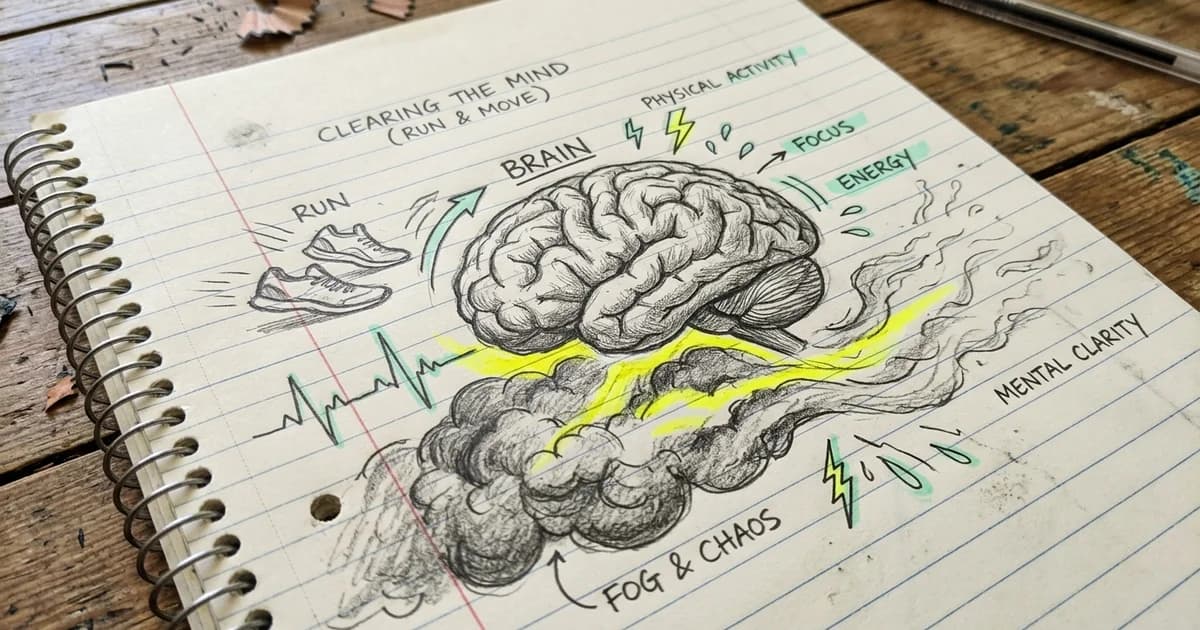
Brain Fog Exercise: The Complete Guide to Moving Your Way to Mental Clarity
You missed a deadline last week. Not because you were lazy, but because you sat at your desk for three hours re-reading the same paragraph. Your thoughts felt like they were wrapped in cotton. You knew what you needed to do. You just couldn't get your brain to do it.
That experience has a name: brain fog. And brain fog exercise, meaning physical movement used specifically to clear cognitive haze, is one of the most effective and underused tools for fighting it. No prescription required.
The science here is not ambiguous. Physical exercise changes your brain chemistry in ways that directly counter the mechanisms behind brain fog. This guide breaks down exactly what happens in your brain when you move, which types of brain fog exercise work best, and how to build a routine that keeps the fog from coming back.
Key Takeaways:
- Aerobic brain fog exercise boosts cerebral blood flow and triggers BDNF release, both of which directly fight cognitive haze
- You don't need to run marathons: 150 minutes per week of moderate activity is the research-backed target
- Resistance training, walking, and even yoga all produce measurable cognitive benefits
- Combining brain fog exercise with targeted nootropic compounds can extend and amplify the clarity you get from movement
What Brain Fog Actually Is (and Why It's Getting Worse)
Brain fog isn't a clinical diagnosis. It's a collection of symptoms: poor concentration, sluggish thinking, difficulty recalling words, and a general sense that your mental engine is running on fumes.
And it's becoming more common. Research published in SciTechDaily reports that self-reported cognitive disability has climbed from 5.3% to 7.4% over the past decade, with rates nearly doubling among adults aged 18 to 39. A meta-analysis published in General Hospital Psychiatry found the prevalence of brain fog and related mental health conditions in long COVID patients sits at about 20.4%.
The causes are familiar: chronic stress, poor sleep, sedentary behavior, nutrient deficiencies, and systemic inflammation. What ties most of these together is reduced blood flow and oxygen delivery to the brain, combined with lower levels of the neurochemicals your prefrontal cortex needs to function.
This is where brain fog exercise enters the picture.
The Neuroscience of Brain Fog Exercise
Your brain accounts for roughly 2% of your body weight but consumes about 20% of your oxygen supply. When you exercise, several things happen simultaneously that directly address the root causes of brain fog.
Increased Cerebral Blood Flow
A systematic review published in Brain Research confirmed that a single bout of cardiovascular exercise increases blood flow to the brain. Researchers at UT Southwestern showed that when older adults with mild memory loss followed an exercise program for a year, blood flow to their brains measurably increased. The participants exercised three to five times per week, 30 to 40 minutes per session.
More blood means more oxygen and glucose reaching your neurons. That alone can cut through the sluggishness that defines brain fog.
BDNF: Your Brain's Growth Signal
Brain fog exercise triggers the release of brain-derived neurotrophic factor (BDNF), a protein that supports the survival of existing neurons and encourages the growth of new ones. Think of BDNF as fertilizer for your brain's wiring.
A 2024 review in Frontiers in Neurology analyzed recent studies showing that physical activity increases BDNF levels, particularly in young adults. Higher BDNF levels are associated with better memory, faster processing speed, and stronger executive function, all of which brain fog degrades.
Neurotransmitter Regulation
Brain fog exercise also increases the availability of dopamine, norepinephrine, and serotonin. These neurotransmitters regulate attention, motivation, and mood. When they're depleted (from stress, poor sleep, or inactivity), brain fog is the predictable result. Movement replenishes them.
Which Types of Brain Fog Exercise Clear Cognitive Haze Best?
Not all movement produces equal cognitive benefits. Here's what the research says about specific modalities.
Aerobic Exercise (The Gold Standard)
Running, cycling, swimming, and brisk walking are the most studied forms of brain fog exercise. A 2025 meta-analysis in Frontiers in Psychology found that aerobic exercise had the greatest impact on cognitive function among adolescents (SMD = 0.53), particularly in executive function and attention. A separate meta-analysis in Frontiers in Neurology showed that aerobic exercise produced a strong positive effect on global cognitive function in older adults with mild cognitive impairment (SMD = 0.81).
The takeaway: aerobic brain fog exercise is the single most reliable way to improve the cognitive functions that mental haze impairs.
Resistance Training
Lifting weights isn't just for your muscles. A 2025 meta-analysis in Frontiers in Psychiatry found that resistance training improved overall cognitive function (SMD = 0.40), working memory (SMD = 0.44), and verbal learning and memory in older adults.
The mechanism is different from aerobic exercise. Resistance training appears to reduce systemic inflammation and improve insulin sensitivity, both of which affect how well your brain processes information.
Walking
Don't underestimate the simplest form of movement. Harvard Health highlights research showing that participants who walked briskly for one hour, twice a week, experienced measurable improvements in memory and thinking skills.
Walking is the lowest barrier to entry for brain fog exercise. If you can't do anything else, walk.
HIIT (High-Intensity Interval Training)
Short bursts of intense effort followed by rest periods can deliver cognitive benefits in less time. Peloton's health editorial team notes that HIIT two to three times per week is a strong choice for clearing brain fog. The intensity drives a sharper spike in BDNF and cerebral blood flow compared to steady-state cardio.
Yoga and Mind-Body Exercise
Yoga combines physical movement with breath control and focused attention. Parade cites experts pointing to yoga, tai chi, and dancing as exercises that help prevent mental decline. The cognitive demand of remembering sequences and maintaining balance adds a neurological training component that pure cardio lacks.
How Much Brain Fog Exercise Do You Actually Need?
The research converges on a clear target. Harvard Health recommends 150 minutes per week of moderate-intensity exercise, such as brisk walking, for cognitive benefits. The Cleveland Clinic echoes this number, noting that exercise helps preserve and improve cognitive function.
A network meta-analysis in Frontiers in Psychiatry got more specific: interventions lasting 12 to 24 weeks, performed at moderate intensity (60-85% max heart rate), totaling at least 150 minutes per week, correlated with the highest cognitive improvements.
Here's a practical weekly template:
| Day | Activity | Duration | Intensity |
|---|---|---|---|
| Monday | Brisk walk or jog | 30 min | Moderate |
| Tuesday | Resistance training | 30 min | Moderate-High |
| Wednesday | Yoga or stretching | 30 min | Low-Moderate |
| Thursday | HIIT session | 20 min | High |
| Friday | Brisk walk or cycling | 30 min | Moderate |
| Saturday | Active recreation (sports, hiking) | 30-60 min | Variable |
| Sunday | Rest or light walk | 20 min | Low |
This schedule hits the 150-minute minimum while mixing modalities for maximum cognitive benefit.
How to Start Brain Fog Exercise If Mental Haze Makes It Hard to Start
Here's the paradox when breaking through cognitive haze: the thing that clears brain fog (exercise) requires the very motivation and executive function that brain fog destroys. A few strategies to break through:
Start absurdly small. Five minutes of walking counts. Your brain doesn't need a marathon. It needs blood flow. A 2025 study covered by ScienceDaily confirmed that any form of exercise can boost brain function and memory across all age groups. Any. Form.
Attach it to a habit you already have. Walk for ten minutes after your morning coffee. Do five minutes of bodyweight squats before lunch. Pairing movement with an existing routine removes the need for willpower.
Exercise at the same time every day. Consistency matters more than intensity when you're starting out. Your brain thrives on predictability.
Go outside. Natural light exposure amplifies the cognitive benefits of brain fog exercise by helping regulate your circadian rhythm, which directly affects alertness and focus.
Brain Fog Exercise Combined With Targeted Nutrition
Exercise is the foundation, but your brain also needs the right raw materials to maintain the clarity that movement provides, which is where nutrition and natural fog support comes in. This is where specific compounds can extend the window of focus that a workout opens.
Caffeine and L-Theanine are the most studied cognitive performance pair. A study published in Nutritional Neuroscience found that the combination of 97 mg L-Theanine and 40 mg caffeine improved accuracy during task switching and self-reported alertness (both P < 0.01) while reducing tiredness. The L-Theanine smooths out caffeine's rough edges, promoting focus without the jittery anxiety that coffee sometimes causes.
Theacrine and Methylliberine take this further. A double-blind, randomized, placebo-controlled trial published in the Journal of the International Society of Sports Nutrition found that the combination of caffeine, methylliberine, and theacrine produced similar cognitive vigilance benefits to caffeine alone, but with the potential for a longer duration of effect due to their different pharmacokinetic profiles. The researchers noted that co-ingestion of these compounds may improve cognitive performance over a longer period compared to caffeine by itself.
Building a Complete Anti-Fog Protocol
The most effective approach to brain fog isn't a single intervention. It's a stack: regular brain fog exercise to change your brain's baseline capacity, plus targeted nutritional support to maintain that elevated state throughout the day.
Roon was built around this exact principle. It combines 80 mg of caffeine, L-Theanine, Theacrine, and Methylliberine in a sublingual pouch, delivering the same compound stack that clinical research supports for sustained cognitive performance. No nicotine, no crash, no tolerance buildup. Just 6 to 8 hours of clean focus that complements what your brain fog exercise routine already started.
Pair your morning brain fog exercise with Roon, and you're addressing cognitive haze from both directions: structural brain changes from movement, and neurochemical support from compounds that work with your biology instead of against it.
Your brain fog has a fix. It starts with your next walk. It stays gone with the right support. Try Roon today.